HomeFeatures
XCOM’s Jake Solomon is swapping turn-based tactics for life sims, and he’s not coming backAs the XCOM and Marvel’s Midnight Suns director leaves Firaxis, he chats to us about what’s next, and how life sims have been creeping into his work ever since the birth of Minecraft
As the XCOM and Marvel’s Midnight Suns director leaves Firaxis, he chats to us about what’s next, and how life sims have been creeping into his work ever since the birth of Minecraft
Image credit:Rock Paper Shotgun
Image credit:Rock Paper Shotgun
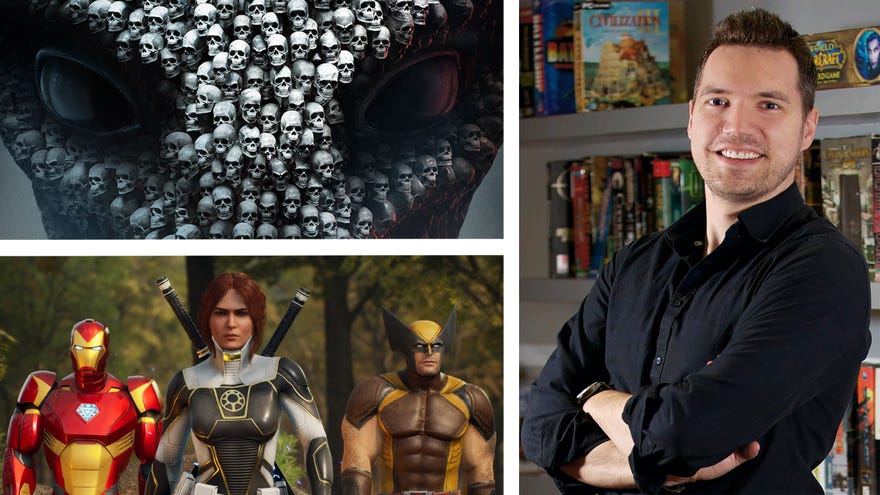
When I meet Jake Solomon at GDC, it’s his third day of unemployment. TheXCOMandMarvel’s Midnight Sunsdirector and designer announced he wasleaving Firaxisback in February, but his final day at the studio where he made his name and worked for more than twenty years was still very fresh in his memory. “It’s surreal,” he says. “For probably the next ten years, I’ll refer to it as ‘we’ when we talk about Firaxis, and it’s sad to think it’s not the right pronoun anymore. It’s exciting, but a little terrifying.”
On the face of it, that panic might seem unfounded. Over the last decade, Solomon has become one of the most revered names in turn-basedstrategy games. Having cut his teeth on many ofSid Meier’s Civilizationgames in his early years at Firaxis, he went on to become the designer who spearheaded the revival of XCOM with Enemy Unknown in 2012, before going on to direct its even more beloved sequelXCOM 2and its War Of The Chosen expansion a few years later. Most recently, he was creative director on Marvel’s Midnight Suns, which allowed him to marry his life-long love of Marvel comic books with the thrilling tactical combat he’s so well known for.
Card based battles make Marvel’s Midnight Suns an essential tactical RPG | ReviewWatch on YouTube
Card based battles make Marvel’s Midnight Suns an essential tactical RPG | Review

Just as XCOM 2 was kicking into gear, Solomon tells me his publisher 2K came knocking and asked him what his dream ‘big idea’ might be. Straight away, Solomon says he pitched a voxel-based animal creation game called Dusk. It was an idea that stemmed from his forays intoMinecraftat the time - a game he still plays today, albeit now in the company of his two daughters. “[Minecraft] is in its own way perfect,” he acknowledges, but ever the designer, the idea of having his own stab at a game like that lit a fire in him.
Minecraft’s voxel animals and creative mode were a big inspiration for Solomon’s ill-fated game, Dusk. Sadly, that idea never saw the light of day. |Image credit:Rock Paper Shotgun/Mojang Studios
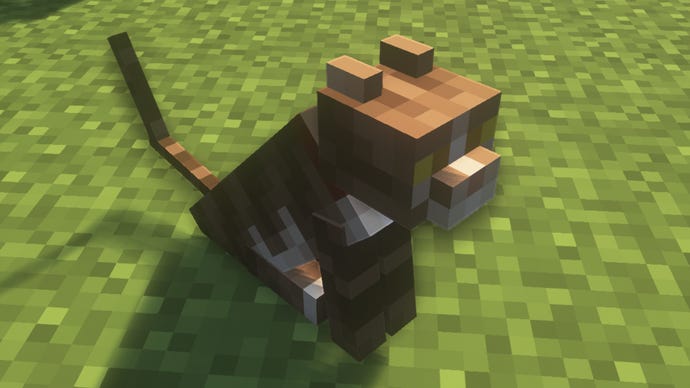
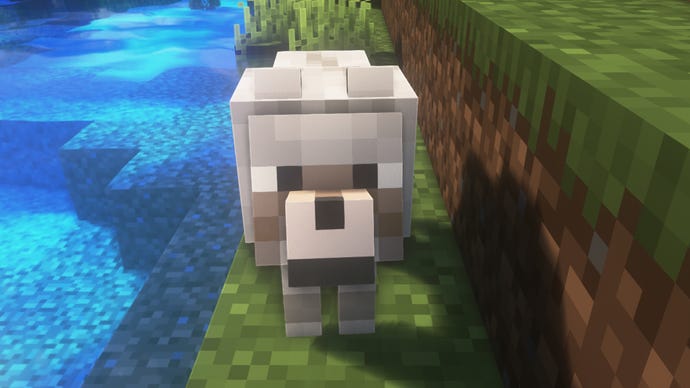
2K greenlit development for Dusk, and Solomon set to work on it. Unfortunately, Dusk never quite made it to fruition, as around ten months later Solomon was called back to take the reins on the then quite wobbly XCOM 2, leaving his dream game to fade into its own kind of twilight. In an alternate timeline, Dusk would have been “kind of likeNo Man’s Sky, but if you were the one creating the world, as opposed to visiting it,” he says. But it wasn’t just XCOM 2 that ended up being the nail in the coffin for Dusk. Tech issues also abounded, which Solomon says were “pretty overwhelming” at the time to try and make his idea a reality.
But there was also the small problem of “coming up with the reason” for why you’d be creating these animals in the first place. “You can have a creative mode where you can do all that stuff, but I do believe in being game-led where there’s game objectives sitting over the top of the toy, as I would call it,” he says, citing the dual nature of Minecraft andFortniteas prime examples of this. “Finding the game reason for why am I sticking horns on a rabbit? That was giving me trouble.”
Even now, though, with better tech and the freedom to do whatever he wants, Dusk is not the game Solomon wants to make next. “Somewhere deep in the recesses of my mind, some part of it is spinning on,” he muses. “But I do think for a game like that, you have to have a pretty strong theme. […] Evolving animals, even now, I think how many unique creations can that be, as opposed to something like Minecraft where it’s almost endless what you can do? How many variations of animals can you create where you feel this is completely unique and authentic to me? It’s not as powerful, when I think about it.”
In fact, Solomon doesn’t know what his next game is going to be just yet. Rather, his more pressing concern is first establishing his own studio, and when we speak he admits, “I’m not even in that space yet”. While his studio’s yet to be formed, though, he’s certainly been thinking about it a lot, and despite only being three days off Firaxis' payroll, Solomon confesses he’s “not great at not working.”
Sounds like Solomon needs to take some advice from Captain Marvel…
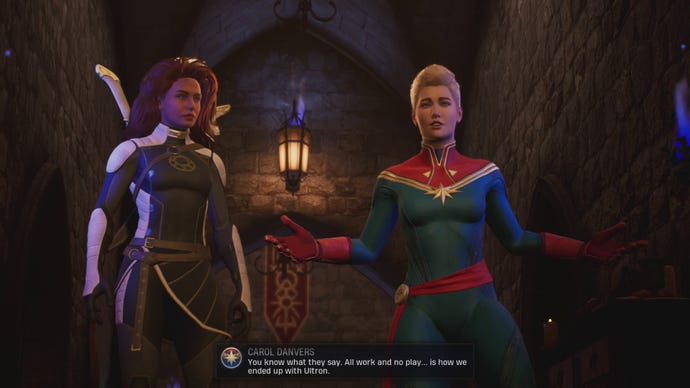
“It really is a thing where I love design,” he says. “I love thinking about design systems, I love thinking about any idea. I’m gonna chew on it and chew on it and chew on it. I just can’t not have that in my head. Even if I was on vacation, the back of my mind is working. It’s not in a way that takes away from the others around me. It’s just what my mind naturally goes to - thinking about the game systems and thinking about how to improve them all the time.”
He stops for a moment, and laughs. “Listen to me, I sound miserable! I’m not! I’m truly a generally happy guy. Maybe I should take a vacation. See what that’s like.”
Indeed, it’s clear that Solomon’s passion for making games hasn’t dimmed in the slightest now he’s struck out on his own. “Even at Firaxis, it was never a case of ‘I’m burned out’ or any of those things. I love that company. I love the games we made there.” It’s just that that passion now lies elsewhere, and outside of Firaxis' wheelhouse.
I ask him if he considered pitching his new ideas to Firaxis, or even to publisher 2K, like he did with Dusk. But while Solomon says that, yes, he could have taken that route, he ultimately felt that “it would have been a really big left turn” for both him and the studio as a whole. “Firaxis has so many great opportunities, there are so many great, historic franchises there, but they have the people to do it. And so for me to then try and throw another wrench in there and say, ‘Hey, how about this other new thing?’ I think it just wouldn’t have been fair to everybody.”
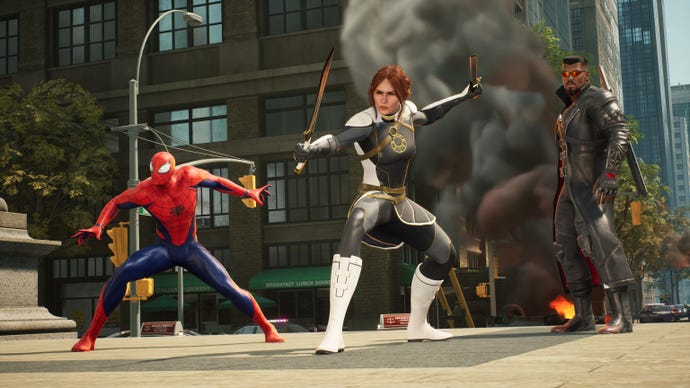
Instead, he decided to wrench himself away from the studio he’s worked all his life - a decision that had been gradually forming in the back of his mind in the months leading up to the launch of Marvel’s Midnight Suns. He speaks with great pride about that game, and the people who helped him make it, and it’s clear he still loves the turn-based tactics genre as a whole, too. But as he describes it, “I started to think about what’s next, and thinking about a turn-based game, there’s obviously a lot about that that appeals to me. But for the first time, it didn’t appeal to me as much.” His mind was lighting up with other ideas, he tells me, “and I started to realise that’s no way to go into another big project.”
But I think many will agree Solomon’s own pair of XCOM games fit into this mould as well - we’ve certainly filled enough pages of RPS with our own tales ofdoomed soldiersandwimpy squadsover the years, and heck, folks even took to Facebook at one point to create an entirememorial wallfor their droves of fallen teammates. Admittedly, Marvel’s Midnight Suns didn’t lend itself quite as well to this kind of emergent storytelling, what with its cast of fixed, pre-conceived heroes and greater emphasis on scripted narrative events that take back at the Abbey between your main missions. But it did also dip its toes into theRPGend of the life sim pool with itsPersona-esque character relationships and the everyday drama that ensues with having two different super teams living under one roof.
For many (RPS readersincluded), XCOM 2 and its War Of The Chosen expansion are the pinnacle of the entire XCOM series.
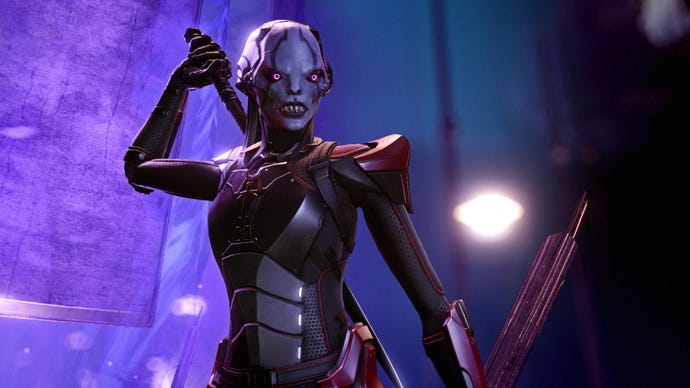
He concedes that Midnight Suns lost some of that XCOM drama. “You don’t get to say like, ‘Oh, yeah, this is Frankie, and he’s this terrible sniper, and I swear to God, he misses like every shot,’ but then one time he does something great, and you’re like, ‘I love this guy’. Those stories are more impactful, because you have ownership of them as a player.”
In fact, Solomon cites just three things that allow that sense of ownership to take hold in XCOM. “We give them a home country, you give them a nickname once they reach a certain rank, and then you give them a specific class. Those three vectors are always enough, that’s all players need to say, ‘All right, I’ve got a story for this.’ Sometimes you randomise the customization and they come out weird wearing like a Fedora or something like that, and you’re like, ‘All right, this guy, I know exactly what this guy’s about. He’s got a ponytail and a Fedora. I know I wouldn’t like this guy immediately. But he’s a great ranger.’ I always like that, because that always made me giggle, and it was really fun to then see players love that stuff, too.”
You know who you are, XCOM squad buds… |Image credit:2K Games
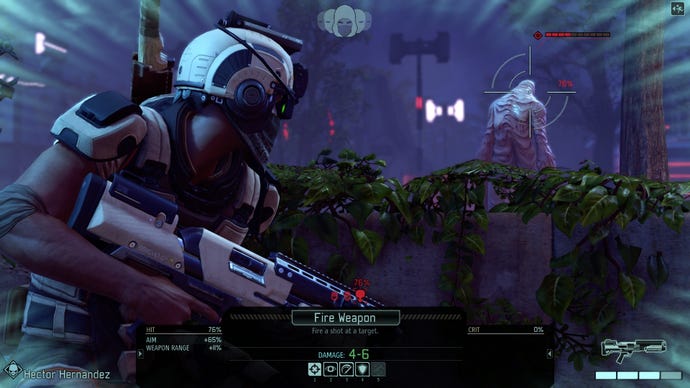
“In Midnight Suns, that wasn’t the case. The narrative had a much stronger role. And so it was different in the way that I thought about the characters. In XCOM, you could just think about them as a series of systems, and with a strong theme of soldiers fighting aliens, but Marvel is much much different. And for me, it was really enjoyable just because I’m such a passionate fan of Marvel. It was personally very, very enjoyable for me to play in that toolbox.”
“I’ve always liked simulation,” he says, “but I’ve always kind of viewed it as like, ‘I do not know how they design this stuff!’ Because for me, I always tend to veer backwards. I like the safety of putting the rules front and centre.”
It’s a trait he picked up from working under Sid Meier, he says, and even now Solomon prefers his work to have “clear-cut rules that are almost board game-like” so players know what to expect. “That is typically the way that I like to approach design. The player knows what’s going to happen, and if you do this, you get that, and I think that was even more evident in Midnight Suns. We just tried to put as much information out there in front of the player as possible.”


The card system is one of my favourite things about Midnight Suns, particularly in how it allows you to string out your turn far beyond the default trio of card plays it gives you.

“When we first started approaching that challenge, it was all so scary because there are so, so many good iterations on card mechanics,” he says. “I’ve always loved them and viewed other people’s designs as being so elegant and clever, and I didn’t understand how to do it. But it was very, very rewarding. So I at least have that experience to say, ‘Okay, I can learn some new design skills!’ I love that part of Midnight Suns, and so that is actually really exciting to me.”
He also believes that the initial backlash around Midnight Suns’revealhas better prepared him to deal with the public repercussions of daring to do something a little different. “I never had an experience where people had expressed disappointment before playing, you know? I think a lot of people were open to it. […] But I also totally get it when people look at the images coming out and go, ‘What the fuck is that? Are those… are those cards?Cards!?’ So yeah, I can sympathise with people for that reason.”
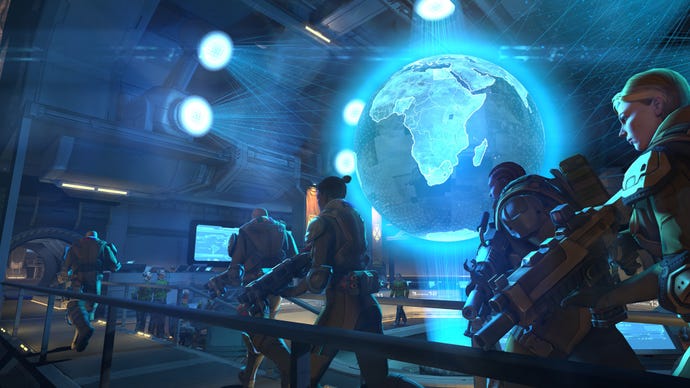
The greatest lesson Solomon takes with him, though, is one that came from his mentor Sid Meier, right back when he first started making an early prototype for what would eventually become XCOM: Enemy Unknown. Developed during a six month window between the release ofSid Meier’s Piratesand Civilization Revolution, this was a prototype that famously crashed and burned internally. Solomon was, admittedly, still finding his feet as a designer at that point, having previously done mostly programming and graphics work on his earlier projects at Firaxis, but if there’s one piece of advice he could give to his former self, it would be this:
Solomon says he spent most of the six months he had for the XCOM prototype making an inventory system rather than focusing on making the game fun. |Image credit:2K Games
“I would, very clearly, say that as a designer you have to look the scariest thing in the eye,” he says firmly. “The worst thing in human nature is wishful thinking - the idea that it’s going to be okay. No, it’s not going to be okay. You have to find the way to make it okay. It’s not going to be okay when better art goes in, it’s not going to be okay once this new engineering feature goes in. You must find what’s going to make it okay.
“And the problem is that, as a designer, you did your best job!” he laughs. “You already put your best ideas in! And then it comes back and it’s like, ‘This is not fun.’ You’re like, ‘Well, that was my best idea!’ And your brain will be like, this is too stressful. […] That kind of anxiety - I know it sounds crazy - but that kind of anxiety is like my engine.
“I think when I was younger, I was just like, ‘I’ll work on an inventory system!’ as opposed to going, like, play the fucking thing and say to yourself, ‘This is obviously not fun, and it’s my responsibility to make it fun, like, ‘What are youdoing?Make a change, dude!'” He grins. “Start with the first least fun thing and change it. Even if that was your best idea, ‘Tough luck, dude! You’re the one who got this awesome job of game designer.’ Your job is to look the scary thing in the eye and say, ‘Yeah, not good, I gotta find a way to do this better.'”
Despite those ups and down, though, looking back, Solomon is rightly pleased with the impact he’s had on the turn-based tactics genre. “To some extent, I’m probably scared to ever touch it again,” he admits. “I’d be afraid to go back to that.” His pride for both his work and his fellow developers at Firaxis is palpable as our conversation draws to a close, but he’s also confident that the designers and friends he’s left behind “have fresher and newer ideas than me,” and that they’ll continue to make great games without him. “I think I’d be gun shy anyway, to mess up the contributions that I did make. I’m okay for those to stand. I’m okay with that.”
