HomeHardwareFeatures
With the Steam Deck OLED and its “awesome” rivals, Valve see a bright future for handheld PCsThe Steam Deck OLED devs on its speedy turnaround and why a more powerful Deck wouldn’t make sense – yet
The Steam Deck OLED devs on its speedy turnaround and why a more powerful Deck wouldn’t make sense – yet
Image credit:Rock Paper Shotgun
Image credit:Rock Paper Shotgun
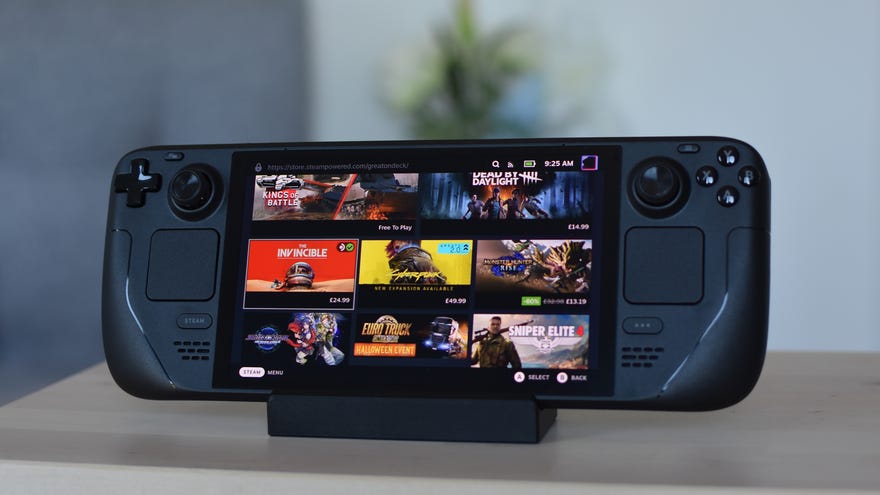
To quickly recap mySteam Deck OLED review, Valve’s refreshed handheld is brilliant, serving up major improvements to screen quality and battery life while making loads of little quality-of-life tweaks.Its revealwas a surprise, mind – haven’t Valve repeatedly said that therewouldn’t be another new Steam Deck for ages?
Not quite. That warning was always qualified in that a morepowerfulDeck was still a ways off, and theSteam Deck OLED’s performance improvements are both tiny and a likely incidental result of its efficiency savings. This very point was repeated to me in an interview with Valve designer Jay Shaw and software engineer Jeremy Selan, which also covered the Steam Deck family’s future, its current struggles with intensive big-budget games, and why they want “more, more, more” rivals like theAsus ROG AllyandLenovo Legion Go.
To see this content please enable targeting cookies.Manage cookie settings
To see this content please enable targeting cookies.Manage cookie settings
To see this content please enable targeting cookies.Manage cookie settings
We sat down prior to me getting my own flesh mitts on the Steam Deck OLED, so don’t worry, there’s no technobabble between hardware heads. There might be a juicy software update question, though.
RPS: When did Valve start working on the Steam Deck OLED? Was it right after the Steam Deck launch?
RPS: You weren’t tempted to wait for a whole new-generation Steam Deck?. You were like “Let’s work with what we’ve got?”
Jay Shaw:Yeah, we’re looking for a generational leap in terms of performance before we start talking about the next generation of Steam Deck. And we’re not there yet.
Selan:One of the core challenges in product design is you really have to balance the tradeoffs. And I would say cost, performance, and battery life are the three things you really want to think about. And even then, this is a brand new APU, we just tuned it for battery life. We could have gone the other direction and tuned it for performance, but when you look at how those things would balance out, it didn’t quite make sense, I think, for our customers.
RPS: With the current Steam Deck, we are getting to the point where there are new games, particularly AAA ones, coming out can be just a bit too much for it to run.Starfieldis one of the big ones, as isCities: Skylines 2. Did you think it would take longer for the hardware demands of modern games to overtake what the tech can handle?
Shaw:It’s an interesting point. We’ve talked about that a lot internally, right? When you see something like Starfield come out, it’s very demanding, it brings a lot of even high-end PCs to their knees. But then at the same time a game likeArmored Core VIships, and is an incredible experience on the Steam Deck, and it looks great. So it’s like we’ve got AAA Number One that maybe really does require a super high-end PC to play well, and then we got AAA Number Two, that I think looks awesome. It still looks just as good and plays really fast, and for some reason that one is the one that works well.
Image credit:Rock Paper Shotgun
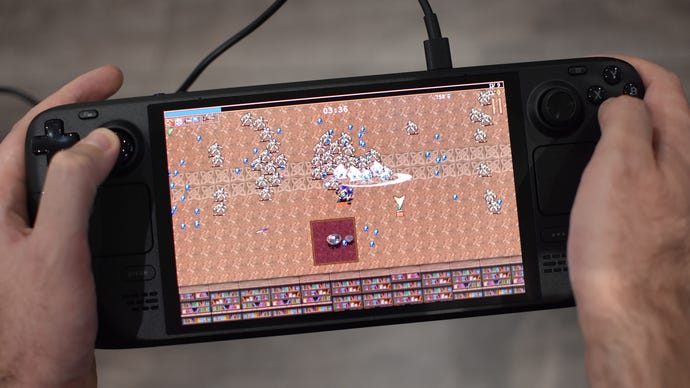
I don’t think we really have a way to predict how developers are going to ship games. We have noticed, though, that with a tonne of these games – even ones that when they ship, they’re maybe not as optimised as we’d like them to be – over time, developers seem to continue to push updates to those games that make them run better.
Selan:We obviously care about the longevity of the device.
Shaw:Very!
Selan:When we shipped the original Steam Deck, I don’t know if we ever got into this, but it was a real question of whether we should ship 8GB or 16GB of memory. And we explicitly made the hard economic choice to go with 16GB across all the SKUs, because we really wanted to ensure that feature compatibility for the catalogue. So we’re thinking very hard about it, and there’s always performance work we’re doing on our side. Every few weeks when we ship an OS update, a huge amount of that update is optimisations to make new games play even better.
Shaw:Yeah, very much. We feel that a lot of the work is on our end, because we have such intimate control over the software, and we have such intimate understanding of the hardware that we can optimise on our end tomake a lot of these games play better.
Selan:I don’t want to make any promises about specific games, but just because their performance challenges sometimes at launch, doesn’t mean it won’t be a very smooth experience a few weeks down the road.
RPS:I’ve seen that happen, yeah.
Shaw:I mean, I’m playing throughCyberpunk 2077again, and I’m playing on the Steam Deck OLED. And I’m like “Wow, it’s cool, it’s a treat to play.” It’s just such a weird thing to be playing a game like Cyberpunk on a handheld. And HDR looks so good! Yeah, HDR looks incredible. It just kind of blows my mind a little bit.
RPS: Speaking of software updates, you’re going to be discontinuing a couple of the original Steam Deck models – are those ones specifically going to keep getting the usual software updates?
Shaw:Yep, absolutely.
Selan:They’re actually functionally identical to the 256GB LCD model that we’re going to continue supporting. So from a customer’s perspective, they still have the current lineup, it’s just they don’t happen to have a storage size that corresponds to a unit that’s continued to be on sale.
Image credit:Rock Paper Shotgun
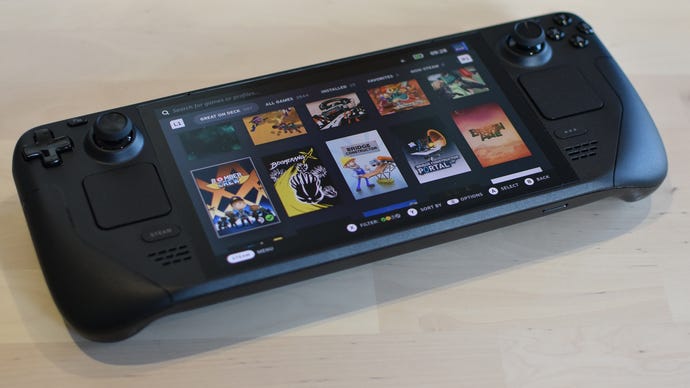
Shaw:The nice thing about SteamOS and, y’know, our ability to just push the software out constantly, is that this is the exact same experience you would have if you were playing Steam in Big Picture Mode, for example. So all those updates that we’re doing are not only going to affect all Steam Decks, whether you bought it day one, or you buy it today, but they’re also going to affect Steam itself. If you’re running Steam on a PC that you bought 15 years ago, hopefully these updates should all affect you. So yeah, we’ll always be updating with all Steam Deck customers in mind.
RPS: In terms of the Steam Deck’s future, Valve say that the Steam Deck OLED is the “definitive” version of this generation. So you don’t see yourselves bringing out any more new additions?
Selan:I don’t think we’re promising specific timelines. The new generation, if we did one, is not close. It would be years away, when we feel like the processor and GPU technology is at a stage where it’s worthy of doing a new performance target.
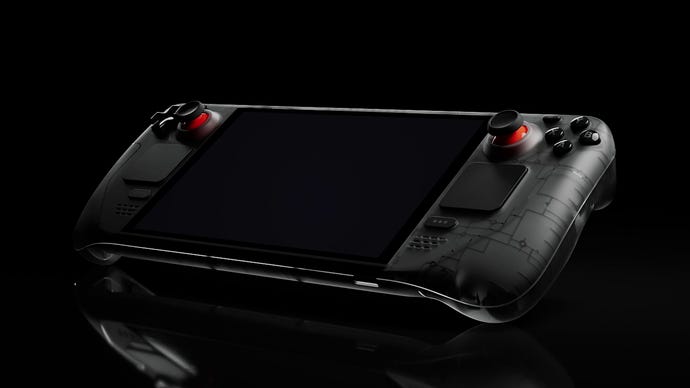
I am super excited about the Special Edition (of the Steam Deck OLED). Not being a designer, I imagine maybe there could be other special versions?
Shaw:We have so many ideas. So many ideas as to how many fun colorways we can put out there. That’s not, obviously, a new generation of Steam Deck, but we hope that this limited edition is something people get excited about. Because I know for a fact that the design team would just absolutely love to dive in, in earnest, to doing some other colours and fun things. But yeah, this is the one, for a long time.
Image credit:Valve
RPS: What do you guys think of the other handheld PC we’ve seen since the Steam Deck launched? I remember the Valve standpoint in 2022 being “We want more people to make handheld PCs!” So is stuff like the Asus ROG Ally and the Lenovo Legion Go what you had in mind?
Shaw:More, more more!
Shaw:Yeah, it’s great. And also, we’re very happy to collaborate and work with other companies in terms of software and in terms of getting a really good gaming experience to their customers through SteamOS. We’re very happy to see that on more devices, so we’re hoping to collaborate with more companies as they start to create these. And we can work with them to do a better job for all customers. It’s more the merrier.
Image credit:Rock Paper Shotgun
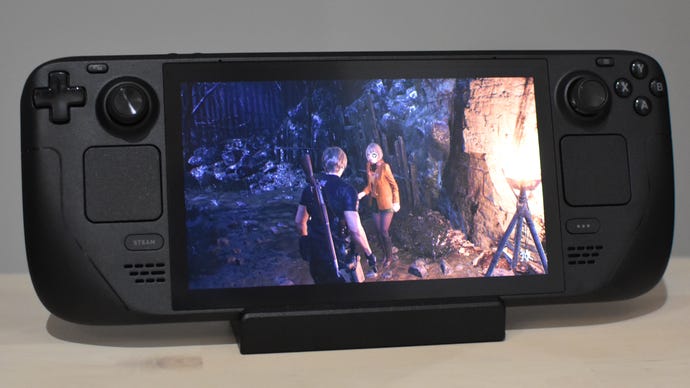
Selan:A huge number of devices actually use Steam, even in thenew Big Picture mode, on those devices. Sort of showing off very similar user experience, which is great.
Shaw:It just pushes us to continue working on that. And then it’s a larger customer base that’s talking to us, and more competition is obviously better for all customers.
Selan:Two thumbs up!
Shaw:Yeah, two thumbs up! Please, everybody, keep making these. This is cool.
