HomeFeaturesDwarf Fortress
It was inevitable
Image credit:Kitfox Games
Image credit:Kitfox Games

In games it’s often a delight to be proven wrong. Such as, for example, my longstanding belief thatDwarf Fortresswould never make the biggest and most important change it possibly could, and fit itself with an interface fit for purpose.
Bay 12 Games have, of course, gone further than that, and released it for general sale on the biggest shop in the business after sixteen years as freeware. There’s even a charming new graphics overhaul to replace the famous ASCII symbols which, depending on who you ask, might not have technically counted as “graphics” at all.
I’m not here to discuss the relative merits of this shiny new version and the “classic” version. Both will be updated in future, the latter still free, and neither expected to reach a full 1.0 release inside 20 years. All this chips around the edges of what I’ve been pondering, which is this: What exactly is Dwarf Fortress’s place within our culture now, after a decade replete with games that looked to it for ideas?
Workshops on Fire! - Dwarf Fortress GameplayOnly you can stop fortress firesWatch on YouTube
Workshops on Fire! - Dwarf Fortress Gameplay

You could name any random colony sim and it would be easier to learn, and less of a mess than Dwarf Fortress, even with its new interface. On a basic level, most modern colony games that get beyond a beta are better games, because they take the template it established and focus on making that work. It’s also because most of it isn’t a game.
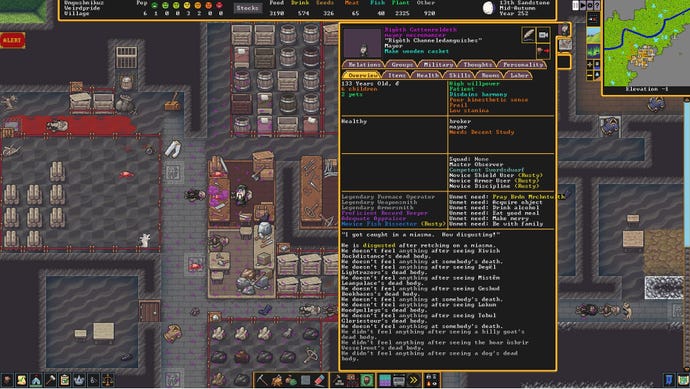
That’s not a dig. I’m not being the jeb in the steam forum of every visual novel ever. I’m not even making a remotely original observation, but even with its new interface, it’s really a world generator that you can play games in. It’s a successor to what Maxis were pioneering in the early 90s with their Sim- series of games, which (long before devolving into a string ofneoliberal carbrain sims) they called “software toys”. Simulator/game hybrids not meant to be won or completed, but playedwith. Games like SimEarth andSimLifein particular, in which you generate a (2D, of course) planet and its environment, then design and seed a planet with customised organisms and see how they all get on, with or without your meddling and a meteor strike or two when you get bored. Sounds familiar, right?
A cosy house in Minecraft
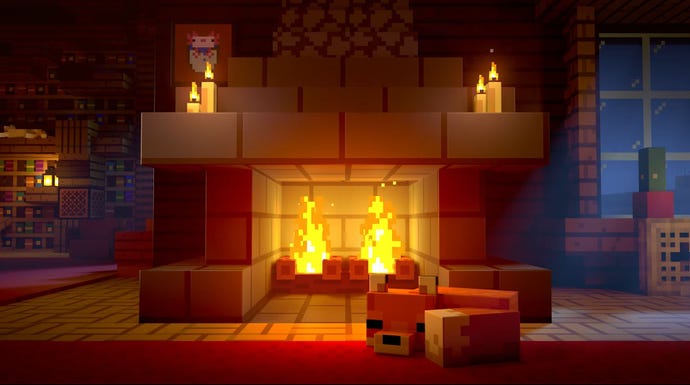
Because the things it’s been outdone at are the things it wasn’t reallyabout. Going Medieval or RimWorld’s narrower focus gets you more involved with a cosy little settlement, sure, and micromanagement trumps the bigger picture, but their idea of difficulty is often random nonsense and bigger spawns. If you fight off 10 attackers, they’ll send 25 next time. In Dwarf Fortress, a civilisation can decline because it sent out too many raiders who didn’t come back. In its final version the game aims to track even wild animals to this degree. Where Minecraft generates a cool abandoned temple, in DF a dingo man might visit that temple and spend the rest of his life writing and distributing books about it, and discussions about it might help an elf resolve their personal traumas. And sure, 99% of that will sit in the background, never noticed from your perspective, but once in a while it will, and the more you look, the more connections you’ll find. It is a life simulator, and as such most of it goes utterly unrecognised. But it’s still happening even if you don’t see it. With each new version it becomes even more a game about life, about culture, and its creation and development, in addition to building dams and throwing goblins into the vampire pit.

I still have many criticisms. It frustrates and it obfuscates, and it falls prey to a kind of simulationist uncanny valley, in which the more it does, the more glaring its omissions feel. Its new interface is still merely tolerable, with several problems and annoyances, and even removes some vital features from the classic version. But its huge success on Steam is about more than indulging in some shared memes, and more than its creators getting one of the most deserved payouts in game history. Not that everyone can (for the love of god, don’t try to take general industry lessons from its utterly singular nature and circumstances) but that this unlikely behemoth that quietly shaped the industry for the last 15 years can not only keep doing so, but reach and inspire even more people.
