HomeFeaturesDistant Worlds 2
We’ve now played Distant Worlds 2 and it’s a light in an age of shadowAtuuk my time wi’ this preview build
Atuuk my time wi’ this preview build
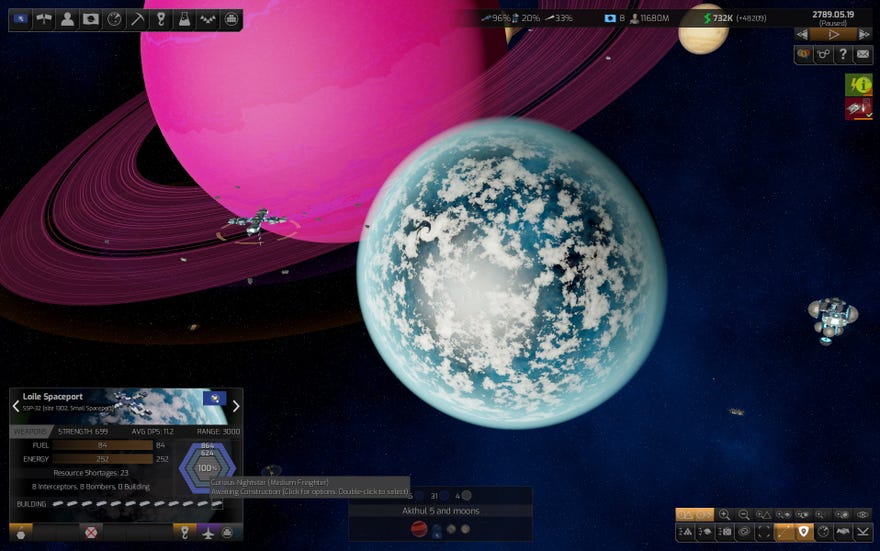
Following Code Force’srecent demonstration, I was optimistic about the upcoming space 4X/simulation/strategy/forward slash gameDistant Worlds 2. The original was a game I very nearly adored, but playing it always meant being a little too frustrated to talk about it without complaining a lot (which, granted, I do about everything, but still).
Code Force have since sent us a preview build, and I’ve been consumed with it for the better part of a week. I’m struggling to gauge exactly how much to reserve, because it’s had me positively cackling at my minor successes and howling in enjoyable despair at my setbacks. If they can do, ooh, two thirds of what I’m hoping in the six weeks before its release on March 10th, this could be every bit as brilliant as its predecessor, with fewer flaws.
Distant Worlds 2 | Release Date AnnouncementWatch on YouTube
Distant Worlds 2 | Release Date Announcement

Most immediately obvious is Distant World 2’s dramatically better performance. The assurances we got during their Q&A demonstration the other week were clearly true. Aside from an occasional brief pause, everything you ask happens instantaneously, and loading times are excellent (and this while running from an HDD, too).
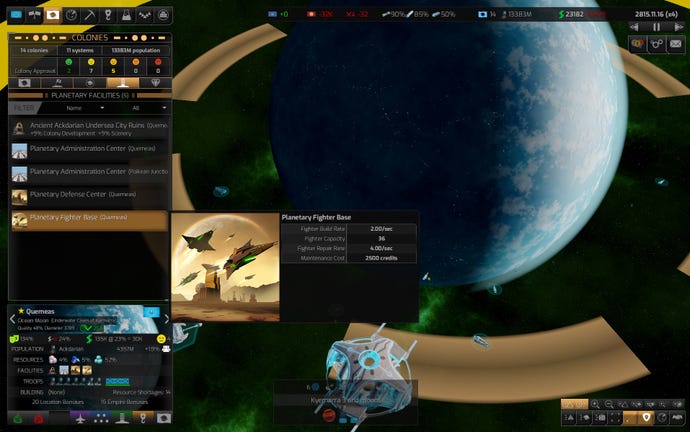
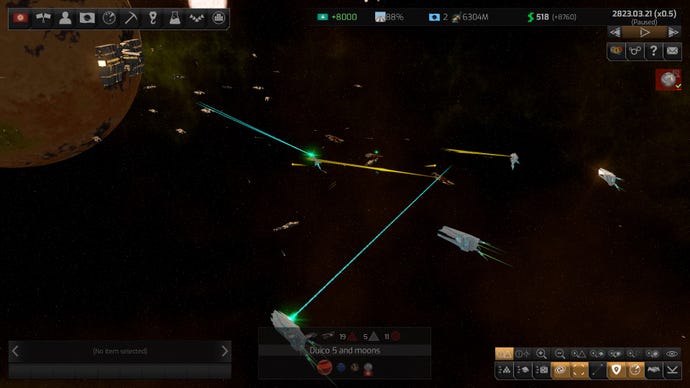
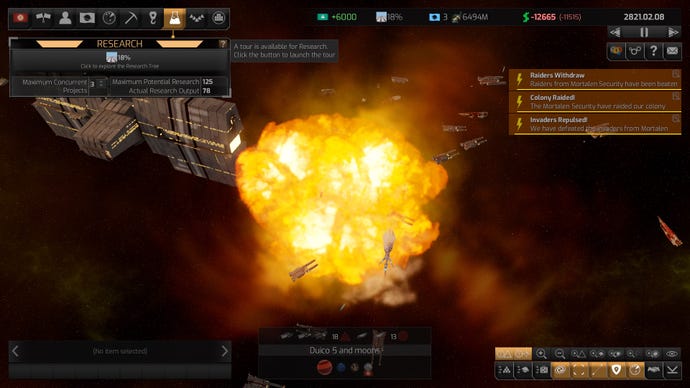
The fixed weapon hardpoints also add practical significance to the new 3D graphics. Distant Worlds 2 is a lot easier on the eyes, with each faction having distinct ships. You can see them visibly enter starports to dock for repairs, and they’ll also send shuttles down to planets or ship debris. There’s more bustle, but crucially avoids becoming a mess of overlapping sprites and ships inexplicably circling out of their own attack range. Non-combat ships can more reliably be automated too, with multiple modes for explorers and builders. The latter have a dedicated salvage mode, a new feature that supplements the recovery of disabled or wrecked, but still intact ships. It makes me feel less reluctant to blow up a ship I could board instead. Debris isn’t always profitable, but I’ve made cash from it, and when you capture a station that uses tech more advanced than your own, you might get lucky and research it while patching it up.
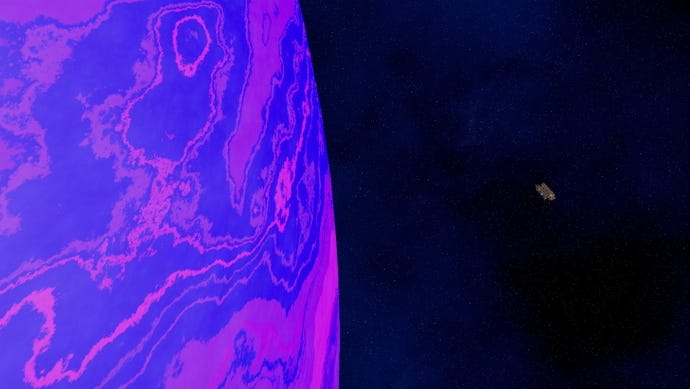
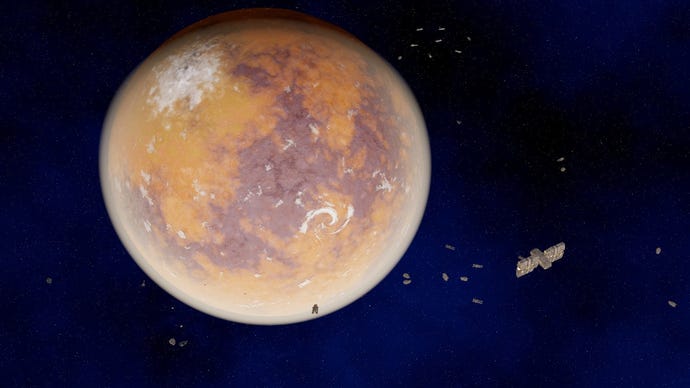
Planets are pretty enough to be worth zooming into and panning around.
I do wish there was an option to modify existing ships and stations without just reverting them to a blueprint, though. You can’t, say, convert an advanced starport you captured into a simple defensive base unless you create a design with those guns attached, which you can’t do unless you’ve researched said guns. It’s the limitations of the shipbuilder again, basically. It’s not devastating, but the familiar adherence to blueprints feels like a missed opportunity to fit a more bespoke option in. Manually adjustable stock levels help here, though, to keep your civvies from emptying your coffers trying to fill every backwater port with unnecessary supplies.
Salvage is also a source of prisoners. Any character who survives a wreck or boarding attack is one you can attempt to hire, execute, or release or trade back to their bosses. The character system works much like it did in DWU, but they’re not as scarce. They’re still on the flat side when compared to rich RPG-heavy sims likeCrusader Kings 3or the obscure nonlinear dynamics ofShadow Empire. But you’ll probably find a superstar of some kind, be it a spy or general, or my entire team of highly skilled researchers who are as troublesome as they are useful because they’re all unbelievably corrupt.
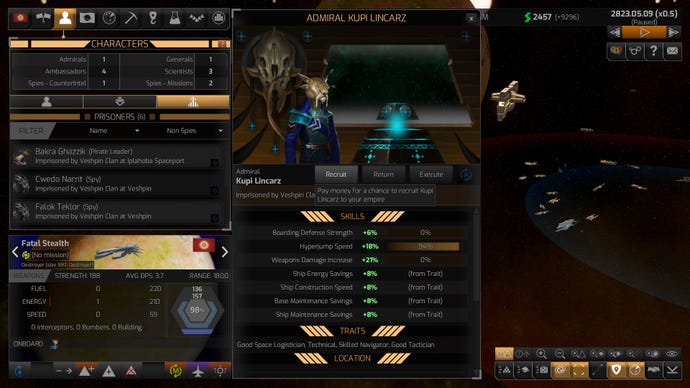
Distant Worlds 2 includes a few features from the original game’s expansions, with the pre-warp start in particular making a welcome return. It’s a short phase, but the early game in general feels considerably longer. This could be changed with the right startup settings, but I’m all for a longer early game in any 4X, especially one with such a huge focus on exploring and building logistical and economic networks. Pirates are back too, and though they’re not as complex as they once were, they’re also less miserable to deal with. No longer does every pirate you pay off send a fleet to parasitise your helpless colony; instead, they do as promised and leave you alone. Their payments are more manageable, and their attacks less overwhelming. They have quite a knack for finding the right window to send a couple of raiders in fact, rather than dropping their entire fleet to cripple your empire.
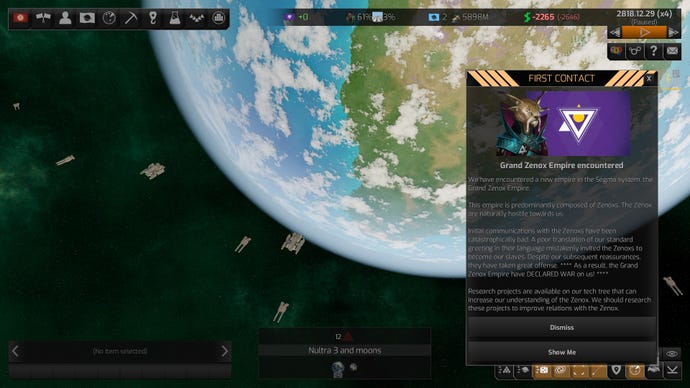
Diplomacy has been expanded with more treaty options and those first contact scenarios. I’m told the AI is a top priority for finishing touches, so I’ll hold my complaints for now. The framework is there and the dynamics seem to be working even where the details and balance are a little off. Indeed, an intriguing new feature adds multiple research levels to improve diplomatic channels on a per-species basis; to begin with you can only broker the most primitive deals until you research your new neighbour’s language. This opens up more options and slightly bumps their opinion of you, and pursuing more research into their culture, history, and so on will continue that trend.
The larger galaxies have some interesting effects with a lot of these factors, stretching out the exploration periods and putting major powers much further apart, so they have time to lean into their personalities before clashes start. Nebulae are now not just gas clouds but active hazards, and warp drives now have to carry out multiple jumps, requiring you to chart courses. The result is a stronger sense of the geography thatspace gamesoften lack.
I do have complaints. It’s inevitable that some will remain come the full release, and perhaps even after a patch or two. The biggest is really a collection of small details, little inefficiencies and confusions that remain despite the big improvements in UI and data management. The main cashflow display is still very unhelpful, as so much income is irregular that the constant display of your net income/outgoings has no apparent bearing on your balance. The help texts and encyclopedias are better but finances in particular will confuse a lot of players, and could use further explanation and breakdowns. Although it’s easier to find the dozens of resources, our build had no easy way to find what they’re used for, what exactly you’re importing/exporting, or how much you’re trading with a given faction and thus whether you can afford to cross them. The notification system needs an “ask me again in ten years” option, and desperately needs a “never waste my time with this again” one.
A lot of these are things Code Force have already said they’re working on, so while I can’t ignore them entirely, I also can’t hold them against the game at this stage. If we’re to imagine the worst case scenario, it’d be the full version making no changes at all, in which case it would get a hard time but still be a dramatic improvement onDistant WorldsUniverse. Very little has been lost, little has fundamentally changed, but almost everything works better. That’s a strong baseline, and I am frankly alarmed at the thought of how much of this year I’ll likely spend playing Distant Worlds 2.
