HomeFeaturesWatch Dogs Legion
Watch Dogs Legion with ray tracing is almost unplayable without DLSSEven on an RTX 3070
Even on an RTX 3070
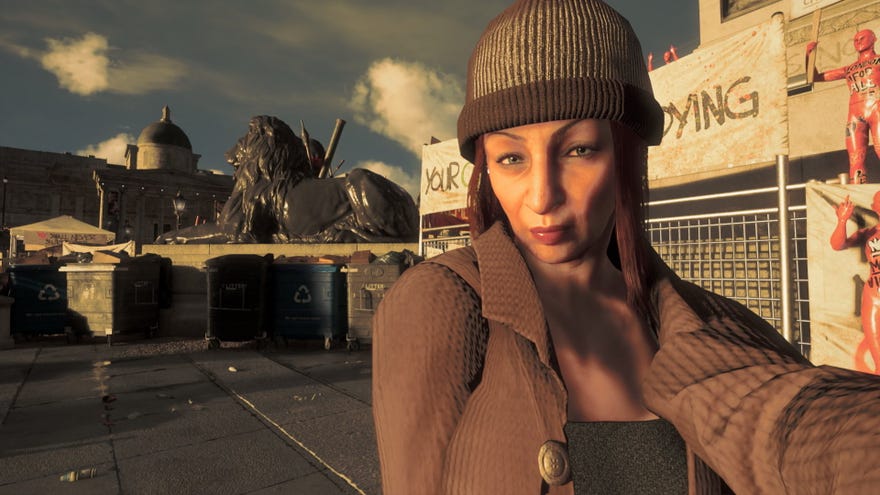
Watch Dogs Legionis one of this year’s bigray tracing games, utilising ray traced reflections to bring the wet, rainy streets of London to life. It’s also one of the growing number of games to support Nvidia’s performance-boosting DLSS tech - and based on my initial testing of the game’s ray tracing effects on PC, you’re definitely going to need it if you want to admire the UK’s dystopian capital in all its reflective glory, even if you managed to bag yourself one of Nvidia’s newly-releasedRTX 3070cards.
That’s right.Watch Dogs Legion’s ray tracing effects take quite the toll on your overall frame rate compared to other ray tracing games, regardless of whether you’re playing at 1920x1080 or above. Whereas other ray tracing games such as Shadow Of The Tomb Raider andMetro Exodusare just about playable on higher-end RTX cards without the aid of DLSS at lower resolutions these days - especially if you’ve got an RTX 3070 orRTX 3080inside your PC - Watch Dogs Legion is a lot more taxing, making DLSS pretty much mandatory for all ray tracing graphics card owners.
To see this content please enable targeting cookies.Manage cookie settings
That’s no bad thing, of course. Aswe discovered in Death Stranding, DLSS was able to turn any RTX card into a 4K 60fps machine when it was switched on in Kojima Productions' apocalyptic postie sim, and its latest DLSS 2.0 iteration wasso similar to native 4Kthat you might as well turn it on anyway.Death Strandingdidn’t have any ray tracing effects to contend with, of course, but DLSS is still a great bit of technology in its own right, especially when it brings those higher resolutions within greater reach of lower-end RTX cards.
Watch Dogs Legion also supports DLSS 2.0 and comes with separate Performance and Quality modes just like Death Stranding, as well as a Balanced mode that presumably falls somewhere between the two. It can’t quite hit the same performance highs as Death Stranding, as even the RTX 3070 struggled to hit 60fps with it turned on at 4K Ultra settings, but for the most part I found it was instrumental in maintaining a smooth 60fps at 1080p, 1440p and High 4K settings.
Why is Watch Dogs Legion’s ray tracing so demanding? It’s all to do with the resolution, quality and range of those ray traced reflections. As our friends atDigital Foundryhave explained, Ultra ray tracing has the highest resolution reflections and the greatest reflection range, showing more of the world around you in objects like windows and glass compared to High or Medium.
No ray tracing.Medium ray tracing.High ray tracing.Ultra ray tracing.
No ray tracing.
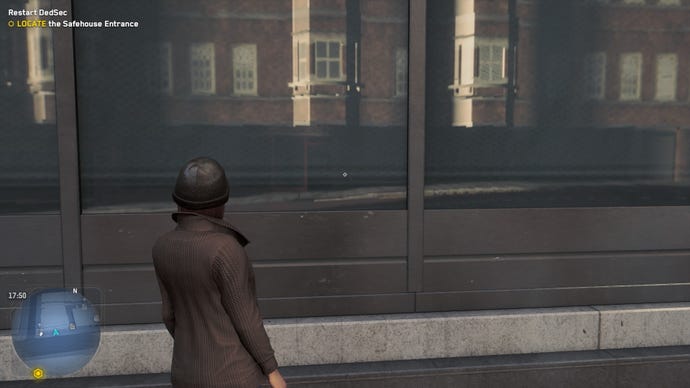
Medium ray tracing.
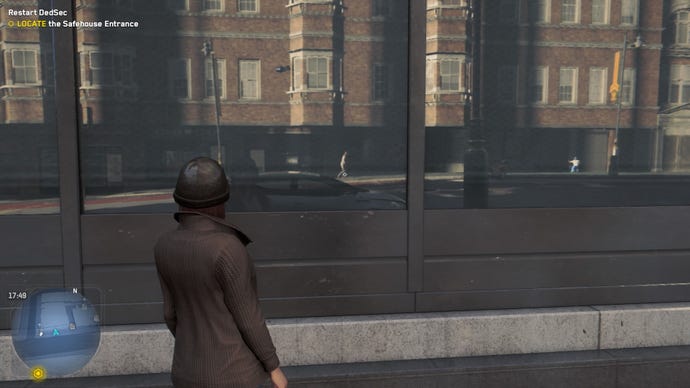
High ray tracing.
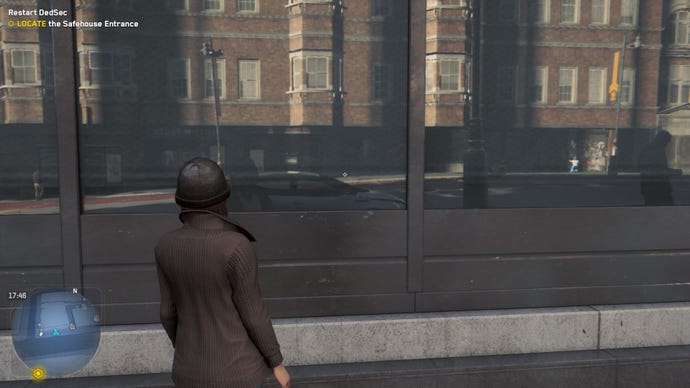
Ultra ray tracing.
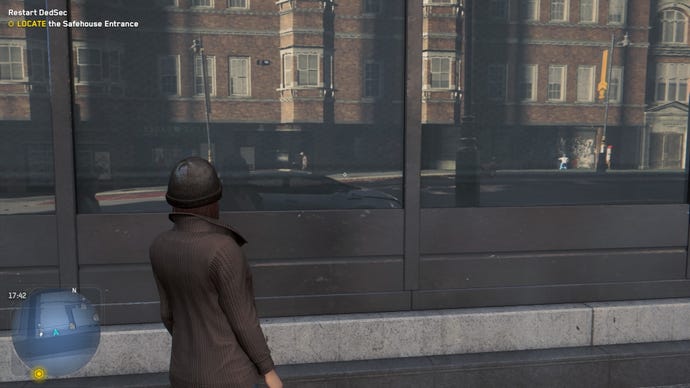
Opting for High or Ultra ray tracing does take its toll on your PC’s performance, however. With the RTX 3070, for example, I recorded an average frame rate of 82fps on Ultra at 1920x1080 without ray tracing enabled, which fell to an average of 55fps with Ultra ray tracing. As for 2560x1440, it dropped from an average of 71fps on regular Ultra to just 37fps with Ultra ray tracing thrown in. That’s a performance drop of around 33% at 1080p, and closer to 48% at 1440p.
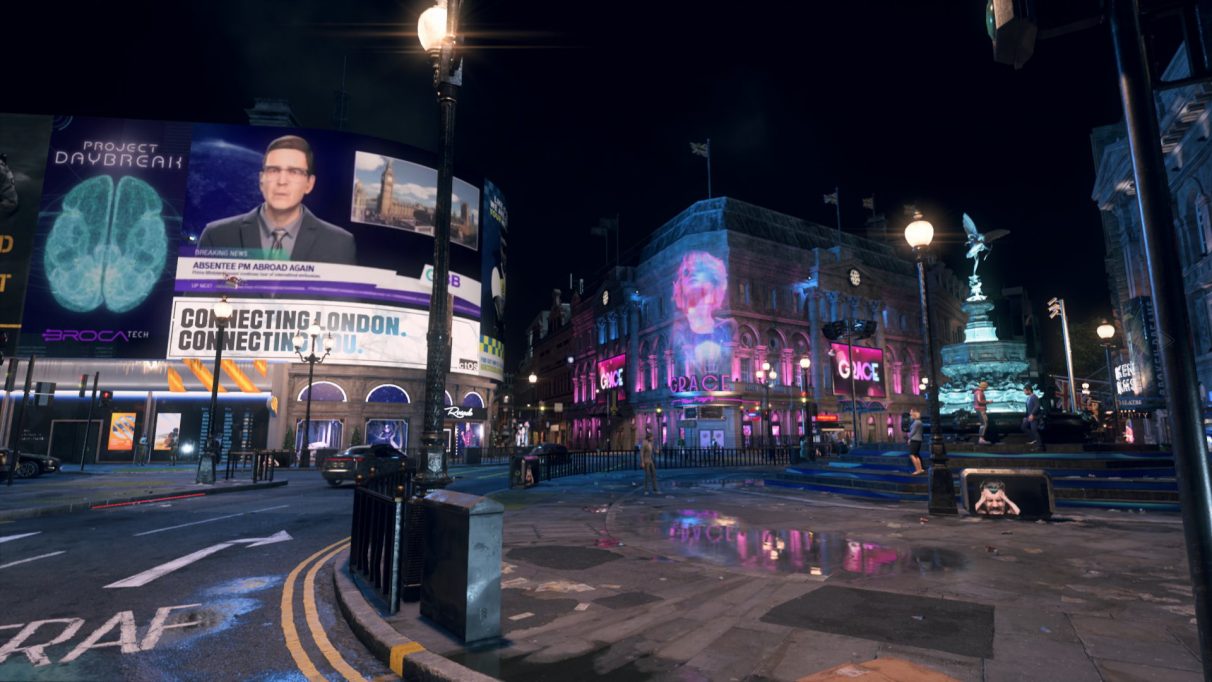
Piccadilly Circus does look proper good with its Ultra ray traced puddles.
Of course, you might say that an average of 55fps at 1080p is still perfectly playable without the aid of DLSS. However, when my results also saw lows of just 10fps in the busiest and most complicated section of the benchmark’s under siege Camden Market with Ultra ray tracing enabled, DLSS quickly became critical in preventing the game from stuttering to a grinding halt. When I ran the benchmark again with DLSS Performance mode switched on, for example, the minimum frame rate only dipped to 41fps, averaging a much more pleasant 66fps overall. Still a little juddery in places, all told, but nowhere near as bad as a game-breaking 10fps.
In fairness, you could probably manage playing Watch Dogs Legion on Very High at 1920x1080 with an RTX 3070 without needing to turn on DLSS, as here I saw an average of 65fps with Ultra ray tracing switched on along with lows of 41fps again. But let’s not forget that the RTX 3070 effectively offers the same performance as the RTX 2080 Ti, Nvidia’s previous RTX flagship card. If you’re looking to play Watch Dogs Legion with an RTX 2060, for example, DLSS is going to be absolutely mandatory at 1080p, even on lower quality settings.
However, whereas early implementations of DLSS left a lot to be desired in terms of overall image quality (coughFinal Fantasy XVcough), Watch Dogs Legion’s DLSS 2.0 implementation is actually pretty damn good. Like Death Stranding, I was hard pushed to tell the difference between its three different DLSS modes when I switched them on, and if you can spot any discrepancies between the images below, then your eyes are much keener than mine.
DLSS off.DLSS Performance.DLSS Quality.DLSS Balanced.At higher resolutions such as 2560x1440 and 4K, DLSS becomes even more important. At 1440p, for example, that previous average of just 37fps on Ultra with Ultra ray tracing enabled suddenly becomes a much more playable 64fps average with the DLSS Performance setting switched on, bumping up the minimum frame rate from a stuttering 23fps to a much less problematic 36fps. Indeed, even its result of an average of 71fps without ray tracing switched on still dipped to lows of 40fps in my benchmark results, showing just how hard the game’s DLSS tech is working to make up that performance shortfall.
DLSS off.DLSS Performance.DLSS Quality.DLSS Balanced.
DLSS off.
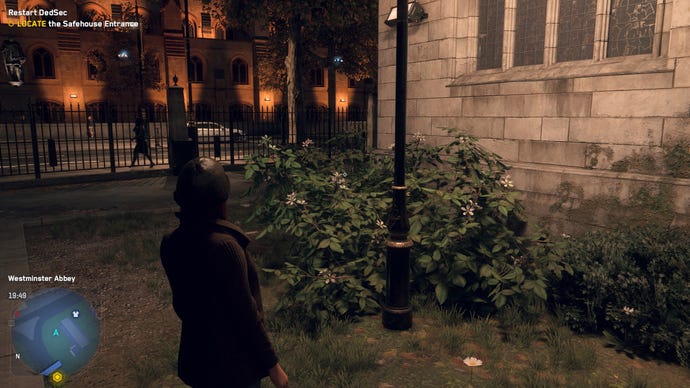
DLSS Performance.
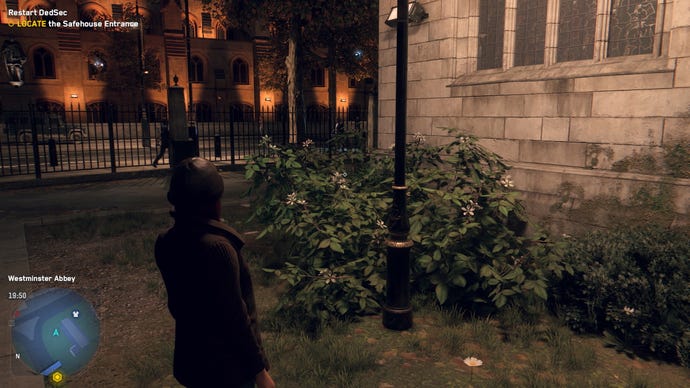
DLSS Quality.
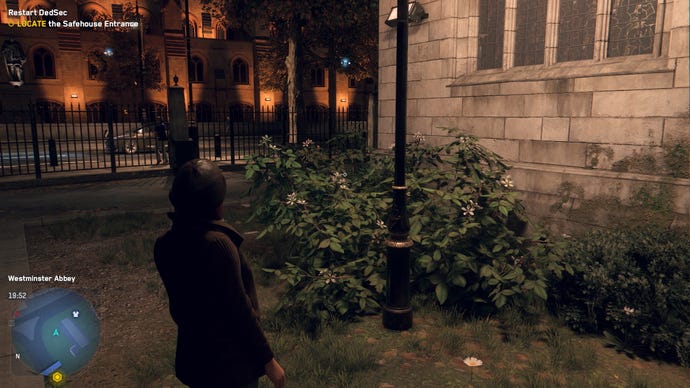
DLSS Balanced.
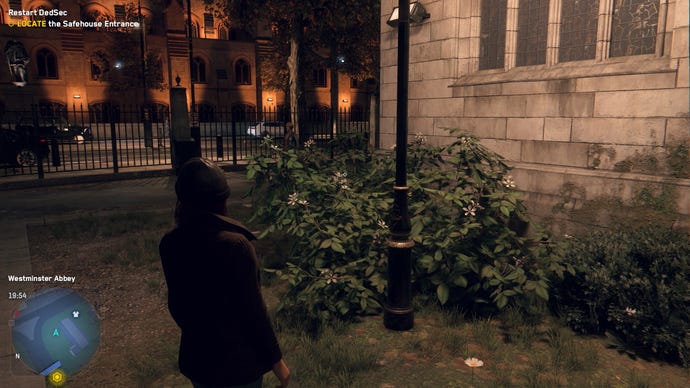
That might not sound like much, but take a closer look at the minimum and maximum frame rates for each result and the benefits of the game’s DLSS tech start to become a lot clearer. In all three cases, the maximum frame rate topped out at 90fps (base High), 87fps (RT Ultra) and 86fps (RT High) respectively, but the minimum frame rate rose from 27fps (base High) to 38fps (RT Ultra) to a positively whopping 45fps (RT High). That’s a huge increase at the lower end of the frame rate scale, resulting in a much more stable and enjoyable gaming experience overall.
Seeing individual autumn leaves reflected in the streets at night is very atmospheric.

As I said earlier, though, Watch Dogs Legion’s DLSS 2.0 tech won’t suddenly turn your RTX 3070 into a flawless 60fps machine on max settings at 4K like it does in Death Stranding - and that’s because of Watch Dogs Legion’s considerably higher VRAM (or graphics memory) requirements. 4K Ultra settings in Legion, for example, requires 8.2GB of VRAM, which exceeds the 8GB of memory you’ll find on the RTX 3070. What’s more, bumping up the ray tracing to Ultra brings that figure closer to 9GB.
Even at 1920x1080, Watch Dogs Legion’s default Ultra settings still requires 7.4GB of VRAM.
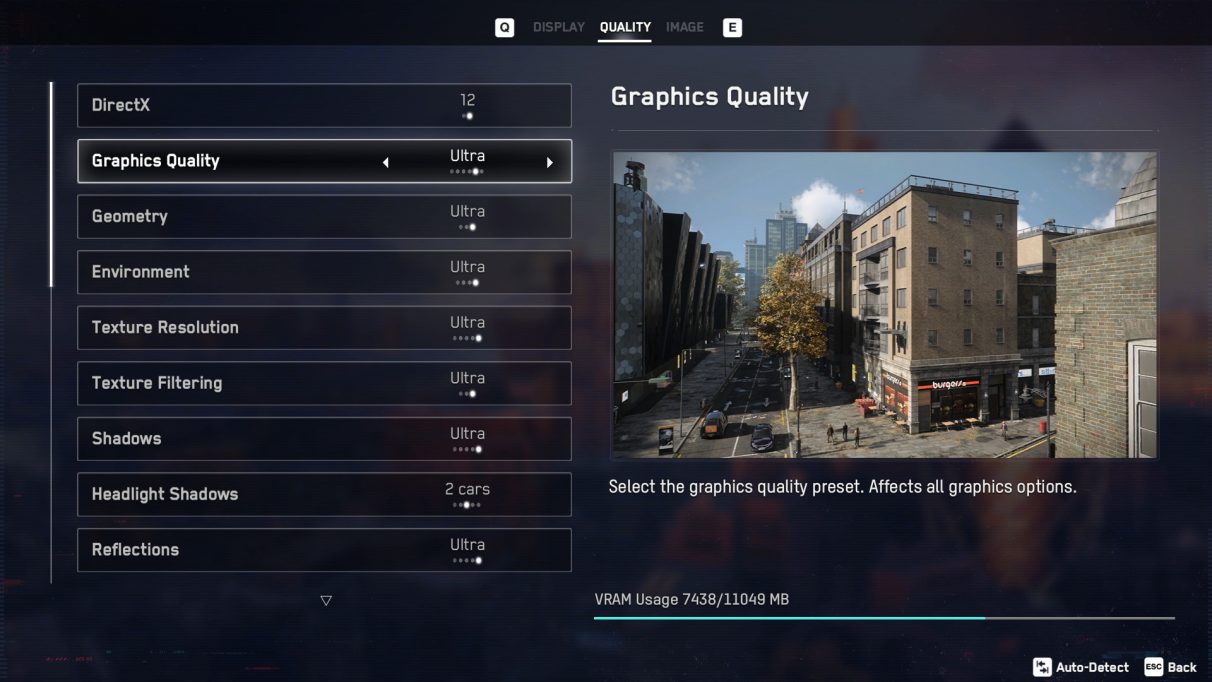
In truth, Ultra settings at 1440p also goes over the RTX 3070’s 8GB VRAM limit, and even Ultra settings at 1080p only just scrapes in with its 7.4GB VRAM requirement. As a result, RTX cards with only 6GB of VRAM such as the RTX 2060 will find it pretty difficult to run those higher quality settings at lower resolutions in the first place, let alone start contemplating throwing in ray tracing and DLSS into the mix. As a result, you may need to temper your expectations slightly going into Watch Dogs Legion, especially if you’ve only got an entry-level ray tracing card.
Still, with DLSS bring pretty much mandatory even for Nvidia’s new RTX 30-series, I’ll be interested to see what AMD’s upcomingBig NaviGPUs are able to make of it as well when they come out on November 18th. AMD have yet to announce a proper DLSS competitor technology for their RX 6800, RX 6800 XT and RX 6900 XT graphics cards, and I’d be very surprised if their default ray tracing tech could produce similar kinds of frame rates to Nvidia’s DLSS results without some clever upscaling magic going on in the background. With just over two weeks to go until their release, however, we shouldn’t have to wait long before we find out.
