HomeFeaturesWarhammer 40,000: Rogue Trader
Warhammer 40,000: Rogue Trader is Warhammer Mass Effect, and you can own planetsPlus, visit Commorragh for the first time in a game
Plus, visit Commorragh for the first time in a game
Image credit:Owlcat
Image credit:Owlcat
In the grim darkness of the far future, the galaxy is your oyster. Or at least it will be, once you’ve played 100 hours ofWarhammer 40,000: Rogue Trader, anRPGfromPathfinderdeveloper Owlcat in which you can buy planets, configure your genocidal Dark Eldar friend to strike ten times a turn, and gaze on ruefully as a demon explodes out of your Psyker’s head.
An immediate and shameful disclaimer: I can’t match Nic Reuben’s deep knowledge of the 40K tabletop universe, which saw himruminating upon the mysteries of the Koronus Expanse back in 2022, while holding Owlcat’s feet to the fire over the absence of space dwarves. The nearest I got to playing 40K as a lad was its BattlefleetGothicspin-off (which none of my friends were interested in, so when I say “playing”, I mean that I sat in a room staring glumly at some unpainted Lunar-class Cruisers while other kids went out and climbed trees). The framing I’m working with instead, based on an hour of hands-off Rogue Trader gameplay, is that it’s sort of WarhammerMass Effect, but with XCOM-style turn- and grid-based combat, and while there are opportunities to be a compassionate hero, you fundamentally only have the option of playing Renegade. Let’s dig in!
Top 13 Best RPGs to Play on PCWatch on YouTube
Top 13 Best RPGs to Play on PC

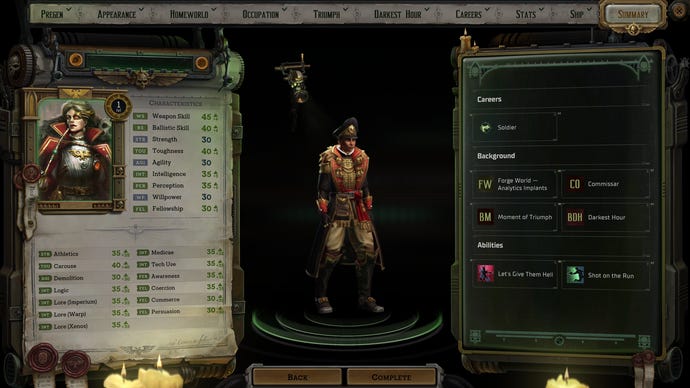
Your goal in the game as a custom-created Rogue Trader is to restore the trading empire of your predecessor Teodora, who has met a mysterious fate. Character creation sees you picking through a pleasing abundance of stats, including Carouse and Commerce and three flavours of Lore, while also choosing a Triumph and Darkest Hour to form your backstory. These latter choices have both minor mechanical impacts and larger narrative consequences. “Other characters might know about your greatest triumph or your greatest failure and deal with you accordingly,” said Mishulin.
Image credit:Owlcat
Pasqal is the group’s machine-worshipping tech-priest. He’s a versatile fighter, capable of melee and ranged damage, and something of a strategist. In the demo, Mishulin had him placing melee, defence or ranged buffs on map squares, the catch being that once he’s buffed three areas, he can only relocate them one at a time - a fun touch of in-game map-editing. Jae, meanwhile, is a “cold trader” - that is, a smuggler with whom you might develop a mutually beneficial arrangement, who can be upgraded to manage unit initiative and dollop out extra moves to party members.
Image credit:Owlcat
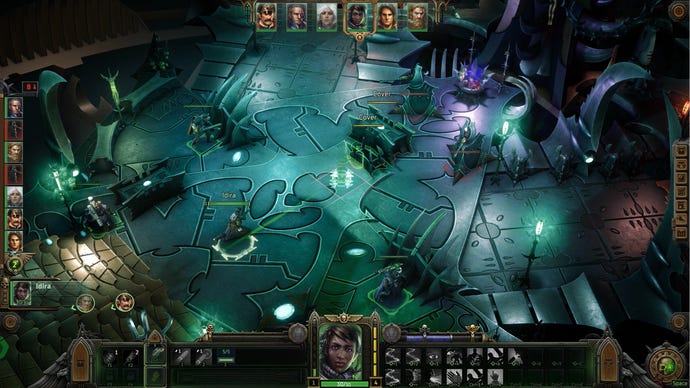
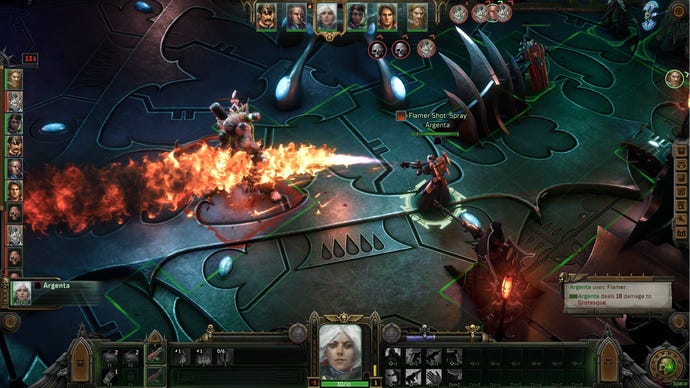
And then there’s Marazhai, a blade-dancing Dark Eldar. The Dark Eldar are among the least friendly of Warhammer 40K’s seldom-friendly races. They like to torture people from ‘lesser species’ and feed on the resulting psychic energy. “They don’t work with humans,” Mishulin commented. “They consider humans animals. But in this particular case, it was either Marazhai dying or joining the retinue.” You’ll have a hard time persuading him to get chummy with xenophobic human party members, especially Space Marines and Sisters of Battle. But it’s worth the trouble, because Marazhai is an absolute lawnmower in the fray. As an assassin, he can attack from oblique angles to inflict bonus damage, jump through enemies to reposition while slashing them, and score additional movement points whenever he lands a critical.
While battles do seem formulaic in places - there’s that familiar XCOM mop-up period, with the last survivor dug in somewhere denying you a clean finale - the game’s Momentum gauge is a nice pace changer. You gain Momentum when you take turns and deal damage, and lose it when you receive damage or get knocked out. Fill the bar, and you can perform Heroic Acts, such as giving one character a whole additional turn. Empty it out, and you’ll gain access to Desperate Measures that allow you turn the tide, though I wasn’t told exactly how these differ from Heroic Acts.
Image credit:Owlcat
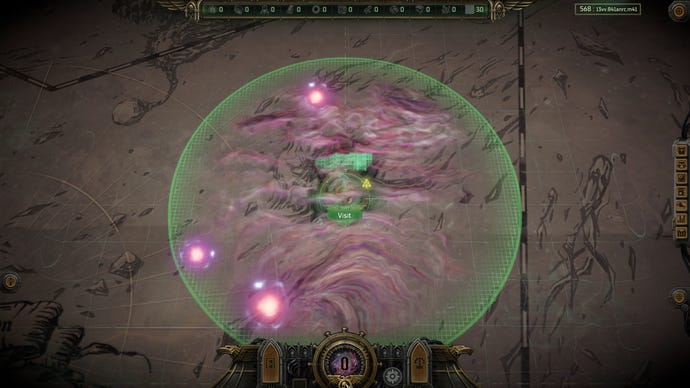
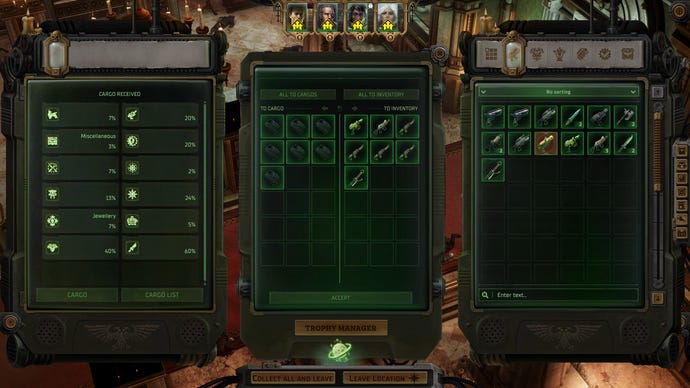
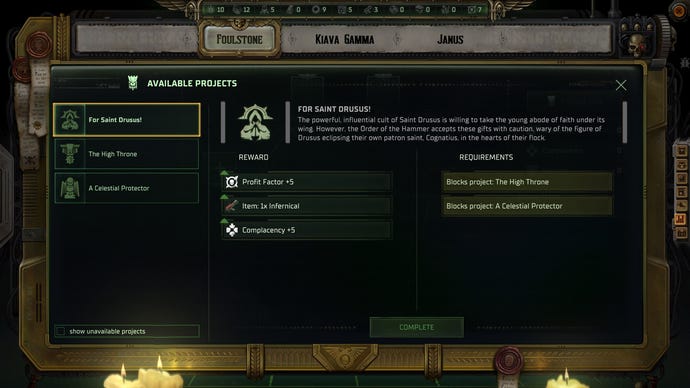
I also didn’t get to see much of the campaign beyond battle, but it sounds like there’s plenty to do and explore. Grander locations include the Dark Eldar city Commorragh, which has never been glimpsed in a video game before. “We are working together with Games Workshop to make it as look as it should, to convey the Drukhari race, to show what they are into, and how it functions altogether,” Mishulin said. “There’s pretty tight cooperation between us.” There are five main factions to befriend or alienate - the Drusians, the Explorators, the Kasballica Mission, the Fellowship of the Void and the Imperial Navy. As for planetary colonies, you can both found your own and reforge connections with Teodora’s lost holdings, enriching yourself and accessing regional storylines, which may include dealing with problems your predecessor left unaddressed.
Image credit:Owlcat
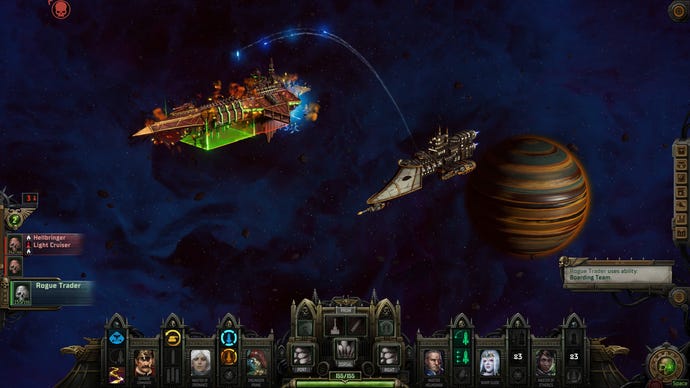
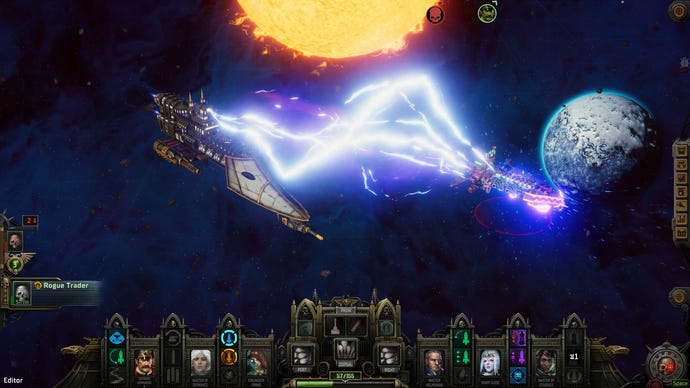
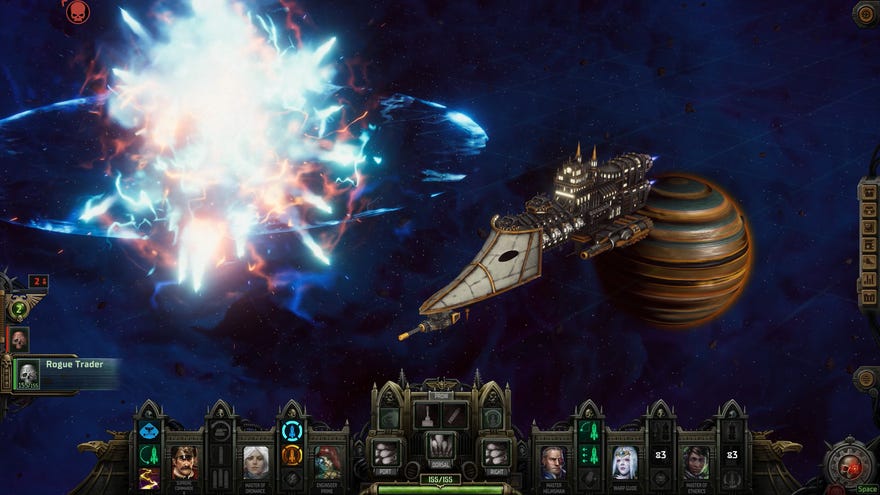
Sadly for this lapsed Battlefleet Gothic player, Owlcat didn’t share much during our demo about the game’s spaceship - excuse me,voidship combat, but the broad strokes seem promising. “It’s also turn-based but the mechanics are completely different,” Mishulin said. “It’s closer to naval combat, moving into position, attacking enemies with broadsides. And also facing - there is a powerful enemy over here, but you have to point the nose of the ship in the direction of another enemy.” Sounds a lot like Tindalos' Armada adaptations to me, which I’ve always wished were turn-based (I played them pretty much exclusively in tactical slow mo).
I’m not sure I can face another hundred hour RPG right now, but if I were going to crack open another character creator, Rogue Trader (which is currently without a release date) would appear high up the list. I might have missed out on 40K as a kid, but I’ve learned a thing or two about Games Workshop’s horrendous universe in the course of playing umpteen video game adaptations, and Owlcat’s latest seems to tick all the boxes. It’s vast, bristling with things to customise, and powerfully grim. The major question ahead of review is whether its bigger narrative choices and consequences will add up into a compelling saga on par with thebest RPGs, or just another dragged-out spell in Warhammer’s overflowing trenches.
