HomeFeatures
Videogame subtitles could learn a lot from comic book letteringThe shape of sounds.
The shape of sounds.
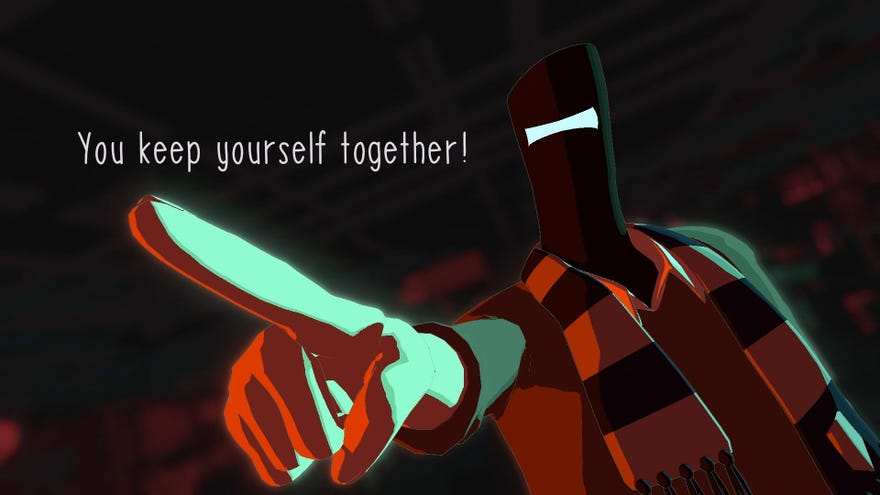
This notion is, of course, wrong. You never notice when a letterer has done a good job, because their goal is to remain unseen. They work hard so your eyes can fly effortlessly over the page, always knowing who said what and where to look next. Explore a lettering site likeBlambotand shudder in fear at the number of rules needed to make a single balloon look good, from the distance between text and balloons borders to the shape of the balloons themselves. Lettering is a difficult job that mixes composition, typography and design, but we only notice it when it’s done badly. It’s truly a pity we don’t take it more seriously, because videogames would benefit from a deeper understanding of this invisible art.

We’ve all stumbled upon games where the text was… off. Games where the font was too small, too ornate, or just felt disharmonious in a way that was difficult to place. In the worst cases, bad text can make a game almost impossible to play. And big titles aren’t immune from this:The Outer Worldswasrecently patchedto fix the game’s minuscule font size.Death Strandingalso suffered from similar issues — though it should be all fixed up for its arrival on PC.

There is no direct equivalent to comic letterers in games development. Instead, you have UI artists, UX artists, and a myriad of technical questions to answer. Is this interface readable in all the screen resolutions that our game supports? Does our text engine support text from right to left, for Arabic localisation? Will this menu look terrible once it’s translated into a language with longer words, like German? Developers spend so much time making sure text is readable at all, they then can’t make sure it looksgood. Every solution more complex than a message window at the bottom of the screen requires so much additional work.

Watch on YouTube
Watch on YouTube

Necrobaristais a visual novel about a supernatural cafe in Melbourne where the dead can have one last cup of coffee before moving on. It looks like an anime and it reads like a manga, with every click bringing you a new animated panel to read. It’s difficult to describe, because there’s nothing quite else like it.
“I approached my script as if I was writing a play,” explains Damon Reece, friend in freelancing and Lead Writer of Necrobarista. “My script has a lot of stage directions in it. Then Kevin [Chen, the game’s director] draws the storyboard, breaking my script in shots. Each “shot” contains information about composition, camera work and dialogue lines, which gets hand-placed in every shot.” Once the storyboard is done, the team recreate the scenes in the game engine and iterate on them - posing characters and faces, tweaking animations and composition. The end result is absurdly stylish, half anime and half futurist poetry.
Necrobarista’s approach has more in common with the way animated films are made than with traditional visual novels. It’s highly unusual for a video game team to put so much care into the way text and images blend into each other. All too often, narrative designers work without even knowing how the words they have written will appear in-game, and I know this because I work as a narrative designer when I’m not busy writing here. My life is made of spreadsheets, and despair.
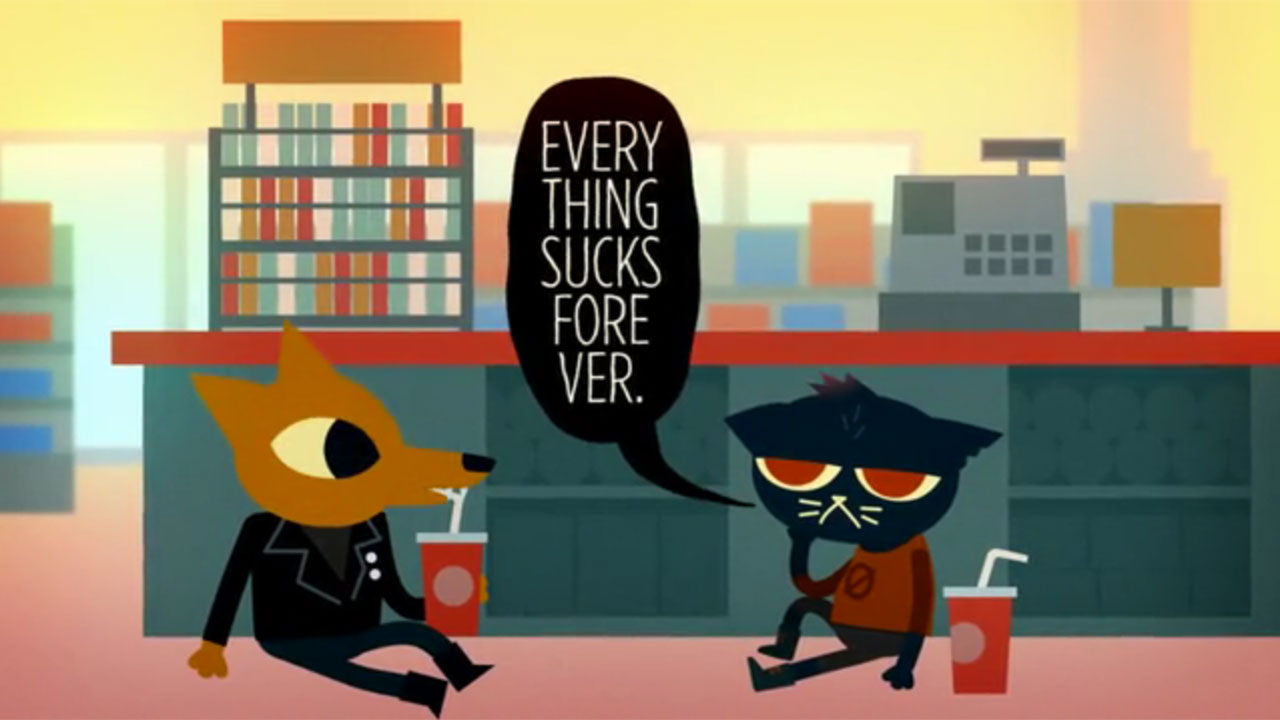
But not all lessons learned from comics should be applied to videogames. Different mediums have different needs, and our brain interprets them in different ways. Consider the work of Todd Klein, Sandman’s main letterer.
Sandman is a comic about immensely powerful personifications of metaphysical concepts, and Klein created different balloon styles to capture each character’s voice — like the wobbly, colourful balloons associated with Delirium. When, in later Sandman comics, other characters' fonts were digitised, Klein stillhand lettered each of Delirium’s balloonsto make them look properly messy.
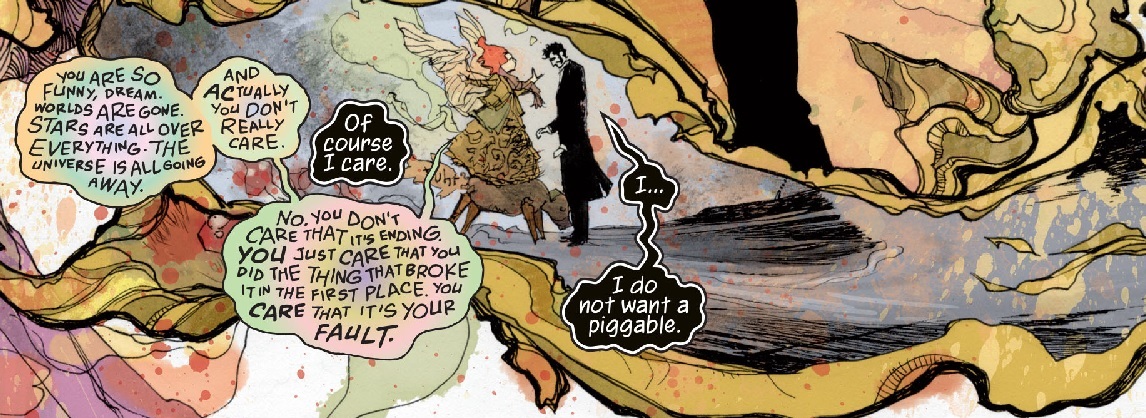
I can only think of a handful of occasions where UI text elements are treated with the same level of importance as everything else in the scenes of a game. The moment when a character’s hair blows over a dialogue box inTangle Tower. The way the message box ofMay I Take Your Order?cracks the moment anEldritchbeing appears. The way Badeline’s hair inCelestedangles out of the message window. Thedynamic, shattering text in Katana Zero.
Watch on YouTube
Watch on YouTube
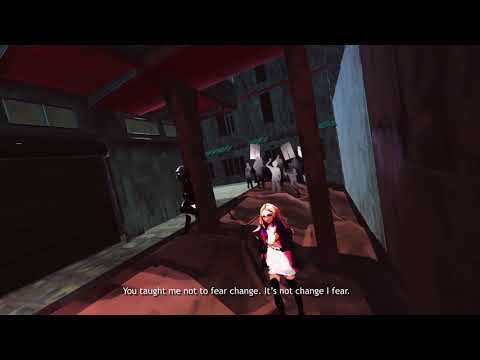
“When I go through to the script, I start writing out stage direction of what I’d want the camera to show,” explains Tanya Kan, executive producer, director and main writer. “During this entire time I’m gathering mood board pieces for art. What kind of buildings and architectural style I want, what kind of story I think their walls are whispering. But it’s only after the first good draft of the script that I typically go in and doodle thumbnails.”
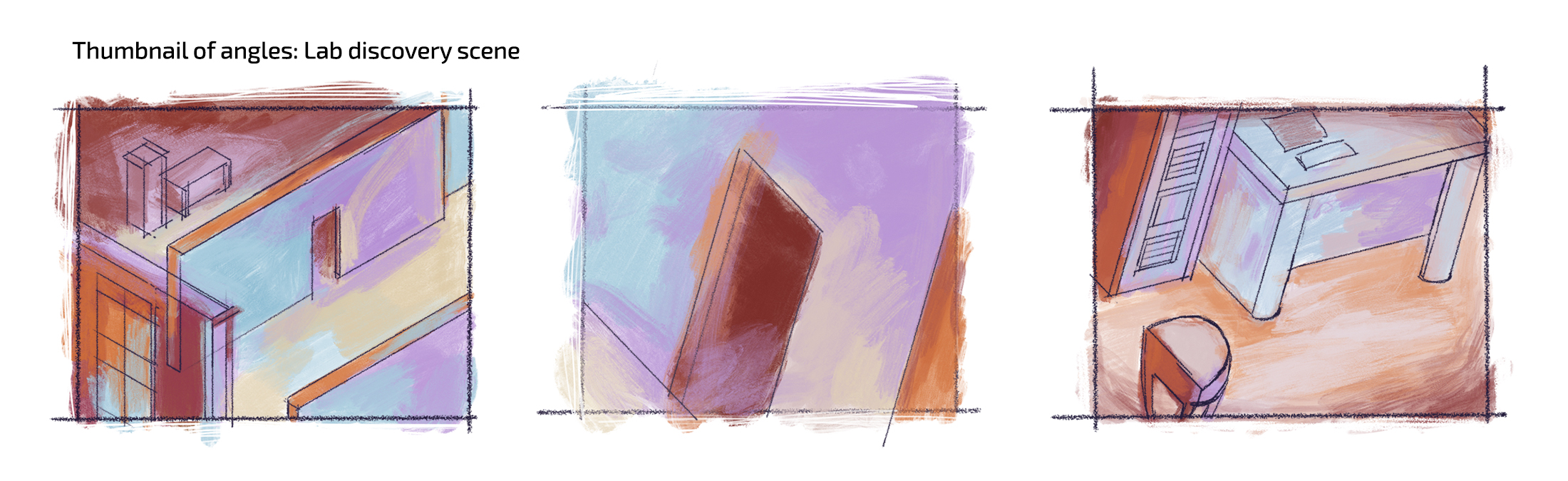
Kan says that level design only happens after the first solid draft because, at that stage, she’s already started designing in 3D, and planned out suitable placement for each chunk of diegetic text. “Usually at this stage I go back and forth between the 3D models and the diegetic text, having a good idea of what is surrounding a piece of text at all times, because eventually the camera will pan,” she explains. “And that transition itself tells a story. What buildings I put next to each other, what walls and objects I put next to each other, is important.”

This is a useful metaphor for how sometimes you need to make an abomination of your code just to make sure a bunch of text on a screen looks nice.
You can wishlistSolace StateandNecrobaristaon Steam. Their planned release date is yet to be announced.
Disclaimer: I know the Vivid Foundry devs because we met at the Toronto Comic Arts Festival, where they guarded my laptop while I was busy shopping. Thank you, Vivid Foundry, for allowing me to blow my paycheck over sexy vampire comics.
