HomeFeaturesTwelve Minutes
Twelve Minutes preview: a time loop thriller about finding empathy - even with your killerEternity eating the same thing for dinner is the real horror
Eternity eating the same thing for dinner is the real horror
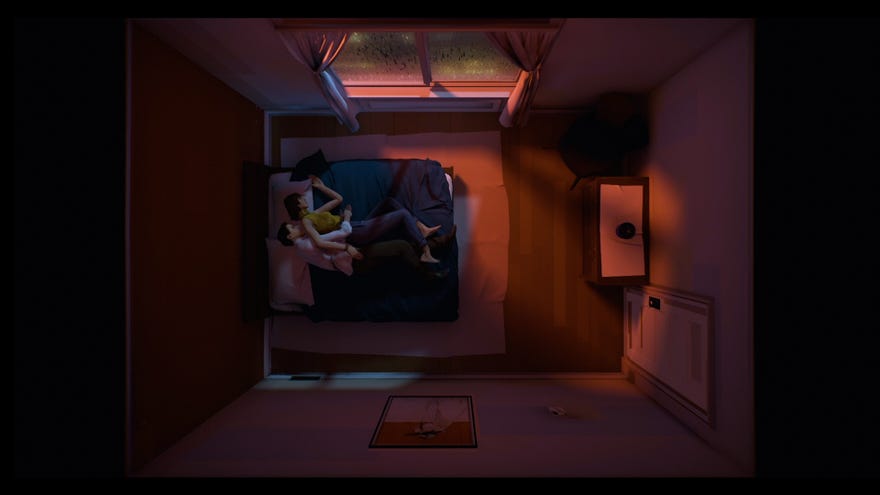
Twelve Minutes- which you may remember as one of those games that came to your attentionthe best part of a decade ago, and whenever you see it pop up again with a new trailer you’re like “Oh yeah, that time-loop puzzle game, with the husband and wife and policeman!” - is still not finished. At this point, though, Twelve Minutes is the closest tonotnot being finished it’s ever been. Director Luis Antonio tells me it’s going to be out “really soon”, and that they’re just at QA and bug fixing right now.
TWELVE MINUTES | Developer Gameplay WalkthroughWatch on YouTube
TWELVE MINUTES | Developer Gameplay Walkthrough
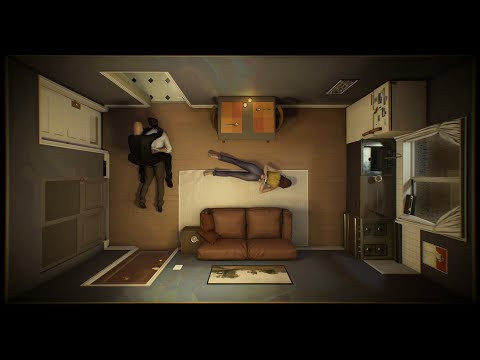
The twist, of course, is that every time the evening ends (usually with your death) it immediately starts again from the beginning because of a Groundhog Day-style time loop situation. And while Detective Dafoe is obviously your most immediate concern, you have much longer term goals to think about, too, especially as you accumulate knowledge over each repeat of the loop.
For example, what’s up with the ol' ball and chain being accused of murder anyway? What actually happened to her dad? And also why do you keep looping through time over and over again? That last one becomes pretty important, I imagine. You can have frantic and confusing conversations with your wife, interrogating her about her past or trying to convince her that you’re in a time loop with your future-knowledge. But it’s mostly about empathy, and having it for all of the main characters, says Antonio.
He tells me that the game had two main stages of development. The first was figuring out the mechanical bits: what was interesting about the time loop, and how to build puzzles around it. On my second loop, for example, I immediately stashed the kitchen knife from the sideboard, because you can use it to cut through your zip-ties. Locking the door also gives you a few seconds of extra time, and you can find a phone to call for help.
“The second part was - once I knew there would be people in it, and that they would have to speak to each other and that would have to have a narrative - figuring out that narrative,” says Antonio. He goes on to tell me how he wanted to create a situation where you have to connect with all the characters and end up understanding their needs without judging them. “There’s no guilt, there’s no, ‘Why’re you doing this?!’, so everyone speaks based on their needs and their feelings, and no one is good or bad or wrong or right.”
Probably shouldn’t have done that though, mate.
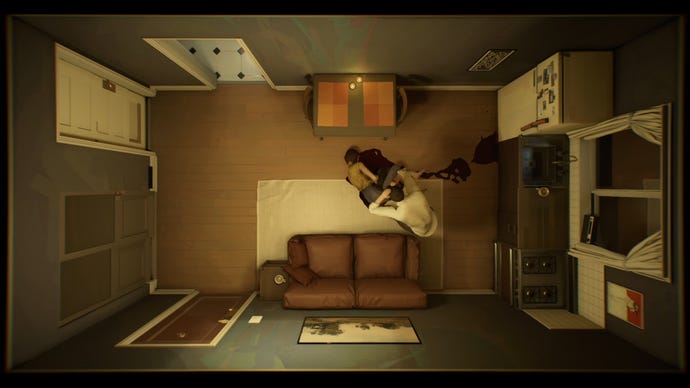
This is, as you can imagine, an interesting idea when applied to a dude who breaks down your door, zip-ties your hands behind your back, and chokes you to death. But the lack of judgement applies to you as a player as well. In the same second loop of my playthrough, for instance, I also tried to stab the intruder, which I felt was entirely justified given how my first loop went down. From the wife’s perspective, though, it just looks like her husband opened the door to a policeman and immediately tried to kill him. Antonio says that “you can do pretty dark things in the game,” but the game itself doesn’t assign morality to your actions. “None of the characters is ever imposing, ‘Oh, I shouldn’t do this,’ or, ‘I should do this.'”
At the same time, it’s hard not to feel uncomfortable, almost transgressive, as you watch intimate moments like a prolonged kiss from the fixed, top-down camera perspective. This choice started as a practical one - it’s both easier to do, and easier for people who don’t play games to navigate. But as development went on, says Antonio, “I started to ask myself, ‘Who are you?’, and you’re almost like a voyeur. Maybe the subconscious of the main character.”
I found it interesting, too, that Twelve Minutes seems to lean into the horror of an endless time loop. Though yer Groundhog Days and the like do eventually deal with the ennui, the depression, or indeed the soul-screaming terror that would come from being stuck in one, they’re also almost all comedies that kinda keep it light. In Twelve Minutes, the hallway carpet in your apartment block is the same as the hotel in The Shining, which definitely feels like it’s holding up a sign reading, “Creeping dread and fear ahead”.
Antonio describes, in a good-natured way, a generation of modern games like The Last Of Us orGrand Theft Autocasting players as, essentially, mass murderers. “You have narratives where you care about someone, but you’re totally just:[machine gun noise, as if miming spraying-and-praying at a group of people]. I wanted to bring this down a notch.”
This guy definitely isn’tdafriend, amiright?
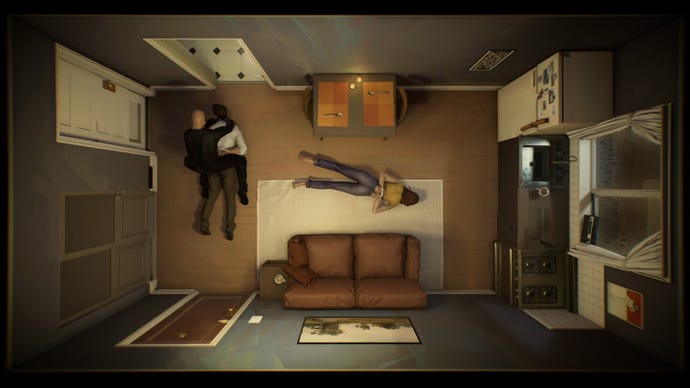
“Someone breaking into your house is huge, right?” Antonio says. “You’re not a superhero, you’re just a totally regular person on a normal day when this happens. I think going towards that direction, where everything is more raw, helps create tension.”
I feel oddly disconnected from this idea of empathy, after my own brief dalliance with Twelve Minutes. I can only imagine myself gettinglessempathetic for the characters with each loop that passes, and indeed that increasing detachment is really from where the horror in time loops is derived. But I’m up for the challenge! If all else fails, I’m eager to crack Twelve Minutes open to solve all the puzzles that leak out. Like, for example, the air vent in the bedroom that I can clearly open if I find the right doohickey… Here’s hoping we won’t have to wait too much longer before we can find out.
