HomeNewsRoots Of Yggdrasil
This Viking citybuilder has a touch of Okami about itRoots Of Yggdrasil nails its inkwash visuals and sound
Roots Of Yggdrasil nails its inkwash visuals and sound
Image credit:Rock Paper Shotgun/ManaVoid Entertainment/Indie Asylum
Image credit:Rock Paper Shotgun/ManaVoid Entertainment/Indie Asylum
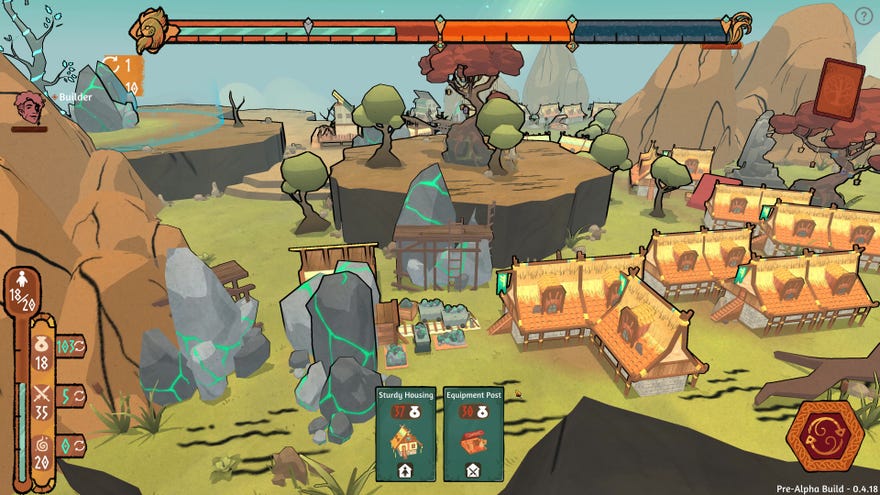
Steam Next Fest may be over for another few months, but luckily some game demos are still alive and kicking. This is excellent news, as it means you’ve still got time to giveRoots Of Yggdrasila go, a chill, Viking citybuilder that has such strongOkamivibes with its inky, cell-shaded visuals, strong black outlines, and flute and harp-driven soundtrack that I kept having to remind myself I wasn’t just playing a spin-off of Clover’s seminal Zelda-like. I swear, if it weren’t for the smattering of autumnal trees in the tutorial level, its grassy plains, tall mountains and bright blue river would have been a dead ringer forOkami’s Kamiki Village.
Roots of Yggdrasil - Animated Reveal TrailerWatch on YouTube
Roots of Yggdrasil - Animated Reveal Trailer

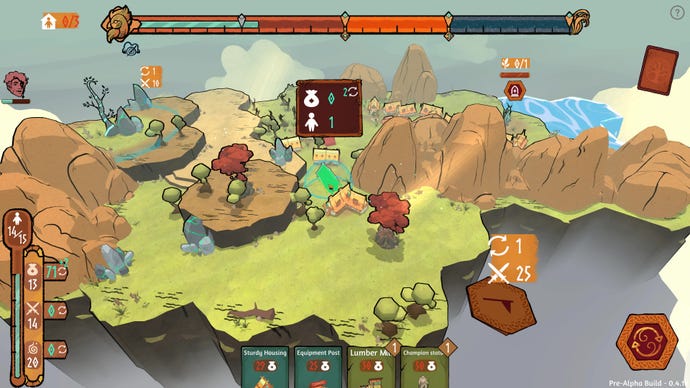
Roots Of Yggdrasil is, of course, a very different kind of game to Okami. As well as being a turn-based citybuilder, it’s also a roguelike, tasking you with building lots of little settlements on floating hexagonal islands to power up the titular roots of its mythical world tree so you can find a way back home. Building houses increases your population, and kitting out clusters of them with equipment posts raises your village’s might level, which you’ll need to unlock new tile masses to get closer to that biome’s Yggdrasil root.
You can place houses anywhere you like, scratching that Dorfromantik itch of creating cute little dioramas while also having set win conditions to help structure your run.
To get more income, you’ll need to end your turn, and it’s here where Roots Of Yggdrasil’s chill vibes start to become increasingly less easy-going as the game goes on. You see, you’ve only got a certain amount of time before the Ginnungagap appears - the primordial void, according to Norse mythology, represented here as an ominous dark purple cloud that starts to eat your map the longer you spend there. Since the Ginnungagap waits for no one, you’re told, each turn suddenly has its own countdown clock when it pitches up, putting the pressure on to activate your Yggdrasil portal and get the hell out of there. It adds a welcome sense of tension to the mix, and when it happened to me during one of my non-tutorial demo runs, it really made me get my skates on.
Uh oh, here comes the Ginnungagap!
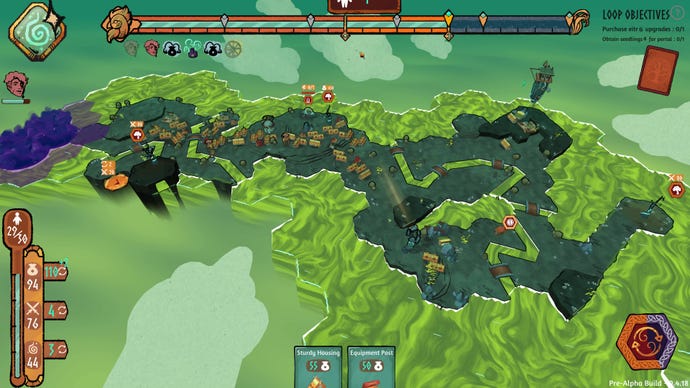
Thankfully, you’ve got all the time in the world to carefully rotate and place your settlementsbeforethe Ginnungagap appears, so you can luxuriate in Root Of Yggdrasil’s gorgeous visuals and ponder how to best make use of the available space you’re given. You’re free to place houses down wherever you like, rotating their randomised shapes with your mouse wheel for the perfect fit or just plonking them down wherever for a more haphazard - I sayorganic- layout if you prefer. Specialised cards do have some building conditions - lumber yards must have at least one house in their catchment area, for example - and ech Yggdrasil roots has its own unlock conditions as well. In my demo where the Ginnungagap turned up, for instance, one required 80 Might while another needed 450 banked income, so managing your resources effectively during its time limit is essential to making it out alive.
And once your portal is activated, it’s time to pack up and head back to your home hub called The Holt (which also looks like it’s been plucked out of Okami - or at leastNoClip’s floating tourist renditions of Okami, anyway). Here you can spend the resources you’ve gathered to unlock new things like blueprints for different building types, as well as other bits and bobs to help with future runs. It’s a compelling little loop, and I felt a pang of ‘Wait I want more!’ when the demo ended.
