HomeReviewsThe Wreck
The Wreck review: a raw road trip down memory laneCrash and learn
Crash and learn
Image credit:Rock Paper Shotgun/The Pixel Hunt
Image credit:Rock Paper Shotgun/The Pixel Hunt
Then again, calling The Wreck a time loop game isn’t entirely accurate. Really, it’s a 3Dvisual novelwith a clear start, middle and end, but it’s one that borrows the form and structure of looping memories to elegantly excavate Junon’s personal history as she tries to get a better understanding of her past and present. It’s more like a series of little time loops in miniature, and they’re all building up to Junon making a single, life-changing decision that will have far-reaching consequences for her future.
The Wreck - Release Date Trailer - All PlatformsWatch on YouTube
The Wreck - Release Date Trailer - All Platforms

Unsurprisingly, Junon’s not best pleased about this. She has a difficult relationship with her mum, or Marie as she prefers to call her, and she can’t figure out for the life of her why she’s been entrusted with such a responsibility. Not when her sister Diane has always been the one who’s been closest with her mum, or when her mum’s spent the better part of Junon’s adult life berating nearly every single decision she’s ever made, from her choice of career as a struggling screenwriter to her own style of parenting. It’s a dilemma Junon will spend the rest of the day trying to work out, and how she - an estranged daughter with heaps of her own emotional baggage to deal with, much of which is directed solely towards her mother - can possibly determine what’s right or what Marie would have wanted.
When Junon tries to run away from her problems, her car will crash and memory objects will flash before her eyes as they fly out of her bag. |Image credit:Rock Paper Shotgun/The Pixel Hunt
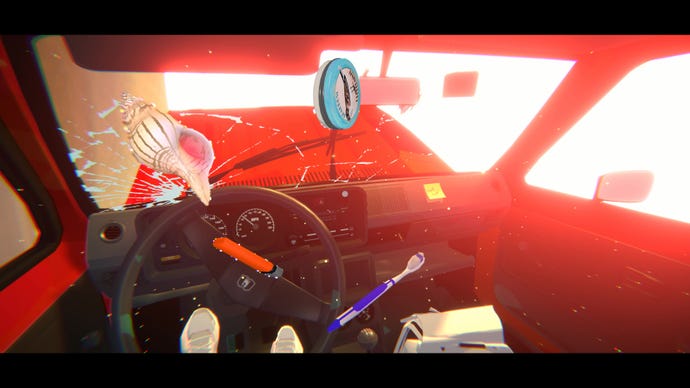
Some words you won’t be able to click on at all, with them disappearing just as quickly as you’ve glimpsed them. At these points, Junon will get flustered and angry, and she’ll flee the scene in anger, getting into her car and driving off, triggering the next phase of her time looping memory trawl. Out on the road, she’ll repeatedly swerve to avoid hitting a deer, crashing her car and sending the possessions in her bag flying in front of her face. As time slows to a crawl, each of these objects lets her explore a distinct memory from her past, and once she’s examined it in full, time resets back to where she was. Now, armed with renewed emotional fortitude, she’s able to confront the words that escaped her earlier and steer the conversation in a more fruitful, productive direction.
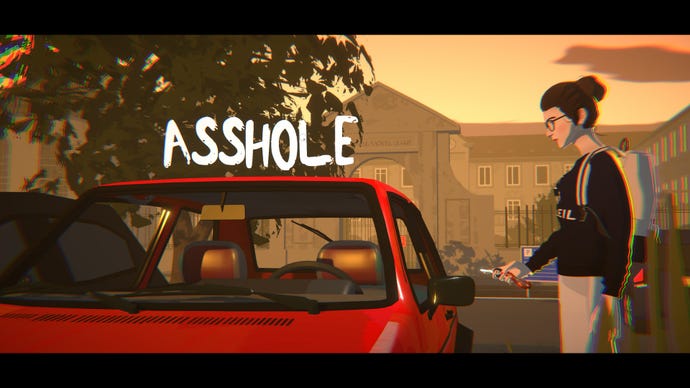
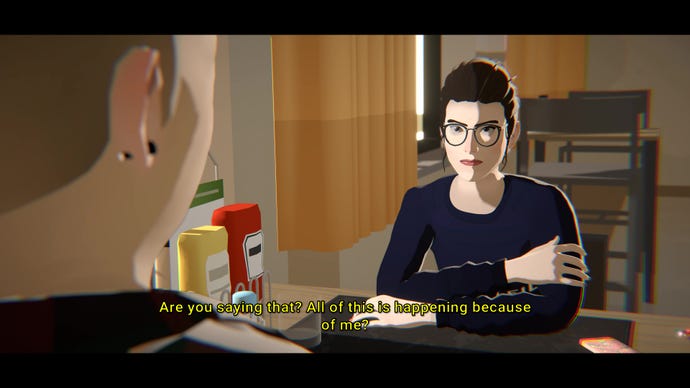
Large words in white like ASSHOLE (left) vocalise Junon’s inner thoughts, while regular dialogue in yellow (right) plays out automatically. |Image credit:Rock Paper Shotgun/The Pixel Hunt
The events of the game are actually being written as a screenplay on Junon’s laptop. Alas, you can’t ever go back and read the whole script, but the devs are working toadapt it into an actual novel.Image credit:Rock Paper Shotgun/The Pixel Hunt
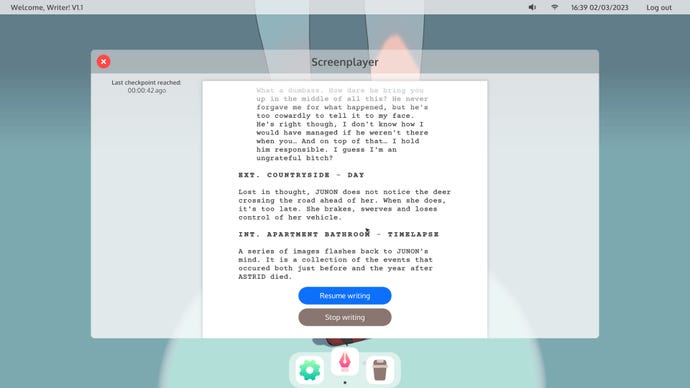
For me, it’s this tension of writing, creating and using your life’s experiences to inspire great art that really sits at the heart of The Wreck, and it’s explored in brilliant, forensic detail throughout the game’s five-hour run-time. It’s still a wonderfully sensitive examination of grief, family, toxic relationships and personal discovery, but it does so through the lens of grappling with the burden, fallout and exhilarating rush of the creative process, too - and the effect that can have on those around you. It’s there in Marie’s work as a world-famous artist (explored beautifully in a revolving art exhibition in one of Junon’s looping memories), and it’s there in the way Junon is writing this entire script, using all the conventions of film, TV and games to create an affecting, warts and all story as she faces up to her past mistakes.
Image credit:Rock Paper Shotgun/The Pixel Hunt
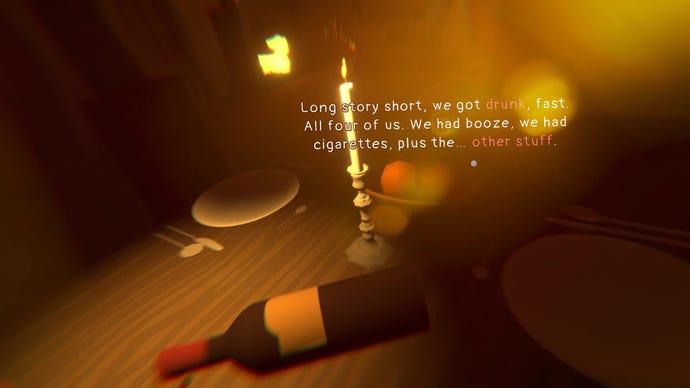
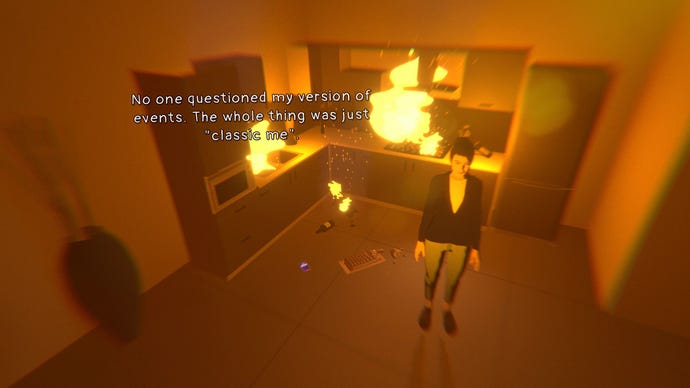
Each memory scene is a beautifully constructed vignette that you can rewind and fast forward to root out new details in Junon’s recollection of the event. The camera moves along a fixed track and employs quite a lot of motion blur, but there’s a setting to reduce its effect if you find it nauseous. |Image credit:Rock Paper Shotgun/The Pixel Hunt
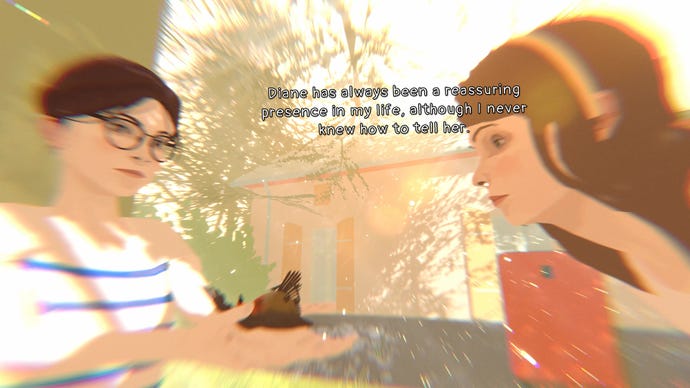
And those past mistakes are explored in classic, obsessive detail - the same moment going around and around in Junon’s head until she dissects every last detail of it. The way one object bleeds into the next instantly calls to mind last year’s excellentHindsight, but using the right and left mouse buttons to rewind and fast forward time also has a touch ofLife Is Strangeabout it, although here you’re hunting down objects that will trigger yet more words and thoughts to appear onscreen rather than actually altering the events being depicted. It doesn’t take much to find these words, but the arc and swell of each scene, its swooping camera angles and the artful construction of each memory all work together to deliver an achingly powerful gut punch every single time. I’d be loathe to spoil any particular details, but watch out for the nested doll’s house and snapshot bathroom scenes. They’re really something special.
