HomeFeaturesThe Heroic Legend Of Eagarlnia
The Rally Point: The Heroic Legend Of Eagarlnia is a sort of light grand strategy, somehowI like driving in Eagar
I like driving in Eagar
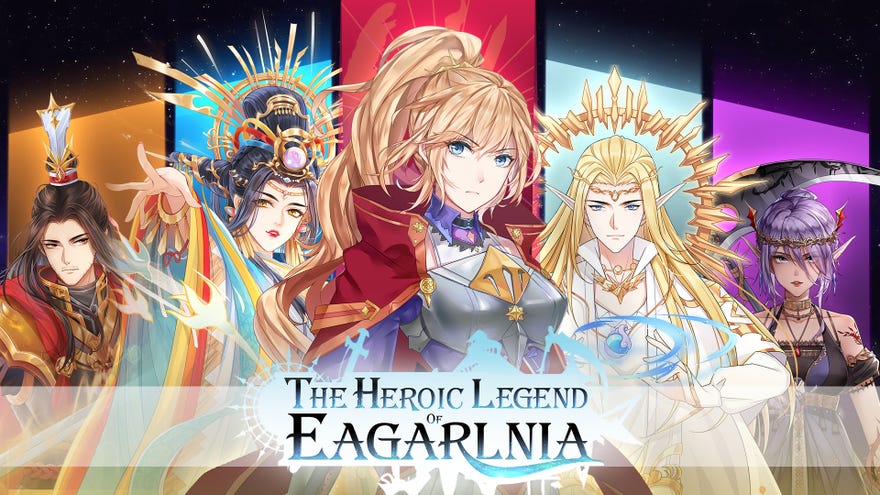
I still don’t know whether to describeThe Heroic Legend Of Eagarlniaas “complicated” or “simple”. Before starting a game, it gives an impression of being a complex grand strategy that’s something like a fantasy Total War with a D&D alignment system and a distinctly East Asian focus on characters and dialogue.
It’s far simpler than that. There was a period of disappointment, even, when it seemed like there wasn’t much to it at all. That’s partly because it’s easy to play it too passively, or get stuck in attritional stand offs, and partly because of the need for a bit too much repetition. But over time its subtler details become more apparent, and your choices start to feel more multifaceted.
And yet, it remains at heart the same throughout. On your first ten turns you’re doing the same actions as in your 200th, and its battles in particular are largely hands off. So maybe it’s complicated, but simple to actually play? Hmm.
The Heroic Legend of Eagarlnia | Full Release TrailerWatch on YouTube
The Heroic Legend of Eagarlnia | Full Release Trailer
Alright, let’s describe it. You pick a faction from a fantasy map that very vaguely resembles China (in the same way that 90% of Anglo fantasy maps are basically Western Europe, and probably the Middle East where the Dark Evil Evil Dark Monster Doomdark is). Each faction has a lot of text that you won’t read, half a dozen named characters, and a lot of confusing icons that you don’t need to worry about yet.
Every faction plays essentially the same way, with the only huge difference being dependent on what setup options you choose. The biggest ones are whether alignment restricts what factions a character can work for, and whether AI factions can poach your characters. With some caveats, I recommend enabling both of these, simply because they make things more interesting in the long run, but they could also be frustrating depending on what happens in your game.
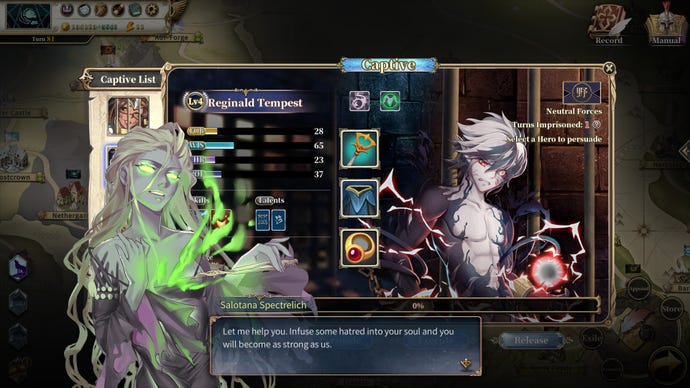
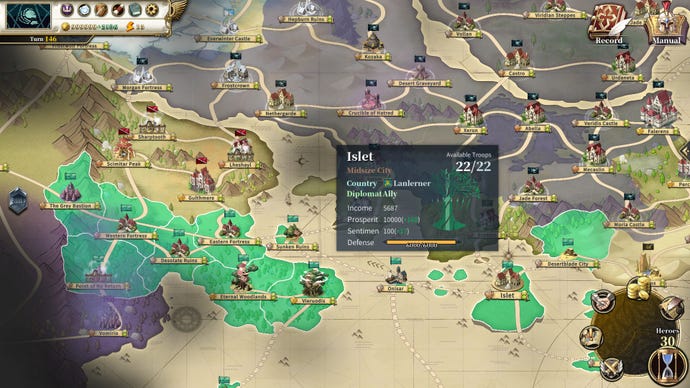
Interestingly, when you capture and turn faction leaders, you also get access to their story missions, and their occasional conversations when facing familiar characters in battle. Wipe out a faction and all its surviving characters are yours, to imprison, execute, or release as you see fit. It’s surprisingly dramatic having to decide then and there which specific people to behead. Entertaining, too, if you’re playing as an evil faction and have developed a dislike for particular people in battle. Imprisoned people can be recruited or, ah, “interrogated” first and then turned. Released ones might join you in gratitude… or turn up fighting for someone else. Gits.
An oddity of this system is that even confined to one city, a faction can be just as dangerous as when they have 6, because as long as their characters are alive they can send out an army.
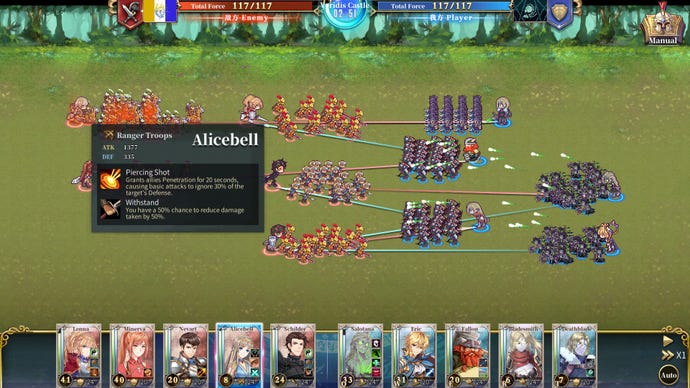
Armies. This is a weird one. You don’t recruit armies, as such. But you can make any character a general in the barracks, assigning a particular type of fighter to each. They’ll automatically replenish losses over time, and cost money to maintain, so you’re best off using them as much as possible, if only so your rivals are licking their wounds instead of eyeing up your cities. You don’t need to worry about logistics or movement at all - a bit likeImperialism, armies can just attack any neighbour instantly. The battles initially seem like hopeless chaos. In a sorta 2.5D screen, armies full of sprites rush at each other in a jumbled melee, and for a while it’ll seem either completely random or fixed against you. There is, however, a 7-way rock-paper-scissors system going on. Troops vary from faction to faction, but the basic types are all shared, so while your spearmen might be undead and better than someone else’s, who gets good archers instead, they’re still your best bet against cavalry. So you’ll match unit for unit, right? That’s a good baseline.
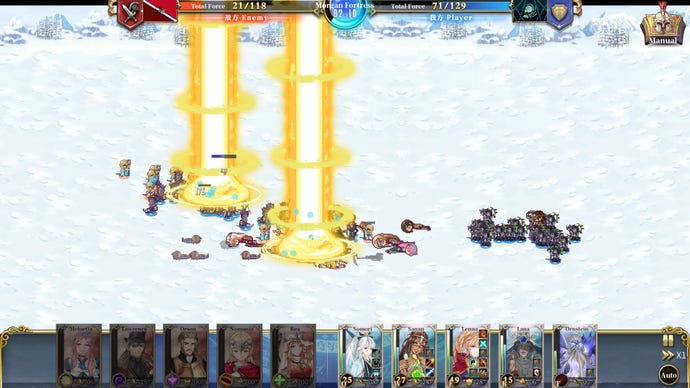
Battles remain messy, and any semblance of formation or organisation evaporates almost immediately. But once you get a handle on that higher level game of evaluating and countering your enemies, there’s a great tension to some of them, and some big upsets can happen when powers combine, or your neighbours happen to have a lot of characters who lead armies that counter yours, or there’s that one bastard whose magic turns every battle round at the death.

For all this though, each turn is simple even when you have lots of characters. Sure, there’s a sort of side quest system too, where you can send characters off for several turns to explore off map locations and usually come back with new items and resources (for upgrading troops, a slow but vital long-term project that, again, some characters and factions excel at). There are lots of little details but most turns are a case of sending the same characters to do what they’re good at every turn, over and over. Money guy do money, training guy train, sneaky girl sabotage defences again and again because town defences are crazy tough and sabotage often fails and the enemy just builds it up again. Ugh. It could really use a “repeat orders” function, or just some alternative to the repetition. The opening in particular can be dull as you don’t really have any momentum, but despite all this I found myself enjoying and plain liking Eagarlnia the longer I played it.
