HomeFeaturesShadows Of Forbidden Gods
The Rally Point: Shadows Of Forbidden Gods exhibits the power of evil chaos theoryPedagogue of Wrong Gods
Pedagogue of Wrong Gods
Gods. Those jerks. You know what the problem with god games is? They’ve got no subtlety. It’s all open worship and overt power, conquering and seizing so you’re only superficially different to a 4X or management game.
I suppose what I’m saying is that SOFG is more fun if you revel in scheming and causing chaos, and given the choice between effective and interesting, will always do the right thing.
What is Shadows of Forbidden GodsWatch on YouTube
What is Shadows of Forbidden Gods

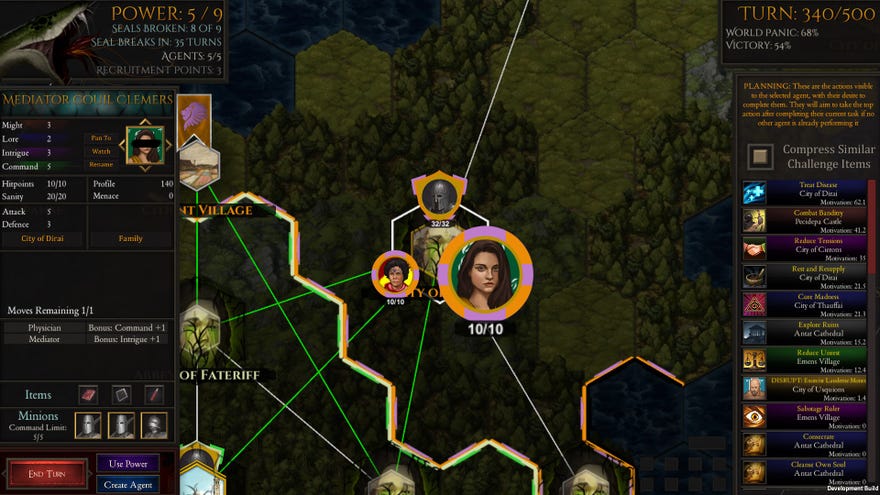
The premise is actually pretty novel. You’re an ancient, absolutely evil god preparing to return to the world, and can act almost exclusively through a handful of human agents. They must gain access to powerful people and corrupt or destroy them, removing any chance at resistance.
They can’t do this directly though. It’s not a case of approaching barons and warriors and throwing some dice to see if you can infect or mind control them. Instead, your agents will spread Shadow (corruption/evil, essentially) across the world, along with maddening curses and eldritch cults. People residing in sufficiently corrupted areas gradually lose their ability to fight or even notice anything’s amiss. But the real challenge isn’t corrupting the world. It’s corrupting the world without drawing the attention of the Chosen One.
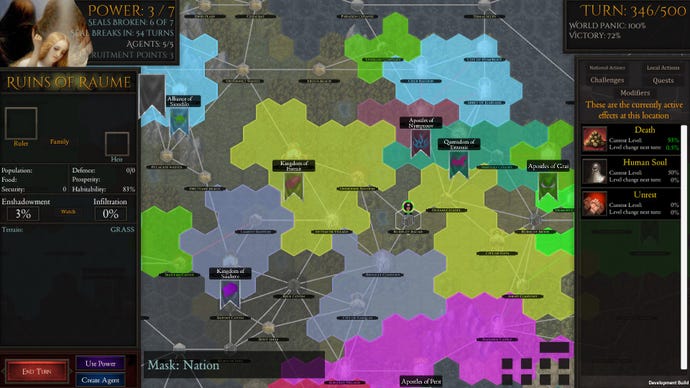
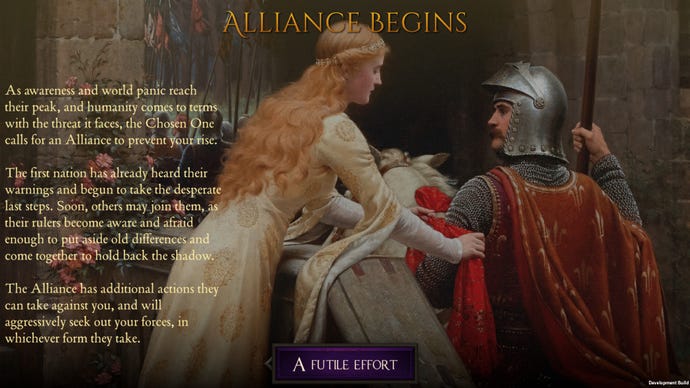
Every game has a Chosen One who is aware of your nature and imminent return. That character will travel the world just like your agents, but instead of spying and stealing and profaning altars, they’ll warn everyone, then build an alliance of kingdoms against you, and finally, if you really let it go down to the wire, fulfill the prophecy to find your evil party bus and play Ed Sheeran albums in it until you flee reality forever. The world is big enough, and influencing it slow enough, that you can’t challenge them directly at first, and any time your agents spend meddling is time they’re not opening more doors, so you’re both playing a long game.
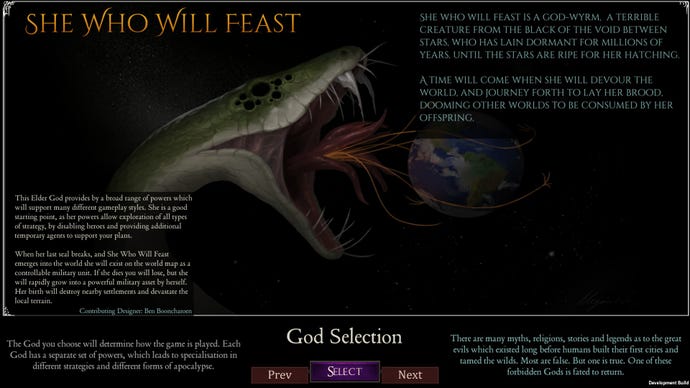
It wasn’t the smart play to attack him, but the result was too hilarious to regret, and it taught me that the real joy of Shadows Of Forbidden Gods is to play it likeSkyward Collapse; not cautiously and carefully measuring every move, but causing as much mayhem as possible and seeing if you can ride the tsunami home. You still have to time it well, and misdirect wherever possible, but your agents are mere pawns. Killing one off is nothing - these mortal fools are all doomed anyway - as long as they don’t take you down with them.
There’s even one god with the power to declare an agent a heretic, sacrificing their life in exchange for convincing multiple heroes that you’re no longer a threat, fully removing their awareness of you. You can essentially fake your own death just to frustrate your opponent. That same god, the Ophanim, is built on the delicious concept of building a false religion to capitalise on fear of the Shadowthat you’re also spreading. At any location you’ve infiltrated, the Ophanim can establish a religion that will grow more rapidly the more Shadow you expose the area to. If the followers' faith is high enough they lose all free will, and will blindly join your theocratic empire, waging crusades against whoever you like, even outright destroying cities to root out unbelievers.
It’s also a pleasantly chill time, despite the subject matter and the complexity. Much likeCrusader Kings, the world is too big for you to keep track of everything, much less control it, and your most powerful plays are mostly those that grow beyond you and sustain or even spread themselves. You only have a handful of agents (a mere one at first), and each turn involves only a few straightforward decisions. The music deserves a mention too, as its simple soft strums of some friendly stringed instruments were a counter-intuitive, but inspired choice. It reminds me somewhat ofMedieval Colon Total Warin that respect.

I’m pushing the chaos and stories angle hard because, if I’m honest with myself, I can see Shadows struggling with balance even after it leaves early access (in an estimated two months). There’s just way too much going on, too many variables and options and rippling consequences to ever pin everything down without sacrificing too much. It’s also in dire need of a UI overhaul, as there’s so much information buried away in awkward places I struggle to even describe. There are several overlays but even they are woefully inadequate, and render a few options far too fiddly to keep track of. Even something as simple as selecting a location is a case of repeatedly clicking on it to cycle through every character there first, which I’d have a fit about if this wasn’t still in early access.
But there’s something a bit special here, for those with an eye for an offbeat structure. The only game I can directly compare it to isHeretic Operative, but the joy of playing the outright baddies sets it apart even from that. Where AI War was about skirting around the AI’s progression rules, and playing as pirates inDistant Worldswas more a form of parasitism, Shadows of Forbidden Gods is a strong effort to simulate something original and unusual, and it’s already colourful and entertaining enough to be worth your time.
