HomeFeaturesPhoenix Point
The Rally Point: Phoenix Point’s final form still frustrates as much as it innovatesEnhancement under the sea
Enhancement under the sea
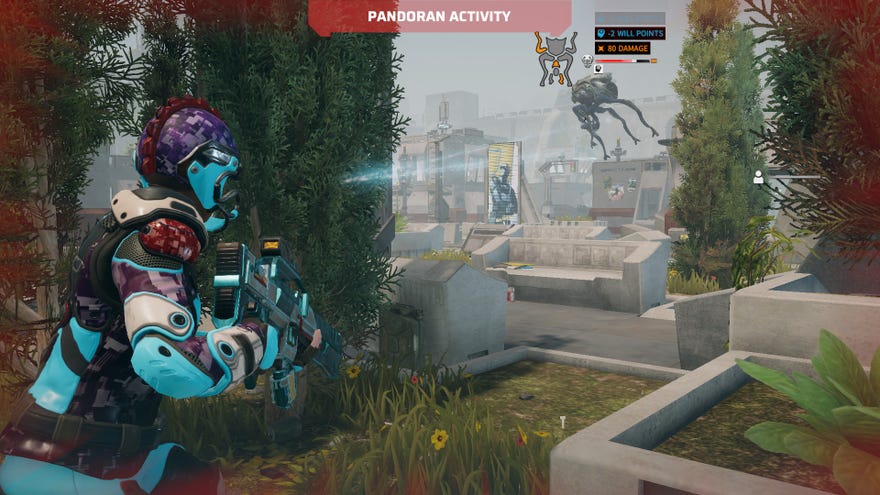
Do you ever feel like you’re sitting down with a game like a worried parent, saying “I just don’t know what to do with you?” Because that’s how I feel aboutPhoenix Pointafter the last few months of playing it on and off. I’ve definitely enjoyed it more than onits release in 2019, and its DLC adds more to think about and manage during what were once long lull periods. There’s a lot to like aboutits final form. There’s also a lot to… I don’t quite want to sayhate, but I’m also not quite sure why. It’s one of the most evenly mixed bags I’ve ever rummaged around in.
When I (very quickly) got sick of theXCOMgames, I uninstalled them. When I got sick of Phoenix Point, I started a new game. I like it overall, but after two and a half years of updates, it remains a frustrating game. This is no remake. Its influences include almost every effort to advance what is arguablya genre of its ownsince the release of its great-grandfatherUFOin 1994. Prior to 2012’s XCOM, most of those efforts were okay at best, but some were doinginterestingthings, and it’s those things that Snapshot Games cherry picked from and formed into something fresh.
8 Best And Worst Things About Phoenix Point | Phoenix Point Review (PC)Watch on YouTube
8 Best And Worst Things About Phoenix Point | Phoenix Point Review (PC)

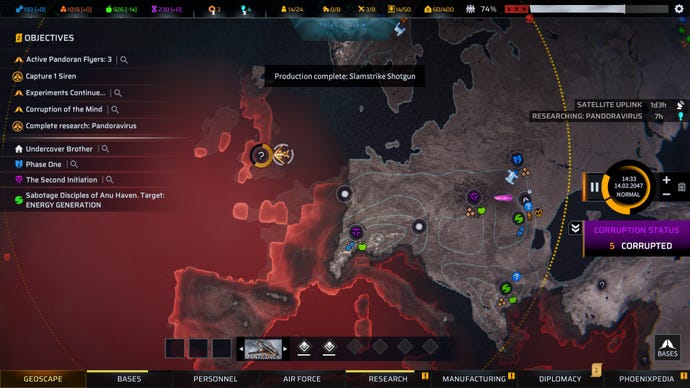
Base management is surprisingly lacklustre. They’re not the vital fortresses you’d expect from an XCOM game, and are mostly used to bridge the gap to the next plot-critical spots and triangulate Pandoran bases, which takes some getting used to conceptually. Uncovering the history of your own faction, the Phoenix Project, and its work are your only hope, since merely shooting monsters as they come is a losing battle. The plot ties in to the history and relations of the factions too, and it’s a colourful enough ride. Overall, Phoenix Point feels more active on thestrategyside. You’re always flying off somewhere, scooping up resources, doing little side missions or trading or uncovering more areas. There’s less of the waiting around, although there is a lot of repetition.
But on the tactical side, things are more mixed. Despite its retro influences, Phoenix Point isn’t an appeal to nostalgia. It takes notes from the Firaxes XCOMses too, but customises rather than copying them outright. Instead of the standard two-actions design, or a super-granular system with dozens of time units, Phoenix Point splits the difference somewhat. Soldiers have four action points, and can perform actions in any order rather than shooting immediately ending a turn. Even using up one AP on movement doesn’t have to be done in one stroke. Unlike XCOM’s frankly terrible way of forcing you to commit all or nothing, you can move in discrete portions, adjusting your path as needed, or even fire and still resume one AP’s worth of movement.
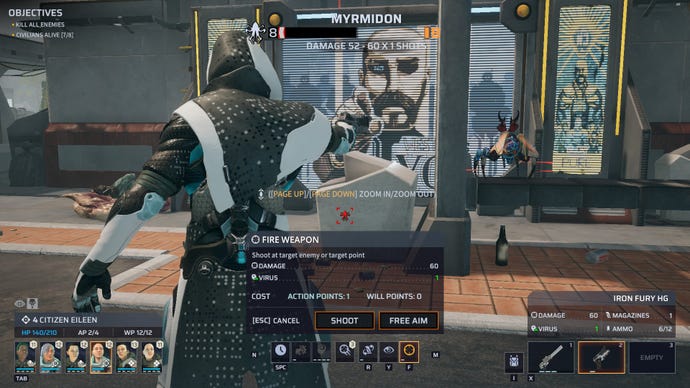
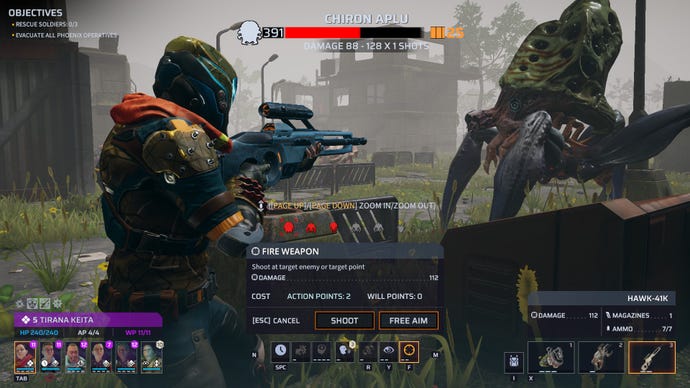
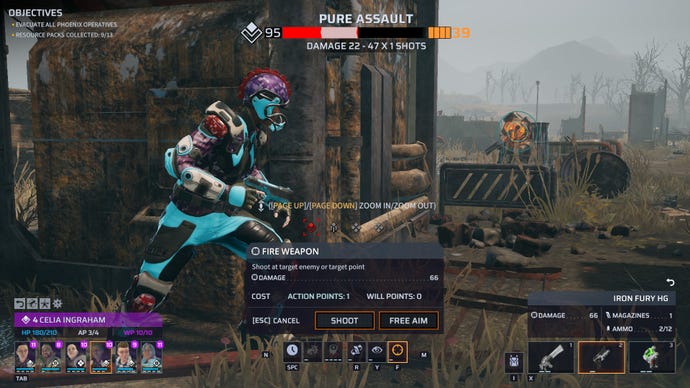
This system is definitely where Phoenix Point shines, and the genre as a whole ought to be taking it as a starting point. But for every few great moments, there’s a frustrating turn of underpowered guns, limited options, or enemy moves that feel artificial and occasionally cheap. The Pandorans get more powerful, and irritating over time. Each type is a chassis onto which they gradually fit more abilities and weapons, trying new combinations, and apparently paying attention to which are most effective and fielding those more often. Butyourweapon technology is mostly sidegrades. Reverse engineer Synedrion’s lasers and you get more range but less power than Jericho’s gauss guns. Manufacturing is prohibitively expensive, and each class of soldier can only use one, or sometimes two types of weapon, dramatically limiting your room for variation. You just don’t get many meaningful options, and must rely on high level soldier abilities, which exacerbates the too-punishing cost of losing them.
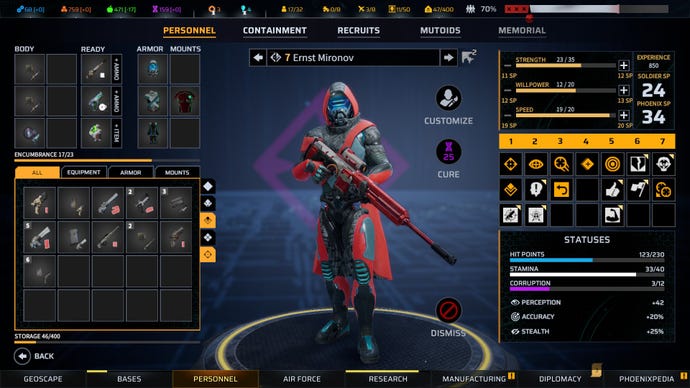
Most soldiers are your familiar assault, heavy, or sniper classes, although friendly factions can sell you their specialists. With class dictacting weapon choices, you have very few loadout options though, and a soldier facing an enemy his weapon can’t kill is useless through no fault of your own. Some weapon categories are minimally useful. Shotguns and assault rifles quickly become outclassed, and heavies in particular are largely dead weight. Their weapons are slow to fire, extremely inaccurate, and they move too slowly to compensate. Snipers meanwhile are the only class that can use handguns, even though any soldier who gets an arm injury can’t use any two handed weapon, rendering them near useless.
Soldiers in Phoenix Point are too expensive to be disposable, but you have limited control over who to recruit or what you can do with them, so generally just take whoever shows up without much attachment. New recruits? Oh, but he’s a heavy, so I can only give him terrible weapons that don’t fit into my strategy. Or there’s this sniper but her only good skill is biochemist, which is wasted on single shot weapons, plus she can’t use any of my guns.
Phoenix Point’s battles are too much of a hybrid. They’re gnarly enough to alienate fans of XCOM’s simplified approach, but not committed enough to its great simulationist ideas. Its two years of DLC added more rules and side features, and livened up its story with subplots and drama on the global map, but its underlying friction remains. I had hoped that mods might be the answer, but they don’t seem to be coming, save for some tweaking around the edges.
In trying to compromise between both it falls short of its potential, and winds up an uncomfortable fusion of two clashing design concepts. The overwatch and manual aiming and ballistic systems set up a shooting game where your people are soldiers, but the class and ability systems fit a game about magical supermen chaining together special powers. I come at it like a strategic challenge, but to overcome the piled on enemy abilities I’m supposed to playCard Warsinstead.
I hate having so many negative things to say, because I love Phoenix Point some of the time. I’m sure I’ll play it again every few years until someone finishes the half-step forward it’s made for the genre. I want to see it made right, somehow, but until it is, I just don’t know what to do with it. It’s too inconsistent to wholly recommend and too good to condemn.
