HomeFeaturesJagged Alliance 2
The Rally Point: Jagged Alliance 2 is still unique, and it shouldn’t beFallow the leader
Fallow the leader
Image credit:Sir-Tech, TopWare Interactive
Image credit:Sir-Tech, TopWare Interactive
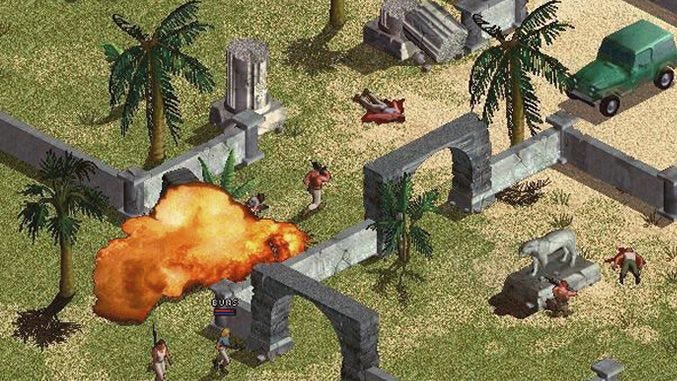
There are old games that are plain too hard to get into now, even I have to concede. Ancient ruins of a house to be admired and contemplated, but not fit to live in. The ceilings are too low, the stairs too narrow, the pipes an afterthought.Jagged Alliance 2isn’t that far gone, but it’s getting there. It gives lots of options for fine control but using them is largely gated behind esoteric, repetitive keyboard shortcuts, which get doubly cumbersome during its awkward transitional moments between real and turn-based movement.
What I’m saying is: it’s still worth it.
Jagged Alliance 3 | Legacy TrailerThe trailer for Jagged Alliance 3, which is not Jagged Alliance 2 but is out next monthWatch on YouTube
Jagged Alliance 3 | Legacy Trailer
It’s worth, too, some light wrangling to get it running on modern systems at a reasonable speed. I recommendStracciatellafor the simplest vanilla experience, which is really what you should start with (and theGOG version. For your own sanity, don’t rely on Steam for very old games).Vocal fanswill tell you to playits famous 1.13 player-made “patch”, but that’s a modification so huge and complex that it’s best saved for a second or third playthrough, and even without it, Jagged Alliance 2 remains a phenomenal, tragically unique game.
It’s guerrilla warfare across an open map, any part of which can become a battlefield. Combat happens in turns, which still push the clock forward. Reinforcements can appear mid-fight, and other squads will continue patrols, repairs, or whatever else they’re up to. There are no hard gates (although many areas are de facto off-limits until you’re properly equipped), and you can liberate the island however you see fit. But you’ll prioritise mines for income, and airports for supply drops. Towns in general are useful as they let you train defensive militia, and provide services and side jobs. You’ll spend downtime there too, patching up wounds, repairing items, and having everyone train while someone ferries supplies to where you need them, your sneaky types explore, or your b-team escort some civilians.
It’s not just the battles, basically. Where its excellent cousinSilent Stormis about discrete, orderly missions, andtherecentbatchof mercenary games are about a single, self-contained party, JA2 is a full management game, expecting you to balance books, procure vehicles, organise supplies, and keep your people from quitting in a huff.
They’re simple characters, entirely in keeping with the game’s exploitation flick tone. That vibe keeps it from descending into po-faced military gunwank, and is key to its enduring appeal. But it isn’t without its homophobic and racist stereotypes, only some of which can be shrugged off as tongue in cheek 90s pastiche. It takes smart writing to do dumb, stereotyped characters well enough to feel more ridiculous than malicious, especially with such brevity. I can’t exactly defend it, but I can still roll my eyes and play it, and appreciate that they at least feel like cartoonish individuals rather than some numbers picked out of a hat.
Image credit:Strategy First
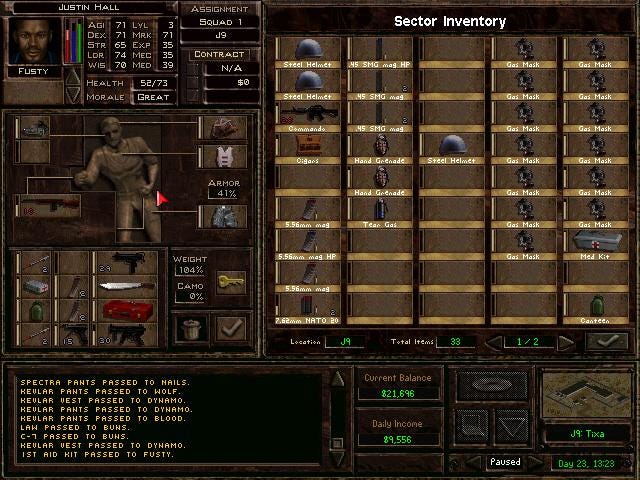
The explicitly designed roster means you’re thinking more in terms of who they are, rather than what perks they have, even if it’s the same under the hood, because it manifests as something unique to that character. Malice and Meltdown pair well because she loves killing and he fancies her, but Ira won’t work with Malice because he “makes my skin crawl”. One character goes off the rails if he’s left in a region with a bar. Another will flat out murder his rival if you let them mingle. They become familiar as names, faces and attitudes. Wolf? Yeah, he’s a pro, we could use him. Flo? Useless but cheap, and smart enough to become a useful admin mule over time. Razor is volatile but a beast with knives, and sleeps very little. Each will improve their skills if they use them enough, and even some D-list dregs have surprising potential. You’ll find yourself sticking with the ones you plain like, or gel with your playstyle, rather than who has the most Numbers.
It stings when they die, too. Your reputation and costs aside, that’s a gap that you can’t just fill with another randomised soldier. Their replacement might underperform in the desert, might panic when outnumbered, might have a personal grudge against your medic.
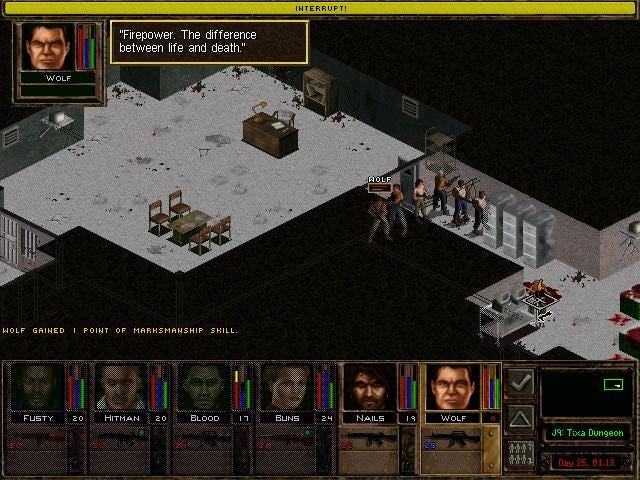
And all that connects with an excellent combat system too. Despite the massive surge in turn based shooters following 2012’s XCOM, we’ve had relatively few following a simulationist model. JA2’s is the most advanced I’m aware of for a 2D game. And yeah, that does mean it’s pretty gnarly. Every character has a pool of action points, which varies according to their fitness and state. Everything from opening a door to, stabilising wounds (nothealing - first aid prevents bleeding and reduces penalties, but actual healing requires rest and a doctor) consumes AP, but you have dozens, not just one or two. Running takes fewer AP but it’s louder and more tiring than crouching, more visible than crawling. There are semi-hidden options to strafe, sneak, and pickpocket enemies (who otherwise drop items only randomly when killed), and even firing gets more accurate the more AP you put into an attempt.
Firing is about more than focusing on one enemy in turn to efficiently reduce their damage output. Morale, injury, shock and exhaustion apply to everyone, so wounding three guys can be as effective as killing one. They’ll lose AP and accuracy, and may opt to retreat - right into your flanker’s line of sight. Most revolutionary though is JA2’s simulation of suppression. It’s shocking how few games model suppression considering how critical it is to modern infantry combat, and the model here is robust. Blasting semi-aimed shots at bunched up enemies can ruin their day even if nothing connects (and I should note, way more so in the 1.13 mod, which dramatically increases the power of suppression), so it can be worth taking potshots just to keep the enemy stressed while your other mercs get into position.
That granularity has its cost, of course. Sometimes a merc is screwed because they lack the points to turn their head to the left, or a single enemy potshot of suppression leaves them standing next to their target, 1 AP short of a stab attack. It’s a lot to manage, too, every turn. That’s true in battle and on the world map. Much as I like fine control, and taking inventory before arming everyone up to the bullet, it becomes such a chore that I’ve never actually finished a campaign.
Image credit:Sir-Tech, TopWare Interactive
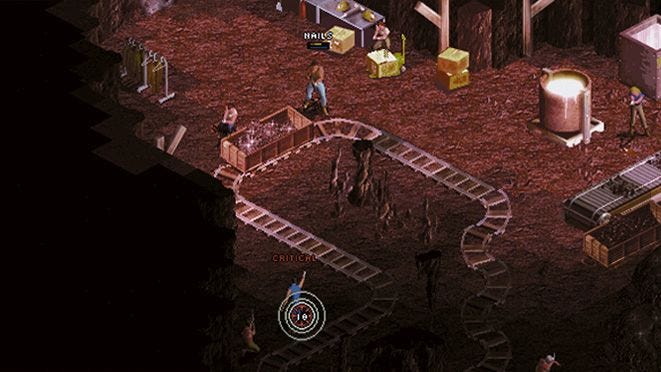
Much as I want a modern Jagged Alliance to keep those simulationist ideas, I don’t think it’s strictly necessary to go all in on the action points system, essentially, or any other specific one. Exceptions likePhoenix Point’s hybrid approach proved there’s potential in the middle ground. But I think that the simple XCOM model has become such a default that too few games examine it at all, much less deviate, and we really need a line of turn-based shooters that come from a less abstracted, boardgame-y school of design.
So I’m hopeful. I don’t envy Haemimont Games for the tightrope act such an anticipated sequel demands, but I hope it will lead a wave of heftier, wrinklier turn-based games for those of us who want to do more than two strictly regulated things per turn.
