HomeHardwareFeatures
The PC gaming hardware year in review, 2022 editionThe tech, and Deck, that defined this year
The tech, and Deck, that defined this year
How was your year for PC hardware, reader? Pick up anything nice, or got any old favourite gear still going strong? I’m still very happy with the4K gaming monitor I got for a pittance, and have spent the past twelve months becoming increasingly convinced that tenkeyless keyboards are, in fact, thebest keyboards.
That’s just me, though. On an everyone’s-invited macro level, 2022 ended up being the most transformative year for PC gaming kit in recent memory. We’ve had it all: long overdue launches, bitter disappointments, and genuinely impactful performance innovations. Also, Valve made a handheld PC. That was cool.
The Witcher 3’s next-gen PC update is disappointingWatch on YouTube
The Witcher 3’s next-gen PC update is disappointing

Instead of me banging on about peripherals I liked, then, let’s look back at the highs, lows, and occasional mids of hardware throughout 2022. Starting with one that needs no introduction, as I’ve already been banging on about it since February.
Image credit:Rock Paper Shotgun

The Steam Deck nailed a new way to play PC games
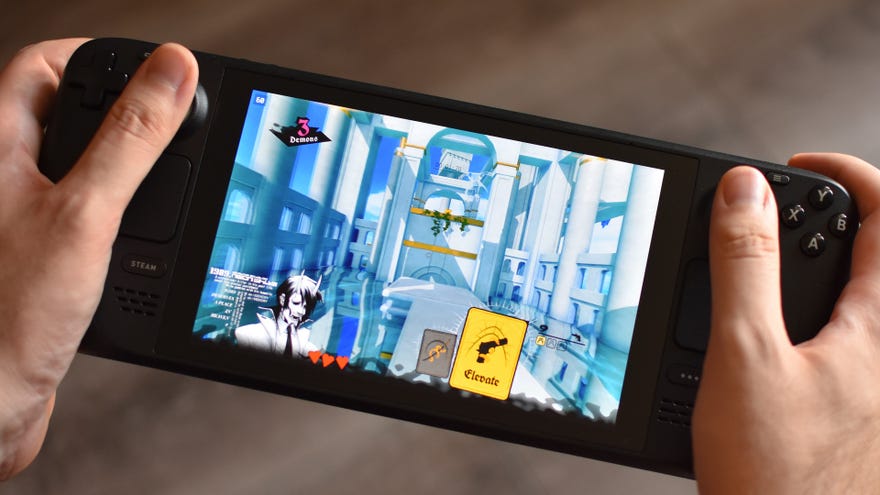
TheSteam Deckwas inarguably 2022’s biggest PC gaming hardware story. Finally launching early in the year after weeks of delays, it proved itself no plasticky boondoggle – Valve had indeed created a remarkably powerful, cleverly designed, and surprisingly flexible tool for playing PC games on the move. And it’s gone down a treat with players, too. Although it’s only recently become possible to buy a Deck without a reservation, the handheld has been the top-selling item on Steam for most of 2022.
AsGabe Newell told mein February, Valve were also keen to maintain a PC-appropriate openness with the Deck. As such, it’s drastically more versatile than the like of the Nintendo Switch, or even the less locked-downPlaydate. You can quite easily add support for non-Steam launchers, toplay games from your Epic Games Launcherand GOG libraries, and it’s possible (thoughnot always advised) to remove and replace a good chunk of the internals using standard screwdrivers.
Tinkering is optional, mind, and for as little as £349 this is an impressive little thing right out of the box. If you’ve yet to try the Steam Deck, I heartily recommend borrowing someone else’s, as it really is quite the experience, especially the first time. It’s (most of) your Steam games, running on a handheld! Even the really graphically demanding ones, floating about between your thumbs! Corrr. Eventually that amazement cools, but only to a more sustainable appreciation, specifically for the ability to take a library of potentially hundreds of games out the door. Or, very often, just to the sofa. Sometimes I’ll want to play games but not to continue sitting bolt upright in the desk chair I’ve been in all day, and the Steam Deck is perfect for that.
Fun Steam Deck fact:The framed Steam Deck artwork I gave to Liam in ourunusual accessories video, filmed in August, is still on the wall of his office. That Liam, he’s too nice for us.
Upscaling grew up
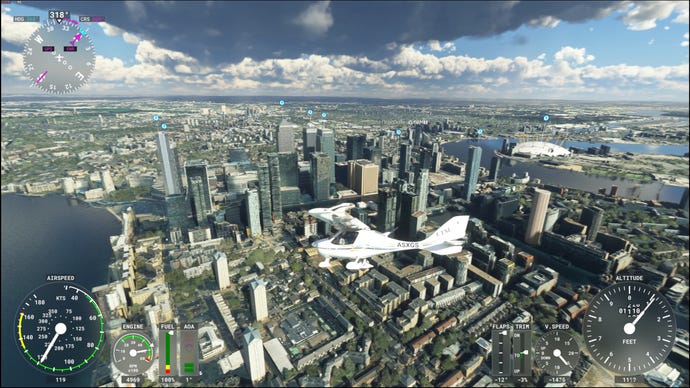
For years now, upscalers – likeNvidia DLSSandAMD FSR– have provided a cunning way of speeding up PC game performance without resorting to the typical method of slashing quality settings. 2022 saw major improvements to both DLSS and FSR, with Intel’s XeSS also establishing itself as another viable platform-agnostic alternative. Faking your monitor’s resolution has never looked so good.
There are some limitations toDLSS 3: it currently only works on the RTX 4080 and RTX 4090, and because AI-generated frames are essentially invisible to your PC’s rendering pipeline, a game that owes its high framerate to generated frames won’tfeelas smooth to control as if all those frames were rendered out. But it performs well at enhancing the look of games that wouldn’t run any better without it anyway, and Nvidia have said they could look into making DLSS 3 possible on older RTX cards in the future.
Fun upscaling fact:The first game to support the full trifecta of DLSS, FSR and XeSS wasDeath Stranding Directors Cut, upon adding XeSS in a patch on September 28.
Intel graphics cards escaped vapourware hell
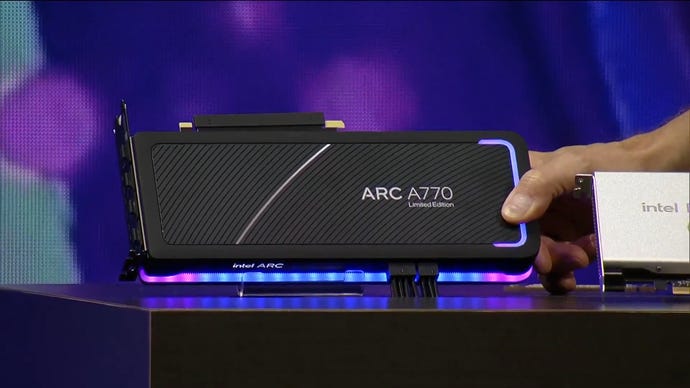
TheIntel ArcGPU family spent much of 2022 missing its own release windows. Not that Intel changed tack for it, repeatedly claiming their long-awaited return to desktop gaming graphics would be ready soon, before going quiet again in a stringing-along routine worthy of any Covent Garden street performer. It wasn’t until autumn that the flagship Arc A770 and Arc A750 became real slabs of plastic and silicone, that you could touch and feel and install in a PC.
Their chances of shattering the Nvidia-AMD duopoly? Low. Our pals atDigital Foundry(Intel never sent us the cards, sob) found that the Arc A770 and Arc A750 are decent, affordable 1080p/light 1440p contenders. But! They suffer from low DirectX 9 and 11 performance while needingResizeable BARsupport to function well at all. Not so much a triumphant return as shuffling into a party two hours late.
Still, an underwhelming launch doesn’t necessarily snuff out its own significance. For the first time in generations, someone other than Nvidia or AMD has gaming GPUs on sale – that’s a big deal what. And this generation, originally codenamed Arc Alchemist, represents only the first of four planned architectures, with early whispers suggesting the following Arc Battlemage could be far more ambitious.
There’s also a sense that sometimes, when hardware is as long in the making as Arc Alchemist was, just getting it out the door can be an achievement in itself. There were definitely moments this year when I started doubting if these graphics cards would ever truly see the light of day, and while neither the Arc A770 and Arc A750 are GPUs I’d buy myself, as long as there’s enough potential in them I don’t mind being proved wrong.
Fun Intel-graphics-card-that-actually-was-abandoned fact:A supposedly functional prototype of Intel’s Larabee GPU, a desktop card design cancelled in 2006, sold on eBay this year for €4650. That’s about £4053, $4933, or two RTX 4090s with change.

Big games made big system requirement demands
It’s the PC hardware circle of life: graphics cards and CPUs get faster, games become more demanding of those components, they become faster in response, repeat until we fly into the sun.
Nonetheless, PC system requirements started creeping up in 2022 at a quicker pace than I can ever recall, especially for AAA fare. Minimum specs began dropping familiar old names like the GTX 970 and moving onto whole new hardware generations, with the GTX 1060 – currently the second-most used graphics card among Steam users – listed as the minimum for games likeElden RingandGhostwire: Tokyo. The upcomingSilent Hill 2 remakeis even asking for a GTX 1080, which cost about £550 when it was new, as one of its minimum spec GPUs. The other? AMD’s Radeon RX 5700, an upper-mid-tier card that’s less than four years old.
Some games are getting very hungry for memory too.Marvel’s Spider-Man Remastered,Marvel’s Spider-Man: Miles Morales,Icarus, andReturnalall list 32GB of RAM for their highest recommended specs, as didStar Wars Jedi: Fallen Orderbefore later revising it down to 16GB. Having that much DDR4, let along pricier DDR5, is a big ask when most PC owners are still on 16GB. Per the most recentSteam hardware survey, fewer than 16% of respondents have 32GB of RAM or more.
Again, you’d expect both minimum and recommended specs to rise in time, though for the sake of keeping as many games playable for as many people as possible, I’m hoping this rate of change slows down in 2023.
Fun system requirements fact:There is nothing fun about system requirements.
Graphics card prices recovered, then became awful again on purpose
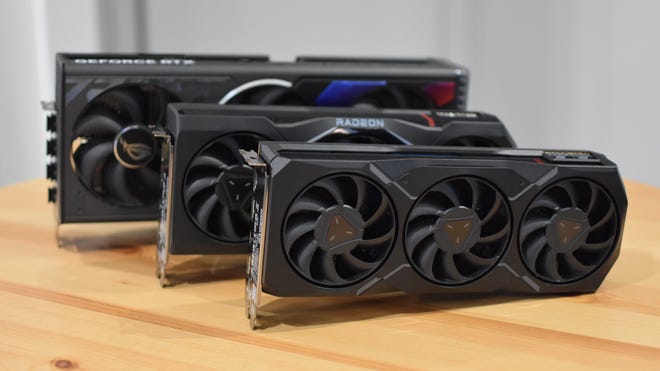
Imagine it. Almost an entire GPU generation lost to the lunacy of price gouging, with a historically shitty combination of parts shortages, unwelcome interest from cryptocurrency barons, and reseller greed making it nearly impossible to get a fair trade. Close to two years later, the market finally stabilises, just in time for new cards to release – and they all cost hundreds of pounds/dollars more than their predecessors did, on their makers’ say-so.
Except you don’t have to imagine, because that’s exactly what happened late in 2022. TheRTX 4080launched at £1269 / $1199, approaching twice the RTX 3080’s launch pricing, while theRTX 4090was and remains more of an intangible concept than a serious buying option at £1679 / $1599. And those were the starting prices – expect even more devastating price tags on partner versions. AMD went somewhat less mad, releasing theRadeon RX 7900 XTfrom £900 / $899 and the Radeon RX 7900 XTX from £1000 / $999, but those are still only a range of two, with no more affordable alternatives currently announced to use the same RDNA 3 architecture.
There are only two defences for this that aren’t nonsense. One, these components are much more powerful than the ones they replace. Two, the costs of certain parts have increased for reasons unrelated to simple moneygrubbing. But not only is the timing of these price rises insensitive, given we’re only just navigating out of the great 2020 borkstorm, they also bode extremely badly for the typically affordable variants that most PC owners will be waiting for. Is an RTX 4060 that costs £750 going to be a compelling upgrade? Almost definitely not.
