HomeFeaturesWildermyth
The Making of Wildermyth: how a family developer created one of the most innovative RPGs in yearsLyrical Ballads
Lyrical Ballads
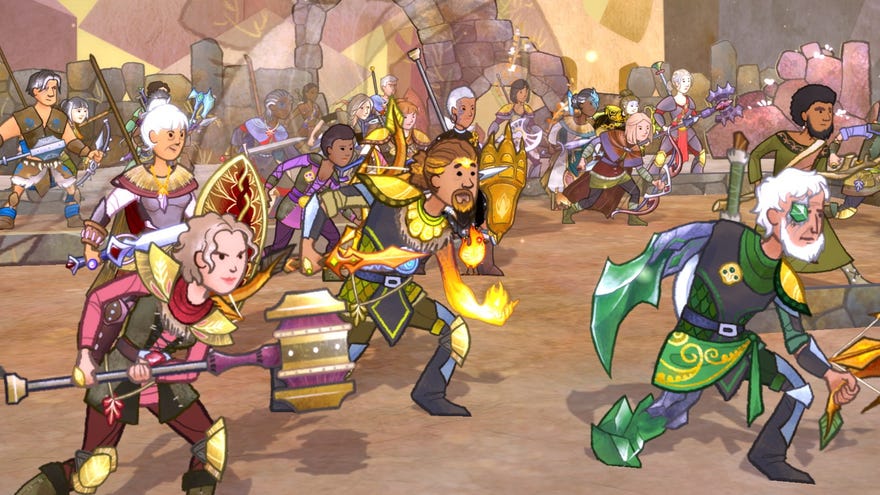
A truly dynamic story is a goal game designers have strived toward for decades. Worldwalker Games’Wildermythgets closer to that goal than most. In this spellbinding RPG, players guide bands of heroes through a lifetime of adventure, embarking on dozens of short, whimsical quests wherein they grow, age, and quite literally evolve, with the potential to transform into walking trees, celestial beings, and anthropomorphised crows.
Wildermyth is an inspired example of narrative design, with some nifty tactical combat to boot. But when Nate Austin, his wife Annie, and his brother Doug began developing the game around eight years ago, the weight of emphasis between storytelling and combat was very much the other way around.
“All three of us had been playing X-COM a lot,” says Nate, who co-owns Worldwalker Games with Annie, and is the primary programmer on the project. “And we love the stories that are generated. But we wanted a lot more detail about the soldiers.” Nate was working for Riot Games at the time, while Annie at Heavy Iron and then at Gamesalad, and Doug was finishing college. But the three got together at thanksgiving one year and sketched out the rough idea of what would become Wildermyth. “Part of the inspiration was to just to take some of those ideas, and some improvements that we wanted to make, and put it into a fantasy setting, because we felt like that would fit better.”
Wildermyth Launch TrailerWatch on YouTube
Wildermyth Launch Trailer
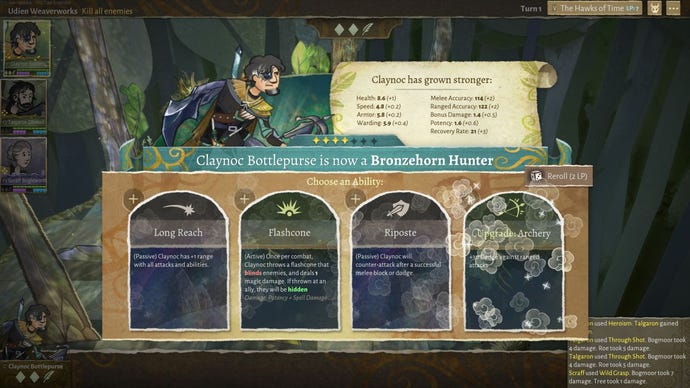
The original pitch for Wildermyth was a turn-based tactics game with League-style heroes at the centre, who evolved into those heroes as a consequence of your actions during battles. For example, characters who fell in battle could end up with permanent injuries like missing limbs, and then go on quests to have those injuries healed, or their bodies augmented into something greater.
Doug had a particular vision for the kind of stories he wanted Wildermyth to tell. But there were some practical hurdles to him achieving this. At this point, Wildermyth was very much a side project for Nate and Annie, with no real budget or rigorous development plan to speak of. Doug, meanwhile was fresh out of college and figuring out what he wanted to do with his life. “There wasn’t a job to give me,” he says. “So I was just like, ‘what’s my actual career going to be?'”
Doug left the project and wouldn’t return to Wildermyth for another two years. But those limitations on both budget and time did help define other areas of the game, like its papercraft art-style. “We knew we were going to do 2D because I’m not a 3D artist at all,” says Annie, who creates all Wildermyth’s art. “We specifically went real minimal on animations so that we can have all these rigs [static character poses] where the hunters are holding a bow and the warriors are holding a spear. We can’t animate a bow drawing with that. And they’re all gonna have different outfits.”
A duck.
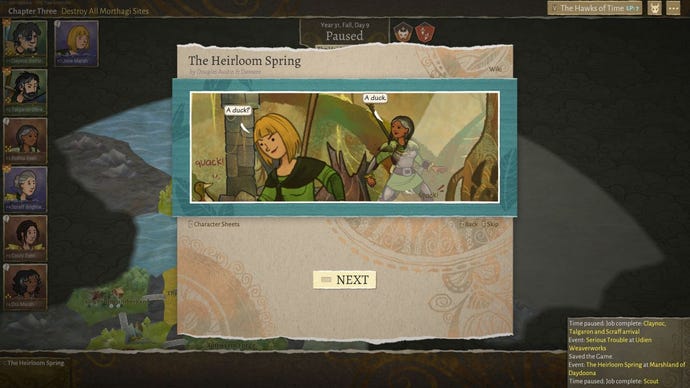
Tone was also tricky to pin down. The Austins knew they didn’t want to go grimdark like Game Of Thrones, but they also didn’t want the game to be too light and quippy and insincere. “We wanted to treat the world with reverence,” Doug says. “Not undermining the seriousness of all the life and magic and beauty that we’re implying.”
The more seriously the Austins took the storytelling side of the game, the more Wildermyth began to come together. For starters, thinking about story and character helped give the tactical side of the game more shape. “One of the major [design principles] was to make you think a lot about teamwork,” Nate says. “To have where everybody is standing be important and what everybody’s actions are important, so that you wouldn’t just have one hero carrying the fight. You really need teamwork, and a lot of that is about positioning.”
They also found a way to make all the random stories that players encountered on their journey feel like they mattered. “We had, for a long time, this concept that everything would be procedural and every story would be dynamic. And at one point in 2019, we were like ‘Alright, let’s try and make a cohesive villain from front to back. That’s how the first Gorgon villain came about,” Doug says. “The random events started to make sense a lot more because they took place within this plot structure.”
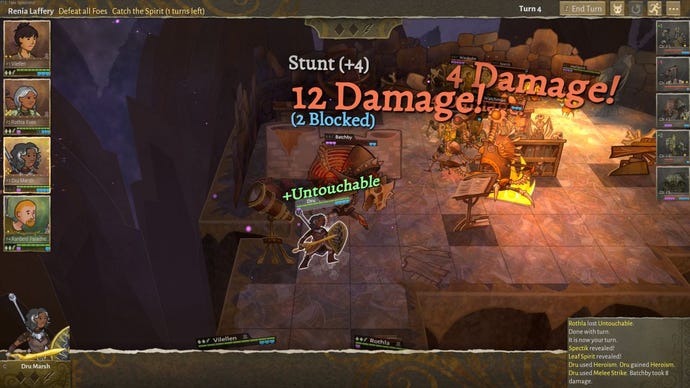
“The original stuff was much more simulationist. Instead of having tiles, we had an open map with features on it in different places,” Nate says. This map had systems like populations that grew and shrank, and dynamic threats made travelling more risky. But all those systems made it difficult for players to understand where to go and what to do. “We threw away a bunch of work on that in order to get to something that was simple enough and worked well enough. It’s still not the part of the game that anybody gets excited about,” he adds.
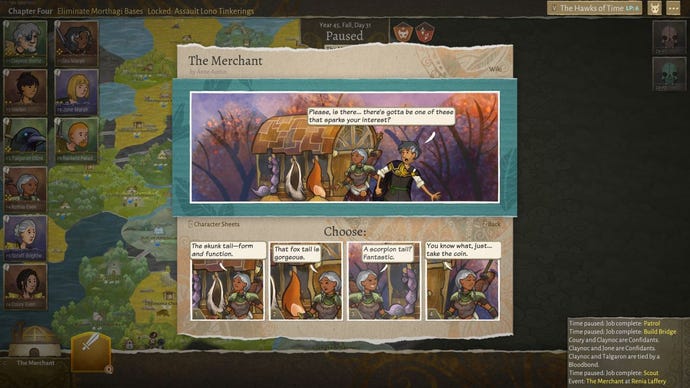
Wildermyth may have started out life as a fantasy X-COM with richer characters, but it ultimately became something much more novel and distinctive, one of the most innovative narrative RPGs of recent years. This happened, the Austins believe, because they asked at every step of the project whether new ideas and features were actually interesting, and served the vision for the game. “Make every decision. Don’t have hit points because games have hit points,” Nate concludes. “Decisions like that, we try to make them very intentionally, and hopefully you end up with something that doesn’t feel like it’s a copy.”
Correction:An earlier version of this article incorrectly said that Annie Austin had also worked at Riot Games. This has been corrected.
