HomeFeatures
The making of Dishonored: Death Of The Outsider, and how Arkane killed a god"Every aspect of Death Of The Outsider is about the struggle to find your path toward either light or dark."
“Every aspect of Death Of The Outsider is about the struggle to find your path toward either light or dark.”
Can Deathloop Kick It? Yes, It Can | My Fav Thing In… (Deathloop Review)Watch on YouTube
Can Deathloop Kick It? Yes, It Can | My Fav Thing In… (Deathloop Review)

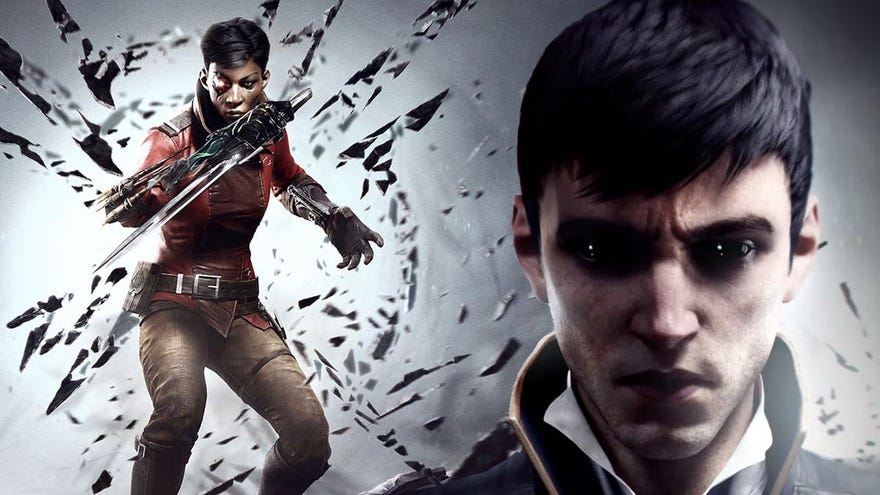
When first conceptualising Death Of The Outsider in around 2014, Smith and Duval knew they wanted two things: Billie Lurk being used to get to The Outsider himself, and closure for Dishonored villain (and later ally) Daud. In fact, as former lead game designer-turnedDeathloopdirector Bakaba explains to me, Death Of The Outsider was originally meant to be two DLC expansions forDishonored 2, but Arkane quickly pivoted to releasing a standalone game, in part to allow for “more ambition in the system and mission design.”
The witches were proposed but discarded as a potential source for a protagonist.
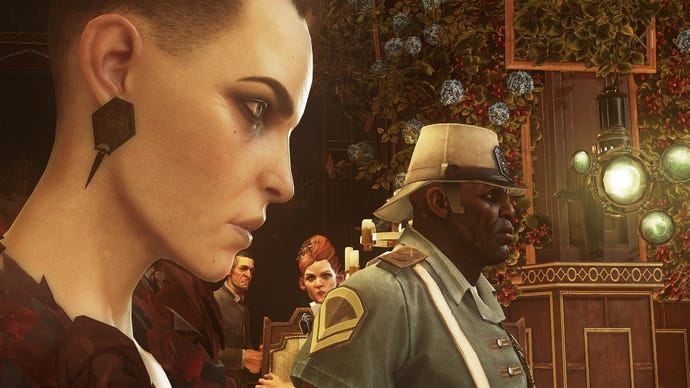
Initially there was an idea that Daud would return as the playable character, as he did in Dishonored DLC Knife Of Dunwall, but eventually Arkane settled on Billie Lurk, Emily’s companion from Dishonored 2. This focus opened up Death Of The Outsider in some pretty intriguing ways. Bakaba tells me that because Billie had already received her redemption arc in Dishonored 2, Death Of The Outsider’s story could be about something more than that. This in turn meant Arkane was able to ditch the Chaos system of the previous games. This system responded to the player’s actions in both Dishonored 1 and 2, with more lethal players getting higher Chaos levels that made the world more dangerous, while stealthy, non-lethal players got a lower Chaos level and less dark outcomes in the game as a result. But Death Of The Outsider isn’t a “test” of Billie Lurk, Bakaba explains, it is a mission for her, and so the player is free to use whatever methods they want to get the job done.
Selecting Billie as the protagonist was also key to something Smith believed in: whoever kills The Outsider shouldn’t bear his mark. “Giving Billie an independence from The Outsider seemed key, so he cannot just take away what he’s given her,” explains Smith. “But from a development standpoint, that gave us a bunch of freedom to alter existing game systems. Dinga and I spent a lot of time weighing the pros and cons with the game designers. At the end of that major Dishonored arc, those game mechanical changes felt refreshing to us as creators, and to players, I think.”
But the first significant death Billie has to deal with isn’t The Outsider. That honour falls on the shoulders of Daud, who dies in his sleep, off-screen. There was a lot of discussion about how Daud should die, Bakaba explains. “You know the person is sick and you go to work, you come back and their soul has left this world,” Bakaba says. “There is a sense of ineluctability in that situation that I thought was moving,” the designer says, adding that Daud’s death intentionally occurs right after the player has amassed their full arsenal, with a weapon capable of slaying a god. “As a player you feel in control, smart and indestructible. And then you feel the gut punch of realizing your old mentor has just died.”
Daud’s death is a significant moment for the player.
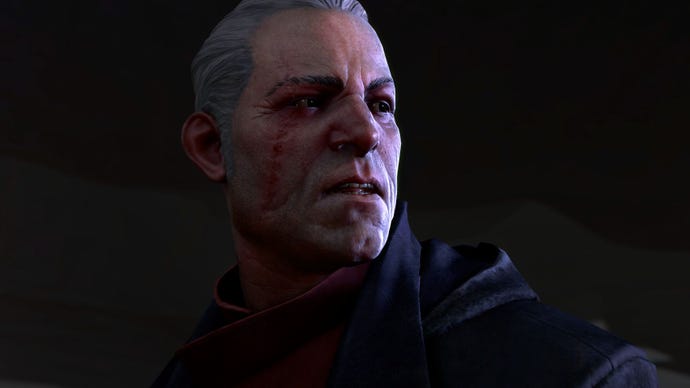
Killing a god is no easy task, with or without a mentor. Since the first Dishonored arrived in 2012, opinion on The Outsider himself has been somewhat split: is he an enticing trickster, intent on uprooting society with Faustian deals? Or is he himself a victim, trapped in increasingly violent cycles as those with his blessing impose their will on the world?
Monforton, who played the first games from a fan perspective just like the rest of us, immediately shoots down the idea of The Outsider as a trickster. “If you look at what he offers you and the language he uses around it, he is not lying to you or trying to tempt you into particular choices which will have bad or chaotic outcomes for you,” Monforton explains. Rather, she says, The Outsider is interested in what those who he gives his blessing to will do. It’s very true that while The Outsider gives the player supernatural tools and abilities throughout Dishonored and Dishonored 2, it’s always squarely in the hands of the player what they do with them.
Bakaba explains it from another angle, adding that the idea was almost to have “mystical mundane people.” The Whalers and Witches in previous Dishonored games used magic while everyone else “seemed a bit disconnected from it”, so it was fun for the developers to create enemies that use Bone Charms just like the player does. “We wanted them to look almost like real people, but have their fascination for the Void taint them physically,” he says, remarking that, had the cultists researching the Void stayed there for a few centuries or so, they might’ve just evolved to the big hunks of rock you see floating around in there.
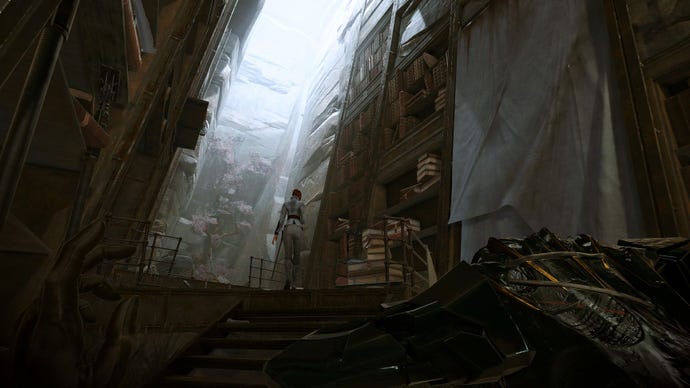
Part of the Cult’s vast research library, a cold and unhomely place.
It’s around this time the player becomes aware there’s another way to end The Outsider. Over the course of the game, Billie learns that The Outsider had a life before he ascended to his place in the Void, but this life was snatched away from him when the Eyeless sacrificed him as a teenager. Duval was “really into the idea of killing god,” while Monforton was more into the forgiveness angle: “Of course I always play non-lethal in those games, of course I think that killing anyone even for punishment is wrong, and never a solution. But killing God? I wouldn’t pass that chance.”
But there was a lot of debate about how to implement the non-lethal method of returning The Outsider to his human form. Duval says that game designers at Arkane proposed ideas like “magic stones” and other “gamey” things like intricate mechanisms that could save The Outsider from, well, being The Outsider.
In the end, Duval proposed whispering The Outsider’s name as the way to return him to his human form, a revelation that was also a relief. “It felt meaningful and elegant enough,” says Duval. “Even if at first there was some confusion among the team, because when I explained that the mark of The Outsider was actually his real name in an ancient alphabet, some people understood that The Outsider was actually named Mark… which was, well, a bit underwhelming!”
Monforton also reveals that the in-game researcher whose work reveals name of The Outsider is a tribute to one of her favourite high school English teachers, Mr. Malchiodi. The name translates to “bad nails” in Italian, meaning the crucifixion nails, something Monforton considers quite apt considering how often she thinks of The Outsider as anEldritch, Christ-like figure.
For every non-lethal ending in Dishonored, though, there’s a pistol held to the back of a head or a knife gliding across a throat for an easier solution. This method presents itself as stabbing The Outsider with the very blade that made him, the one that the cult used to sacrifice the boy he used to be all those centuries ago.
Megill describes a very different lethal ending to the one we saw in the final game. “When Arkane first described his death to me, it felt bizarrely like a minor plot point,” she explains. “Billie killed him, you blinked, and it was over. Smash cut to the end of the game.” This didn’t sit right with Megill, especially when she knew The Outsider was so beloved to fans of the Dishonored series - noting that some even call him their “moody eldritch boyfriend”. So Megill challenged this point to both Smith and Duvall, and was incredibly nervous about it at that, being a contract writer approaching the two creative leads who she’d only just been introduced to, in order to change the very climax of the story they had established.
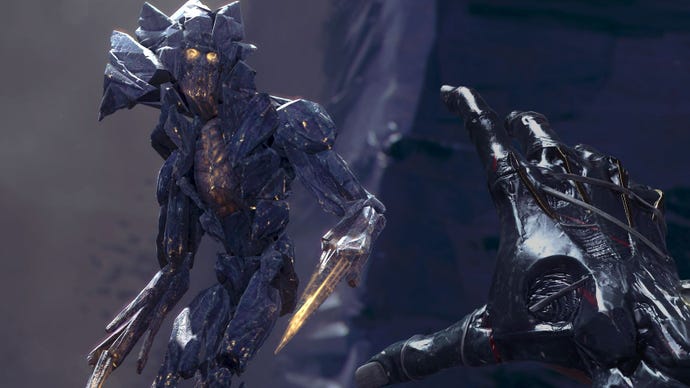
Smith and Duval were both open to feedback, though, and actually ended up changing the entire lethal ending of Death Of The Outsider. Megill and company formed the previously unceremonious ending into something that was far kinder to The Outsider himself, and allowed the player time to mourn and regret his demise. The final scene after a lethal ending has Billie and Daud ruminating on how the world will change without The Outsider, if at all, while Billie notes that killers like them never will. In a closing cinematic, Billie acknowledges that perhaps this ending isn’t fair to The Outsider himself, and although she’s “evened the score,” she’s still just a murderer.
As the final Dishonored game, Death Of The Outsider is “the resolution of a pretty big arc,” says Smith. “Starting with Dishonored, going through Knife of Dunwall and Brigmore Witches, then Dishonored 2; showing the costs of some of those actions, then final stages of redemption, trying to get players to feel empathy for the characters involved, and finally just the opportunity to shuffle the board.”
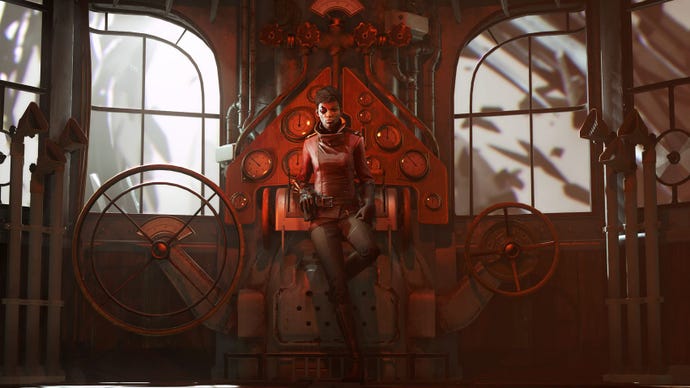
“I think part of his story is learning to hope again,” says Monforton, when thinking about what she wanted to achieve for The Outsider. “In Dishonored and Dishonored 2, he always expects the worst from you. Now, he can allow himself to hope for something more.” And The Outsider isn’t the only one hoping for something better in Death Of The Outsider: Monforton points to Billie also wanting closure and forgiveness throughout the game, and Daud’s ultimate goal being to make a difference. To change things.
