HomeReviewsThe Iron Oath
The Iron Oath early access review: a tactical RPG on a mission to stand outBand of the battles
Band of the battles
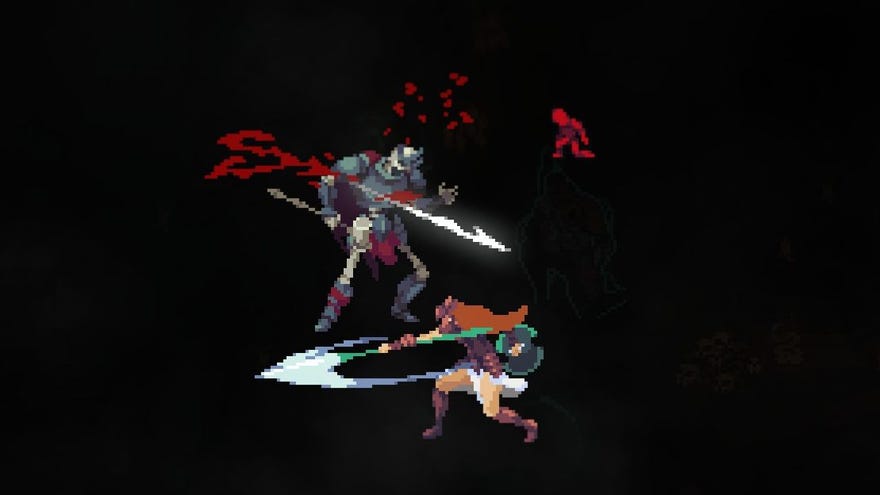
I’m going to complain aboutThe Iron Oatha lot. Not because it’s bad, but because I’m really enjoying it, and I think it has the potential to really take off.
Think of these complaints, for the most part, as a pre-flight checklist done long before the pilot has even sat down; if the game were not in early access, these would be big disappointments rather than exactly the kind of annoying details that early access is meant to iron out.
The premise is familiar, but not oversaturated. You run a mercenary company in a fantasy world, and must travel about it finding and fulfilling contracts that keep your fighters fed, equipped, and paid. Over time, your efforts at stabbing bandits and kicking wildlife in the face give you a reputation that you can leverage for better prices and more lucrative jobs from more influential people. They also make your members more skilled, and thus more expensive to keep on.
The Iron Oath - Early Access Launch Trailer | Humble GamesWatch on YouTube
The Iron Oath - Early Access Launch Trailer | Humble Games
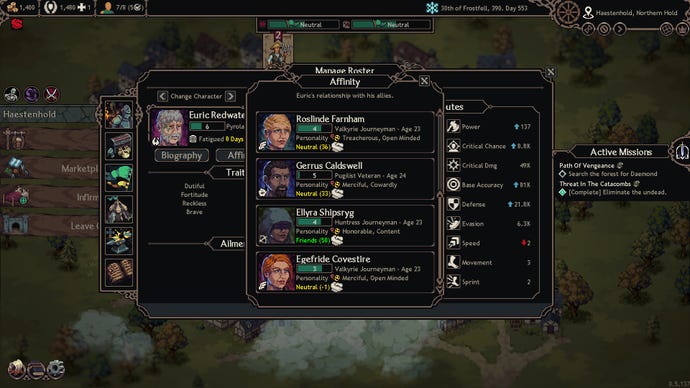
That story is a personal one of avenging yourself on a group of traitors, but its skippable nature makes some sense considering that time affects your mercenaries too, as even those who live will tire and slow with age, and ultimately retire.Wildermythplayers should already be savvy enough to know that this necessitates planning ahead, and using your best gear and experienced older warriors to prop up the younger, weaker hands until they’re up to speed. They also have relationship scores with each other, although at present this doesn’t seem to do much. The focus is less on stories and memorable characters than Wildermyth, but they share an obvious influence in Dungarees & Dingoes when it comes to combat. I’ll get back to that in a bit.
However big your gang becomes (and it must grow over time, as wounded and exhausted fighters drop in and out of the frequent and painful fights needed to keep your profits above rising costs), you’re limited to four stablads per fight. It sounds a bit off, but soon becomes comfortable as you shrug and accept its parameters. It helps you develop a capable bench in fact, rather than just bringing everyone and relying on a dream team.
All this puts The Iron Oath in slightly different territory to its peers. Individuals don’t (currently) have much personality, but the structures are there for it. Each recruit comes with a handful of personality traits that affect their abilities, or possible dialogue options and courses of action. They’re not as precious and irreplaceable as those of Wildermyth, but death does sting far more, and life is less cheap, than in the much more businesslike world ofBattle Brothers. It’s an interesting middle ground between dispassionate army drilling and a typical party of adventure palz. The character classes in particular are elevating it.
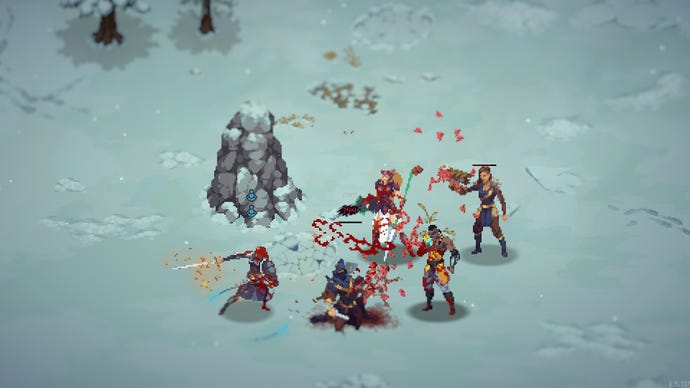
One of my favourite things about The Iron Oath is how its classes are so distinct from the usual generic RPG ones. There’s no standard fighty guy. Pyrolancers are tough spearmen who hit harder the more on fire everything is, while Pugilists go in with raw kung fu brass. One of my spear-wielding Valkyries can push and pull enemies about or fly across a field, slashing everyone in the way anime-style, and later use a power that teleports a slower ally next to them. Only one class, the Hunter (archer), is archetypal, and the Guardian is sort of paladin-y, but with only four spots on the pitch you can’t get too complacent with them. All skill access is strictly limited to your class, but which ones recruits start with varies, and which you upgrade or unlock with new levels is up to you. Weapons are proscriptive, which I normally bristle at, but it works here. You’ll probably get a few fighters the best you can afford, but make do with less than optimal weapons for most and make up for it with those skills. There’s very little faffing about with inventory.
I mentioned D&D back there because of its emphasis on melee, positioning, and class powers. In each round of combat, everyone present moves in order of speed (a direct number ranking rather than variable initiative rolls). Movement is, for once, discrete, so you can move a hex at a time to test ranges, and even undo a move provided it didn’t trigger a hazard. The standard XCOM-ish “move twice or move then attack” applies, as using any skill or standard attack ends your turn, but instead of cooldowns each skill has limited uses until a character rests, and its attacks of opportunity, flanking penalties, and slight wiggle room around character death just feels different. This is especially true in the dungeon segments some jobs come down to.
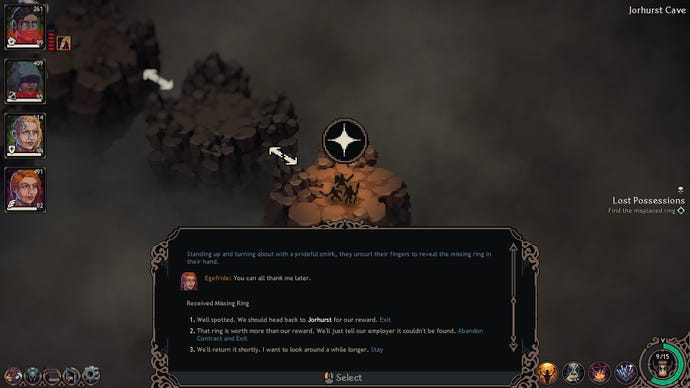
Some jobs will mean a fight or two out in the world. Maybe you’re patrolling for bandits, maybe animals randomly attacked you while you were heading to the next city. I love that some missions are extremely easy. I’ve been paid for basically going for a walk and asking a guy a question, then walking back. Escort missions are often uneventful, easy money for journeys you’d do anyway. This feels so much more natural than most games, where accepting an escort job guarantees a scripted bandit attack, making it no different to a “go and kill these guys” job except taking longer.
But some jobs mean clomping about a dungeon. Here your gang of four must step from square to square, triggering or dodging traps and ambushes, rooting through bones and rubble and chests for trinkets, and eventually reaching the item in question, or confronting a boss fight. Down here, your health doesn’t top up after a fight, and the longer you take the worse things get - every so many turns sets off a random condition, making traps hit harder, nerves more frayed, or misplacing an item. To offset this, you’ve an NPC at the entrance (actually on staff, but whatever) who sells healing potions, and bandages for treating persistent injuries. You can also rest a limited number of times, burning various incenses that heal and provide bonuses of your choice, like more gold, more XP, or restoring uses of special skills. Short rests, like.
I’ll be honest, the restrictions on camping in dungeons never really felt clear in my mind, and I invariably brought as many people with healing powers as I could. I never bothered with ale since morale never seemed to dip, and though there’s a whole tab for “alchemy” to unlock new incense options in the company management screen (as your reknown grows you can exchange points for prizes), I never bothered when the other options are clearly better - 20% lower salaries or 10% faster healing seemed a no-brainer next to occasionally getting a slightly different way to sleep.
And here come those complaints. The difficulty in dungeons comes from some arbitrary restraints, and its time pressure system in practice offers little choice. You’ll be down there long enough to trigger 3 or 4 conditions regardless, so you might as well investigate and loot everything. There’s no way to tell what any enemy is capable of besides the trial and error of letting them slash you up. Given that you’re supposed to be a hardened lifelong mercenary it is strange and annoying that you apparently know absolutely nothing about anything, particularly at the deployment phase of a fight, when I have no idea what any enemies can do or who will go first.
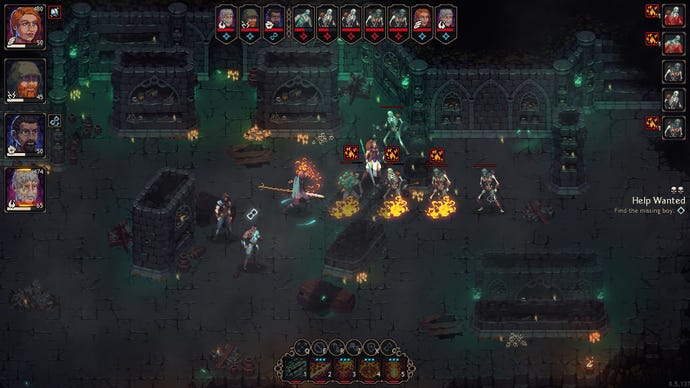
I’d also love to be able to zoom in, because the art and animation are terrific. The sound is too, and all three are a huge part of why I’m loving the game anyway. Combat feels chunky, and even when you don’t trigger the occasional goresplosion effect on a kill, taking someone out feels satisfying. I came across one evil mystic who had three times the health of a strong warrior, but my best pugilist went Goku and hit her hard enough to kill four men, letting my hunter finish her in a single turn. The plenty of opportunities to betray, rob, and kill people make the option to be merciful and generous all the better, and probably vice versa. I don’t feel all that attached to my specific band, but I’m definitely enjoying my time with them. If Curious Panda can flesh things out enough on top of the smaller tweaks they alreadyappear to be patching in, and really lean into its unusual details, it could distinguish itself well in an increasingly competitive division.
