HomeFeaturesThe Fertile Crescent
The Fertile Crescent blends Bronze Age strategy with managing pomegranatesThe fastest way to an empire’s heart is through its stomach
The fastest way to an empire’s heart is through its stomach
TFC: The Fertile Crescent Development UpdateWatch on YouTube
TFC: The Fertile Crescent Development Update
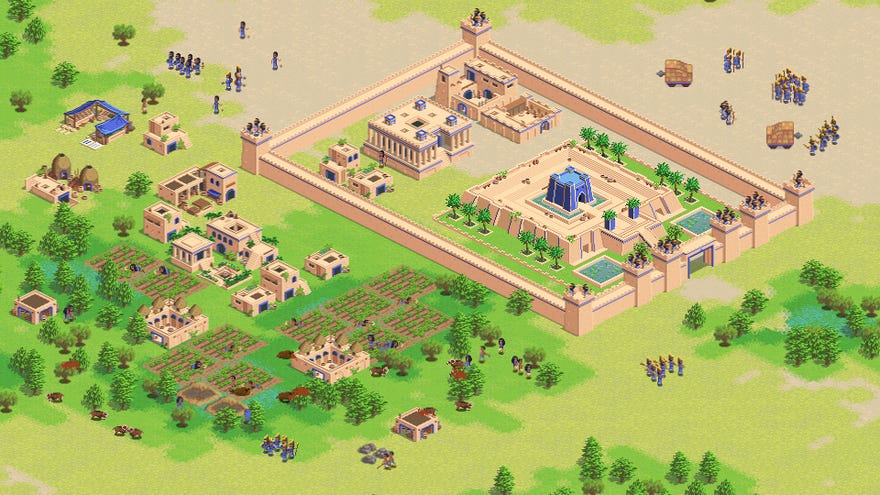
Farms, trees and deer are a familiar sight to Age Of Empires players. What’s new in The Fertile Crescent, you ask? Your food stores deplete over time as you maintain an army, chewing into your economy (and, despite the economic focus, combat is given its fair share of attention, complete with units, counters, and upgrades). On the flip side, excess food grants productivity boosts and speeds up villager training. While this does mean that enemy farms are a great raiding opportunity, so are yours.
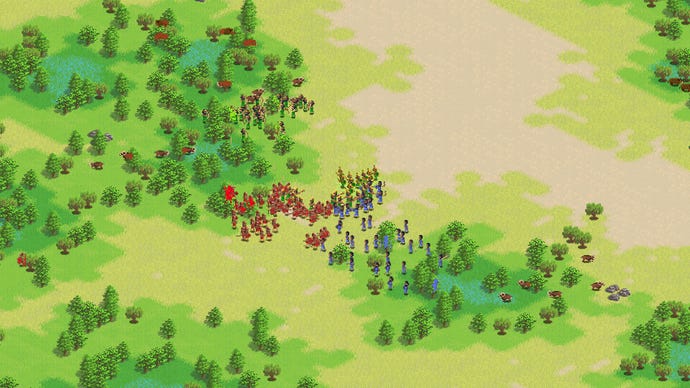
“Usually, having more villagers means more economic output, and as soon as you forget about training additional villagers and your enemy does not, you’re at an economic disadvantage. However, is this really an interesting choice to make?” asked Groenningsaeter. “Therefore, we thought, why not streamline this and add automatic villager production? That frees you up to focus on, in our opinion, more interesting decisions.”Age Of Empires IV’s latest move to remove animation cancelling echoes the same sentiment. I appreciate modern sensibilities like these, decisions that rethink the application of strategy.
Then there’s the riot system, which is where The Fertile Crescent turns food into a double-edged sword. Lose your food supply to mismanagement and, in the words of Groenningsaeter, “there is only so much a population can tolerate famine before they lose their patience.” To aid your pomegranate pursuit, the game introduces you to soil fertility, a staple of classic city-builder games that gives you yet another decision to make in The Fertile Crescent. “Adding soil fertility means you have to plan your village layout around it to maximize food production, which ties in nicely with the food surplus mechanic. The clay pits taking up valuable farming space also leads to some interesting decisions,” noted Read. This means you’ll be switching your resource priorities based on how the match proceeds, adding another layer of strategy to TFC.
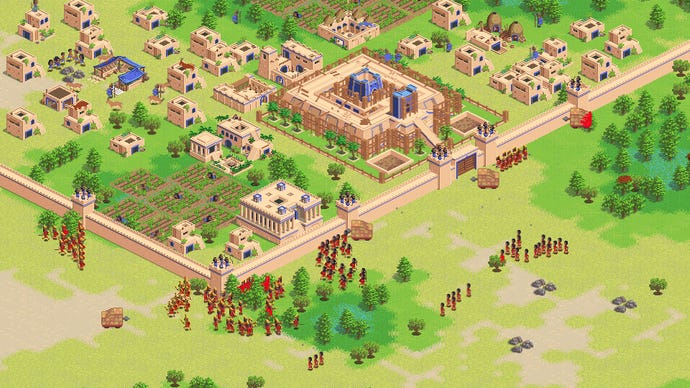
As someone who grew up with city-builders and real-time strategy experiments, I’m happy to report that Groenningsaeter and Read did their homework and it shows, right from TFC’s nuanced economy chains to how food governs military engagements. With multiplayer support, an upcoming “roguelike” Conquest mode and a campaign, The Fertile Crescent has reinforcements on the way to back up its ambition. “Sid Meier once said that a game is a series of interesting choices and that’s definitely what we are attempting to offer,” said Groenningsaeter.
A horizontal knowledge tree with distinct upgrade paths makes up for the lack of additional civilizations to pick from. And while I want upgrades to alter the appearance of units and buildings, I can’t fault the game’s “less is more” visual approach. What if these upgrade paths offer unique units that represent said playstyles? Minor AI issues aside, there’s plenty of meta potential here and I can’t wait to see where Wield Interactive takes The Fertile Cresent. It’s time to give the retooled sickle a spin.
