HomeReviewsThe Dark Pictures Anthology: The Devil in Me
The Dark Pictures Anthology: The Devil In Me review: fourth time’s charming but still not a charmOh no! The murder castle has a murderer in it!
Oh no! The murder castle has a murderer in it!
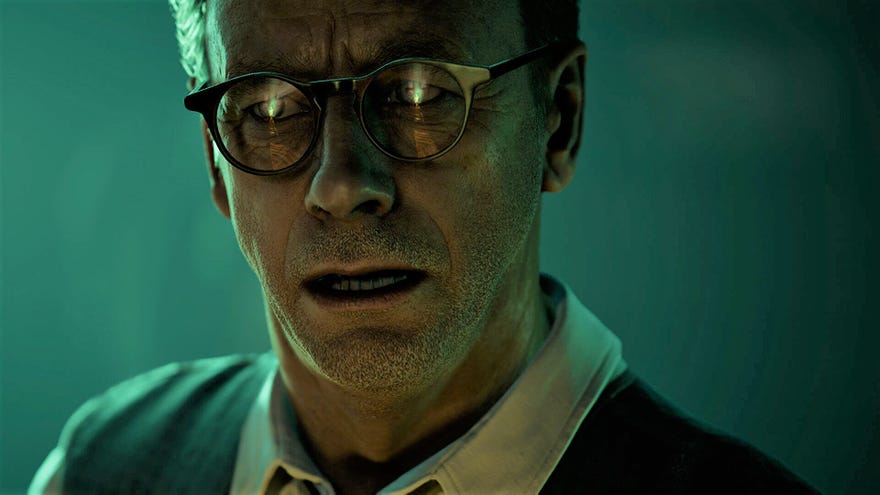
For those yet to stick their snout into Supermassive’s truffle-trove of horror offerings, the basic premise of these narrative adventure games can best be summarised: What if shouting at the screen to try and stop idiot characters performing horror film no-nos actually worked? The formula was both invented and, miraculously, perfected in 2015’sUntil Dawn. Since then, the studio have released three ‘episodic’ (although narratively independent)Dark Pictures titles, andThe Quarry, all of which can best be summarised: Like Until Dawn, but not as good.
The Dark Pictures Anthology: The Devil in Me – Story TrailerWatch on YouTube
The Dark Pictures Anthology: The Devil in Me – Story Trailer

So, let’s rip off the plaster, revealing a nasty gash you probably could have avoided if you’d just been more understanding of Brad the Jock’s underlying inferiority complex in a previous dialogue choice. The Devil In Me is also not as good as Until Dawn, but it is the strongest of the four episodes. It could be as good as The Quarry - it’s certainly more creative with its horror - but it can’t quite outrun the curse ofThe Dark Pictures: a compulsion to tease out serious themes from a fundamentally goofy and self-aware framework, like Ash Williams monologuing about how his chainsaw arm is actually a metaphor for the fractured body politic, or something.
Unfortunately, in Supermassive’s dark quest to evolve the player experience, they’ve fallen to their knees in supplication at the eldritch altar of triple A guff. Hope you like shimmying, friends. All the classics are here. Ledges to climb. Loading-bearing holes to squeeze through. Small gaps to crawl under. Bins to push to get through windows. Ladders to kick down. I’ve been wanting to compile a totally original ‘time to boost’ archive where I score AAA games on how long before they ask you to boost someone up a ledge. The Devil In Me lasts about 40 minutes.
As for the inventory, it’s really just a visual indicator of something these games had anyway. You could always have characters pick up say, flares, and then maybe use them later to get yourself out of a bad situation. Save light sources and a camera, you can only use the inventory items at scripted opportunities, so there’s little difference to how things play out. Ditto for the character’s unique items. Paul Kaye’s Charlie, for example, can jimmy locked drawers with his business card. But all this actually amounts to is an extra stick wiggle and button press to open a drawer that would just be unlocked in a previous Dark Pictures. Only Charlie encounters locked drawers - so it’s not like you’re making choices that affect the other characters. It’s just a gimmick. More interactivity, even marginally, is no bad thing of course. I just wouldn’t put it on the back of the box or anything. It’s not what I play these for.

There are some great changes, though. I genuinely laughed out loud when the director enthusiastically announced a run button in the trailers. Truly, we are but mewling babes in the shadow of technology’s rapid growth. But it really is a godsend. And at the very least, the new traversal options do at least create more interesting layouts. There’s also some creative puzzly set-pieces this time around, especially on the alternate ‘curators cut’ route (the 2nd player route if you play co-op.) Finally, on the play front, accessibility options seem excellent, with a dyslexia font, a hold instead of mash option for QTEs, and several different difficulty options.
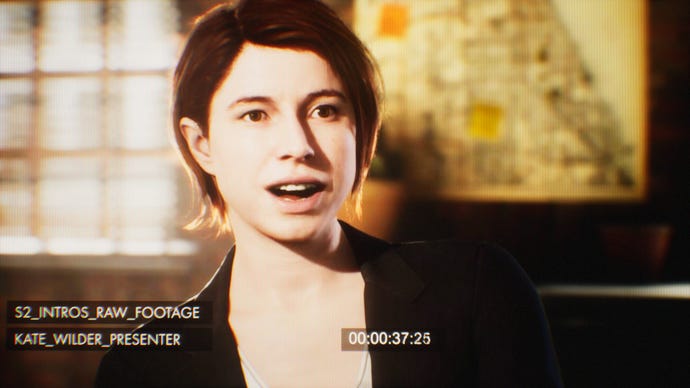
But how are the characters? You might ask, which I’ll answer with a heartfelt request: Please stop making Jessie Buckley do an American accent. In fact, please stop making any actors. It feels strange to say that out of a cast of relative unknowns and Dennis Pennis, Buckley - who I’d usually happily listen to read out mouthwash ingredients - was the part that pulled me out of the game most, but here we are. Kaye’s voice performance is great, though, even if his natural facial quirks as an actor sometimes seem a bit much for Supermassive’s mocap to handle.
Crew members Mark and Jamie are both likeable enough to make you feel bad when you get them killed. But all four of these fools can die for all I care, because the game’s real star is nefariously written to be instant just-add-water Best Girl Erin. I played through two and a half times just to save her, because I am an easy mark. And this is my favourite thing about The Devil In Me: It’s actually pretty tricky to save everyone this time. You’ll want to play at least twice, I reckon. And if like me you compulsively poke around for notes and secrets, the pacing is a lot better the second time around, even if the final acts abandon the more interesting Shining and Saw stuff for a rote, if often thrilling, slasher movie cat-and-mouse game.
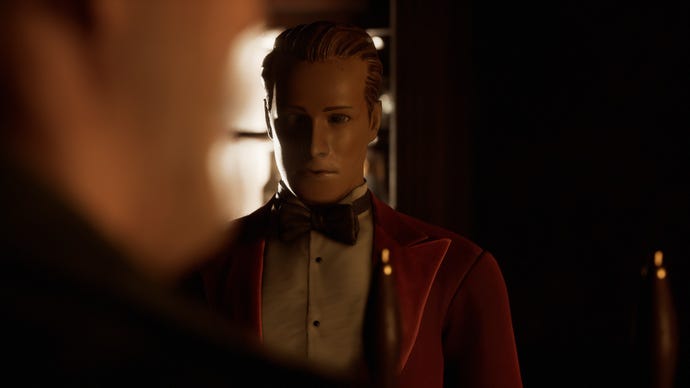
Complaints aside, I should reiterate that I still enjoyed myself. Even after I’d seen the credits roll twice, I found myself going back to poke around in its innards, getting my hands bloody, trying to tease out new strands of fate. Somewhere between the baked-in voyeurism and the murder fun house, I got the feeling this one might be a bit of an introspective outing for Supermassive, at the end of this first season. Or, maybe they just thought it was a cool setup. Still, when Pip Torrens’ always excellent curator opens “this a story about those who create”, it does seem like The Devil In Me is a thesis of sorts - a neat bookend on a shelf of tales.
Still, like an invincible slasher villain or an anime protagonist, the Supermassive formula clearly hasn’t reached its final form yet. It feels like they’ve filled this one with new ideas without properly fleshing them out, just to see what resonates with players most to take forward. And feeling like a test audience for a format, rather than the final audience for a confident, complete work, is a bit of a strange feeling. “I’m not some fucking lab rat!” shouts Jamie, while the killer slides moving hotel walls about. And honestly: mood.
