HomeReviewsSunday Gold
Sunday Gold review: tactical point and click puzzling that fails to meshSunday dud
Sunday dud
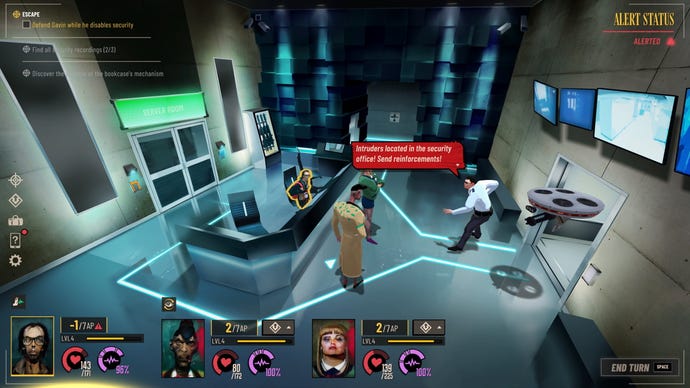
It’s a phrase I often found myself echoing while playing Sunday Gold for review, too, both during its tedious, war of attrition-style turn-based battles, and while trying to figure out some of its more obtuse puzzles. BKOM Studios have tried to fuse one too many things together in Sunday Gold, and the result is a messy, somewhat artificial blend ofDeathloop’s style,Invisible Inc’s tension and a more action-led focus on the cerebral role-playing ofDisco Elysium. There’s still much to admire in its stylish visuals and atmospheric music, but I also haven’t been this cross playing a video gamesince Felix The Reaper, and that’s saying something.
Sunday Gold | Release Date TrailerWatch on YouTube
Sunday Gold | Release Date Trailer

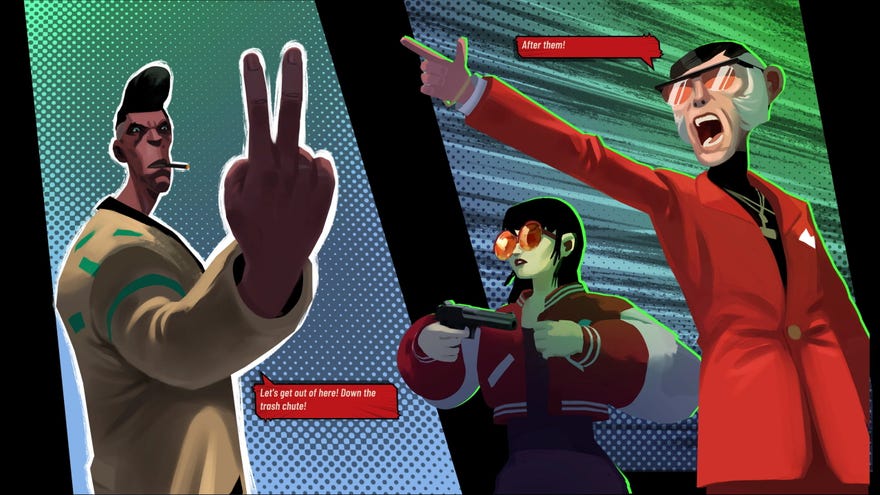
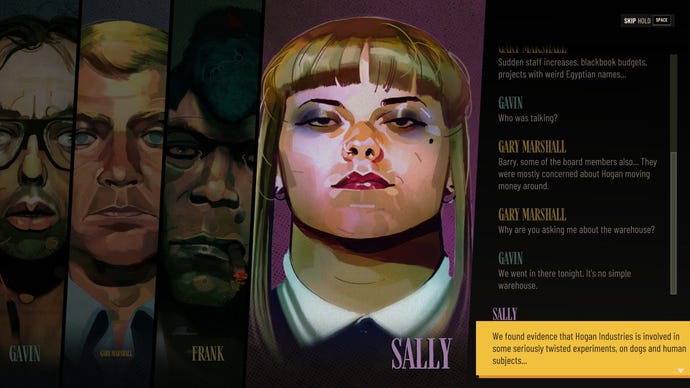
There’s no denying Sunday Gold’s good looks, and its bright, characterful art follows in the same lineage as Disco Elysium.
When sanity levels are normal, you’ve got loads of time to plan your attacks.If composure levels fall too low, however, characters will enter into a timed, flightly panic.
When sanity levels are normal, you’ve got loads of time to plan your attacks.
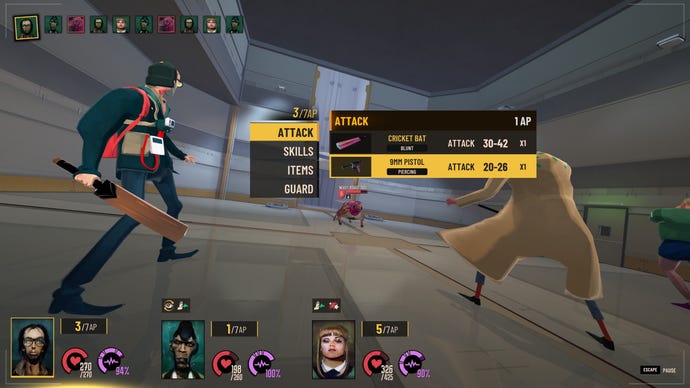
If composure levels fall too low, however, characters will enter into a timed, flightly panic.
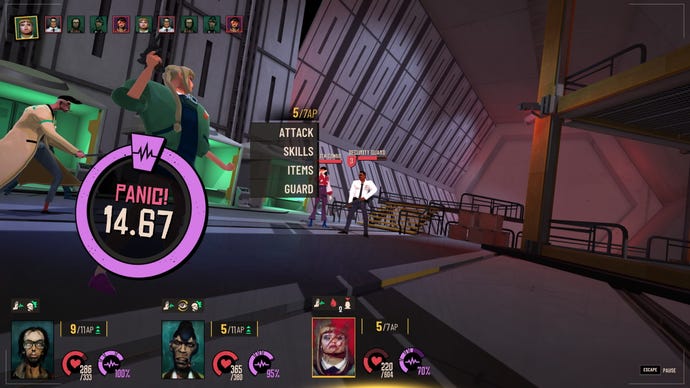
When you’re balancing all this, keeping an eye on the turn orderandtrying to whittle down enemy defences so you can stagger them for a couple of turns, Sunday Gold can be really quite thrilling. Most battles, though, are just a fraction too long and difficult for their own good, and boss battles in particular are a real drag, often lasting upwards of 30 minutes due to increasingly high armour ratings and enemies looping through the same four attacks they have over and over and over again. Heck, the final boss battle took me three goddamn hours to complete, as there was seemingly no obvious gimmick to exploit, and both stages of it committed the cardinal sin ofseveralfull-on scripted healing moments.
It’s not just enemy attacks that get repetitive, either. Many of your own party’s special attacks also have such high accuracy and power penalties attached to them that they made me less inclined to use them (even after pumping skill points into them to try and improve them), which meant I, too, often relied on the same handful of attacks to chip away at these increasingly enormous health bars. Plus, unless you’re really sneaky about it, most battles only leave you with only a handful of action points to play your next ‘point and click’ turn with, rather than replenishing them fully. Essentially, you’re left with whatever number you had at the end of the last fight, which is great if everyone was stocked up when you dealt that final blow, but less so if it ended on a big chunky attack push. And trust me, there is nothing more soul-destroying than finishing a ten-minute battle, only to have to immediately end your turn and go again because you can’t do anything in your puzzle turn.
Ah, the rotating lockpick puzzle, how I’ve missed you…
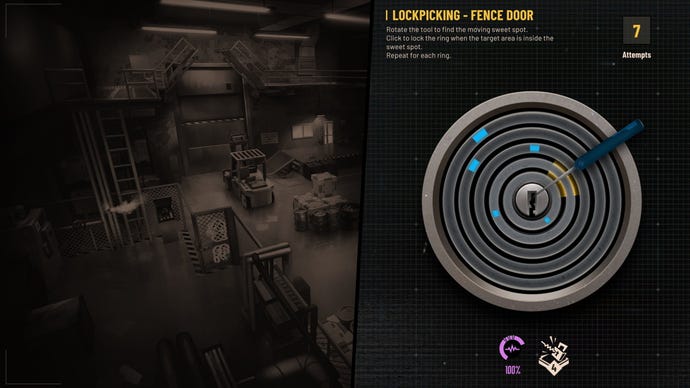
It’s just all a bit too much faff, and late stage puzzles are particularly demanding on the old action point front, shredding through your limited pool at breakneck speed. To make matters worse, the final chapter of the game is especially combat-heavy as well, due to the presence of another gang faction trying to storm Hogan’s manor. I wouldn’t have minded so much if all the extra combat actually meant something to my party’s progression here, but when two of my three characters had already hit the game’s level cap going into that final act (with the other not far behind), it meant every single battle was effectively pointless. I wasn’t earning any more skill points, and all it was doing was getting in the way of the puzzles – of which there weremany.