HomeReviewsStray
Stray review: one small step for cats, one giant leap for action adventure gamesLap it up
Lap it up
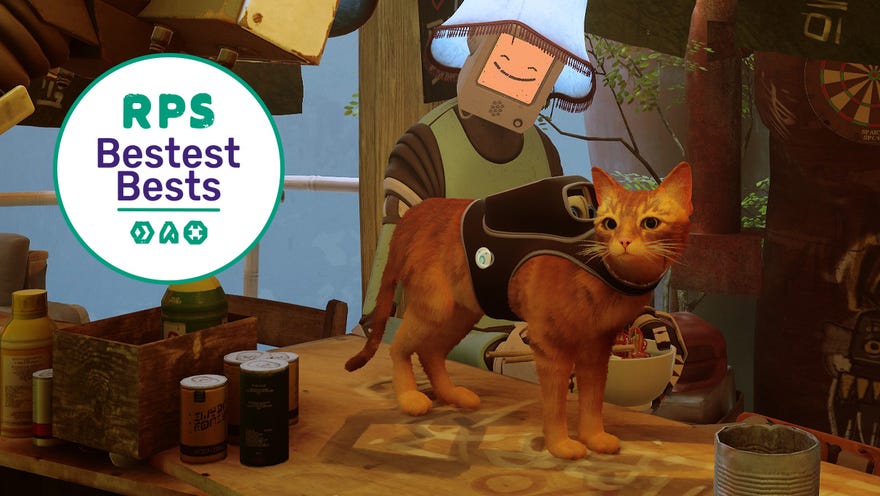
Cats are masters of their domain. As an owner of two tortoiseshells myself, they’ve unlocked routes in our house I never knew existed, using the tiny lip of our fridge as a gateway to the top of our kitchen cupboards, bed frames as launch pads to the middle bar of our sash windows (not even the actual window sill, those daft beasts), and don’t even get me started on how they managed to get onto the top of our 2cm wide shower rail that one time.
Stray Lets You Control A Very Realistic Cat | My Fav Thing In… (Stray Review)Watch on YouTube
Stray Lets You Control A Very Realistic Cat | My Fav Thing In… (Stray Review)

But it’s the way Stray’s cat navigates its walled, closed-off city that impresses the most. Whereas other 3D platformers tend to drown you in gallons of paint and glinting footholds telling you where to go, Stray opts for a smarter way of doing things, offering up simple, context-sensitive button prompts showing you where you can and can’t jump as you move the camera around. The minimalist HUD is still a touch artificial, to be sure, but the overall effect it creates is one of astounding realism, letting you actively pick through this forgotten jumble of ledges, rooftops and air conditioning units as you see fit, rather than feeling like you’re simply going through the motions on a predefined path.
It puts yourUncharteds andTomb Raiders to shame, really, even though its platforming follows asimilarly automated mould. You can hold down A (or Space, if you’re so inclined, although Stray is definitely best played with a game pad), for example, and your cat pal will leap around to its heart’s content as long as there’s a corresponding button prompt on your surface of choice. In this sense, Stray is not a particularly challenging game, as when it comes to navigating its city, there’s no accidentally falling to your death or missing a jump. The key difference here, though, is that you’re actively using the camera to find that next jumping point, as the prompts only appear if the jump is achievable. This does that vital service of handing back agency to the player, giving them the space to wonder whether that ledge is just too far out of reach, or whether your surprisingly springy hindlegs can just about stick the landing.
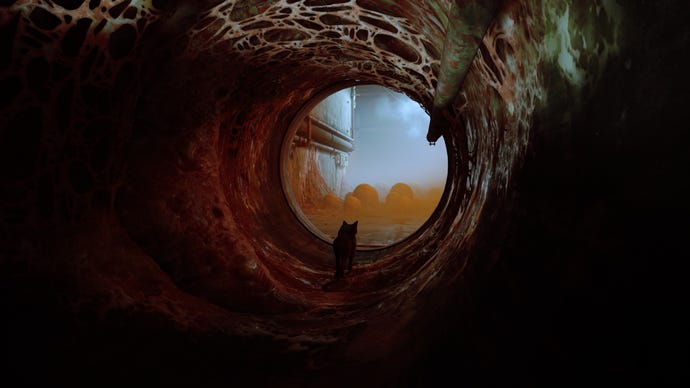
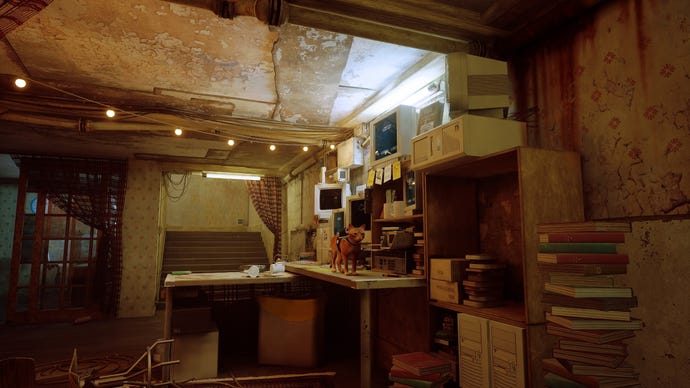
Thankfully, the game’s rather generous checkpointing means that succumbing to the Zurk is no great hardship most of the time, and BlueTwelve’s artful framing of its chase sequences means it’s usually pretty easy to decipher where you’re meant to be heading, too. These high-speed sections are also a nice change of pace from Stray’s more thoughtful stealth and exploration sections as well, and the addition of a Zurk-zapping gizmo later on really ups the ante as players must react to situations on the fly.
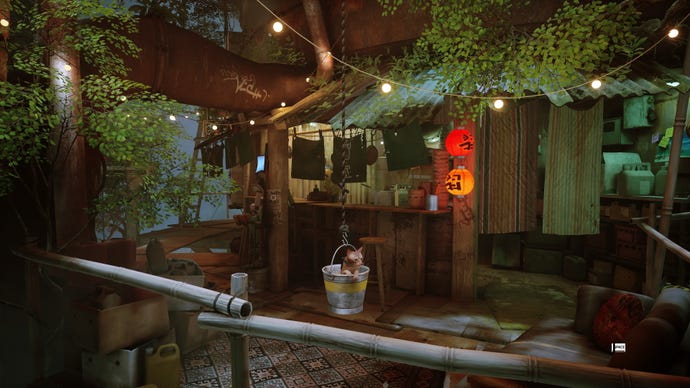
If you thought the game’s starting slums area was pretty, wait until you get a load of Midtown.
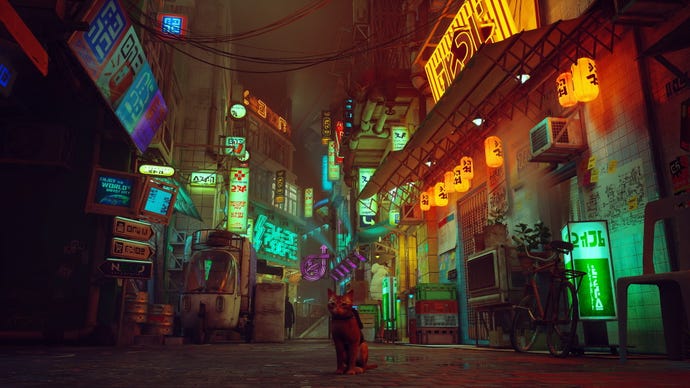
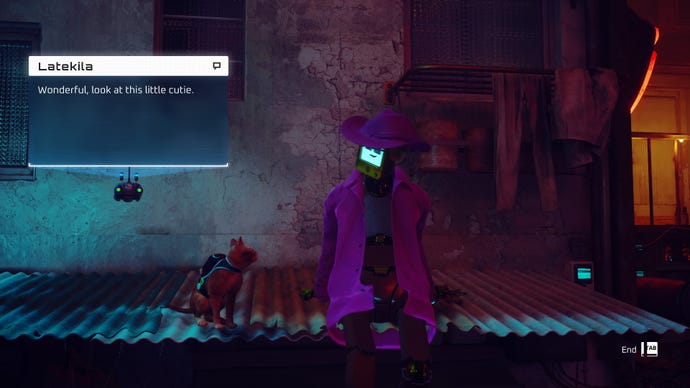
Indeed, considering the small size of BlueTwelve Studios, Stray’s production levels as a whole are phenomenal. The atmospheric lighting and attention to detail in this densely packed city makes it feel like a natural, living, breathing environment, and its population of exquisitely animated androids are imbued with a real sense of warmth and humanity. Heck, even the way they react to your cat’s meow (and occasional leg brush), with their LED faces lighting up into hearts, cheesy grins and annoyed frowns - not to mention the way their voice boxes melt into a goo of bleep-bloopy joy - is nothing short of extraordinary. Again, no spoilers, but keep an eye out for two robots playing mahjong around the half-way point. Easily one of the best moments in the whole game, I tell ya.
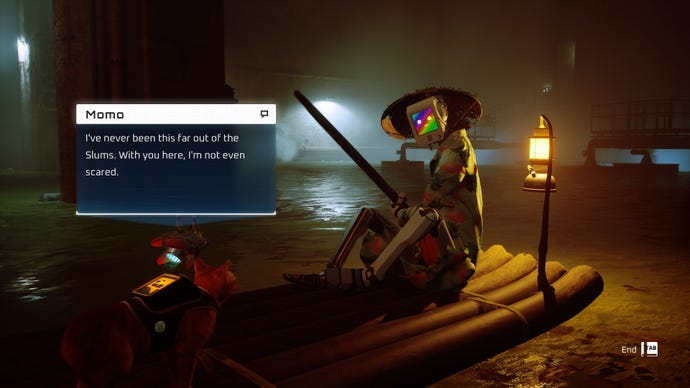
Me too, Momo. Me too.Why yes, I do want to party with you.
Me too, Momo. Me too.
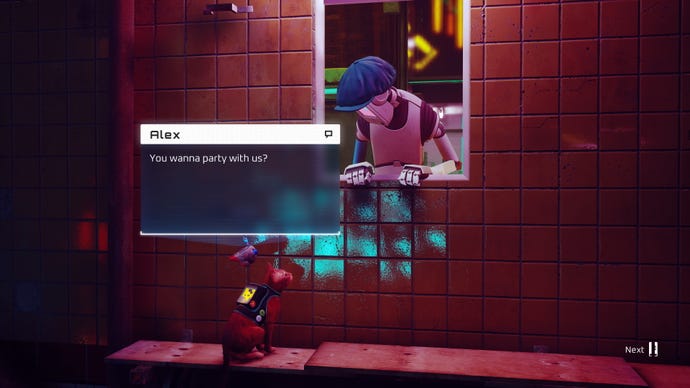
Why yes, I do want to party with you.
My favourite moments, though, are where your cat pal can take a load off for a while, curling up for a quick snooze in one of its many cosy-looking nooks. These sleeping spots are scattered throughout Stray’s environments, and while they don’t serve any actual purpose - you’re not going to glimpse any hidden secrets with them or anything - there’s just something very pleasing, and verycat-like, about the way the camera slowly pulls back, giving you a wide-eyed view of your surroundings. As the world zones out, and the chill music dials in, it’s yet further evidence - if any was needed at this point - of how BlueTwelve are fully tuned in to making this cat ‘em up as authentic as possible.
Will dog lovers and cat-haters get as much out of Stray as someone who, as we speak, has two stretched out purr machines on the bed behind her? Probably not, in all honesty, as fully inhabiting its feline lead is at least 50% of the appeal here. But even if you’re not massively into cats the same way I am, Stray is still a remarkable action adventure game in its own right, and whose naturalistic approach to 3D platforming is among the best I’ve seen. It proves we don’t need condescending slathers of paint to point us in the right direction anymore, and that there are better, more immersive ways of traversing dense and detailed play environments. That’s something worth celebrating in my books, so take note Lara Croft, Nathan Drake and every 3D action hero of the last twenty years. A good game of billiards isn’t the only thing you’ll learn from this four-legged fluffball.
