HomeReviewsStray Gods: A Roleplaying Musical
Stray Gods: The Roleplaying Musical review: a melodic narrative adventure that gives you something to sing aboutHitting the high notes
Hitting the high notes
Image credit:Rock Paper Shotgun/Humble Games
Image credit:Rock Paper Shotgun/Humble Games
Image credit:Rock Paper Shotgun/Humble Games
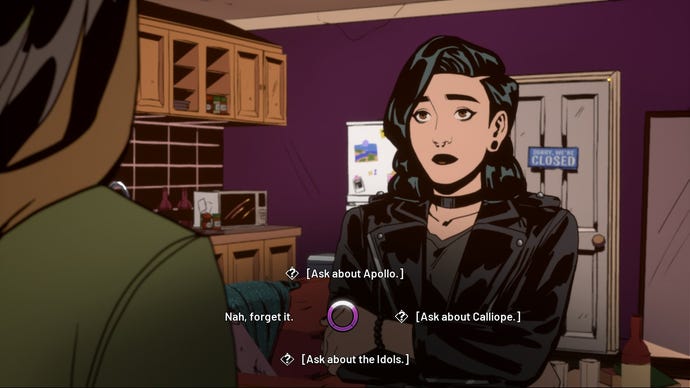
So how does a ‘roleplaying musical’ actually work? Well, as with any musical worth its salt, conversations in Stray Gods have a habit of turning into songs at the drop of a hi-hat. That’s thanks to protagonist Grace, a young singer who’s feeling lost in the world, then inadvertently inherits the power of the muse from Greek mythology. Not only does that make her suddenly immortal, but she can also now compel those around her to sing their feelings and desires - and at certain points in this narrative adventure, she does just that. The melody starts, characters set to crooning, and you intervene when prompted with choices that send the lyrics and music off at different tangents, leading to outcomes that fork the plot in various ways.
Image credit:Rock Paper Shotgun/Humble Games
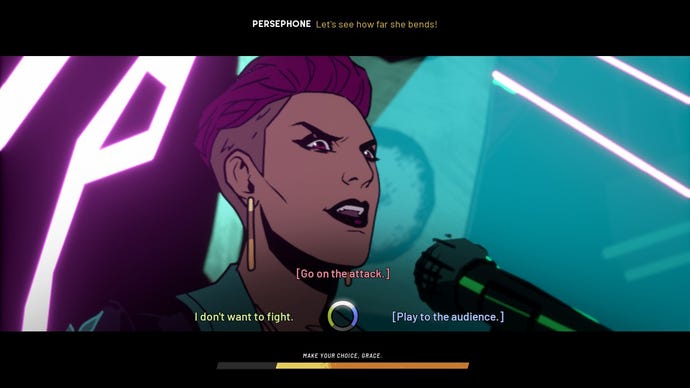
Image credit:Rock Paper Shotgun/Humble Games
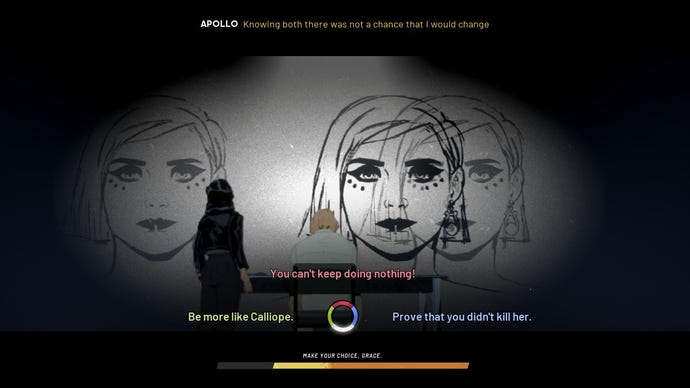
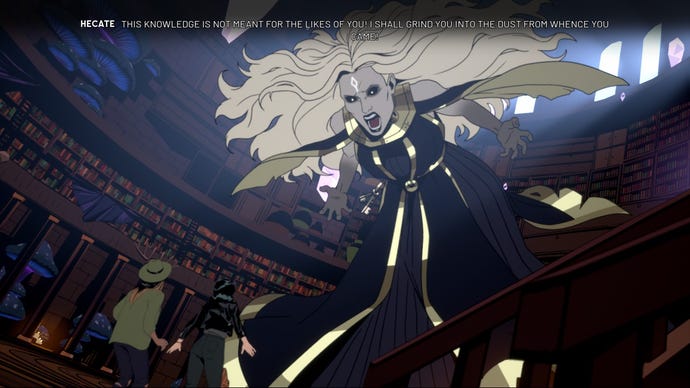
If that sounds dour, rest assured that Stray Gods handles big emotions and epic poem tragedies with a dignified touch, then shimmies back to mischief and humour like an especially supple salsa dancer. Conversations are snappy, with a believable rhythm, as Grace riffs off the personas of the idols with incredulity, rage and charm. If there’s any fault here, in fact, it’s that the Buffy influence brings with it a needlessly large dose of those self-conscious analytical quips the show (and Joss Whedon) was famous for, which feel rather worn these days. Medusa lets slip that she’s longing to taste the blood of a hero, for instance, before adding, “It’s a problem. I’ve been working on it,” when she sees Grace’s unimpressed expression.
Image credit:Rock Paper Shotgun/Humble Games
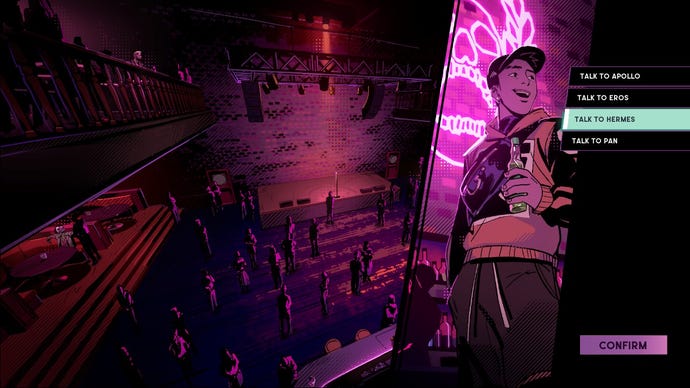
What matters most of all, of course, isthe songs themselves, and they’re certainly a versatile array, switching from comedic ditties to sassy lyrical battles or mournful ballads with consummate ease. Bailey and Johnson, along with Mary Elizabeth McGlynn as Persephone, display impressive vocal range, while Khary Payton as Pan steals scenes with a gravelly, soulful, scheming jazz cat style, even working a goatlike timbre to his voice. The comic highlight though belongs to Rahul Kohli as a pitiful Minotaur – the actor’s, let’s say, lesspolishedsinging voice lending itself perfectly to a bashful, fumbling serenade.
Having said that, however, these songs don’t necessarily stick in the head once they’re over. Whereas the big numbers in Once More With Feeling swim in the mind, there’s nothing quite as catchy to cling onto in Stray Gods' equivalents. In part, that’s due to their branching nature, and the lack of a single definitive version. But also, a few never climb above filler status, while others drift somewhat after strong starts. In particular, many of the compositions refuse to loop back to the original refrain, and it’s thus not unusual to feel like you’ve ended with a different song to the one you started a couple of minutes previously.
Image credit:Rock Paper Shotgun/Humble Games
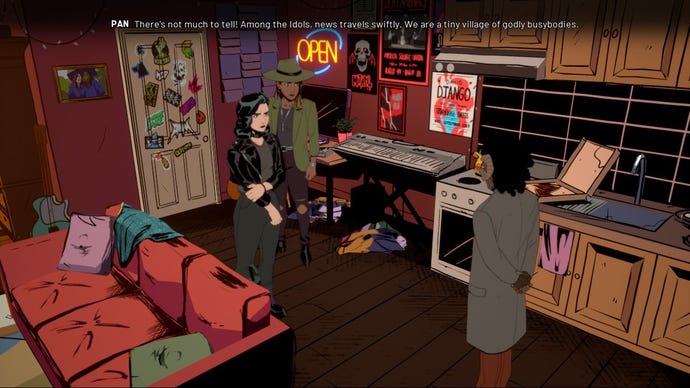
Stray Gods remains a beautifully choreographed work, though, because every element sings from the same hymn sheet. On reaching the end, I was soon tempted back in, using a feature that lets you load a save from any previous scene, wiping everything that came after so you can write a different fate. The branching relationships mean there’s plenty more to see on repeat, with different endings for most characters and different songs to unveil. It also helps that you can skip through dialogue pretty quickly, since the ratio of dialogue to song leans a little heavily towards the former in the second half.
A few gripes aside, then, the ‘roleplaying musical’ concept has proven itself a winner here, and if Summerfall ever want to give us an encore – once more, with even more feeling? – a sequel would be wholly welcome. Plus, isn’t it nice to hear those Last Of Us actors harmonising for a change, instead of pretending to kill each other?
