HomeReviewsSource of Madness
Source Of Madness review: machine learning makes this a messy rogueliteToo many tentacles
Too many tentacles
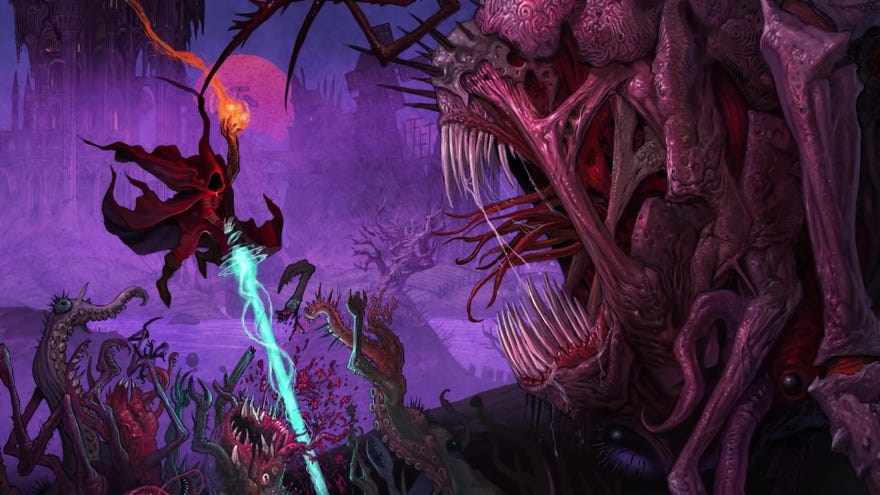
Source Of Madness looks at all the roguelites saturating the marketplace and it says, “Heh, you callthatprocedural generation?” The next day it looks at them all again and it shouts, “Pah, that’s not procedural generation is it?” Two days later it whispers, “Procedural generation? No way that’s what you’re doing.”
Source of Madness | Release Date Trailer | May 11, 2022Watch on YouTube
Source of Madness | Release Date Trailer | May 11, 2022

But forget procedural generation for a bit, because without it the game’s core resembles that of your usual roguelite. You’re an acolyte of the Loam Lands, a Lovecraft-inspired world of spiky buildings and jiggly strips of flesh. The aim is to uncover the secrets of the Tower Of Madness through the process of roguelite erosion, a.k.a. chipping away at it over many generations. Die, and you can spend blood and blue orbs you’ve earned from fallen enemies on permanent upgrades that’ll help you not die as fast the next time around. You get the drill.
And if the drill is done well, likeRogue Legacy 2orDead Cells, then you get The Itch. No matter how swiftly a run ends, you’re rewarded in some way or another, whether that’s gold to spend on a valuable upgrade or an entirely new encounter you’re excited to revisit. The “Just one more run” urge reels you in, like Robson Green catching a grouper off the coasts of Ecuador.
Even if you do find a powerful item, it rarely excites. They just don’t feel all that impactful when you press the trigger, and it’s thanks to the game slight jankiness. I spent lots of Blood I’d gained at one of two big skill trees back at base on a spell called “Flame Wave”. FlameWave. Cor, it sounded so cool! But in practice, it was a rather disappointing blur of fire that flicked over enemies and made some measly damage numbers pop-up.
Sometimes you’ll encounter a shop filled with expensive treats, but sometimes it’s your only way to pick up an item that fulfils some sort of power fantasy.
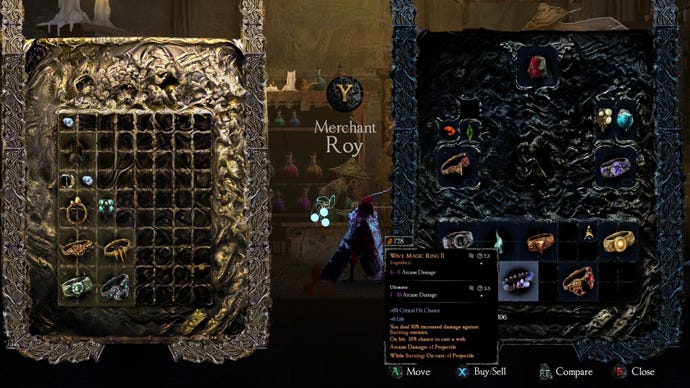
Other spells are a bit better, like a bamboo blast that fires spikes in a big circle. Charge it up, leg it into an enemy, and it’s like letting off a massive shotgun blast. There’s also a basic slash that cleaves at enemies with a squish and a squelch. Once you’ve unlocked more acolyte classes like Pyromancers and Bloodmancers you’ll quickly gain access to bigger, badder spells in the skill tree. But it’s a long, grueling road for a roguelite that’s too wobbly.
This is where the game’s procedural generation bites it in the arse. Roguelites shine when they’re refined to a tee; no excuses allowed. Rogue Legacy 2 is a prime example of a perfectly tuned roguelite loop. Maps and enemies are clear, coupled with precise movement and attack powers. Die and you’ll struggle to find an excuse aside from, “yep, that’s my bad”. Source Of Madness and its writhing Bamzooki enemies, coupled with loose movement and imprecise attacks, makes for a bevy of excuses when you succumb to a smack or whatever it was that killed you.
Fighting big bads is alright. Again, it’s easy to get caught in their tangle of tendrils and tentacles.
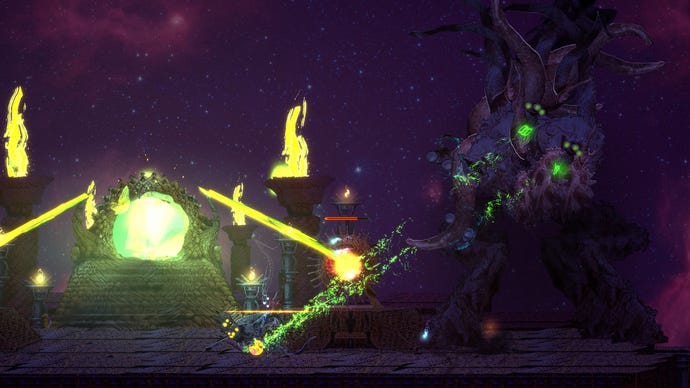
Where the procedural generation really shines is in the world and its gloomy, aesthetic. Each run is relatively fresh, with dank caverns and spiky buildings giving way to rooms that resemble giant intestinal tracts. And over multiple runs the game hits you with more and more random events. There’s a googly eye slot machine that’ll reward you with things like special items and extra cash if you’re willing to gamble blood. Hidden rooms give way to mega-zooki and golden chests, if you’re able to survive.
