HomeReviewsSigns Of The Sojourner
Signs Of The Sojourner reviewThe hand you’re dealt.
The hand you’re dealt.
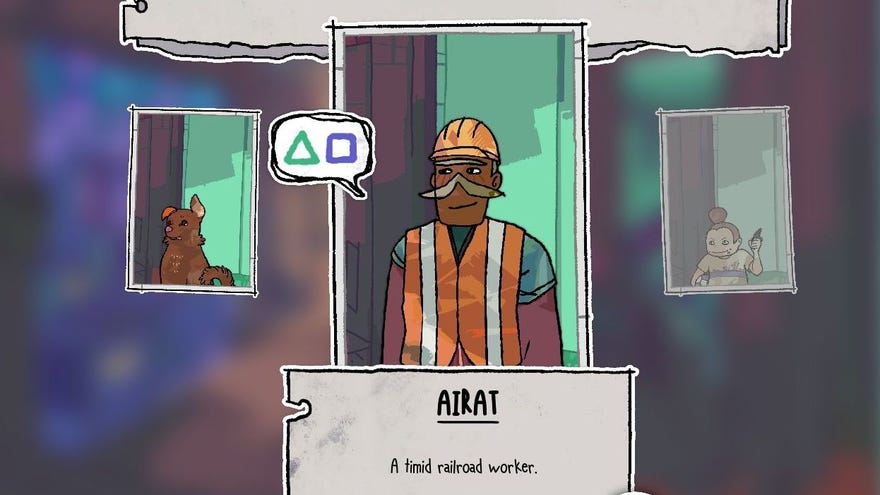
Language: it’s a funny old game, innit? I don’t mean the languages of different countries, either, I mean the different ways of communicating within that. From all the different regional names forthis small but noble beast, to whatever your family calls the TV remote control (ours was “iffer-offer”), to the fact that UrbanDictionary is a thing that exists at all, it can be hard for people to understand each other even when they’re talking the same language.
EnterSigns Of The Sojourner, a deck-building card game with a story about growing up and outgrowing home, where the cards you play stand in for conversations. This game: it’s a funny old language, innit?
To see this content please enable targeting cookies.Manage cookie settings
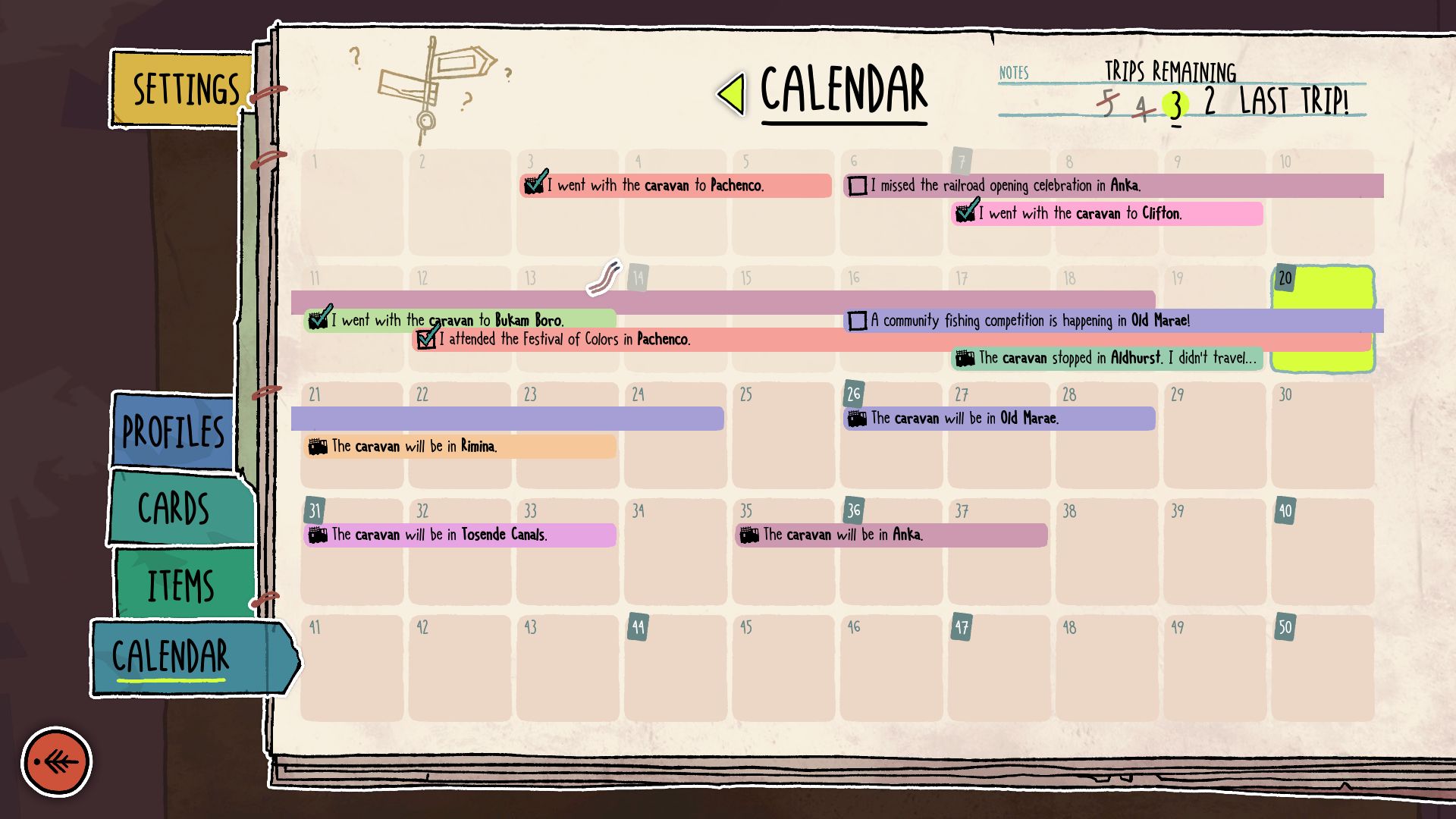
You, unnamed protagonist with what look like cat ears, live in a world maybe a step removed from our own, where travel is treacherous and goods and people are moved in a caravan that loops around once a month(ish). Your little home town, Bartow, is in danger of falling off the route, following your mother’s recent death and the bodega she ran going unstocked. So, you have to join the caravan and get more goods - chocolate from Anka, matcha tea from Bukam Boro, paintings and bottles of wine from slightly bougie art town Pachenco - to make Bartow a place to visit.
And this is where the cards come in earnest. It’s an ingenious system that gets more clever the more I think about it.
I’ve just completed one successful chain with this fellow who sells pickles - all the cards light up in a very satisfying way.
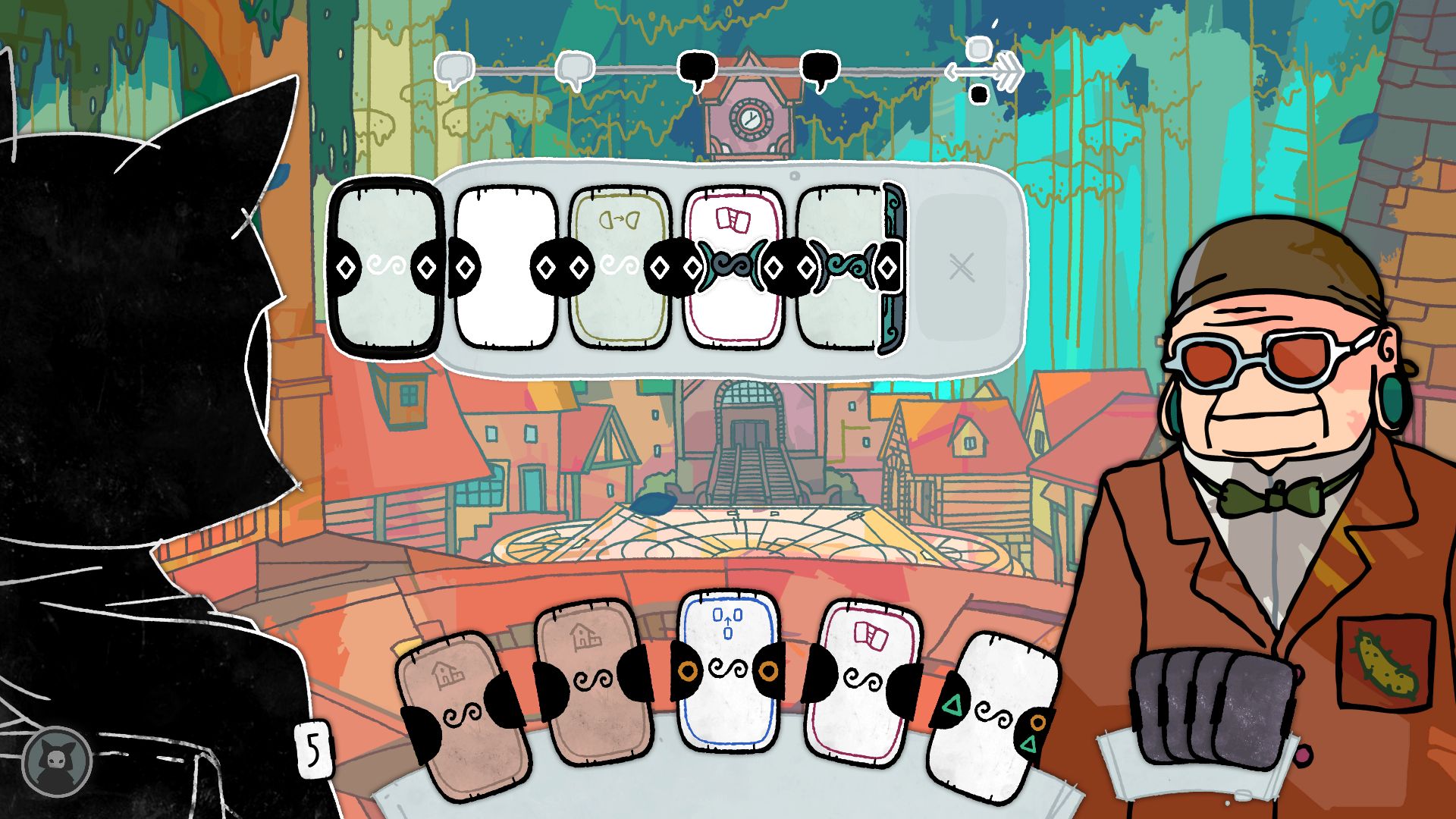
I don’t normally go in for card games because they just seem a bit mercenary, but unlike yer Hearthstones or yer Runeterras, the card games in Signs Of The Sojourner represent “having a chat”. You don’t actually see the conversation you have, you don’t read the words, but a round of cards results in either a good outcome or a bad one.
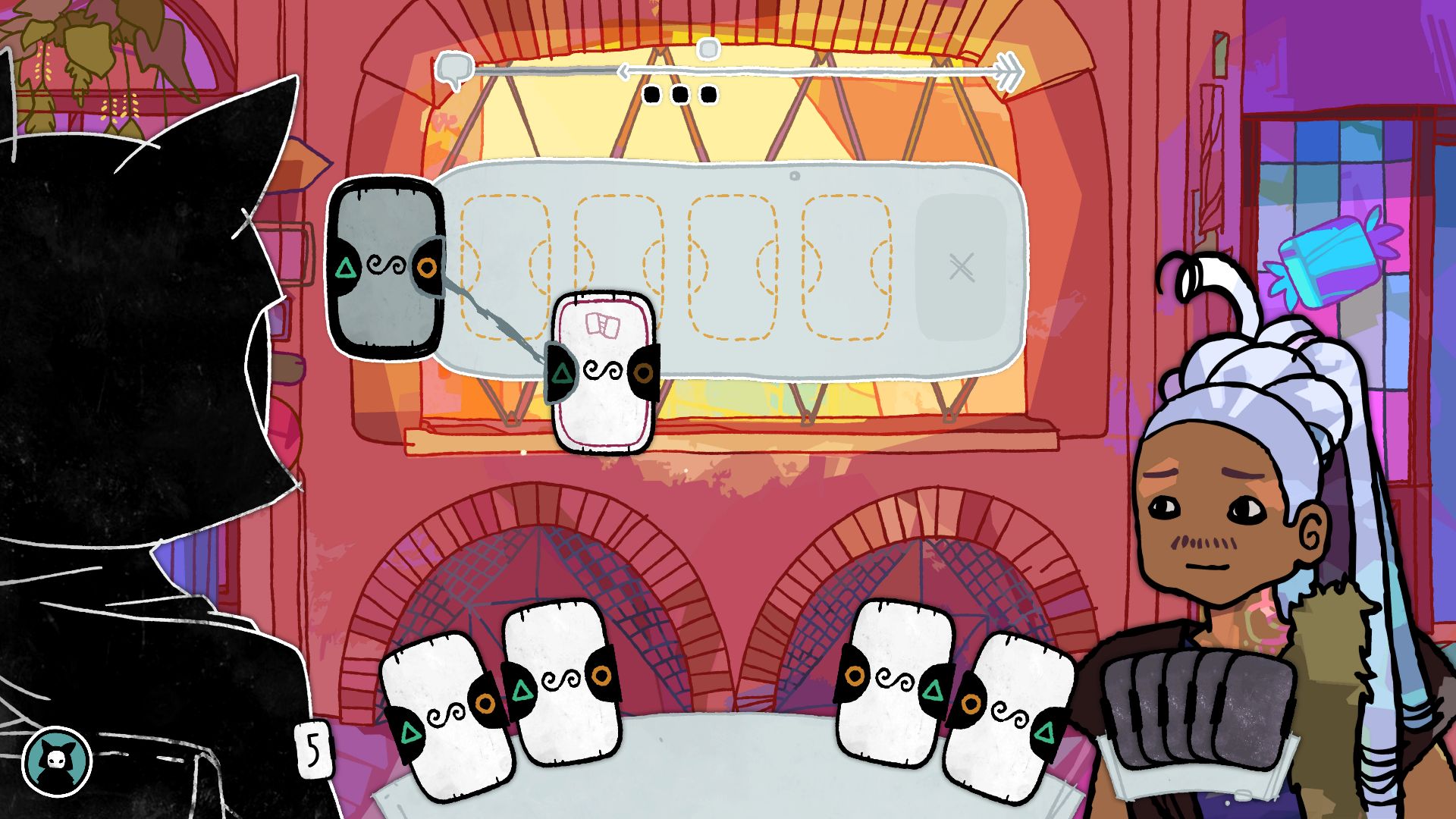
Your goal is to make a connection, metaphorically and literally. You and whoever you’re talking to take it in turns to lay cards. They’re similar to dominoes - they have two sides, with a coloured shape on each, that you have to match up in a continuous chain. So if my partner plays a card that goes GREEN TRIANGLE - ORANGE CIRCLE my next card needs to, ideally, have an ORANGE CIRCLE on the left side to continue the chain (of between three or six, depending on how difficult the chat is going to be). A successful chain gives you an agreement, and a broken one gives you a disagreement. The conversation ends when you’ve maxed out on either agreements or disagreements.
With me so far? It starts off quite simple, but it becomes more complicated. After every conversation you get the chance to discard an old card from your deck, and pick up a new one garnered from the experience you just had. These often involve abilities attached to cards, allowing you to control your chain a bit better. A card with Chatter lets you play another card immediately after it, while Clarify allows you to insert the card anywhere in the chain, and Reconsider reshuffles your deck to get a new hand. Accommodate cards are blank and clone the one played just before, and playing the same card as your partner results in an accord, which locks in your progress.
Every place you chip up in has two symbols that govern the kind of cards the inhabitants will have in their deck, so you know ahead of time if they’re likely to be a GREEN TRIANGLE/ORANGE CIRCLE town or a BLUE SQUARE/LIGHT BLUE DIAMOND type of place (and these also relate to ways of being - empathetic, direct, that kind of thing). So as you go, you try and shuffle more of these cards in your deck, so you can do well talking to different people.
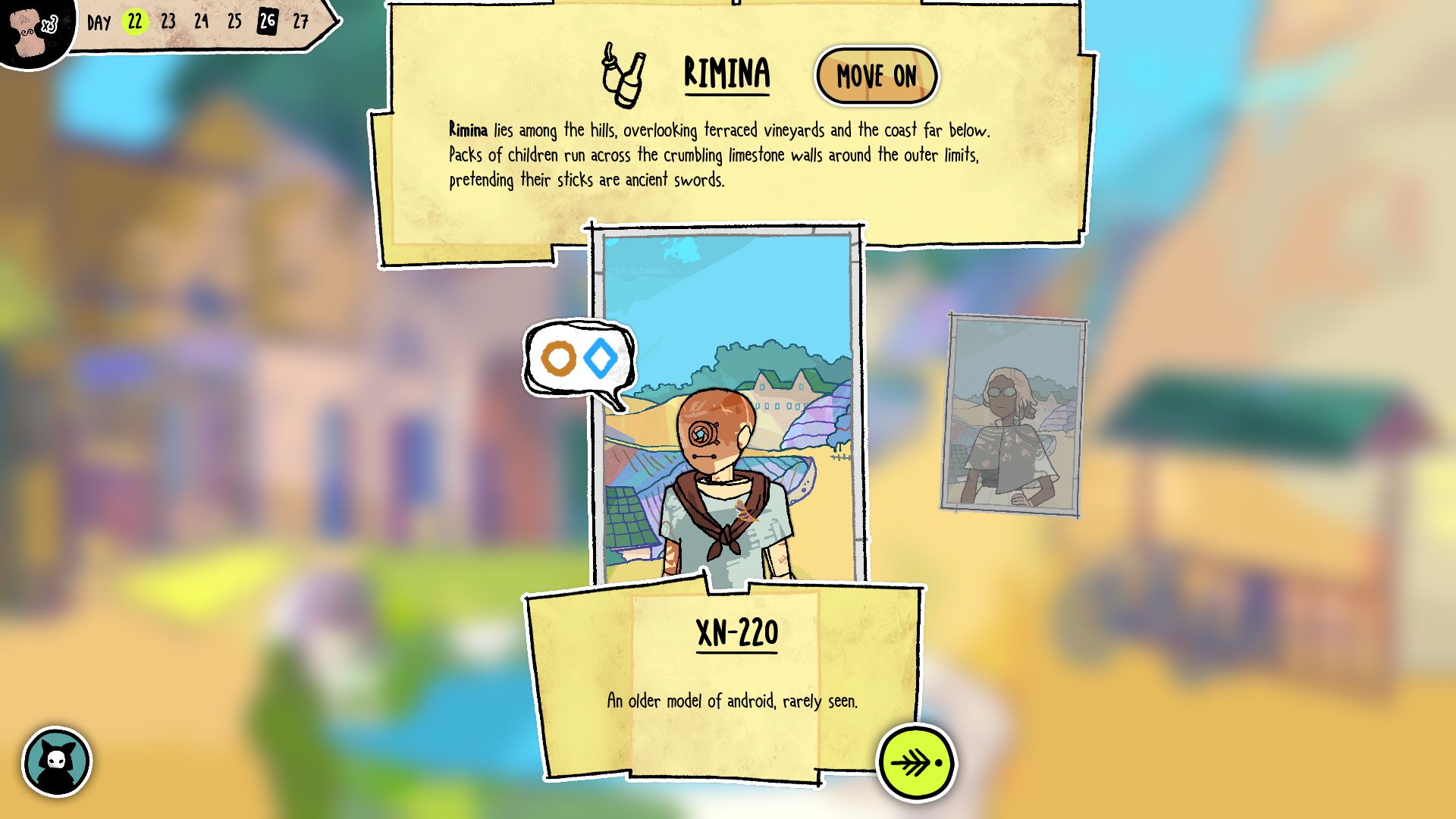
Except, after a while, you realise that the deck is reallyyouand you’re learning different ways to behave from the experiences you’ve had. Your travels are literally changing you as a person. And then you notice that the way you behave is more different from how you behaved at home, the further away from home you are. And eventually the conversations you had locally, which were so easy to start with because you all spoke the same language, are getting harder and harder, because you’ve swapped out so many cards - you’ve changed so much - that you don’t have as many of those GREEN TRIANGLE/ORANGE CIRCLE cards to fall back on. And your best friend from childhood gets cross with you, even though you found some scrap for repairs to his coffee shop.
Aha, yes. I get it now. There’s a mounting anxiety that maybe you’ve outgrown things. You change so much in such a short time outside Bartow, that maybe it isn’t worth staying. All this through cards and some clever halves of dialogue! Well played, Echodog Games!
I don’t think that it should sacrifice everything so I can get the equivalent of a 360noscope 100% cheevo on a gentle game about connections and empathy, obviously. Just maybe a thicky mode for tired thickies that makes all the length of all the chains one card less than they would be - a gnatz easier. Because sometimes I don’t want to choose between a nice story that makes me feel like I accomplished something sometimes, and a clever analogy giving me a capital e experience. I have, to borrow a metaphor, a lot of Fatigue cards in my deck some days.
