HomeReviewsScarlet Nexus
Scarlet Nexus review: slick anime action with a double-edged storyYou don’t know the half of it
You don’t know the half of it
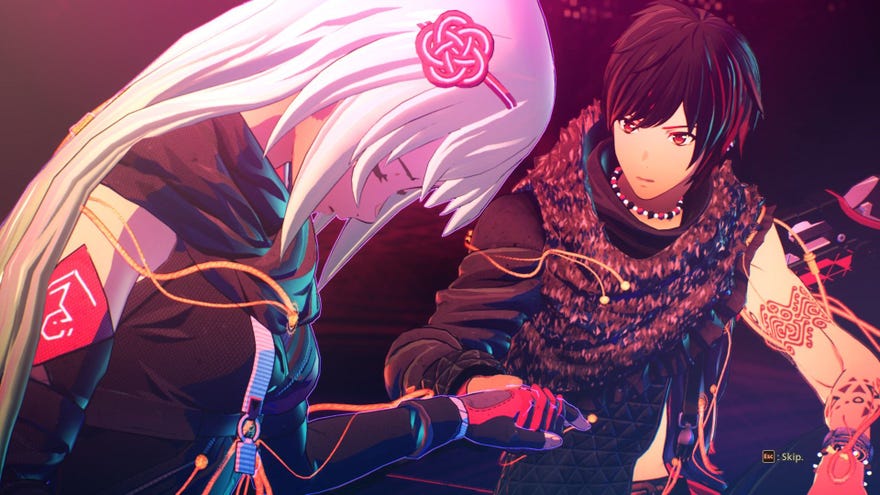
You are a “child of the state” in this big-eyed action RPG that mixes stylish, speedy combat with slow manga storyboarding to drip-feed a tale of conspiracy, war, and weirdness. A child soldier with special telekinetic powers and a bunch of fellow superhero child friends who fight off alien creatures that plague the world. You will hack, slash, and take your mates out to an inexplicably normal restaurant to discuss the latest drama. “You know what these teenagers need?” said the suspiciously overbearing government ofScarlet Nexus, as they pump another round of kids full of medicine. “More hormones.”
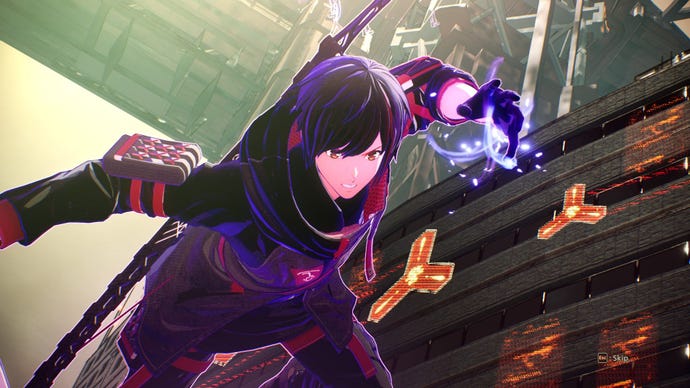
It’s a game of two parts, and I’m not just talking about the split storyline (more on that soon). Firstly, you spend time running through ruins, old hospitals, snowy mountains and the like, battling wonderful and hostile beings called “Others” at the behest of higher-ups. This is pure action game. Pull a trigger to psychically throw a block of concrete, uppercut a monster into the air and perform a combo of attacks while they hang there. You can harness the abilities of team mates who fight alongside you. Your fiery friend Hanabi can do pyro attacks, so activate her ability and your sword will become flaming hot. Shy girl Tsugumi is clairvoyant. Activate her power if an enemy goes invisible, and you can once again see your foe.
Scarlet Nexus Gameplay ReelWatch on YouTube
Scarlet Nexus Gameplay Reel

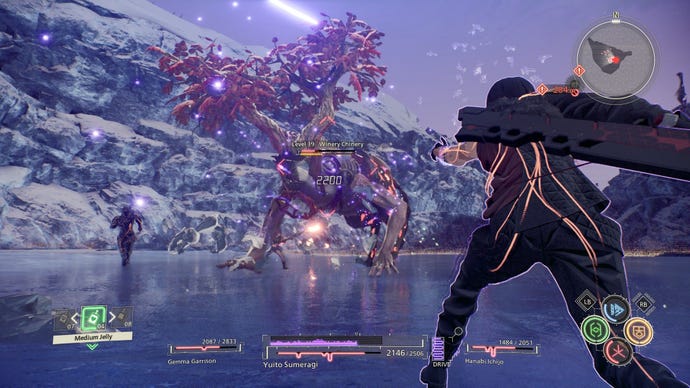
You might find yourself looking at one corner of the screen for the entire game - the Minimap Problem. Navigating walls and slurping up items like a very expensive game of Nokia snake. Turning off the minimap helps a little, but you often end up summoning the map anyway to check if there’s a save point coming up. This kind of dungeon design is commonplace, I know, and you’ll know already whether it’s something that bothers you or something you can live with.
I can tolerate it, provided the storytelling and the characters pick up the slack. So do they? Well, partly. I’m interested in this world, and when relationships between characters degenerate, the story gains a fresh dollop of multi-sided conflict with countless motives. My favourite person is Arashi, user of hypervelocity and self-interested slacker. At one point she takes you out to an eating contest, but only so she can claim the free crate of soda that is awarded as the prize. I’d eat pizza and watch daytime TV with Arashi.
What can I say? The man is passionate about his gyoza.
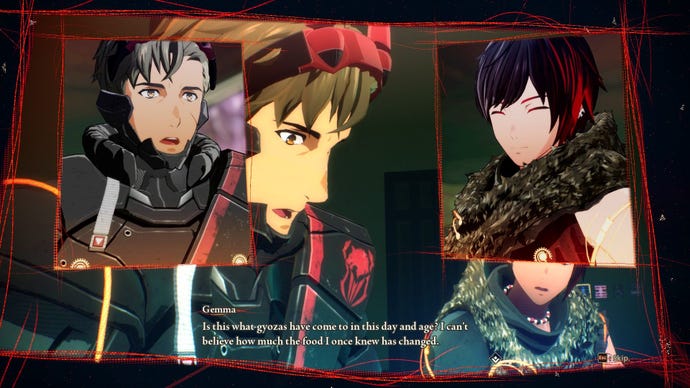
The eating contest takes place in a “bonding episode”. Every chapter closes in the gang’s hideout, see, where you can trigger these cutaway bonding chats. Bring rock-bodied 50-year-old Gemma to a food joint and he will get picky about gyozas. Speak to pint-sized teleport prodigy Luka and he will get adorably talkative about exercise regimes (“I want to have a shredded back,” he says. “I would like to discuss a high protein diet with you.") These sequences gradually unlock new skills as your bond increases. Fire Gal gets a flamey tornado attack, for example. More importantly, the bonding scenes made me laugh or smile. They’re my favourite part of the game.
You can also give characters gifts, items ring-fenced for particular individuals. A fashion magazine for firehurler Hanabi, a nice houseplant for clairvoyant Tsugumi or a coat rack for stealth lad Kagero. These gifts then appear as props in the hideout. Each character has their own space that gradually fills with the souvenirs you find in the rubble of levels. Imagine if the spacepals ofMass Effectdidn’t smooch Shepard when you plied them with sufficient affection, but instead showed you their workspace and said: “Look, it’s that canister of oil you got me. I love it.”
The bonding is a lot less open-ended than I expected froman earlier preview, however. It has none of the missed opportunities or decision-making ofPersona, for example. You don’t choose to go for a walk with pyrolass and miss out on rockbuddy’s pep talk. Instead, bonding episodes are offered in predefined bursts, and the only choice you have is to accept them or neglect them. And why would you ever say no to gyozas? Especially when those gyozas unlock new abilities.
Not all abilities are gained through bonding, though. You have your own skill tree, which unlocks object-hurtling powers, double jumps, aerial dodges, damage buffs, and psy-meter increases. One skill unlocks the ability to use multiple pal-powers at once. In other words, you can eventually turn into a hard-skinned, fire-burping, ghost-seeing teleporter, capable of fending off every type of enemy at once. Just watch your cooldown meters if you do.
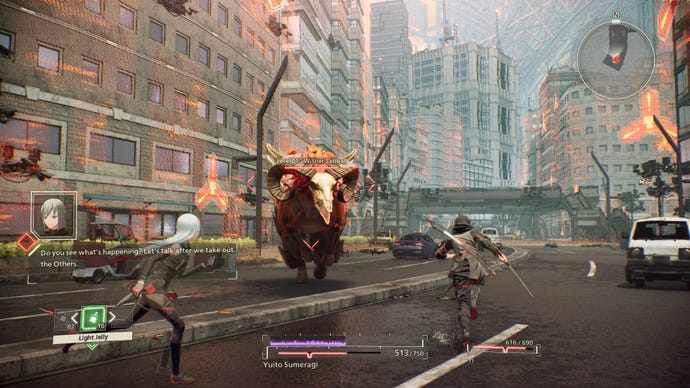
This can also make combat a little busy, especially as encounters begin to mix combinations of enemy types and the tempo of fights increases later in the game. The lock-on isn’t great at tracking enemies, and switching targets is a pain on a game pad, requiring you hold down one shoulder button and twiddle the camera stick left or right (annoying when one thumb is busy bashing hack-o-slash buttons). Combined with the snowballing powers, later fights are frenetic in a way that sometimes feels messy.
There are other irritations recognisable to those cursed with a love of video games. Like boss fights you’re designed to lose but which don’t reveal themselves as such until you’ve splurged all your health jellos. There is also an “angry mode” that makes attacks more powerful, but it auto-activates once a meter fills, instead of being activated with a button, so it often flares up at the end of a battle, and you end up walking around a cleared map with furious power surging pointlessly through your veins, emptying a meter you could have saved for the next fight.
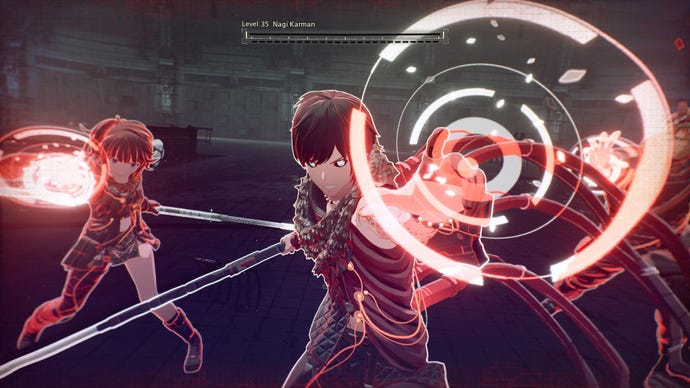
Scarlet Nexus is a decent game of two parts, and both have weaknesses. The combat is swish, stylish and usually competent, but there are too many foibles that stop it from feeling like atruly great RPG. The story is vibrant YA dystopian fiction that goes JRPG-cuckoo (in a good, laugh-out-loud way) at the 15 hour mark. But the plot has more holes than a chain-link fence. Why do people on opposing sides of a civil war keep brain-texting each other to make small talk? Why does nobody bring up the very significant murder that occured earlier in the story?
I don’t think those problems are enough to put off folks who fancy a Netflix anime series with a playable combat system attached. But for me it’s enough to defeat the central gimmick of the game, the twin protagonists. I already know I don’t want to play the same levels again with knife collector Kasane, for example, when I could just watch a YouTube compilation of the cutscenes. When something is broken into two parts, only those with the patience to put it together will see the benefit. But that’s too much repetition for me.
