HomeReviewsSands of Salzaar
Sands Of Salzaar review: a sparkling, but occasionally muddy action RPG gemThe whirling skirmishes
The whirling skirmishes
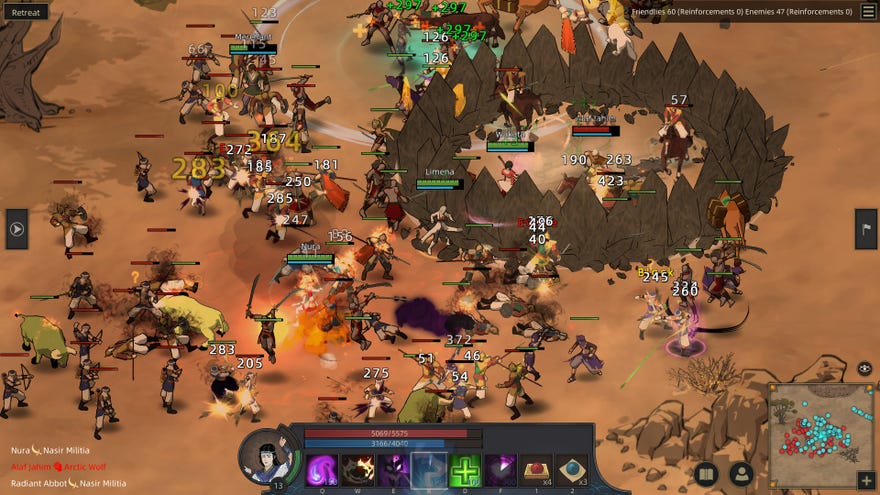
It’s no clone, though. While its component parts are familiar, Salzaar does enough of its own thing to win my affection, and its odd but sincere personality shines despite some muddy edges.
Sands of Salzaar - Official 1.0 Launch TrailerWatch on YouTube
Sands of Salzaar - Official 1.0 Launch Trailer
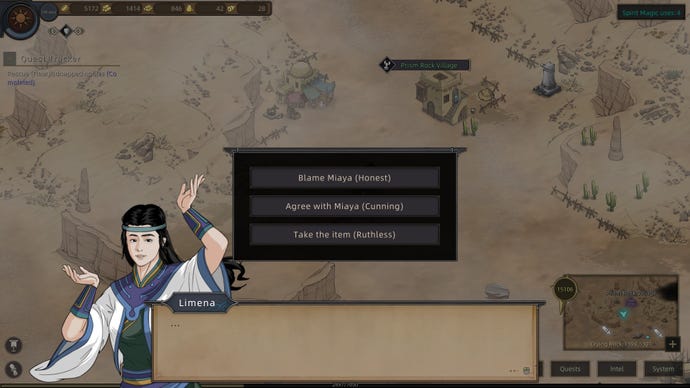
For one thing, while many side jobs are boilerplate deliveries or fights, a fraction are tiny, one-off micro-stories. There’s one about a quarrelling father and son having a blacksmithing contest you must judge philosophically. None of these stories are earth-shaking, and the English translation of its original Simplified Chinese text is generally just fine enough to rule out much artistic impact. They also don’t tangibly define your character much, but they do add a degree of personality and flavour. Recruited NPCs have personality traits, and occasionally interact and ask for your opinion. Again, this doesn’t really do much materially and is a little undercooked in the grand scheme of things, but it colours in the framework.
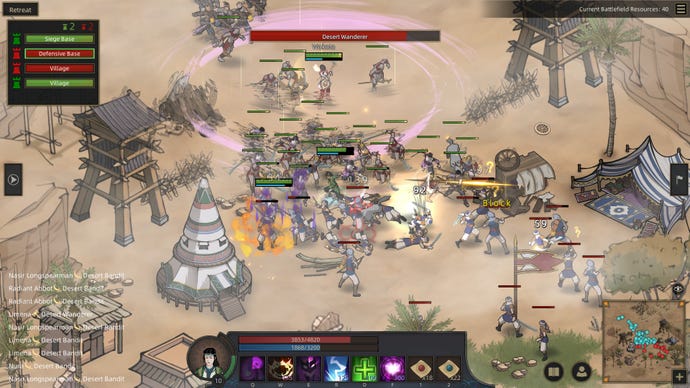
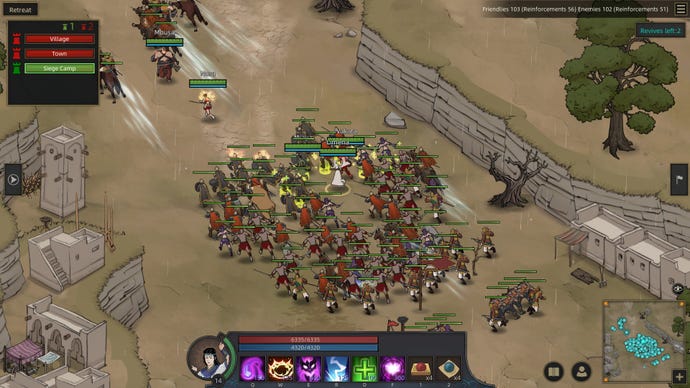
Whatever you choose, battles arechaotic. Since itentered early accessdecades ago in 2020, it’s added a very welcome option to slow battles to 75 or 50% speed, but the sheer number of units and spells and special attack effects knocking health numbers out of people make the idea of an orderly fight seem quaint at best. Diving into the front line is outright foolish for a lot of character classes, and even raw melee fighters will likely rely heavily on sweeping area attacks more than holding any kind of line.
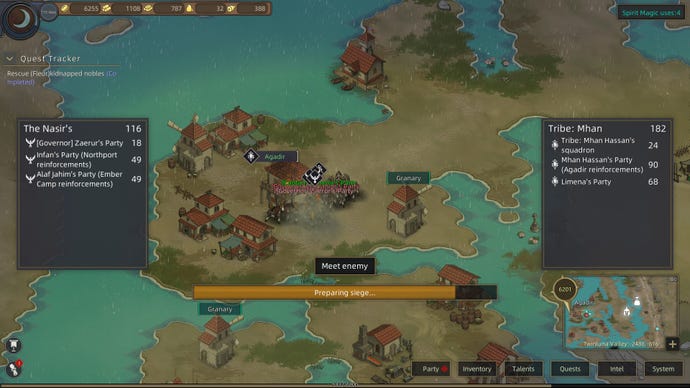
This means that whereMount & Blade’s combat is about your own prowess, Salzaar is about delighting in your character’s power. Not in a cruel sense, but more an innocent kind of delight. Awe at spectacle rather than an expression of superiority. It’s a distinction that will put off some players. It’s a difference I thought would bother me, but instead puts the game in a different category, where you can enjoy it for different reasons.
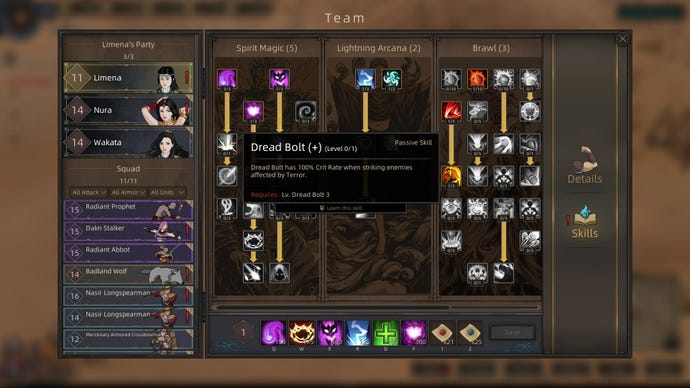
How you allocate these skill points makes a huge difference too, to the extent that it’s quite possible to paint yourself into some underpowered corners. I spent legacy points on a healing skill for one character that I plain never used, and spending more skill points on a glorified plaster when I had a lackey who could heal five times as much for 20 soldiers at once would have been worse than useless. It would have also cost me the chance to upgrade my Confusion spell to one that also summoned a spirit to fight for me, or add an area attack that could freeze multiple attackers. Other characters, meanwhile, could summon what was essentially a magical assault rifle for 30 shots, teleport behind a single target and knock them into the air for huge damage, turn into a wild animal, or curse a group with a status effect that, it just so happened, gave automatic critical hits to about a third of my army.
Several classes also have their own plot missions in addition to the optional main story (an entirely okay one about a gathering threat of Ifrit - evil fire people - that eventually takes priority as a threat to everyone if you pursue it far enough), which again add a lot of variance. The Spirit Witch gets a sort of Highlander deal, where she wants to seek out and challenge other spirit witches to become the most powerful. While she’s quite weak in a fight, she has access to some good debuffing spells, and on the map her mind control powers allow her to periodically recruit hostile bandits or have a hostile general stand down his entire army and leave her alone for a day. The Sultan, meanwhile, starts you with your own hamlet on a tiny bonus map, and more starting army slots than my Spirit Witch had after a dozen hours. His first priority is gathering the strength to see off a rival noble who keeps pestering him about some mythical artifact.
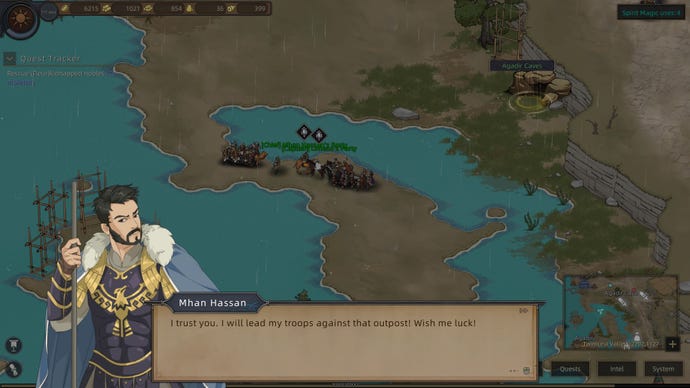
Companions have their specialties too, varying wildly in their usefulness. Chum up to them enough and they can even give your regular units bonus abilities. I’ve had one martial artist lend half my army a constant chance to cause an explosion any time they defeat an enemy unit - including the attack wolves and fairies I’d bought from an animal trainer.
Upgrading any unit once they gain enough XP costs money and some combination of wood, stone, and jade, the exact balance of which depends on the unit type. This becomes a big factor in building your army, as you go from picking up loose resources lying around the world to assaulting special sites likely to provide what you need, to ultimately conquering towns and building mines and buildings yourself. Or you could rely more on the talent point system, a wholly separate ability tree offering bonuses like more resources, fewer casualties, or more slots for named companion NPCs.
It’s a game meant to be replayed, is the thing. Legacy points can unlock higher difficulties, for one thing, but there are also far more skills and combinations than one playthrough can possibly show. And therein lies its biggest problems. The first is a lack of information. Whole features of the game are hidden away in tabs of an interface you’ll only see in town, or after clicking on a specific conversation option with random characters. What status effects actually do, or what’s a proportionate upgrade to a character attribute is entirely opaque. Previewing what an NPC can do is entirely separated from conversations with them, and though the translation is generally adequate, some dialogue options and spell descriptions are a little unclear. Most clumsily, you’re not told what attributes and skills any class has access to until after you’ve spent your legacy points on bonuses. I’d recommend considering your first character a draft.
There’s not a ton of direction, and the quest log is only semi-reliable, particularly when you need to track down a specific person. These issues diminish, as do any early game difficulty or aimlessness as you learn how things work, and there are certainly harder and less friendly games out there. It may sound like there’s a lot to manage, but the moment to moment business remains straightforward roaming from place to place getting into scraps, so it never feels overwhelming so much as… unclear. The real issue is its pacing.
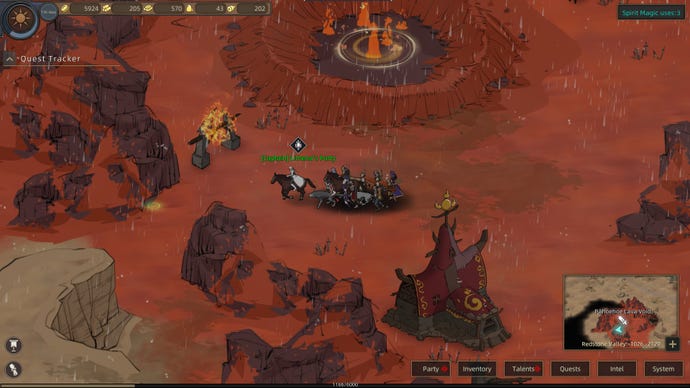
The game moves a lot faster for some classes, which means that there won’t be a typical first experience for most players. But most players will probably find things taking too long to get going. The best fights are somewhat evenly matched, but until you’re familiar with army compositions and your own powers, most fights will see you absolutely pasting your enemies in seconds, or if you antagonise a faction, hopelessly outmatched. To its credit, the auto-resolve system does fine with most fights you could win handily, but that doesn’t remove the grinding, and skipping more than an occasional fight feels like defeating the point. And finally, the movement on both the map and battles is just a little unresponsive at times, making melee a risky proposition for all but the sturdiest characters.
