HomeFeaturesRoguebook
Roguebook has me struggling to choose between what’s smart and and what’s funYou don’t understand, killing fairies is the optimal strategy
You don’t understand, killing fairies is the optimal strategy
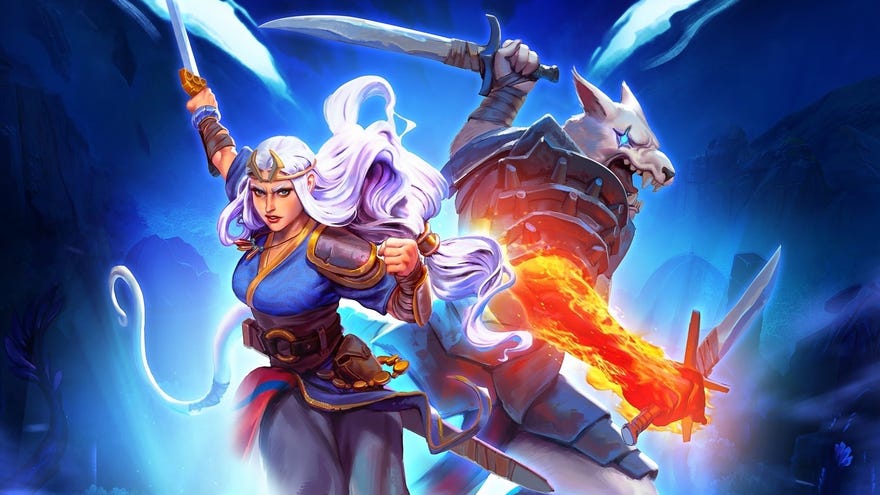
At first, me andRoguebookgot along swimmingly. It’s the best roguelike deckbuilder sinceMonster Train, which isn’t to say it’s nearly as good, but is to say I anticipated playing it for dozens of hours. It’s got a nifty take on exploration, solid combat, and adorable raccoons who load other raccoons into cannons. It’s also got optional fights where you laboriously beat money out of golden fairy orbs, however, and these have spoiled the entire game for me. I’m unlikely to go back unless they’re tweaked, because my stupid brain can’t tolerate either passing up boring yet strategically wise fairy muggings OR clicking my way through them.
That really should be a minor slight. It’s not you, Roguebook, it’s me - but also it’s definitely you, a bit. Same goes for all the other videogames.
Roguebook - Launch TrailerWatch on YouTube
Roguebook - Launch Trailer

Roguebook is a textbook befuddler. After your first win, you start climbing up difficulty levels. They’re similar toSlay The Spire’s Ascension ranks orMonster Train’s Covenant ranks, except cleverer because you get some say in how to make life harder for yourself. You unlock more modifiers each time you beat the game, over and over again until you reach the very biggest difficulty number, which is when you get to pat yourself on the back and question your life choices.
It sucks. Using it means you’ve got to spend a good chunk of every game hunting down the rich and wailing on ‘em before they can flee, just mindlessly lining up your highest damage cards. I still felt compelled to beat up fairies for several runs in a row, though, because it was so lucrative. A system that was meant to inject variety actually railroaded me into repetitive non-fights that led to me quitting completely.
Pictured: lucrative fairy-beating
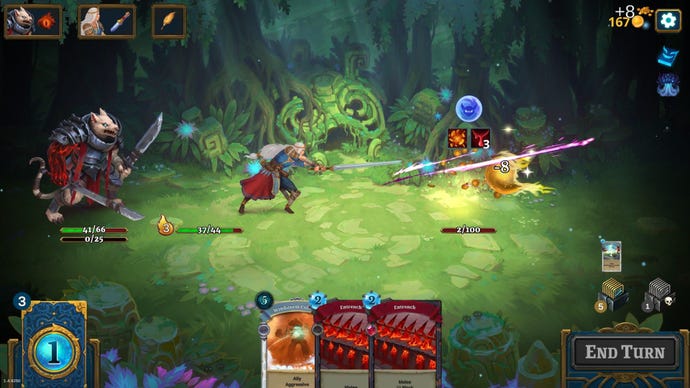
I can hear you screaming at me to just get over myself. Picking different modifiers really shouldn’t be such a big deal, but it would mean making a hard task even harder, and I can’t bring myself to do that. I think part of the dilemma lies in how I’ve instinctively framed the problem: climbing up ranks in Spire-likesdoesoften feel like a task, and this highlights its nature as a self-inflicted one I can choose to step away from. Roguelike deckbuilders can be fantastic, don’t get me wrong, but playing the same one beyond a certain point feels like plugging yourself into a flowchart. They place you in a comfortably automatic mode of thinking where the comfort is dependent on you not clocking the extent to which you’re on autopilot, and knowing I’m playing non-optimally is enough to break the spell.
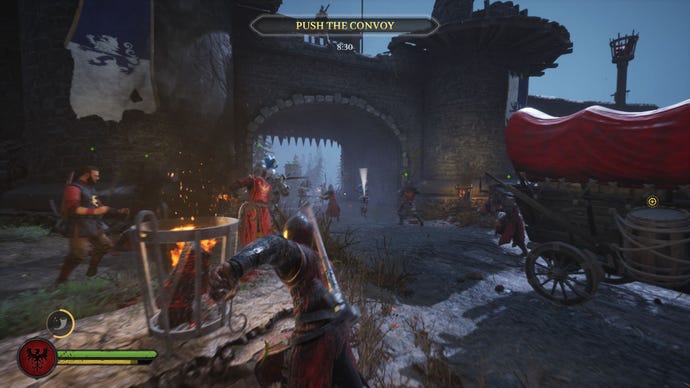
The compromise I’ve come to is to swap perspective each time I die, which gives me the best and worst of both worlds. I’d much prefer it if third-person wasn’t an option for anyone, but I’ve had to settle for giving myself a handicap 50% of the time. I can’t think of another competitive multiplayer game where I’m willing to make that sort of sacrifice, and doing it at all is testament to both a degree of personal growth and just how fine that first-person chopping really feels.
Is third-person cheating? You decide.
You might be immune from this curse, or it might be something you encounter all the goddamn time. Maybe you can’t stop using an overpowered sniper-rifle, or exploiting a particular weakness of a sloppy AI. Maybe you can’t stop yourself from always prioritising science in Civilization. It’s a curse that crops up whenever there’s a collision between something you suspect might be interesting and something you know to be good.
I don’t really have a good answer for how to deal with it, beyond a vague imperative to “chill”. Problem is, that will never silence the niggling voice in my ear, whispering about how I could have fairy blood on my hands and fairy gold in my pockets. Optimal game design might require optimal and interesting decisions to coalesce, but it seems wrong to offload all that responsibility on developers. I know it’s a matter of mindset. At the end of the day, though, choosing not to care about something is no simple thing - no matter what you’re talking about.
