HomeNewsWe Dwell In Possibility
Robert Yang’s latest game is a queer crowd sim about gardeningPlay it for free in your browser
Play it for free in your browser
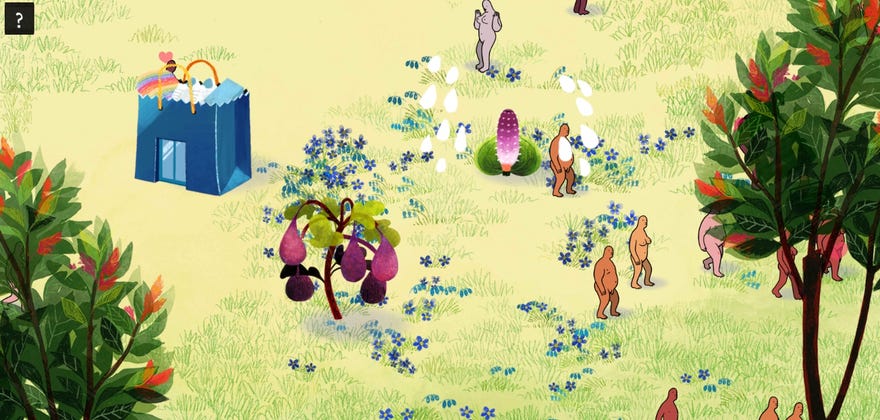
Robert Yang has released a new game in collaboration with illustrator Eleanor Davis and the Manchester International Festival. It’s called We Dwell In Possibility and it is a queer gardening game, which you canplay in your browser(possibly NSFW). It will take less than ten minutes, but if you need a little more context before diving in, I’ll endeavour to provide it below.
We Dwell In Possibility is brief, so it’s hard to describe without spoiling some of the experience of discovering it. I will start simple and become more detailed, so just click the link above to play it yourself once you feel you know enough.
It starts with a 2D view of an empty garden. An instruction explains that there’s no way to win or lose the game. You can left click to paint flowers across the landscape. Nude people start wandering into the garden from the edges of the screen, who you can hurry or redirect. Some of them are carrying items, which they will drop in your garden, and which you can reposition or drag off screen to remove.
Yes, yes, I’m being vague. I will say: although its art consists of simple line drawings, as per the above image, it does feature visible genitals and sexual acts. Whether that’s a wise thing to play where you are right now is up to you.
I liked it enough to say that, if you deem it safe, you should just go and play it. If you do still want more information - or if you’ve played it and want to think about it some more - I recommendreading Yang’s design notes. He digs into its mechanics in detail, but also their intent and the design process.
To some extent, We Dwell In Possibility represents a departure for Yang, as most of his work involves, as he puts it, “uncanny CG beefcake sex games that toy with hardcore gamer aesthetics,” whereas Eleanor Davis’s illustration (and co-design work) gives this a different feel despite the familiar themes. If you like the art - you should, it’s great - I recommend visitingDavis’s website also.
You might also know Robert Yang, of course, from hismany wonderful articles for RPS. I hope he writes for RPS again in future, and that he continues to stretch into new types of work.
