HomeFeaturesThe Lord of the Rings: Return to Moria
Return To Moria isn’t an amazing game, but it takes you to an amazing placeMy cousin Balin will give us a royal welcome
My cousin Balin will give us a royal welcome
Image credit:North Beach Games
Image credit:North Beach Games
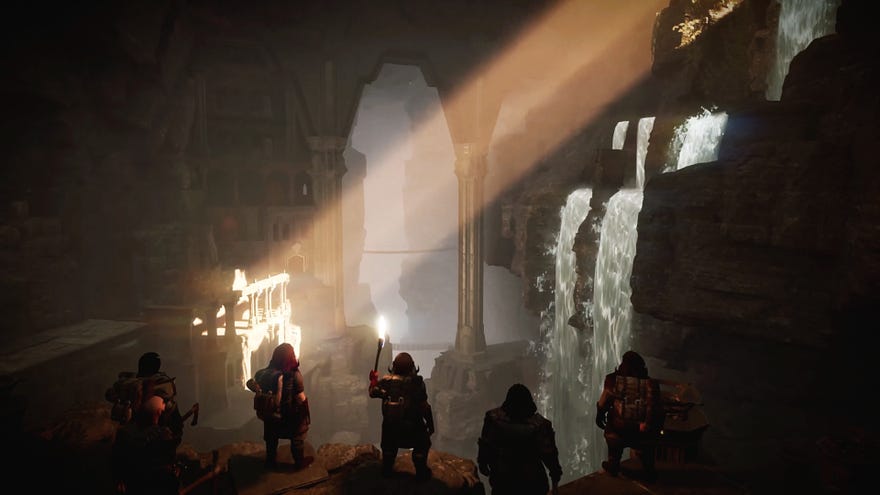
I’m braving the long dark of Moria, and the major dilemma at present is that I can’t line up my feasting table with my hearthfire. In Free Range Games’s plucky dungeon simThe Lord of the Rings: Return to Moria, you’re a dwarf trying to reclaim the once-proud undercity of Khazad-dûm, tunnelling between procedurally generated networks of halls and crafting your own havens and upgrade facilities from long-wrecked forges and mansions.
The game is set after Sauron’s defeat at the end of The Return of the King novel (spoilers, I guess?), at a time in Middle-earth canon when most of the big names were busy shaking hands and doling out promotions, but there are still plenty of orcs, trolls and other threats to worry about in Moria. Right now, though, the real headache is that I can’t make my base of operations symmetrical.
Image credit:North Beach Games
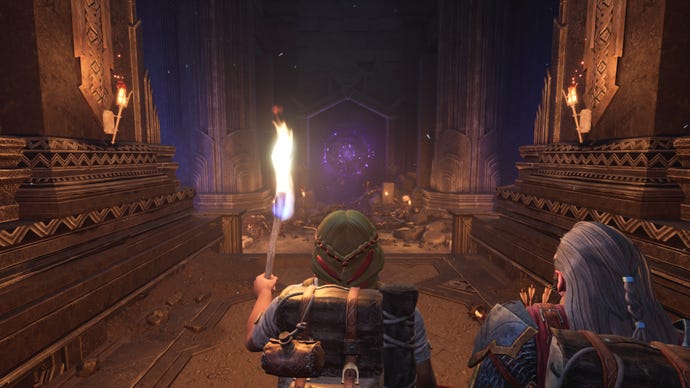
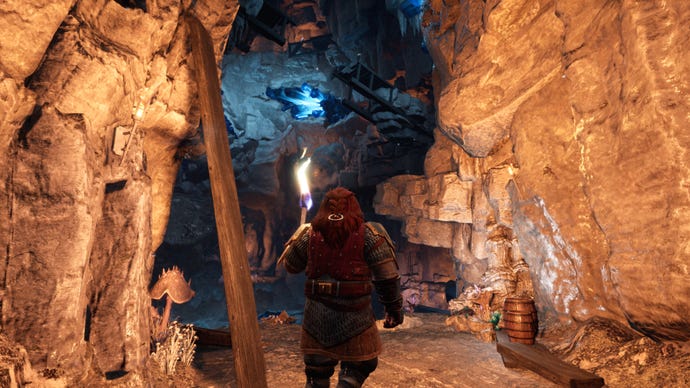
You’ve got your classic endless, pillared halls where the torchlight lingers over arrow-stuck piles of armour and picks out flecks of coal in surfaces that can be excavated. But then you burrow through one of those diggable walls (inmultiplayer, there’s a lovely mechanic where you can have your character sing in harmony with other players during mining) and emerge into an underground forest beneath a larger tear in the roof.
There are traces of Elven architecture here, marks of a long-ago collaboration with the rulers of fallen Eregion - spiral-carved pillars leading the way to grander forges with missing components. There are also a lot of angry badger-type creatures, and some really heavy-footed wolves (the game’s audio cues are a bit overcompensatory, but in Free Range’s defence, you spend a lot of time circumventing threats in the dark). Elsewhere, you’ll venture into abandoned dwarven towns with square courtyards and breweries where huge copper stills slumber like dragons. Are there any actual dragons down here? I can’t speak to the canonicity of that idea, but I wouldn’t be surprised.
Moria isn’t just a set of spaces, of course. It’s a story about avarice and transfiguration. The dwarves dug too greedily and too deep, as we know. The books present Moria as a literal reflection of their self-destructive hunger for gold, jewels and mithril: among its major landmarks is Mirrormere, a lake in whose surface Khazad-dûm’s founder, Durin, once glimpseda crown of stars. But Moria is also a catalyst for transformation and rebirth: Gandalf the Grey becomes Gandalf the White after fighting the Balrog and plummeting into the waters at the BlackChasm’s base.
Image credit:North Beach Games
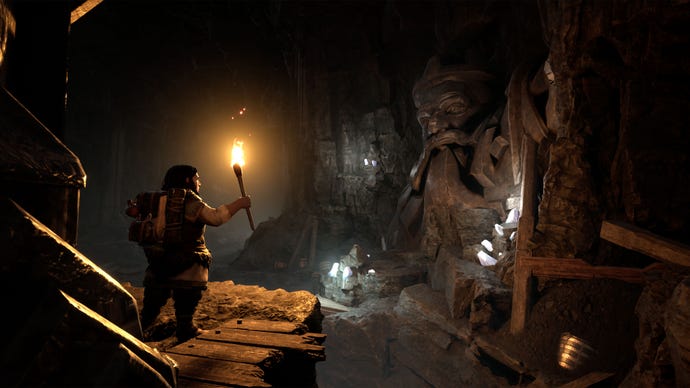
Tolkien scholars call this the “tomb to womb” arc, apparently, which - urgh, thanks lads. I’m interested to see how Free Range handle these ideas in the context of another kind of arc, the routine video game loop of looting and mining and crafting and upgrading. Video games know a thing or two about digging too greedily and too deep, though they seldom really punish you for doing so. One of the original roguelikes was 1983’s The Dungeons of Moria, which was also the first roguelike to feature a town level. That town-and-dungeon roguelike framework was a huge influence on Blizzard’s Diablo games, which have turned the act of drilling down and waking the Balrog into agame-as-a-service.
