HomeHardwareFeaturesRemnant 2
Remnant II might be designed around upscalers, but DLSS isn’t a band aid for bad performanceTo rely so much on DLSS, FSR and XeSS misses their point
To rely so much on DLSS, FSR and XeSS misses their point
Image credit:Gearbox Publishing
Image credit:Gearbox Publishing
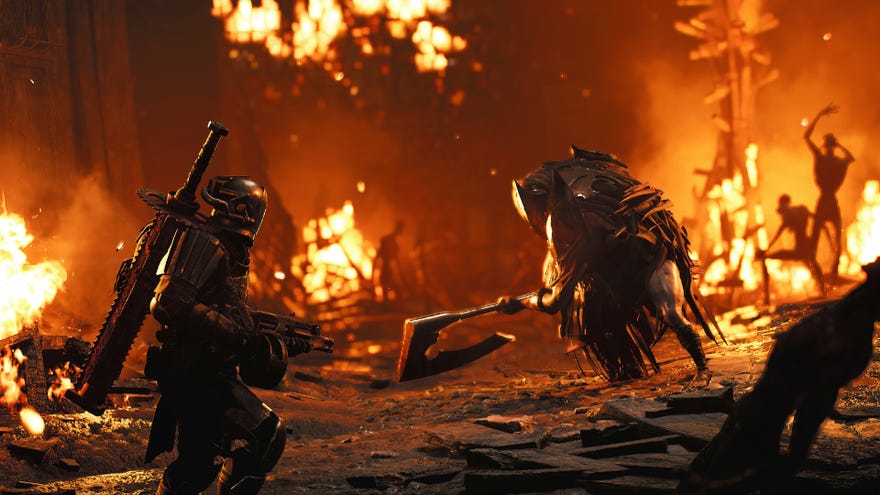
Ideally, the story ofRemnant II’s launch would start and end with it being anambitious success of a shooty Soulslike. Sadly not: in aReddit postaddressing complaints of wonky performance, even on higher-end graphics cards, developers Gunfire Games admitted to having “designed the game with upscaling in mind.”
Working the likes ofNvidia DLSS,AMD FSR, andIntel XeSSinto a game wouldn’t normally be a cause of incredulity. Indeed, as optional performance boosters, they’re pretty much always a welcome sight amid the duller texture filtering and ambient occlusion toggles of the average settings menu. The problem here is that with its dismal performance at native, non-upscaled resolutions, Remnant II essentially forgets about the ‘optional’ part – and in doing so, undermines what makes DLSS and its rivals such valuable tools in the first place.
To see this content please enable targeting cookies.Manage cookie settings
To see this content please enable targeting cookies.Manage cookie settings
To its credit, Remnant II does support all three of the big upscaling players – DLSS, FSR, and XeSS – so nobody will go without one based on their GPU of choice. But, my word, does it run badly if you switch them all off. Let’s take theGTX 1060, an older card but one that’s still thethird most-used among Steam players, as well as one thateasily outperforms the GTX 1650listed in Remnant II’s minimum specs. When I used it to run Ultra quality at 1080p, it limped to just 18fps on average: surely unplayable to even the most hardware-disinterested player.
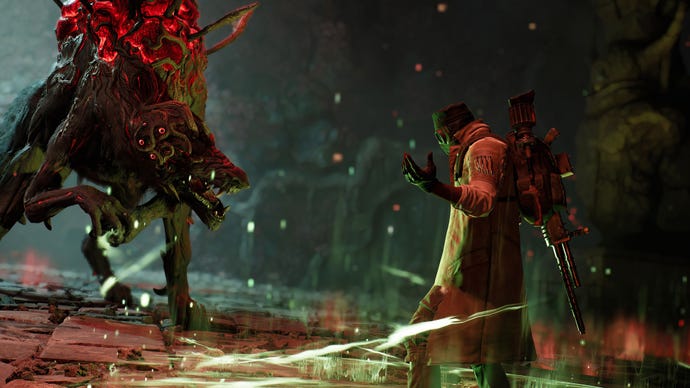
Sure enough, upscaling was essential to get this usually reliable GPU up to an acceptable pace. Even so, XeSS – chosen because to my eyes it looks less fuzzy than FSR at 1080p – only got it up to 29fps on its Quality setting, forcing a drop down to the blurrier Performance mode just to eke out 37fps. It’s not great, and it’s not as if the visuals themselves look or feel deserving of the performance cost. Remnant II is reasonably pretty, but hardly groundbreaking in its aesthetics, and there’s no ray tracing to bring the FPS down.
Image credit:Gearbox Publishing
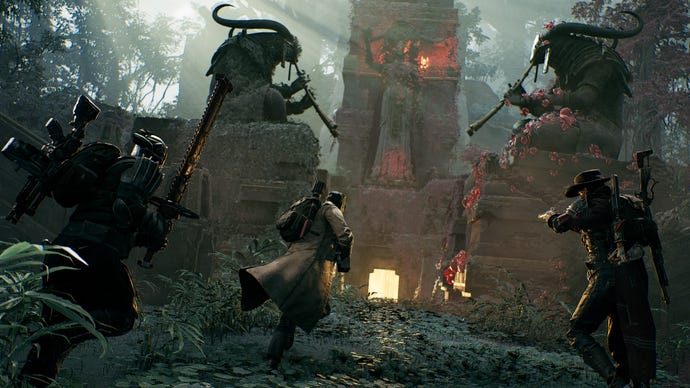
The situation remains unimpressive even if you’re lucky enough to own more cutting-edge PC kit. I also tried theRTX 4070 Ti, an £800-ish howitzer of a graphics card that can blow past 60fps in most games at 4K. No such luck in Remnant II, which only averaged 59fps on Ultra quality at 1440p.Eight hundred British poundsand Quad HD is still too much for a reliable 60fps at native resolution! To actually get the premium performance that the hardware deserves, it took me deploying DLSS on Performance mode to get 91fps, and that’s still lower than any RTX 4070 Ti owner is going to like.
This is not what DLSS et al were designed for, and it shouldn’t be an acceptable use for them now. Upscalers were never meant to act as emergency treatment for infirm games, but to take adequate performance and enhance it to the point where it felt like you were pulling premium framerates. DLSS’ first appearances came in games likeBattlefield VandFinal Fantasy XV: games which already ran competently on the PC hardware of the day. It was a bonus, a gift, a key to unlock the full potential of high-refresh-rategaming monitors. If upscaling instead becomes a necessity, then it’s not enhancing anything, and it’s certainly not extracting extra value out of your other components and peripherals.
Image credit:Gearbox Publishing