HomeFeatures
Catch of the day
Image credit:Vertigo Games
Image credit:Vertigo Games
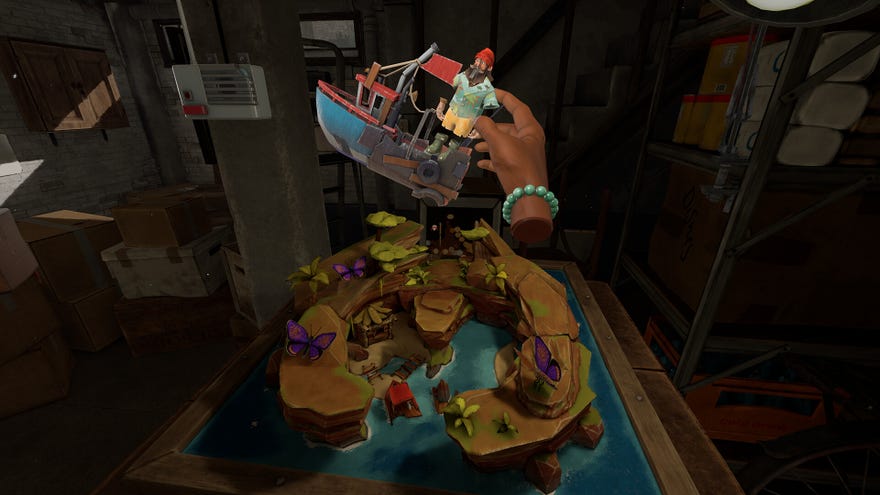
Thrilling as it may be toswing a lightsaberorshoot a headcrabin stereoscopic 3D, the VR experiences I crave most are those which use the tech to fold my brain into entirely new shapes. 2019’s A Fisherman’s Tale was one of those. An unassuming first-person puzzler about a puppet fisherman living in a lighthouse, it dazzled with its incredible deployment of VR’s unique sense of perspective and scale. It’s the kind of game that, if it featured a psychotic AI and some cake memes instead of a beard in a yellow anorak, would have been heralded as a revolution in play.
Another Fisherman’s Tale | Gameplay Trailer [ESRB]Being both a fisherman and a puppet is only possible in VRWatch on YouTube
Another Fisherman’s Tale | Gameplay Trailer [ESRB]

The tale Another Fisherman’s Tale spins sees its eponymous angler searching for Libertalia, the fabled pirate colony and “Land of True Freedom”, which makes it sound like Telegram for people with scurvy. But alas! His rickety vessel is dashed upon the rocks, and our noble fisherman (who does precious little fishing in either game, incidentally) is marooned upon a desert island, and must pull himself together to survive.
Image credit:Vertigo Games
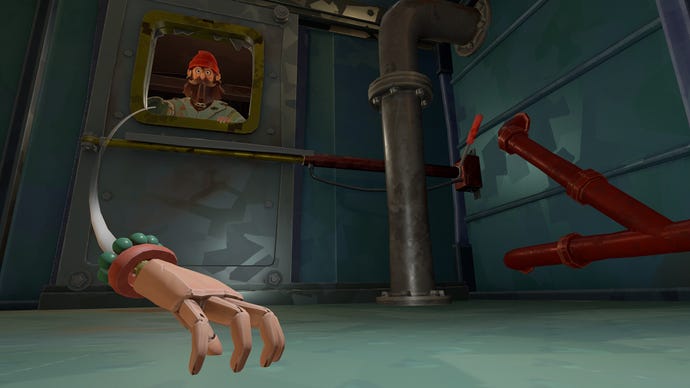
You use these oddball abilities to solve a variety of spatial puzzles. A simple example might see you shoot a hand through a shack window to unlock the door from the inside, but they quickly evolve into more elaborate contrivances. One of my favourite puzzles appears in the game’s second chapter, and sees you navigate one of your hands through a ship’s thrumming engine. Here, you must follow your hand around the outside of the mechanical maze to keep track of it, use the engine’s pistons as elevator platforms, and even fire your head into the top of the machine to complete the final sequence. It’s a wonderfully cartoonish contraption. All it needs isRaymond Scott’s Powerhouseplaying in the background to complete the effect.
Image credit:Vertigo Games
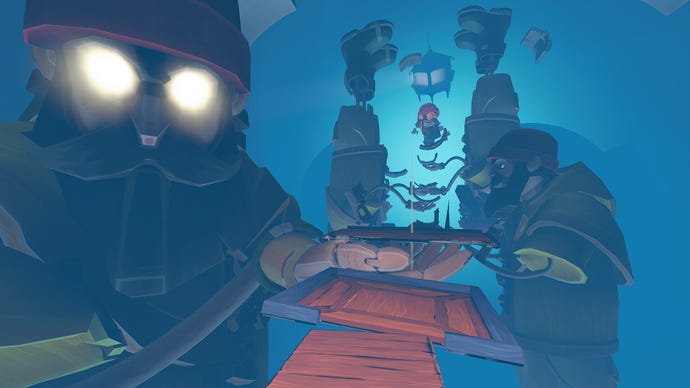
Image credit:Vertigo Games
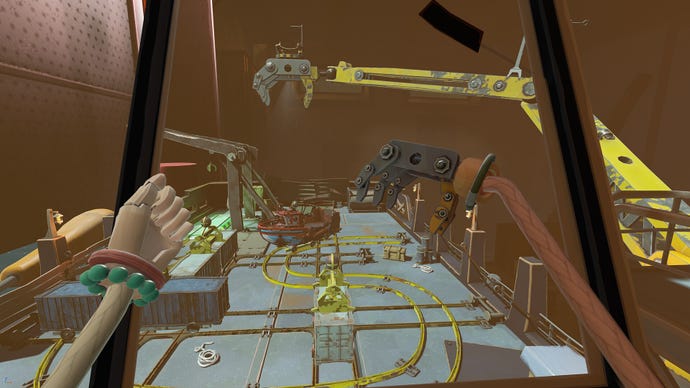
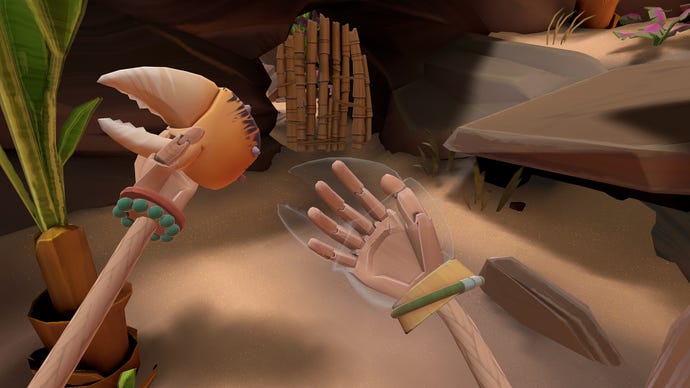
These irksome control issues make some of the puzzles less fun than they should be. Fortunately, detachable appendages aren’t the only lure in the game’s tacklebox. Another Fisherman’s Tale frequently recalls the grand sense of scale froms the first game. This is less mechanically oriented than before, although certain puzzles, such as one where you operate a massive crane with the movements of your own hand, could easily have fit into that original experience. More often than not, though these moments are narrative-driven. Looming above your whimsical seaborne adventure is a melancholy meta-tale that I won’t spoil in detail, but it plays with the “real-life” locations where your puppet’s model dioramas are really kept. As you explore, you’ll occasionally see these areas from the fisherman’s perspective, with stacked shelves and home furnishings visible in the distance like mountains.
On this point, it’s worth noting that the storytelling of Another Fisherman’s Tale substantially improves over the first game. It’s less vague in its characterisations, and while both games have an emotional heart at their centre, the sequel is much better at communicating it. The writing and voice-acting remain generally decent, although the sheer number of hand puns in the script is borderline even for me.
Like the game that preceded it, Another Fisherman’s Tale isn’t the longest adventure, clocking in at 3-5 hours depending on how good you are at indirectly controlling your own hands. But what it lacks in scope it makes up for in sheer imagination. These games wouldn’t work on a flatscreen, which is exactly what VR games should be doing. Couple that with a story that’s lighthearted without being weightless, a pace that’s relaxing without being dull, and a visual style that’s pleasant without being saccharine, and you’ve got a catch that’ll make for a darn fine supper.
