HomeFeaturesMillennia
Paradox are marching on Civilization and Humankind with new 4X MillenniaConquer history, or bend the timeline with its neat Variant Ages
Conquer history, or bend the timeline with its neat Variant Ages
Image credit:Paradox Interactive
Image credit:Paradox Interactive
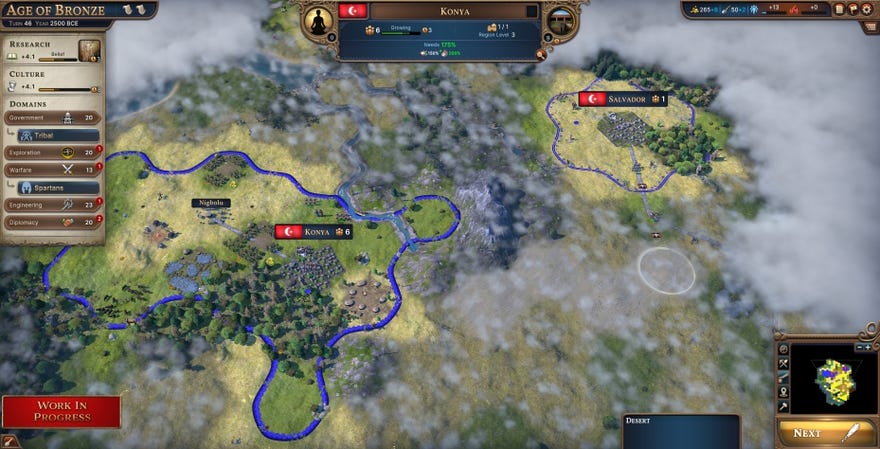
The twist here, however, is that you’ve also got what C-Prompt are calling ‘Variant Ages’, which let you bend the timeline to your will. Some of these variants are more historical in nature, such as an Age Of Monuments where everyone’s building Egyptian pyramids, Friedman explains, while others are more fantastical, with the words steampunk, alchemy and space alien invasions all mentioned in the same sentence. I had a good time with it during my demo, but the real delight was seeing my home army of Kyoto go and invade neighbouring settlement Telford, before going on to conquer Rome - as you do. So if historical melting pots are your kind of 4X jam, read on.
Millennia - Announcement Teaser TrailerWatch on YouTube
Millennia - Announcement Teaser Trailer

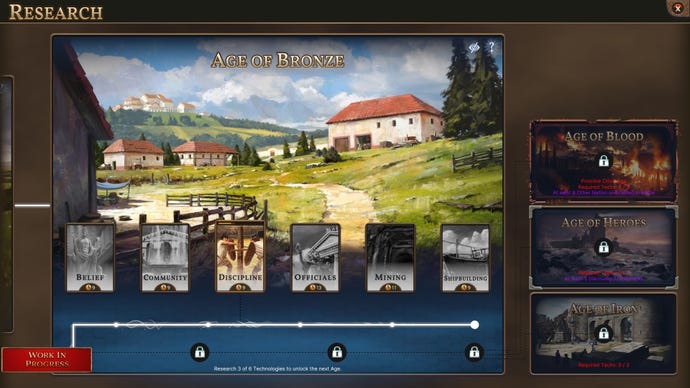
I started my demo in the Age Of Iron, which Friedman tells me is the third historical age in the game. Ordinarily, you’d need to fulfil certain Research criteria before you could move into the next available Age - either a historical one or one of the available Variants - but in my demo, we weren’t aiming for one its interesting-sounding Variant Ages. Rather, the objective was to force me into one of Millennia’s ‘Crisis Ages’ instead - with our particular goal here being the Age Of Plague. What fun!
Image credit:Paradox Interactive
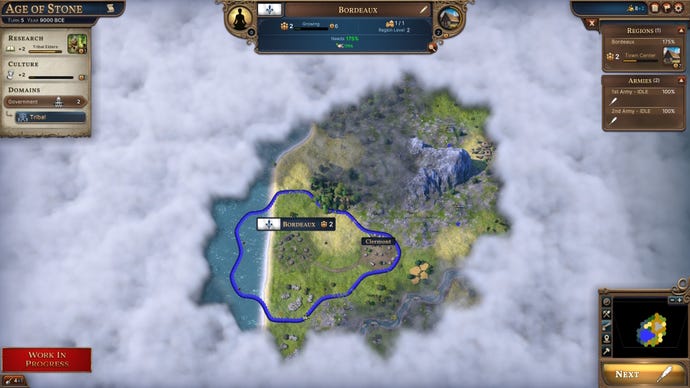
Image credit:Paradox Interactive
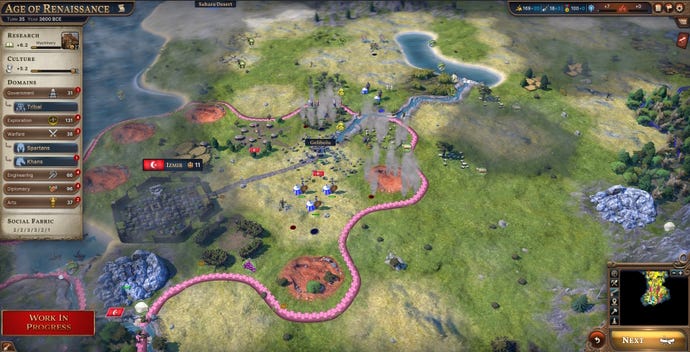
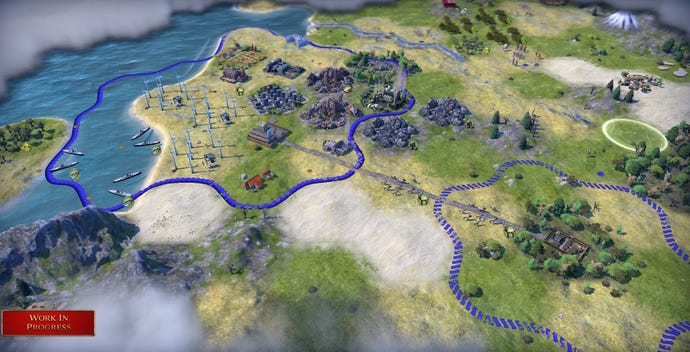
Obviously in single-player mode, you’ll only have yourself to blame when you slip into of these disaster periods, but when you’re 4X-ing against others, it’s a whole different ball game. “When you go into one of these Ages, it sets the timeline for everyone in the game, so the first person to set the Age guides the historical timeline of your game,” he says - and that applies to both crises and variant ages.
It’s not just these diverging histories that C-Prompt are hoping will set Millennia apart, though. Each civilisation also has a ‘National Spirit’ to help define their style and personality. Friedman mentions options such as ‘German engineering’ and ‘French cuisine’, which are “dynamic choices” you can make at the start of a game. Again, I didn’t get to explore these in too much detail during my demo as it was a pre-made scenario, but I’m hopeful they won’t run into too many crass stereotypes.
Image credit:Paradox Interactive
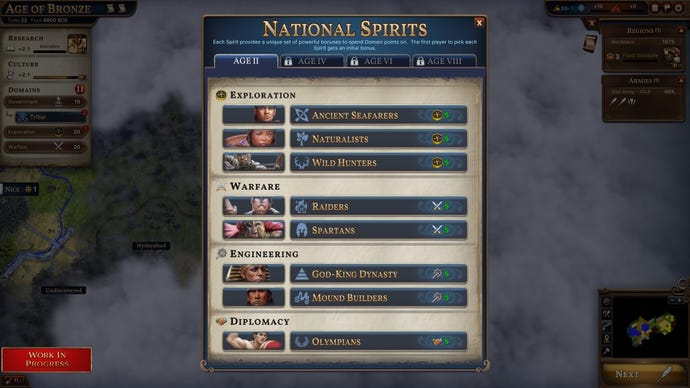
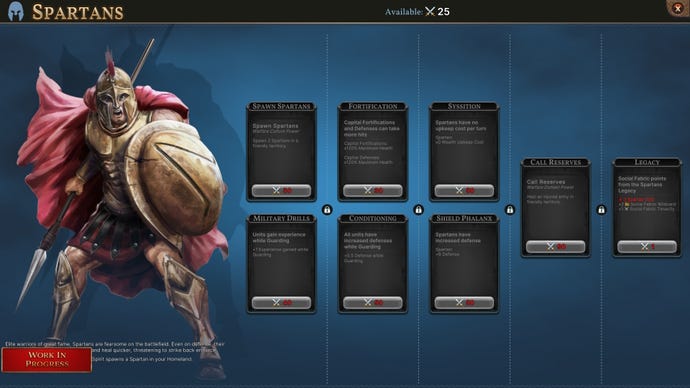
You see, more Spirits will become available as you advance through the Ages, and you can see from the screenshot above that you can have Spartans and Raiders as special warfare units, or Olympians to enhance your diplomacy, for example. Friedman also gives the example that you could be quite traditional and play as the Japanese, who have a samurai unit unlocked from the get-go, or you could, in theory, play as the British instead, and end up getting the samurai later. “It’s really up to you on what choices you need to make to win the game, but also what kind of stories you like to tell.”
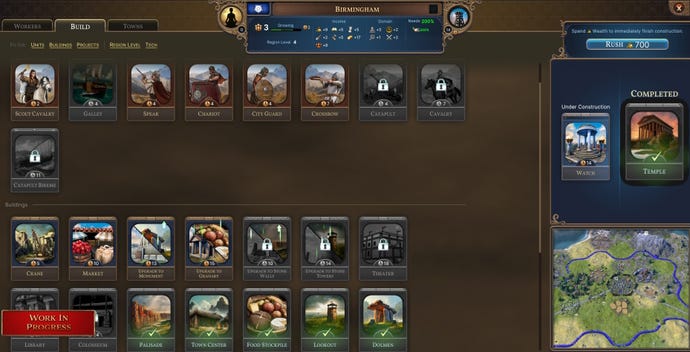
Ultimately, Millennia’s main goal seems to be simply being flexible, and letting you drill right down into the details of your civilisation, which I could see quite plainly in how it approached its economy and its supply chains. “In other games, if you build a forester or a wood cutter, you’ll just get some production out of that,” Friedman continues. “In our game, if you build a wood cutter, you get logs, and logs are worth production, but logs can also be sent to a saw pit, which gets you additional, compounded bonus production on top of that. Or you can send logs off to a paper maker, which gets you paper, which is a kind of intermediary towards getting books, which could be knowledge, or faith-based or administrative documents. Or you could send your logs off to a wood crafter and get arts experience. So lots of our resources have their own personal character to them.”
Image credit:Paradox Interactive
Units heal a little bit every turn when they’re outside your borders, but they’ll replenish their stats much faster inside friendly territory, and I found it was often beneficial to keep a stack of troops sitting inside one of my vassal towns as enemies started pulling menacing faces outside my walls. We’d take the fight to them, and then go back home and heal once they were dealt with. Attacking ends that unit’s turn, too, so you’ll want to make sure you’ve moved into a good position before taking an axe to your foe.
Image credit:Paradox Interactive
Naturally, this being a 4X game, you’ll probably want to declare war atsome point, which you can do through the diplomacy menu. Unlocking envoys gives you some more interesting options here, such as sending gifts, threatening them or turn minor nations in vassals, for example, but these weren’t available in my demo, so I just went ahead and declared full war on Rome. After razing a few of their farms and pestering them with the business end of my warbands' spears, they eventually sued for peace. I could have continued the war if I’d wanted, you know, for full domination, but the longer your warriors spend inside enemy lines, the more unrest you’ll have to deal with - which was starting to get quite high in my primary army. Accepting their offer seemed the best option here, and doing so allowed me to claim their city and push them further east.
But what is research and war in a 4X withoutculture? Friedman describes Millennia’s specific Culture powers as “major historical events”, and you’ll only get to use these once in a while - whenever you fill up your culture bar, effectively. However, play them at the right moment and they could be quite transformative, such as enacting government reforms, creating a new town, or drafting a new army. In my demo, I decided to turn one of the outposts I’d set up with my pioneer into a proper town, allowing me to expand my territory further and start adding more population to it.
Image credit:Paradox Interactive
This is really just the tip of the iceberg when it comes to Millennia’s interlocking systems, though, and there’s so much more to this game than I could ever hope to cover in a single preview. There are lots more nitty gritty details - or “crunchy strategy” bites, as Friedman likes to call them - to dig into on the road to release, such as its tech trees, unit upgrades, and all the effects of its various Variant and Crisis Ages, and it’s great to see another turn-based historical 4X emerge on the scene to rival the juggernauts of Civilization,Humankind,Old Worldand the like. Millennia is currently slated to arrive on PC in 2024, and I look forward to charting its progress - Variants, Crises and all - in the months ahead.
For more of the latest news and previews from Gamescom 2023, head to ourGamescom 2023 hub. You can also findeverything announced at Opening Night Liveright here.
