HomeReviewsOxygen
Oxygen review: a windy post-apocalyptic city builder that won’t exceed expectationsI love looking after numbers, but not doing maths
I love looking after numbers, but not doing maths
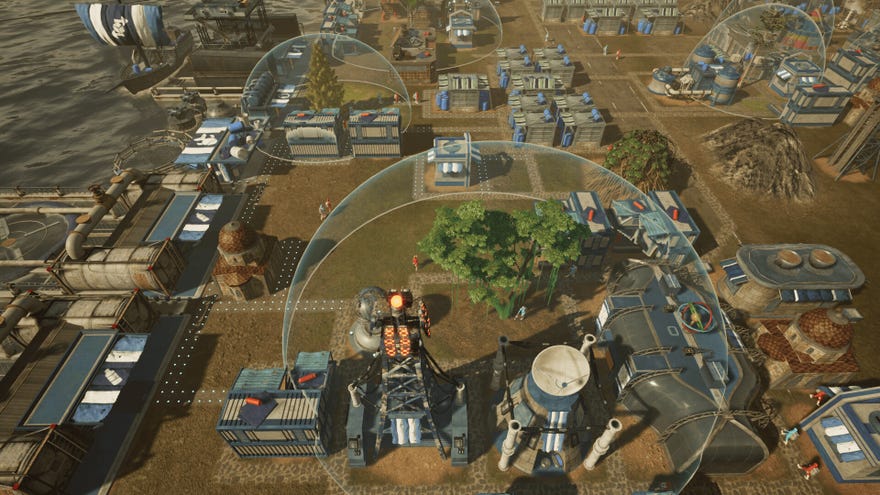
Post-apocalyptic survival is an enduring theme incity building games. InOxygenEarth has, once again, experienced an environmental disaster with the help of human beings. The Earth’s crust has cracked, releasing toxic gas that has spread globally with the wind, and only a little oxygen is left. Unfortunately it’s also me who, once again, decided to take on the responsibility of leading the survivors, to guide them to build a city in this dire situation. This is the destiny of a city builder lover.
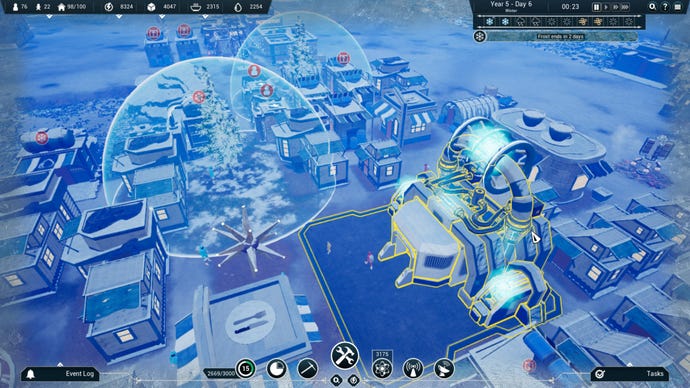
The weather is my biggest enemy in Oxygen. I haven’t had a chance to delve into the ecological and engineering analysis of why strong winds can deplete all the oxygen in my communityanddouble energy consumption. I only know that I have to develop technology, accumulate food, water, and other materials, and build advanced facilities to accelerate that accumulation until the city can sustain itself regardless of the harsh environment during windy, icy, and drought-y days.
Oxygen | TrailerWatch on YouTube
Oxygen | Trailer

Overall I think Oxygen is a decent game. In it I control the placement of buildings and the distribution of labour, where survivors follow my blueprint automatically (obviously they’ve received an advanced education). The profession menu is also the labour control board where I arrange their jobs. If someone suddenly asked me to describe a city builder, I would probably blurt out something unsurprisingly like Oxygen.
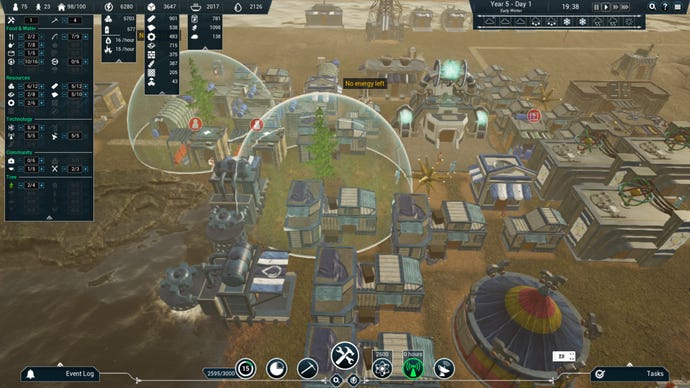
In short, the game can be simplified to a formula balancing energy production, consumption, and storage. I quickly realised that the major issue I needed to manage was the oxygen shortage during windy days. The solution is simple: just turn on all the oxygen generators, but this leads to rapid consumption of energy, and power stations and coal mining are the only sources of it. Building them requires other materials - metal, stone, and gears - so metalworks, quarries, and gear workshops are similarly in need. However, these buildings also consume oxygen during windy days, which in turn consumes energy.
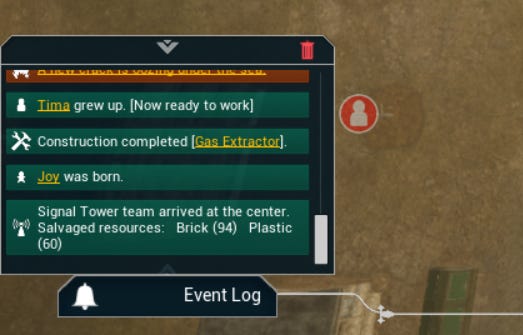
Each person has a name. I’ve always liked these details that make people feel alive in the game. I truly feel joy to see “Joy was born”.
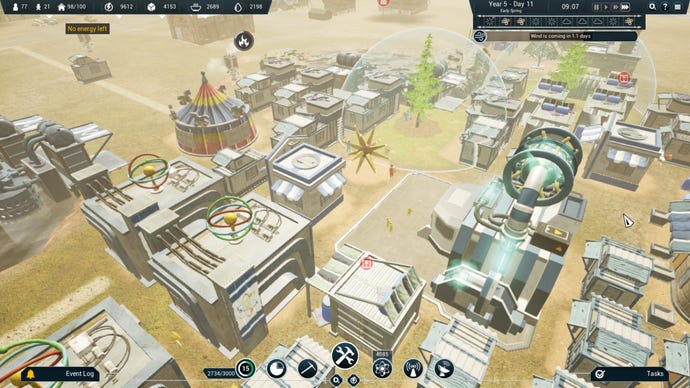
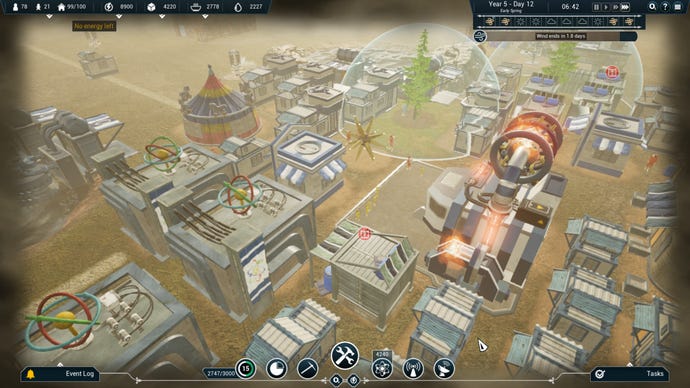
I also enjoy the music, even though this genre will never appear on my Spotify playlist. It changes based on the weather, so while string melodies are always present, there’s electronic bass and drums in bad weather, which helps to make me feel anxious. When I am fully focused on the game I often overlook the background music, but I really enjoy the moment when the storm stops and the intense melody suddenly becomes soothing again. I feel relief: I’ve survived once again. The music creates a real doomsday atmosphere, both when I’m fighting for survival, but also during peaceful development.
Normally survival is not the only theme of a survival game. Once a city becomes developed enough, what should players do next? There could be multiple answers, such as complex systems design inFactorio, exploring other planets inOxygen Not Included, reaching timely conclusions inFrostpunk, or building wonders inDyson Sphere Program. Unfortunately, despite all the options out there, Oxygen has not provided a satisfactory answer, and I couldn’t find a clear objective in the late game. When my patience ran out, I quit the game, and I may never open it again.
Another thing that tried my patience were the tutorials. There are four, all separate from the main adventure, which took me nearly 20 minutes to complete. Once I entered the game, however, the in-game quest system also served as a guide, making those initial 20 minutes feel meaningless. In the early stages completing these introductory quests kept my progress on track, which is great, but in the middle stages there were many tasks that I couldn’t possibly complete, and I felt frustrated and regretful for accepting them in the first place. Along with these are quests that turned out to be useless, like collecting 100 fish when my main food supply was potatoes.
I did enjoy the challenge of dealing with the wind, but as things became repetitive, I found myself questioning why I should patiently build a city that doesn’t really exist. A great city builder makes me feel like I’m using advanced strategies to manage a complex system. A not so good one feels like high school maths. I know that when playing city builder games, I can be a bit arrogant, in that I like looking at the numbers on these panels and feeling omnipotent. But I don’t really enjoy high school maths.
