HomeFeatures
Our favourite games of 2020New year, old games
New year, old games
Image credit:Fellow Traveller/Leoful
Image credit:Fellow Traveller/Leoful
What’s up gamers? It’s 2021 and that means it’s time to round up the team’s favourite games of 2020. You’ll already know our selections if you read our annualAdvent Calendar, but this post gathers all those words and games together in one convenient package.
There’s also a lovely video that has footage of a few of them in action, if you’ve not partaken yourself.
To see this content please enable targeting cookies.Manage cookie settings
As always, the games are in no particular order, apart from the last one, which is RPS’s Game Of The Year for 2020. If you’d prefer to peruse the post in their original calendar format,you can do that too. Otherwise, just start scrolling down.
Half Life: Alyx
To see this content please enable targeting cookies.Manage cookie settings
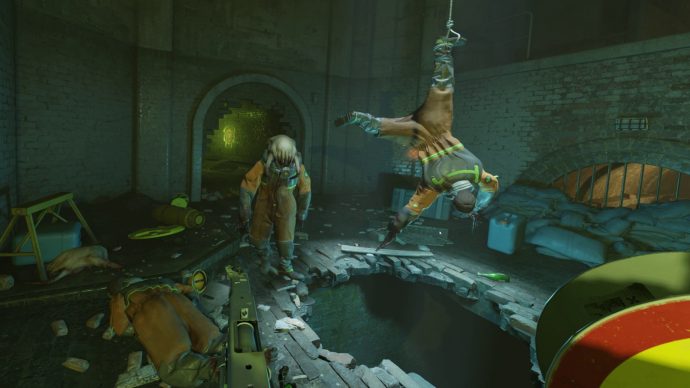
Graham:If a revolution in game design happens and no one’s in a VR headset to hear it, does it make a sound?Half-Life: Alyxapplies every lesson from the last few years of VR first-person shooter design, and then pushes the genre further with Valve’s talent for design, writing, and their unrivalled resources. The result is a great VR game that makes good on the promise of the medium, but it’s also, importantly, a greatHalf-Lifegame.
The marriage between HL and VR feels good enough that you’d swear the series was always meant to be played this way. Headcrabs are scary in a way they haven’t been since I was 14 years old, and Striders are imposing and kind of awe-inspiring in a way they’ve never been before. Even physics-based environment puzzles are better. They often felt like busy work in previous games, forcing you stop your exciting battle to repel invading alien forces and instead spend some time stacking pallets in a car park. HL: Alyx doesn’t jettison these challenges entirely, but the times in which you’re suddenly an electrician, trying to jiggle the wiring in an old apartment, made me crouch and stretch and crawl around my real world room. They made me feel more connected to a videogame space than I ever have before.
And then there’s the ending. No spoilers, but - oof.
If Half-Life: Alyx wasn’t a VR game, it would be the most talked about and influential game of the year. Except it wouldn’t, because if it wasn’t a VR game, it wouldn’t be anything at all. It’d be like a 2D version of Mario 64. VR is in some ways a blessing and a curse, but I lean towards the former. After years of waiting, there’s a phenomenal new Half-Life game to play - and it’ll be phenomenal whenever you’re able to get to it.
Tony Hawk’s Pro Skater 1 + 2
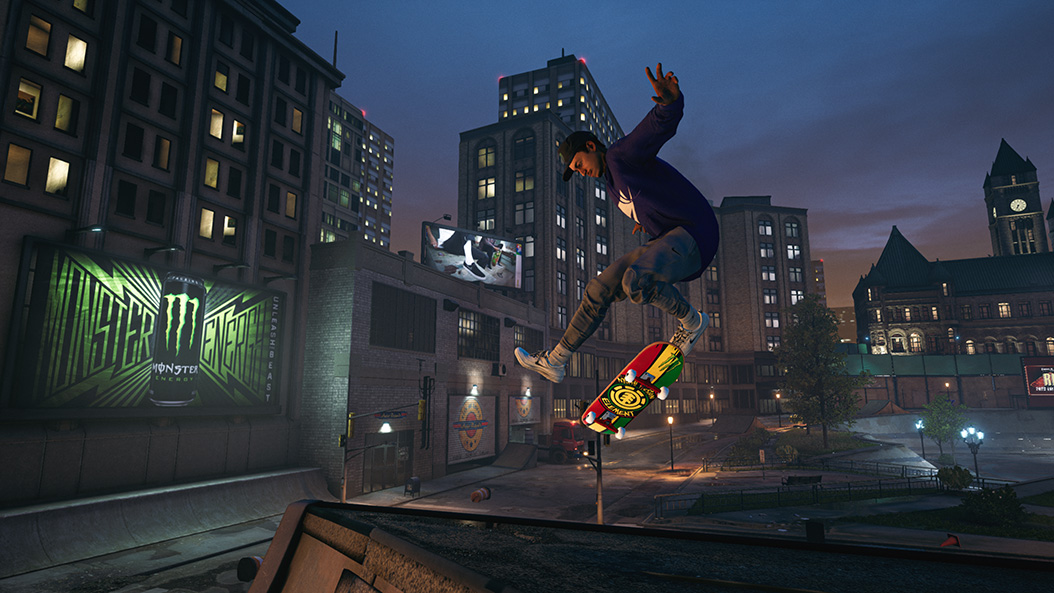
Colm:The greatest compliment I can give THPS1+2 is that it plays as well as my memory of the originals. And that alone is reason enough for it to be considered one of 2020’s best. Because, lord knows, developers have tried to recapture that magic over the last decade plus, and have almost always fallen at the first rail. Did you play Tony Hawk’s Pro Skater HD from 2012? I did… Jesus Christ, I thought poor Anthony would never bounce back from that.
Revisiting these shinier versions of Hangar and School 2 while Zack De La Rocha shouts was already enough to transport me back to a simpler time, but Vicarious Visions’ decision to include reverting and wall planting – both of which didn’t come into the series until later – was inspired. That, on top of being able to manual your way around stages from the original Pro Skater, allows you to find new combos that simply weren’t possible before. You’re able to push up against the true limits of these levels you thought you knew inside out.
One of the best additions to this reworked package are the challenges that span both games. While maps contain the objectives you know and love, like Kickflip TC’s Roof Gap, Ollie The Magic Bum and so on, you’re also able to chip away at larger goals that unlock new looks for your skaters, as well as boards to ride. The perfect excuse for one more go. And then another after that.
Playing Tony Hawk’s Pro Skater 1+2 reminded me of why I never fully got on with the more sim-y skate games that came after THPS. I want big stupid moves, ludicrous combos, and floating gold letters. That’s skateboarding games to me.
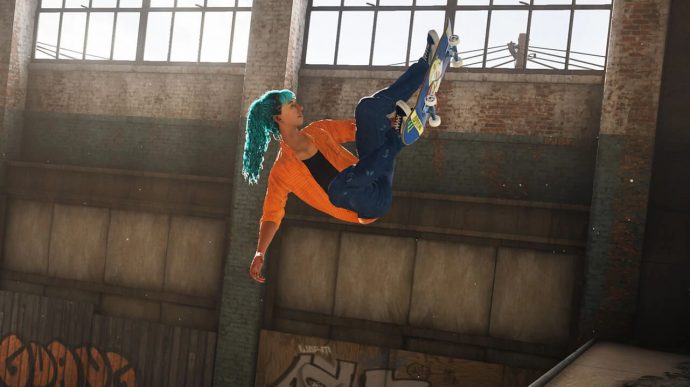
Jake:I’d love to take a time machine back to meet my 11 year-old self. I’d show him just how far gaming has come in 2020, giving him a peek at this year’s cutting-edge releases likeTony Hawk’s Pro Skater 1 + 2and the newCrash Bandicootgame.
Honestly, I think he’d be chuffed to bits to see old Anthony Hawk still kicking it, because skating games were absolutely the coolest things we had back in the early 2000s. It’s been a long while since the last genuinely good one though, and personally - as great as the Skate games and indies like OlliOlli were - I’d been missing my Pro Skater fix.
What THPS1+2 absolutely nails though is something that’s special to skating as a subculture. Skating, for all its danger, punk-attitude and cooler-than-you devotees, is wonderfully inclusive. Head down to any skate park in the world and you’ll see older skaters teaching newbies, tweaking their pristine boards and lending them tips on the best ways to fall. This sense of togetherness and inclusion is clear to see in the opening cinematic of the game. The new selection of skaters is incredibly diverse, even the original cast appear as their current middle-aged forms. Everyone is welcome, just bring a board, a tape cassette of the new Papa Roach album, and the willingness to fail over and over again until you land your first trick.
In Other Waters
Alice Bee:I like having baths, and whenever I do I always stick my ears under the water at least once so I can listen to the weirdglongingand scraping and gurgling noises, because of how everything sounds a bit wrong and alien underwater. And often people compare the very deep depths of our own sea to being like an alien planet. Can’t imagine how weird everything sounds and looks in a sea that is actually alien.
Except, I can now, because of In Other Waters.
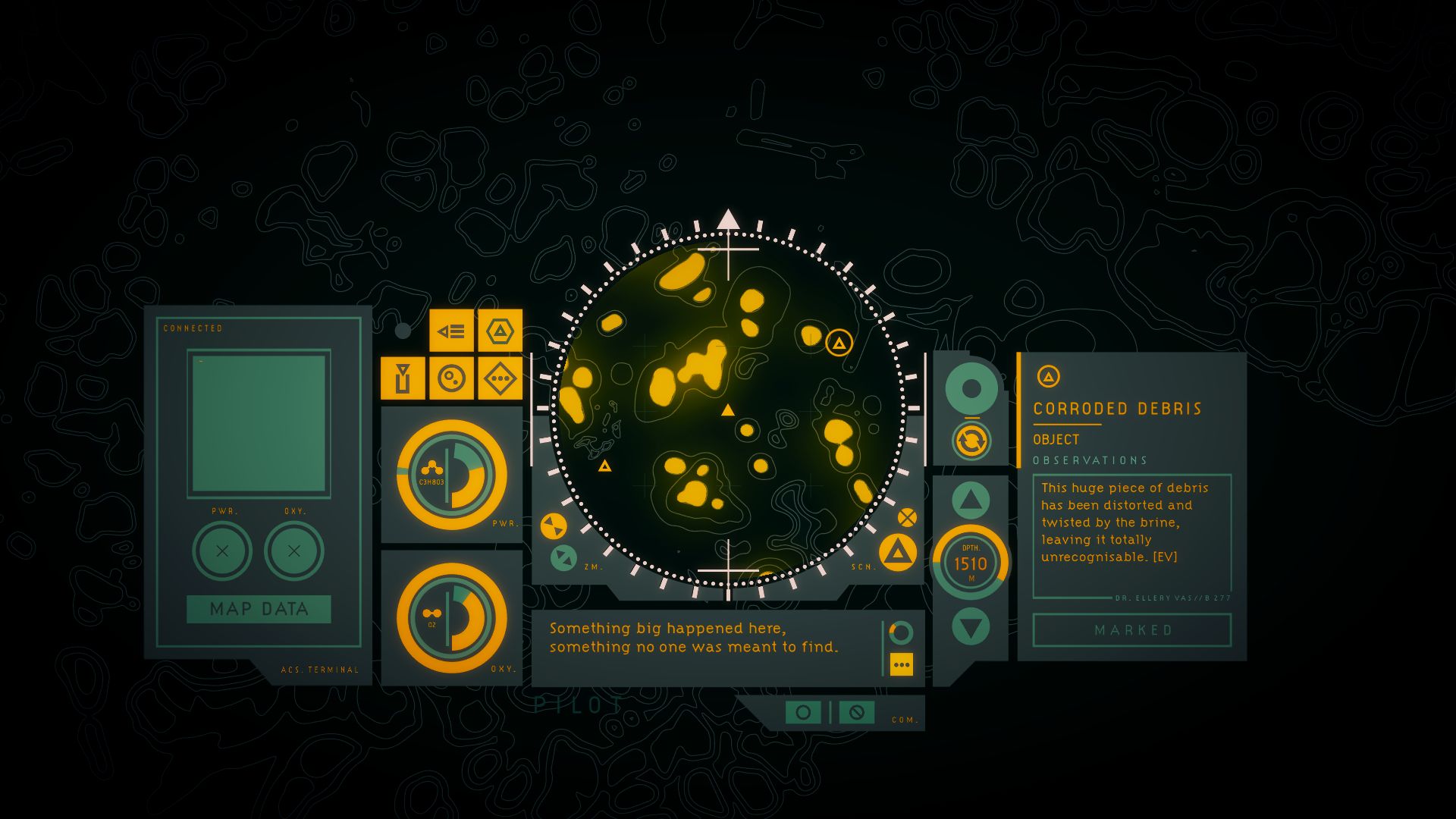
It would be an interesting enough pitch to say “You play as a xenobiologist, exploring the creatures and plants living in the different areas of a distant ocean planet”, but it’s even more interesting than that. In Other Waters has you play as the advanced diving suit of said xenobiologist. You don’t, as such, see the things in the water around you.
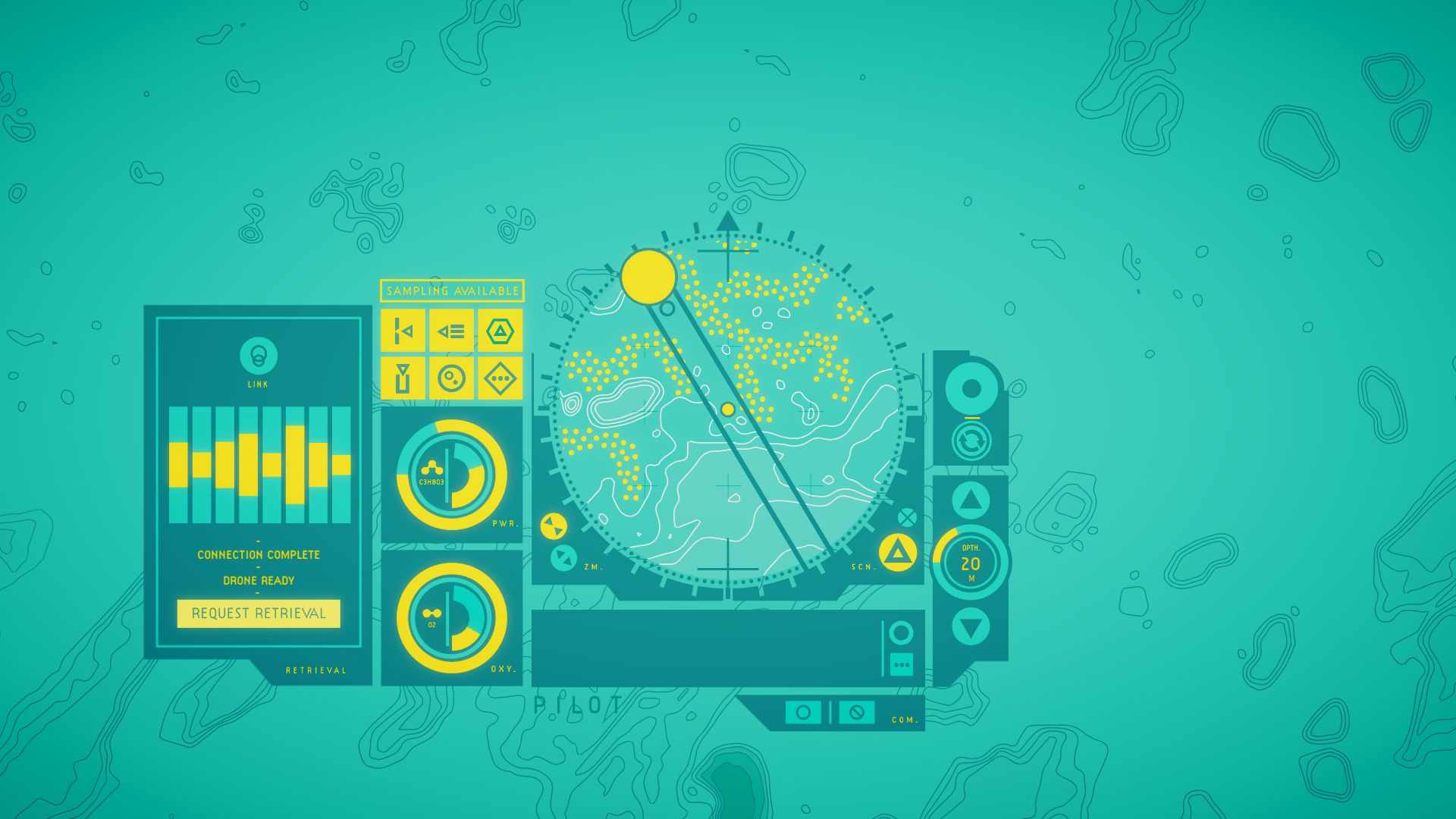
You scan them, and get some basic visual feedback through the suit’s UI. So, the forests of alien plants are dots on the topographical map around you. The creatures amongst them aremovingdots. Some of the dots are bigger than others, or move in a slightly different way.
You can only move between set points, too, so the whole thing is way more restricted than you’re used to from playing most games. Though you’re an AI, with some autonomy, the scope of that autonomy is quite limited. It’s like playing as a supporting character, and it’s very refreshing and oddly freeing at the same time.
Can I also just say how much I love the changing colours of the interface as you dive deeper and deeper into the reef? Proper magic, that.
As you are able to explore further, you encounter different biomes. There are pools of heavy acid, with extremophiles that live in and around them, and if you want to get info about them you have to risk getting a bit sizzled yourself. Science is sacrifice!
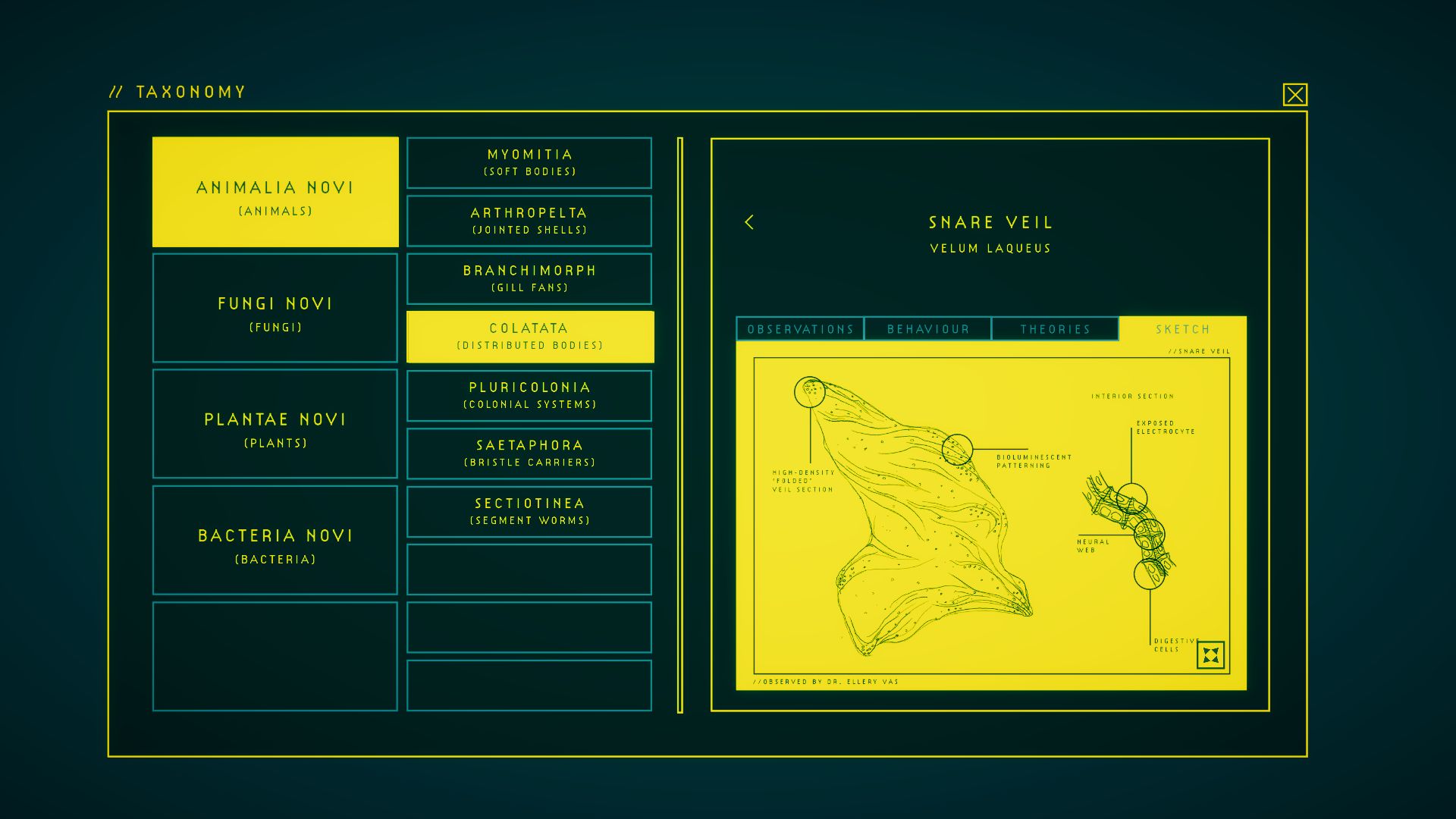
But the magical bit for me is that, with enough information gathered, Ellery will update her files to include a lovely scientific drawing of the species in question. I still don’t know exactly what they look like, but the drawings themselves are very special.
And, the same time that you’re doing your good science, you and Ellery uncover a decades old conspiracy that has, happily, already happened and been resolved. The moral is: everything will probably be okay, eventually. Which is very comforting right now.
Valorant
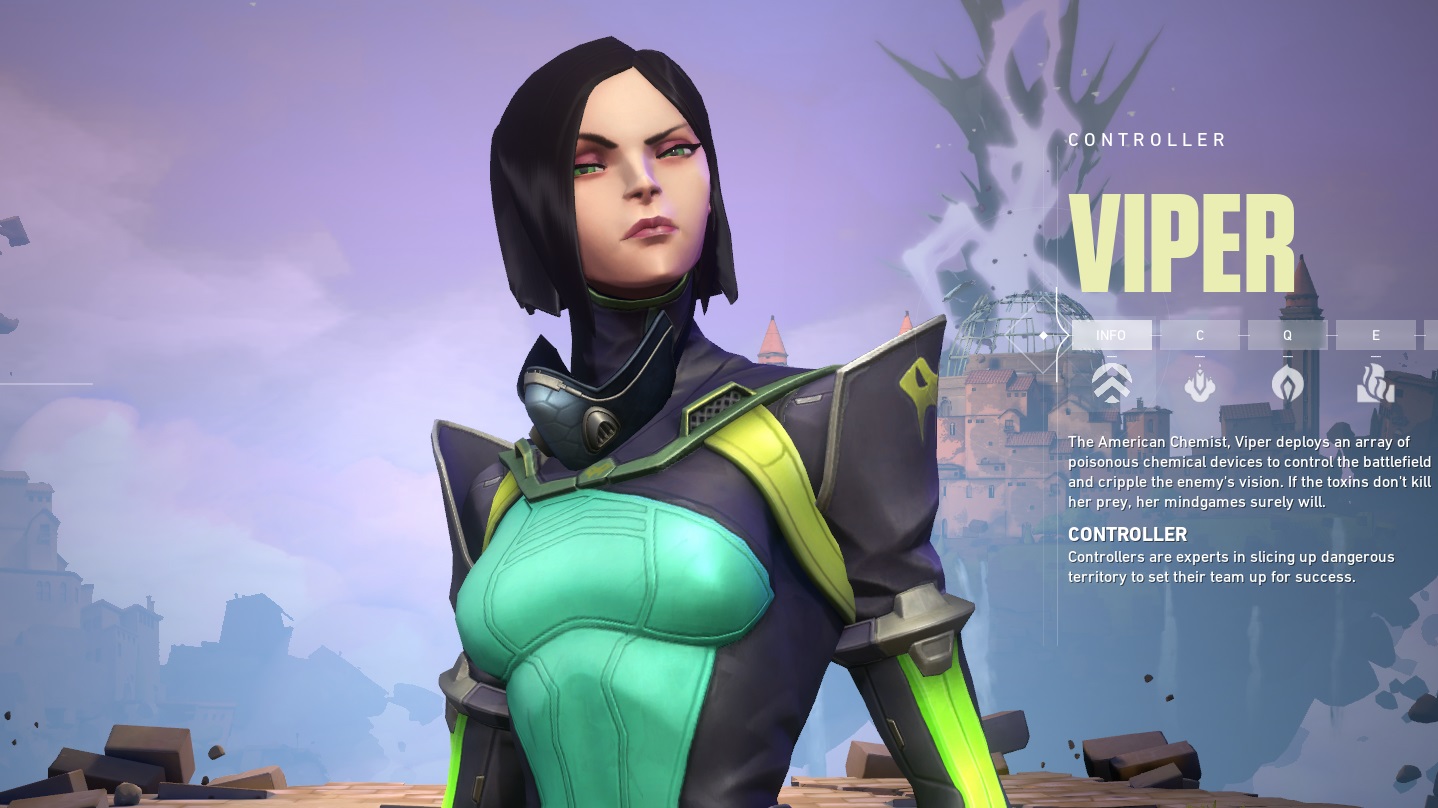
Ed:Valorant is a multiplayer first-person shooter that’s basically Counter-Strike with wizards and ninjas. This means it has this emphasis on precise trigger pulls and crisp headshots, but with an added blend of hero abilities mixed in too. Before the start of each match there’s a roster of Agents - as they’re called here - which you can pick from and it’ll either be your job to plant the bomb or stop that from happening.
At first, I thought Agents and their abilities wouldn’t mesh well with the more measured, knife-edge tension of Counter-Strike. Well, Valorant proved me wrong. Each Agent brings something to the table which, for the most part, aren’t meant to be used offensively, but rather act as clever tools to create opportunities: surveillance cameras that can help you spy enemies from afar, perhaps, or fire orbs which curl round corners and blind aggressors.
I’d always been into Counter-Strike because it rewards teamwork, but also hard work. Not so much now, but a few years back I’d warm up with aim training exercises before hopping into ranked matches (what a massive nerd). Eventually I burned out on the fact I’d actually need to practice to keep playing at a certain level, but deep down I sort of missed the grind.
Then Valorant came along and freshened up the Counter-Strike experience for me. Perhaps above all, though, it reconnected me with an old uni friend of mine who moved all the way out to America for work. We used to play a bunch of Counter-Strike together, so it was great to dust off the mice, lean dangerously close to our monitors, and get a bit too animated at virtual characters who aren’t real. It was like a shite version of some redemption arc where two people sink into their gaming chairs after a long hiatus away from esports.
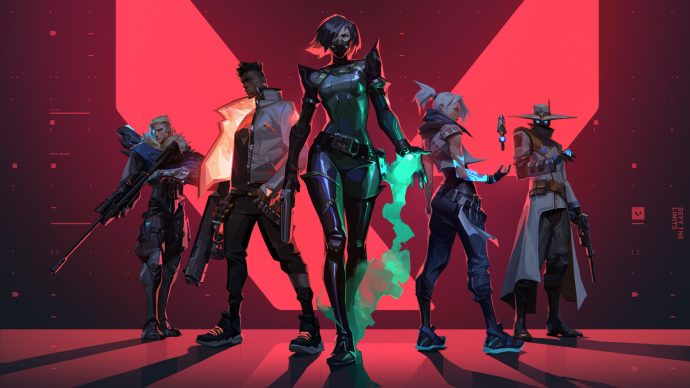
Imogen:I never liked Counter-Strike (soz Ed). It’s an issue I have with a lot of tactical and military-flavoured games, I just find them a bit boring. I thought Valorant would feel similar because it’s slow and tactical and, ugh, I’m impatient. And yeah, it is those things, but thanks to its strange characters with weird abilities, it has a level of unpredictability that I just find so extremely fun.
One game I might be playing as Omen, teleporting all over the place attempting to surprise enemy players. Half the time this will end in my death, but when it works I feel so clever and eager to try it again. Another match, I’ll be setting up my turret as Killjoy, accidentally trapping myself in a corner behind it. Sure, it might be a predictable turret spot, but what you’ll never predict is the daft idiot nestled up behind it, who manages to kill four enemies while they’re all shooting at the damn turret.
I mean, don’t do that second thing, but the point is I love how much Valorant encourages players to experiment. I could’ve moved that turret, but I was tight on time and I was curious to see what would happen. In higher-skilled matches I’m sure less silliness occurs, but the silliness is the best! Just recently I had a whole match where both teams wanted to piss about, and we ended up having a 5v5 knife-fight (though, admittedly, all I wanted to do was end the gameso I could get my banana bread out of the oven).
In this strange year we call 2020, Valorant has become a very social thing for me, too. Be it with randoms or pals, pulling off odd and unexpected strategies is even more rewarding when you manage to rope people into doing it with you. A competitive shooter that’s also prime real estate for shenanigans - what more could I ask for?
Spiritfarer
To see this content please enable targeting cookies.Manage cookie settings
I never quite got over the death of the very first spirit you meet in Spiritfarer, a chain-smoking deer named Gwen. I loved having her around, and when it was time to take her to the Everdoor, I made her a black coffee (her favourite) and sat next to her for the entire duration of her final journey. I was lucky to get these last moments with Gwen, as other characters slip away without any notice whatsoever. Some deteriorate quickly, while others sneak off of your ship while you sleep. Each spirit is unique, with a unique way of passing on.
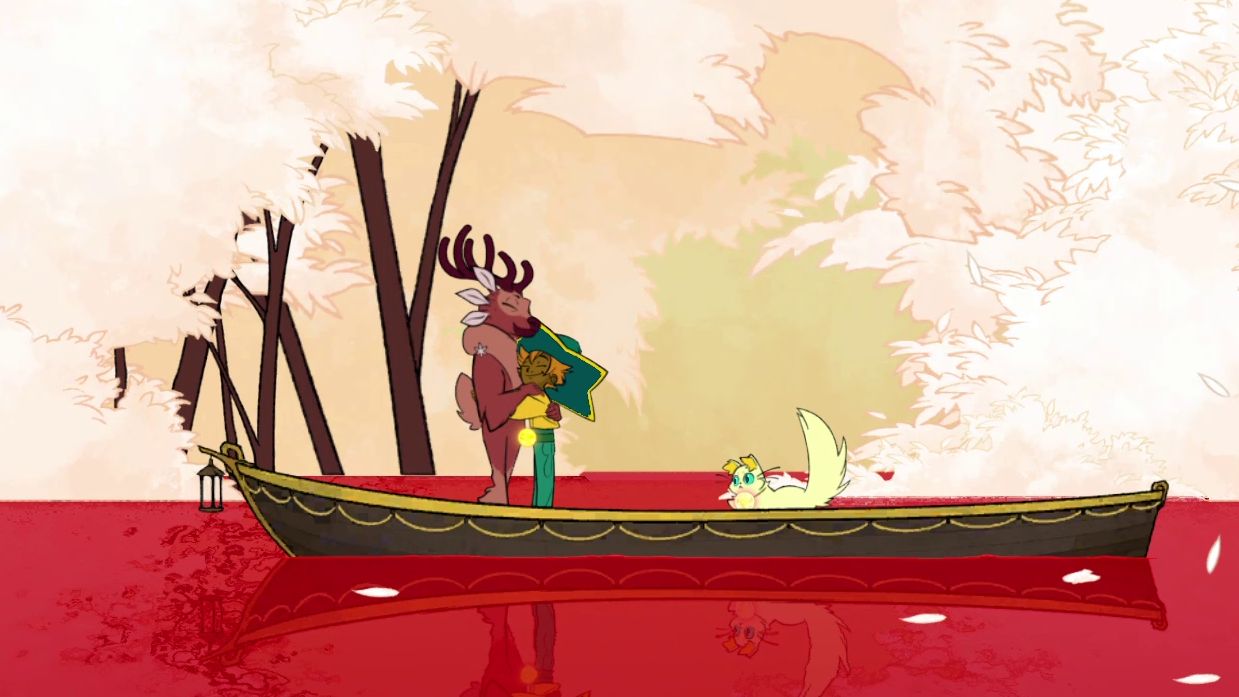
Despite being solely concerned with the cheery subject of death, Spiritfarer is actually fun to play. There’s a management-sim element to your ship, as you collect resources from around the world and use them to craft new buildings and homes for your crew. There’s mining, a guitar minigame and even platforming puzzles. It’s got that great loop often found in farming games. You pull up to a new area, mine everything in sight and then build a new thing that lets you mine rarer items. Seeing your ship grow as you stack ramshackle buildings on top of each other is lovely, as is the satisfying clunk as it sails into a new port for the first time. It’s almost enough to take your mind off of all the death.
Alice Bee:In a world where being kind can feel difficult sometimes, Spiritfarer teaches you to do everything for kindness. It’s a management game where you grow plants and work and cook and build but you don’t do it for yourself. You don’t tend your orchard so you can store all your apples for next winter. You don’t turn logs into plants to build a bigger, better house for yourself. You do it to build nice homes for your mates, even though they won’t be staying in them long.
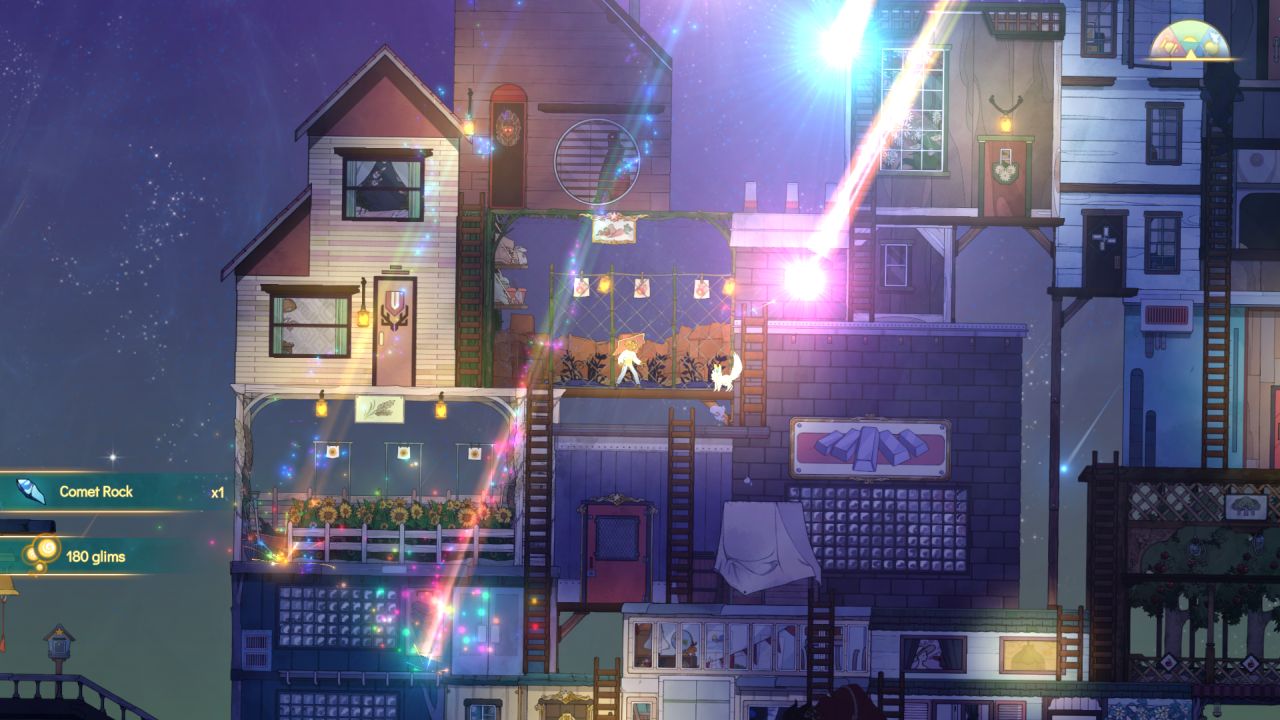
And you won’t mind. You’ll spend ages experimenting with different ingredients in the kitchen, trying to find out what everyone’s favourite foods are. You’ll collect rare minerals and pound them to dust and turn them into sheets of crystal, so you can make nice ornaments for them. And your reward is: they are happy. You are kind to them, and they are kind to you.
I rearranged the whole structure of my boat just so an elderly hedgehog didn’t have to go up and down ladders to her room. Also, she liked the aforementioned orchards, so I made sure they were close to her home as well. Everyone has one character in Spiritfarer that gets to them, see, so for Jake it was Gwen, but for me it was the hedgehog who reminded me of my granny.
Spelunky 2

Graham:At the time of writing, I’ve played Spelunky 2 for 150 hours and completed it six times. I will play it for at least an hour more today, after or during writing this, and probably more. This is because it’s one of the best games of 2020, and one of my favourite games of all time. I think about uninstalling it most days.
At the beginning, this means learning how to deal with simple things, like the steep angle of an attacking bat (turn your back, whip behind you). Later it means experimenting with opaque systems, like sacrificing bodies on unexplained altars to win favour from a god. Finally, if you play for long enough, it might mean putting every piece of information you’ve learned together to complete a chain of secrets and reach hidden worlds with entirely new rules.
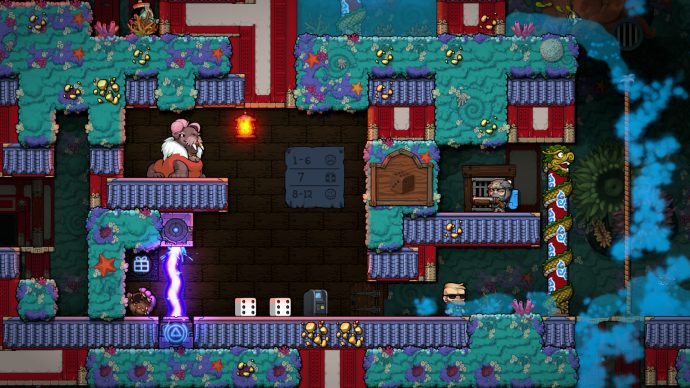
That Spelunky 2 has space for learning and mastery would mean, in normal circumstances, that I’d complete it successfully once and put it down. Fortunately - unfortunately? - it’s also an unforgiving git of a game. Even after 150 hours and six completions (five of which were in the past week), every new life feels like a test. I’m better at the game now than I was when I started, and better at Spelunky 2 than I ever was at Spelunky 1, and yet I still regularly die on world 1 or 2. It is tense and rewarding nearly every time.
Sort of. The problem I have is that the rewards have diminished over time. After 150 hours, failure feels more frustrating, and victory feels more like it’s establishing a baseline of contentment than delivering a thrilling high. Yet I keep playing it, every day.
Spelunky 2 is undoubtedly one of my favourite games of 2020, and I suspect it’ll be one of my favourite games of 2021. I have had over a hundred hours of fun with it, after all, and though it’s possible that I’ve taken everything from it that it has to give me, that’s hardly a surrprise after playing it so much. So after a decade of charting my daily relationship with Spelunky and now its sequel, here’s where I am today: I love this game, but god, I should give it a rest for a while.
Phasmophobia
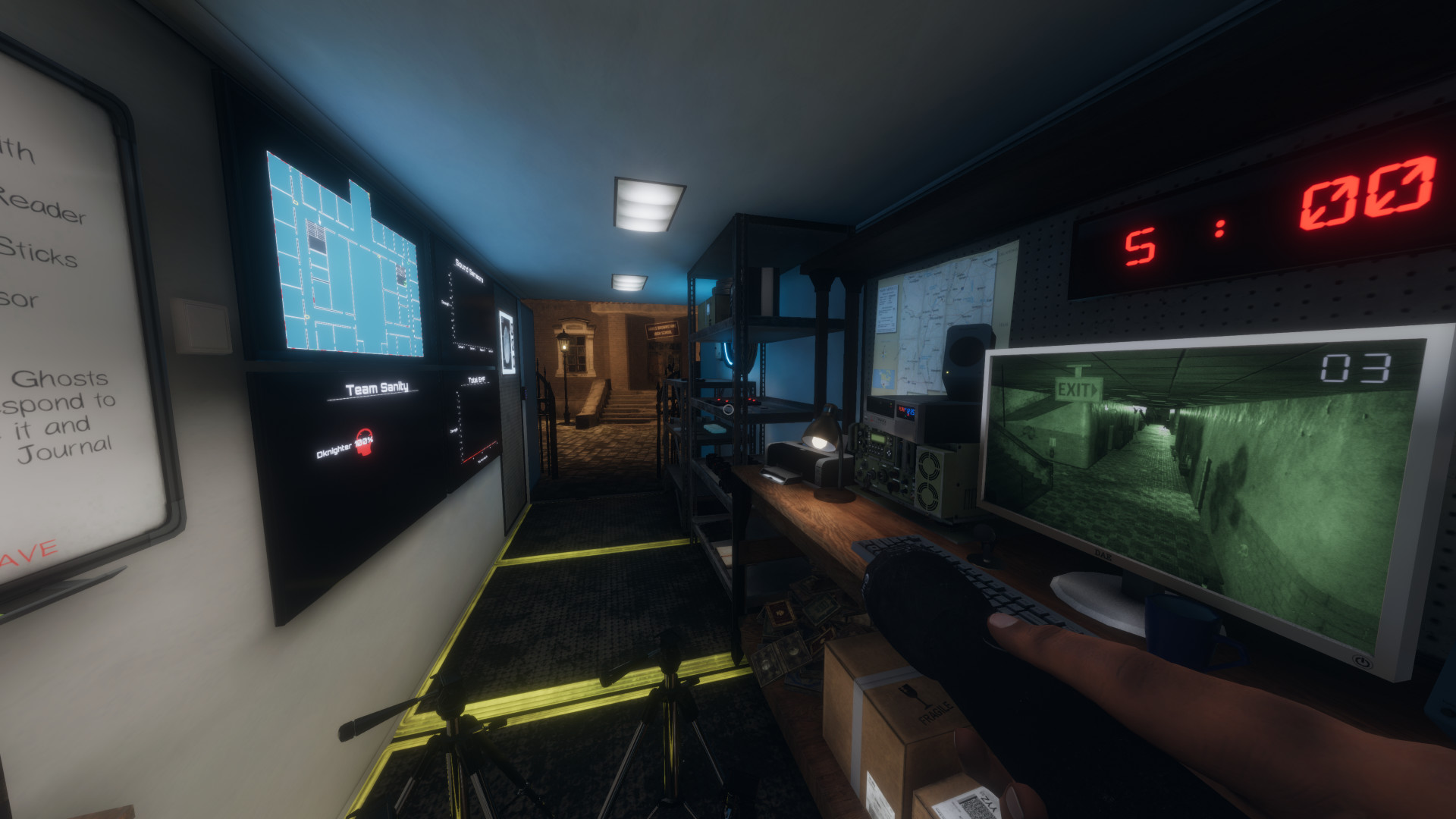
Imogen:I love horror games. I am a wuss at horror games. I’m the pal who suggests playing them, then immediately hands you the controller and refuses to take it back. I cannot do this with Phasmophobia, however, because it is a multiplayer ghost hunting sim where you kinda need everyone to be present and not act like giant babies so you can get the jobs done.
Like most people, me and my pals were drawn to Phasmo because of all those YouTubers and streamers having a wail of a time with it. It’s the sort of thing where you watch players being all over the top and screamy, and you think, ‘I wouldn’t react like that. It’s not that scary.’ And then you get to your first house, hear one (1) spooky noise, and run back to the van because “we need someone monitoring things in the van, guys, I don’t think we all need to be in the house.”
Having played it a fair bit now, I offer to be dedicated van-watcher much less (which I shouldn’t have written because I guarantee a friend will screenshot this and call me out). It sounds weird, but I think Phasmophobia has made me less of an absolute wimp at horror games. When my mates are all picking up their tools to go investigating, I don’t wanna let them down, so I always join in to methodically check all the rooms and evidence. If a ghost is hunting, I quietly crouch in a corner waiting (and hoping) for it to pass, rather than high-tailing it to the nearest exit.
Phasmophobia isn’t some amazingly slick thing. It’s buggy and it doesn’t look great, but I just like the way it makes me feel (brave!), and I haven’t had so much fun playing a horror game in ages.
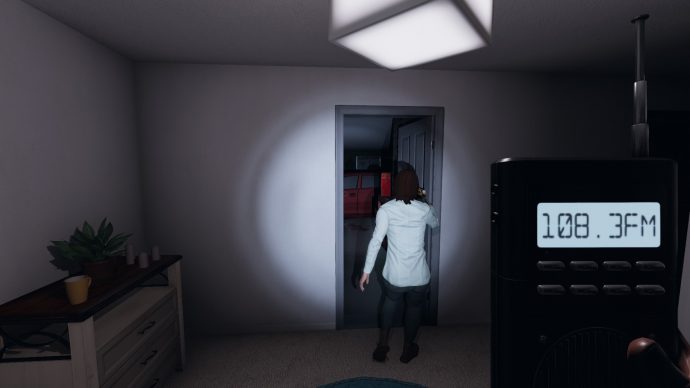
Alice0:I do not understand why Phasmophobia’s ghosts behave the ways they do. That’s great. Why do some ghosts hide for ages, giving few hints to their identities? Why do some happily show off all their ghost tricks at the drop of a hat? Why do some should-be murderous spirits have seemingly infinite patience for ghosthunters clowning on them and taunting them? Why do some love certain rooms? Why do chatty ghosts say the things they do? How much of our voice chat can the ghosts actually understand? And how much does our hollering upset them? I do not know. Tightly-scripted spookings in other horror games are fun and all, but Phasmophobia’s inscrutable, unpredictable, and occasionally frustrating ghosts are perfect for this premise.
And having players use our actual microphones to talk to ghosts is such a great idea.
Gears Tactics

Nate:There’s been a growing trend towards the release of good turn-based tactics games in recent years, but 2020 was a bit of a banquet. X-COM: Chimera Squad’s snake cops burst, hissing, into our lives, while Phoenix Point’s trouble crabs had a good scuttle over the subgenre’s basic tenets to boot. But to me, the standout entry into the genre was Gears Tactics, and it came completely out of left field.
The Gears Of War franchise is the epitome of a lovable brute. The whole thing has this charming air of wistful gigamasculinity; it’s desperately searching for pathos and nuance in a ball pool full of diesel-drenched iron bollocks, and roaring the whole time. Roaringemotionally.
As such, it was interesting to see its identity lifted from the chugging exoskeleton of an FPS, and fitted into the altogether sleeker carapace of a turn-based strategy game. The result wasn’t a massive deviation from what’s understood to be the set formula for these sorts of affairs, but where it did differentiate itself, it excelled.

Atmosphere, indeed, is where it excels. The game does a cracking job of making you feel perpetually on the edge of being completely buggered, while rarely dragging you all the way through the fire into defeat: success always feels earned, and never assured.
It also makes some smart decisions about how to pour Gears’ setting into the squad-’em-up mould, from the overwhelming hordes of brick-faced bastards you’re up against, to the risk-rewarding thrill of chainsaw charges.
Having had the rest of the year since its April debut to play it, it has faded a little in my heart, mind. The between-missions loadout UI, annoyingly unhelpful at the time, began to stand out like a sore thumb in an otherwise brilliant piece of game design, while non-plot mission generation turned out to have been just varied enough to prove enchanting during the review period, only to begin feeling samey afterwards.
However, a quality of life update released last week sounds as if it may have fixed at least the first of these issues, which means now might well be the perfect time to jump in, if you didn’t earlier in the year. I think the game needs at least one expansion’s worth of padding to truly stand the test of time with regard to replayability - but as I said back in April, it’s hard to criticise it for that, given just how much fun it is on the first run through.
Immortals Fenyx Rising
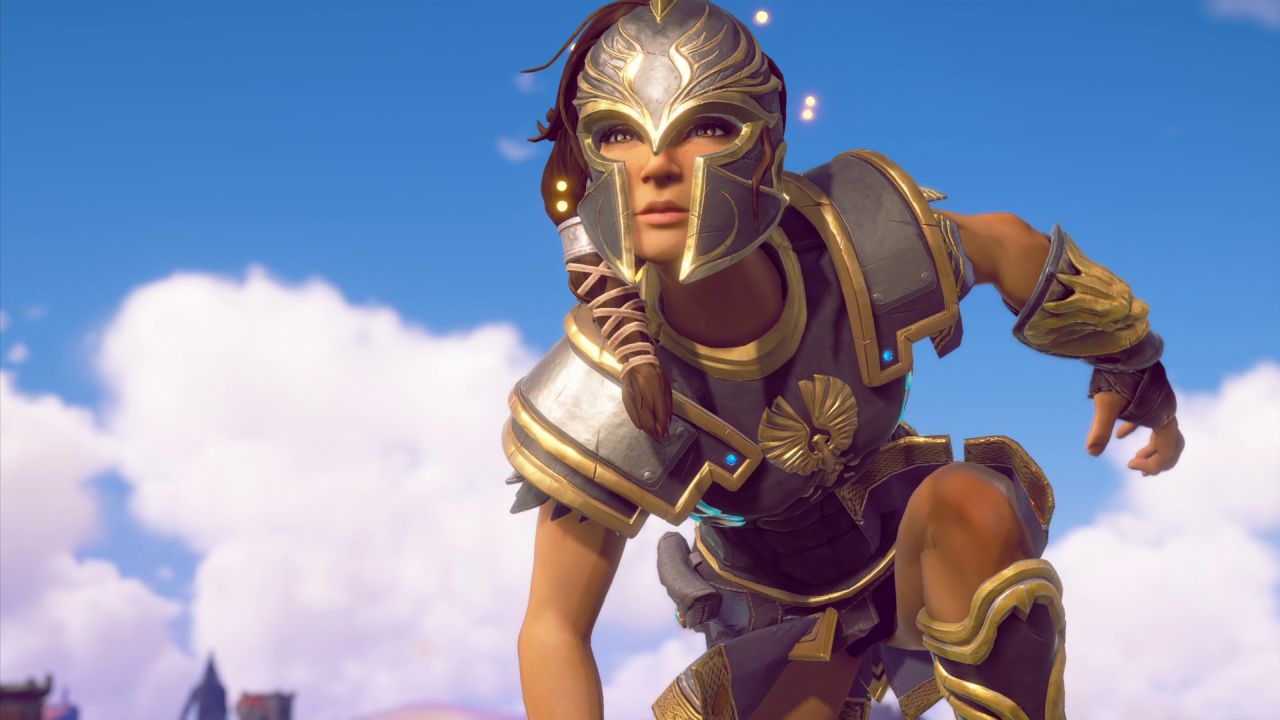
Alice Bee:For a while there I was having trouble figuring out who Immortals Fenyx Rising was aimed at, because while I had initially thought it was aimed at kids, it became clear that the combat, puzzles, and overall vibe was maybe a bit too complex in places. But equally, this cartoony, joyful, adventure-romp couldn’t be aimed at adults, could it?
So I’ll say it: Immortals is great. My best friend in it is a phoenix that I can turn into like, a flying lizard, or a bright green parrot. My horse in it is a big blue unicorn. In one mission I had to fight a legendarily angry rooster. There’s a joke about Charon “saving up to buy a bridge”. Come on!
Nobody gets mad at you for liking it too much or not enough, it has enjoyable takes on loads of Greek mythology, and it’s funny. My only hope is that I get other games in the same series that adapt myths from around the world.
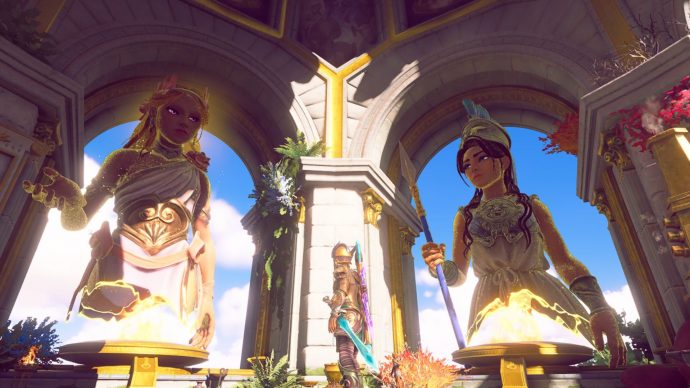
Ollie:Maybe it’s just that December is the perfect time for me to get sucked into a large, polished singleplayer adventure game. Last year, it was Star Wars Jedi: Fallen Order. Every time I finished the story in that game, I’d start again in that same session. The same was - and still is - true for Immortals Fenyx Rising.
It really boiled down to two things. The first is that combat was startlingly satisfying. With a few skill upgrades under my belt, I was pulling off crazy gratifying feats like pulling a harpy down to my level and bashing it in the head with a giant axe; then fluidly moving to perfectly block a Cyclops’s backhand attack, slowing down time enough to wind up a colossal attack with a hammer five times my size, and let it smash against the Cyclops’s chin, sending it flying away into the distance.
Everything felt far punchier than I’d expected. There was a definite moment in my first fight with a bear on the prologue island (which nearly wiped the floor with me, I might add), after which I was just thinking, “Oh.Oh. Yeah, I’m gonna enjoy this.”
It’s not a playstyle I’d suggest for everyone, but for me it matched the satisfaction of cleaning up a level in Viscera Cleanup Detail. Fenyx Rising is one of very few games I’ve bothered to 100%, and I’m probably still going to play it again when I’m finished.
Crusader Kings 3
To see this content please enable targeting cookies.Manage cookie settings
In the lead-up to CK3’s September launch, I was beginning to feel like I was waiting beside an open grave. Don’t get me wrong: I wanted it to be brilliant. But predecessor Crusader Kings 2 is one of the best PC games there ever done has beened. This sequel had to match up not just to its basic quality, but to its appeal after approximately twelve decades of meaty DLC. And all while living up to the fervent, often contradictory, expectations of its various sects of fans. Tough brief.
Well, speaking for myself at least, CK3 was great. I don’t think it was “better” than Crusader Kings 2. But neither was it “worse” - and with the famously long active development lives of Paradox games, it was easy to see how it could eclipse CK2 in time. Crucially, it generated a lot of the same feelings during play, but it mixed in just enough in the way of new ideas that it couldn’t be dismissed as a mere visual upgrade. It was exactly what it needed to be.
Hence ‘competent’, then. Because for all the creativity that went into its design, CK3 struck me as a flex of analytical skill, more than anything else. Paradox thought long and hard about what a sequel needed to be in order to float, gave it just the right amount of hype, and then delivered a game pretty much exactly to brief.
To me, that was impressive, especially from a studio with a rep for taking big ideas and running with them. It would have been tempting, I suspect, to build CK3 around some wild diversion from the established model, but it also would have been a huge risk.

Possibly the smartest bit, I think, was the subtle lowering of the game’s barriers to entry. As soon as it became apparent that Paradox were keen for more people to find the game approachable, fans began practising their accusatory cries of “dumbing down!” But this tightrope, too, was deftly navigated, and CK3 just feels more intuitive, rather than simplified, as a result.
Röki
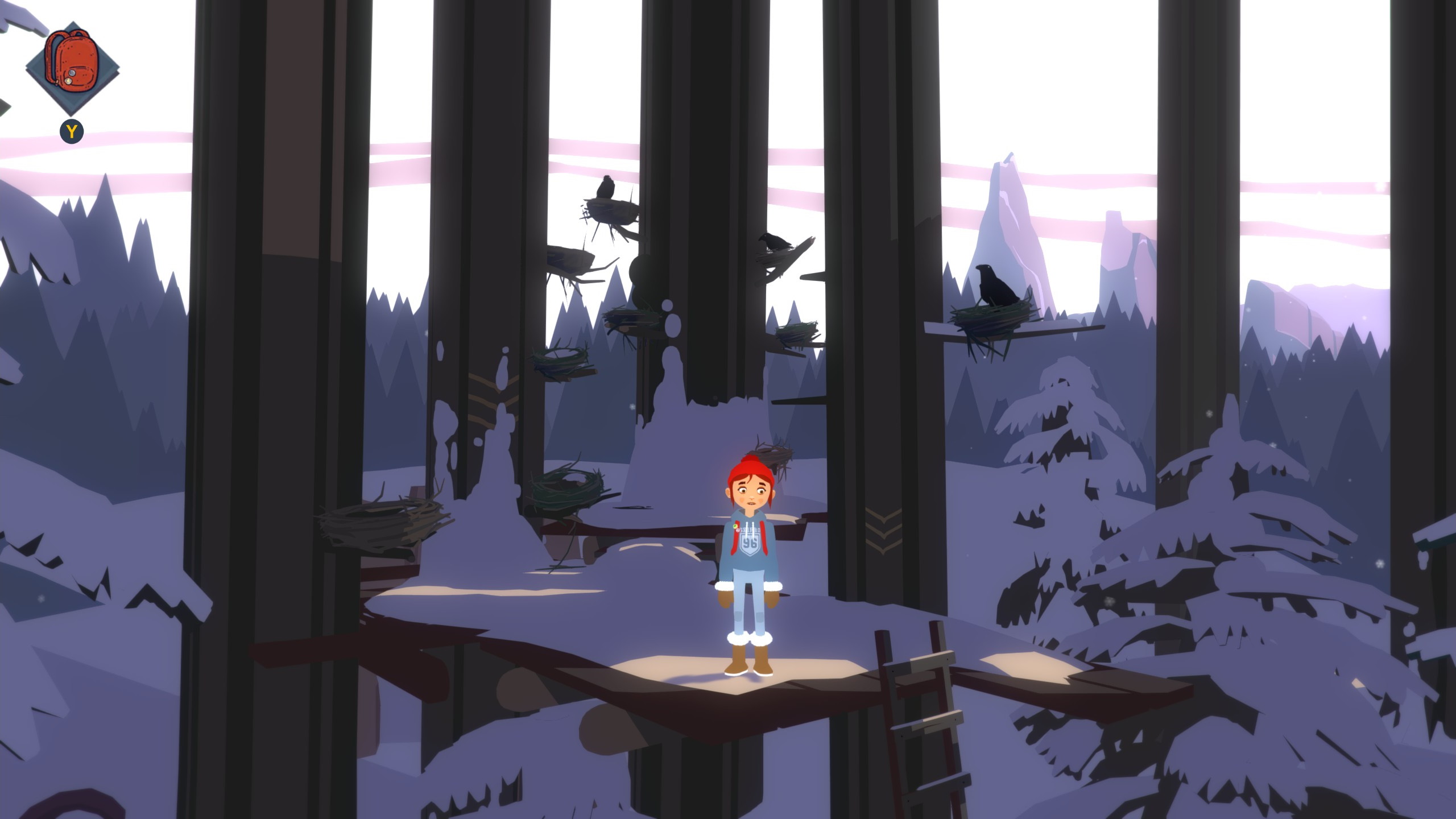
Katharine:Röki is the gentle point and click adventure we needed in 2020. It’s a tale of lost children, lost parents and finding your way through the mist and murk to come out stronger on the other side. The obstacles you face in its wintry, picture book landscape may look and feel epic in scale, with parasitic gods bearing down on you from on high and fierce trolls and sprites looming in the shadows, but the solution is always tucked away in your little red knapsack. Whether it’s slotting ancient stone tablets into place, or simply mixing a vat of sticky liquid to act as a temporary hair dye for an ageing, greying cat, Röki’s puzzles are delightfully grounded in the everyday, making the seemingly impossible task of rescuing young Tove’s little brother Lars from a spiteful demon queen feel that bit more attainable.
Beyond its generous set of puzzles, though, Röki is an ode to childhood and the myths and fairy tales that shape our imagination and urge us to believe in something bigger. It’s a magical game in every sense of the word, at once warm, cosy and charming with its bright, fantastical setting, and deeply tender-hearted as we discover the lingering trauma Tove’s been trying to overcome since she was a young girl.
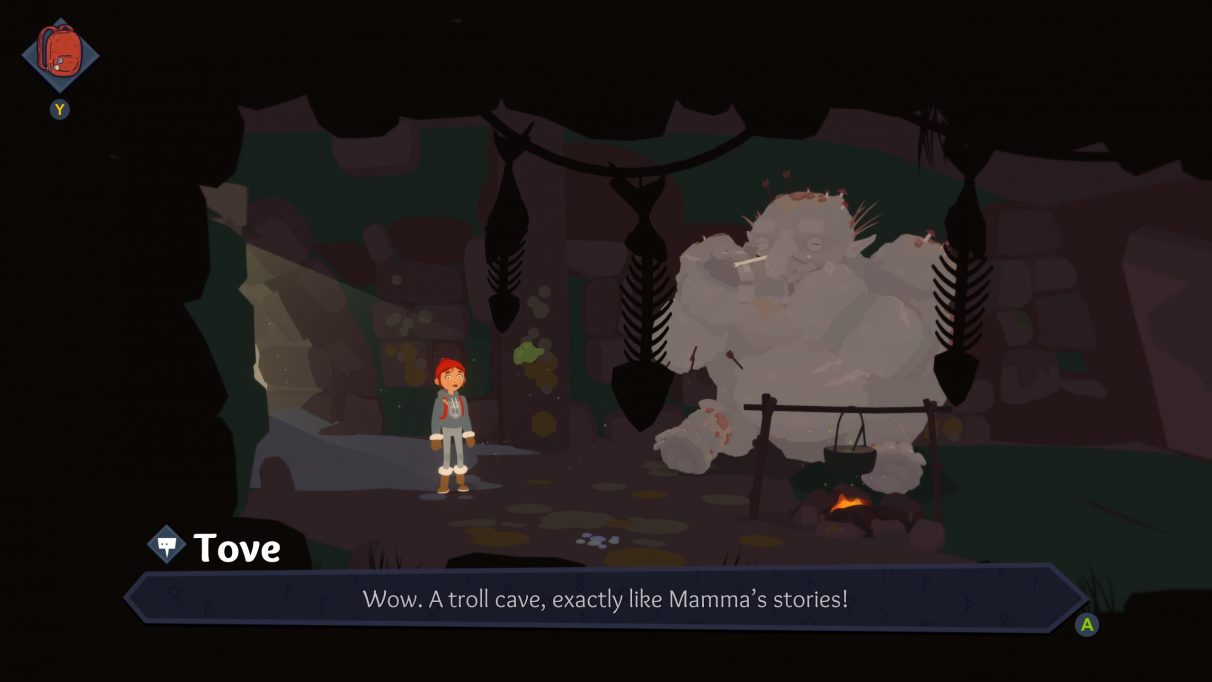
But Röki doesn’t let up. The memories in that treehouse you’ve just grown with your sapling, can and fertiliser combo are all jumbled up. As is often the case with our fickle minds, events have shifted and morphed in the act of remembering them, and the only way Tove can set them right is to effectively tidy them up, rearranging key items within each scene so the memories can play out correctly. It’s the perfect mirror of what she did for Lars' toys at the beginning of the game, only now you begin to realise there’s something else being suppressed and overlooked here, too, twisted beyond all recognition as Tove fights to keep the memory at bay. It’s not difficult to guess what that secret is, but that’s precisely what makes Röki so quietly devastating. You may have cured the gods of their dark, magical curse, but Tove must deal with her own kind of emotional leech before her journey comes to an end.
It’s one of the many great parallels going on in Röki’s coming of age story, but what really elevates it above its peers is how everything’s filtered through the lens of its exquisite point and click puzzling. Lesser games might have dumped these memory sections in a cutscene, but Röki brings every moment back to the root of its genre, showing but never telling. It’s a truly wonderful game that deserves every inch of praise it’s received over the last five months since its release, and one that should definitely take pride of place in everyone’s Steam library. If a game can make me shed real human tears at a virtual sack of manure in this, the year 2020, that is a feat well worth celebrating.
Teardown
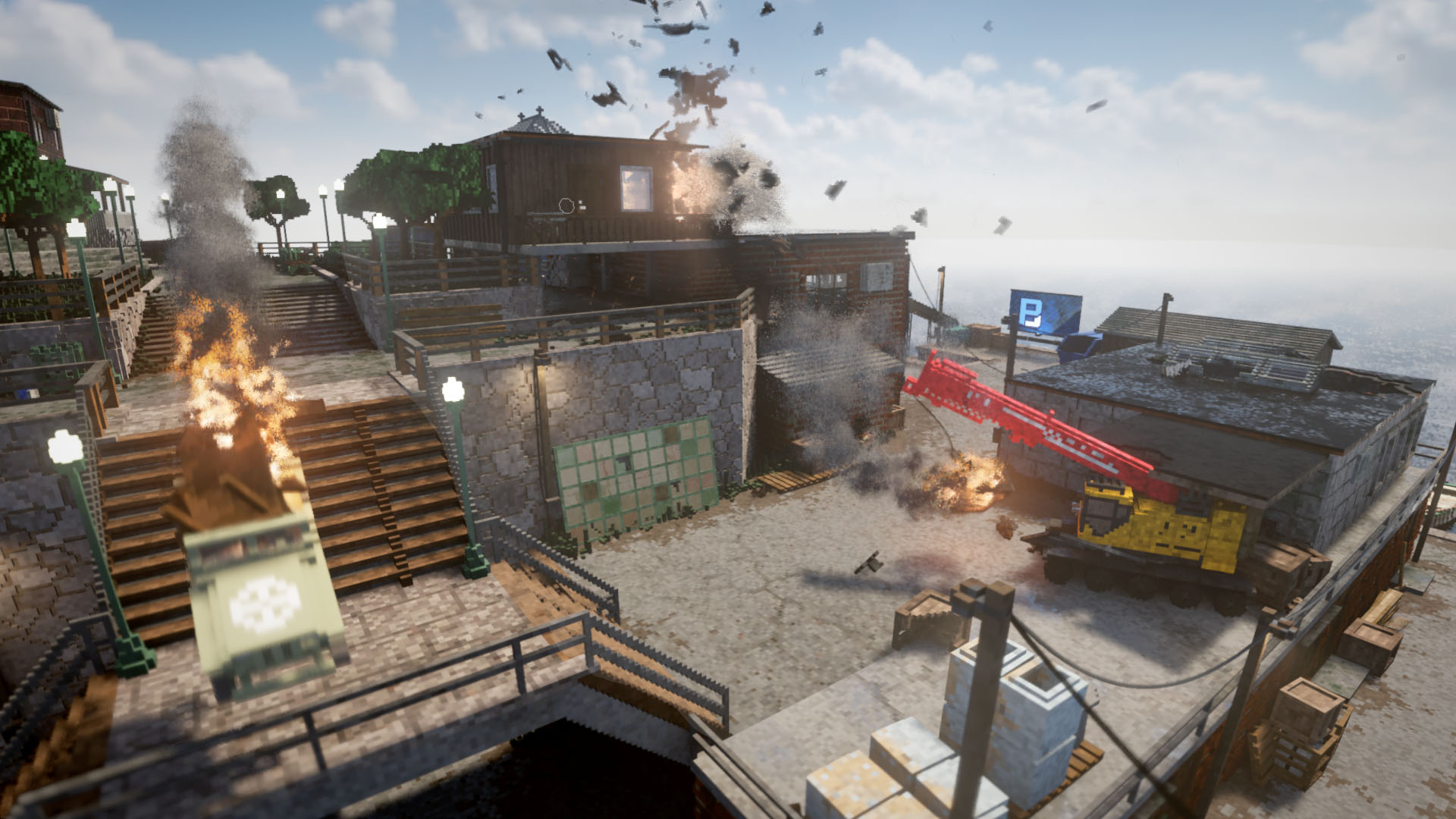
Alice0:Smashing stuff is cool, video games know, but it’s rarely practical. Years of research and development have gone into making piles of clutter fall over and explode in slightly fancier ways. Teardown has cool destruction, no doubt, but it’s far from gratuitous. While we can smash windows, sledgehammer walls, bulldoze houses, and set so much on fire in its destructible voxel world - and we certainly will - it’s a meticulous process too.
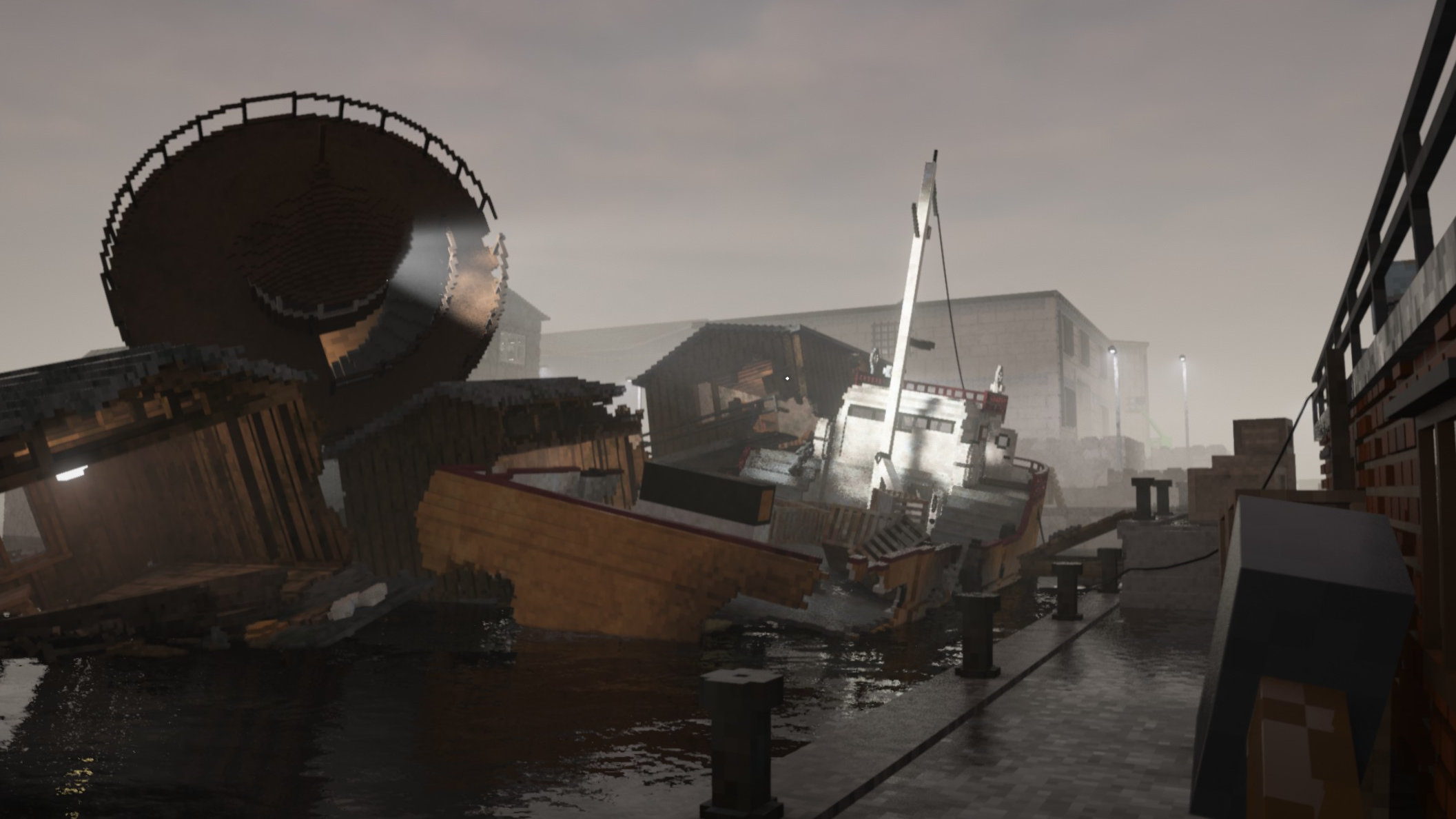
When we enter a level, it’s a recognisable location with a clear purpose. As I formulate my plan, I start cold dissecting it, coming to see homes and factories as abstract series of obstacles and opportunities to avoid and reshape. It’s great fun, too. Like in Zachtronics games, you might solve a level in a way you can’t help but find… inelegant. Something about that escape doesn’t quite sit right with you. You can do better. So back you go, tweaking, refining, and occasionally finding grand new opportunities that massively reshape your escape. You might have no respect for property, but you certainly develop pride in your craft.
It has been a wonderful surprise to see Teardown go from being cool tech demo clips and GIFs on Twitter to, like, an actual proper game, that’s actually properly good. With perhaps a year left in early access, I’m very excited for the game it might yet become.
Graham:Alice0 touched on this at the end, but it’s so rare for games based on new technology to find a game to pair it with.Thistechnology, in fact, has been present in some form in other games, and it’s always been a gimmick. ‘Hey, here’s a third-person action game, but you can smash stuff.’ I’d smash stuff a bit, think “Wow, cool”, and then fifteen minutes later have lost interest.
Tales From Off-Peak City: Volume One

Nate:One of my least favourite ways of describing media is that thing where people say “it’s like x, on acid”, or “I want some of whatever they were smoking when they made this”. 90% of the time, what the person means is “there were surreal elements”, and the experience in question has piss all to do with actual druggery.
But Off-Peak City, I can say, with some moderate experience as a drugsman in my youth, is genuinely psychedelic. That’s not to say it is a Drugs Game, or to do what I’ve just complained about and imply that creator Cosmo D was mashed off his chestnuts while making it. No: I am saying that, to my mind at least, this game managed to evoke some of the same profound strangeness, and strange profundities, as a big go on some psilocybin mushrooms.
It is a game about walking around a small part of a deeply unusual city, interacting mildly with things and having chats with people, until a conclusion is reached. Nothing extraordinary happens in terms of the format, is what I’m saying. Or the story. Honestly, just ten months after playing, I would struggle to relate the plot to you, except for to say that it involved jazz music.
But thefeelof it all - the night sky, and the architecture, and the ever-present liquid excellence of Cosmo D’s own music… crikey. It’s a masterpiece. Just thinking of a snatch of the tune that plays at the start of the game, brings the bouquet of the whole thing to mind like I’m some kind of turbo-proust scoffing an entire bin full of madeleines.

And that’s where the drug thing comes in. I once spent an astonishing forty-five minutes staring at some spilled grains of rice, on the stairs of a house in Wandsworth, and thinking intensely about the concept of circuses. Probably quite a mundane moment from the outside, to say the least. But from inside my head, it was sublime in the true sense of the word, evoking a sensation I will never be able to relive, or to describe to another human being.
In a less full-on way, I feel the same about Off-Peak City. It is, arguably, an altered state of consciousness: something specific and powerful, which you could play through twice in the time it would take me to do a poor job of explaining it.
And you should. Because it’s a state of consciousness you can achieve doing without anything more neurologically reckless than booting up your PC. So go on: go and experience something you’ve never experienced before. You’ll thank me.
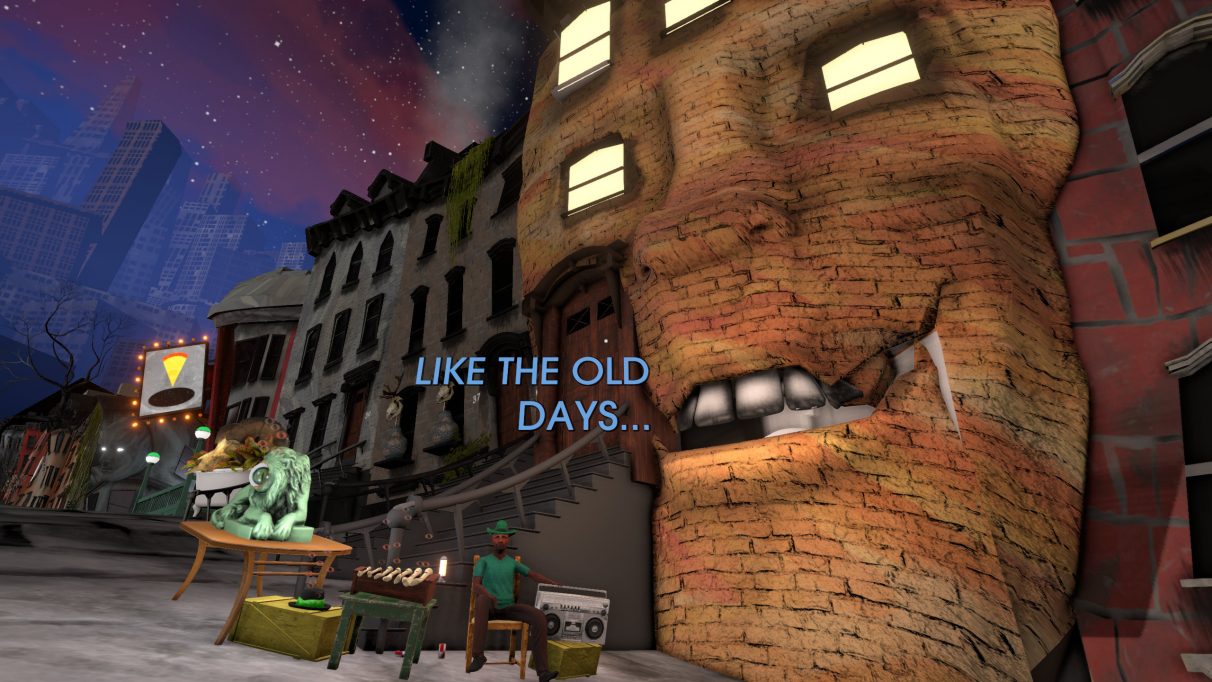
Alice0:Now, I’ve never done mushrooms in a field in the Midlands, but I have spent a lot of time in bed. So to me, Cosmo D’s games capture a sort of dream logic: things might seem bizarre if you took them out of context, but make perfect sense where they are. He takes us to dazzling, exciting, musical places that are so fully themselves that there’s nothing weird about them, it’s just how they are. The world engulfs you, and what a world!
It’s not right that a game which includes chocolate and synthetic brains as pizza toppings has me gagging for a hot disc right now.
Yakuza: Like A Dragon
To see this content please enable targeting cookies.Manage cookie settings
Ichiban represents Yakuza: Like A Dragon’s new direction perfectly, I think. The previous games were a combination of beat ‘em up and action adventure, which dipped their toes into RPG territory, but never fully committed. As a result, it needed someone to push them over the edge. Ichiban, with his boundless enthusiasm, has positivelyEdge-SpearedYakuza in a brand new JRPG direction.
Far from a plodding JRPG, Yakuza: LAD manages to capture the messy street brawls of past entries as strategic and snappy turn-based fights. The plot’s a compelling story of betrayal, suffused with hilarious side missions which involve escorting bubble-covered men to clothing stores, or tracking down mightily important crawfish. You’ll laugh, you’ll cry, and you’ll likely marvel at how pretty Yokohama is too.
I could go on, but I fear I won’t stop. So now it is time for my shite elevator pitch:
You might be cosying up with your Cyberpunks and your AC: Valhallas. But think of Ichiban. He’s cold and alone. During Christmas as well? How could you, how dare you? You want a JRPG that’s full of fun and heart, and where a monkey can manage your slew of businesses? Get Yakuza: LAD in your cart.
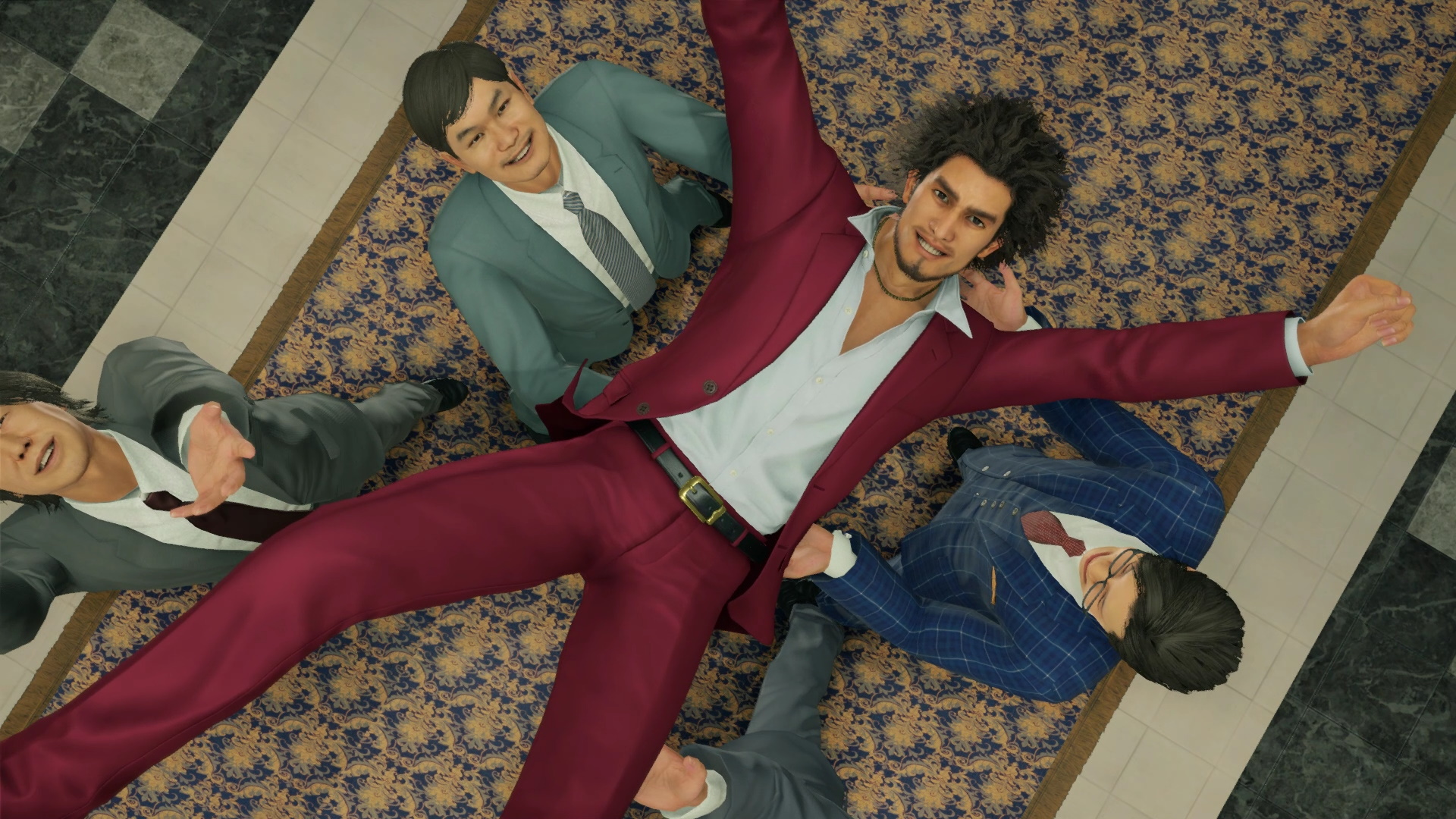
Colm:It’s wild that it all started with anApril Fool’s joke. Unlike Ed, I was alright with replacing series mainstay Kazuma Kiryu, but the thought of slowing the action down to accommodate long, drawn-out battles was ridiculous. Top-tier 1/4/19 prank, Ryu Ga Gotoku Studio…
Then it was announced that RGG Studiowasditching the button-bashing in favour of JRPG-style, turn-based bust-ups. “Oh shit,” said Colm, c. a year and a half ago, “we got worked into a shoot!”
What a fool past me was.
Most of the new mini-games are alright, without being spectacular, and there is some late-game grinding that brings everything screeching to a halt for close to ten hours, so Yakuza: Like A Dragon may not be the definitive version of this type of Yakuza. It is, however, an exceptional way to start a new era.
Paradise Killer
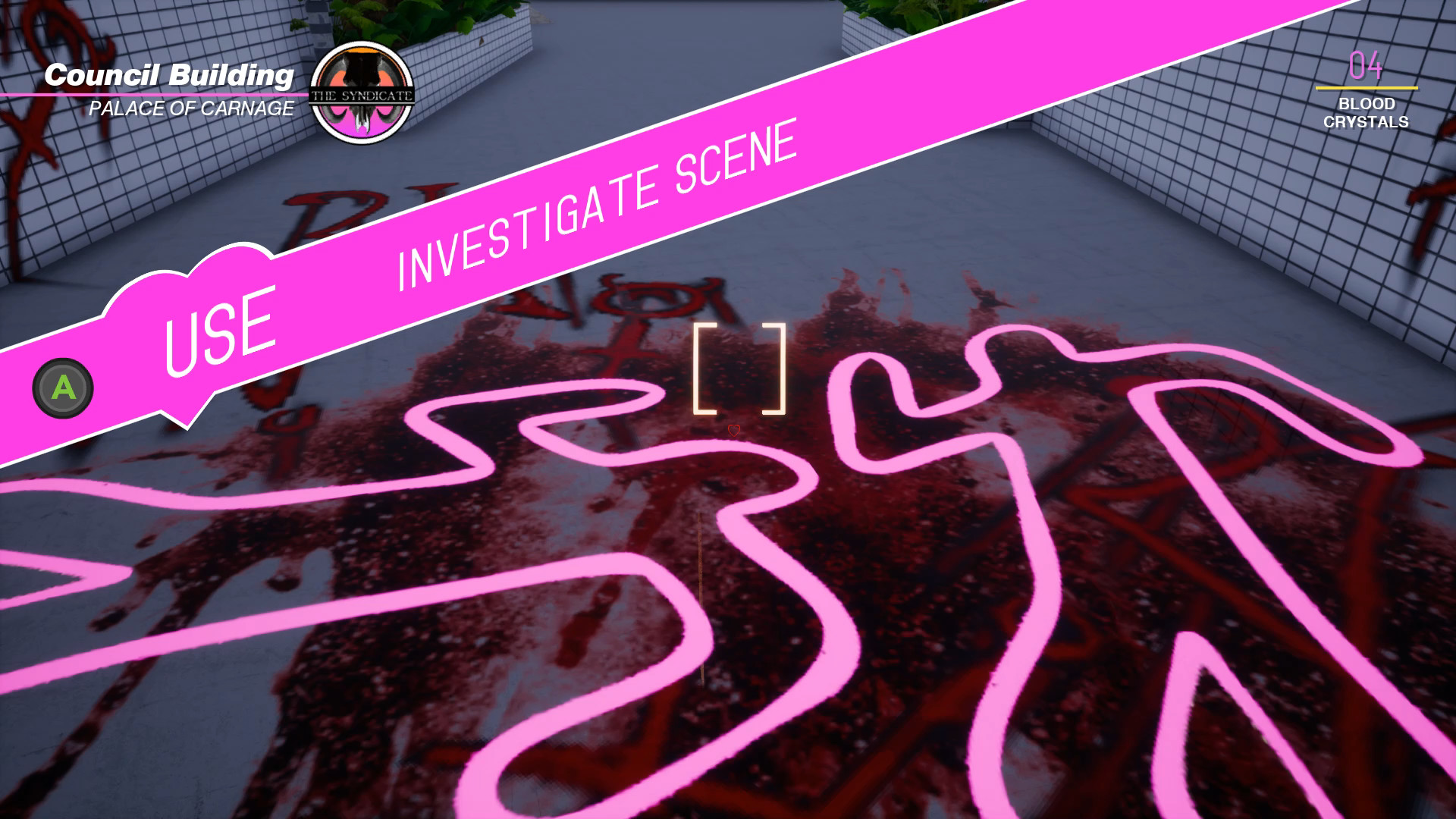
James:Paradise Killer is a real diamond. You’ll know if the vibes are for you as soon as you hit the title screen, and that vaporwave/city pop, synthy sound oozes out of your blue and pink screen. As detective Lady Love Dies, you’re engaged in an investigation on Paradise Island. Well, Island 24, to be precise, as all the previous ones have gone wrong and are completely broken and corrupted. Oops. The Council has been murdered, and you, the Investigation Freak, must return to the island from exile in order to, well, investigate.
All the characters you meet, mostly immortal beings and members of the Syndicate, have their own motives and backstories to delve into, and the island is a flipping joy to traverse. Going around, meeting everyone, and learning more about Lady Love Dies’ history, as well as the history and machinations of the Syndicate and Paradise, engrossed me from the off. Whilst you might not really care about who killed the Council at first, you’ll immediately want to learn all about these wonderfully designed characters, some of whom will gain your trust and others you’ll find suspicious. It’s up to you to find all the evidence hidden around this bizarre island, and every moment of it was a joy for me.
The game doesn’t hold your hand either. That’s probably my favourite thing about Paradise Killer. While it isn’t as brutally laissez-faire as Return Of The Obra Dinn, you’ll have to actually listen to what people are saying and make sure you get to know them. After all, you’re the one serving justice. You have to find… The Paradise Killer.

Alice Bee:I’m reading a Raymond Chandler book at the moment and Paradise Killer strikes me as sort of having a similar vibe to when people do joke Philip Marlowe-isms like “the dame that walked into my office had legs all the way up the ceiling”. BUT if that also somehow contained within it infinite style, blood sacrifice, clothes split either up to the hip or down to the navelwith no other options, sentient drinks machines and endless neon sunsets.
Now that I write that all out I realise that Philip Marlowe probably wouldn’t like Paradise Killer at all, or be anywhere near able to solve the mass murder at its heart, but Marlowe is basically an asshole so I would think of his disliking something as a recommendation anyway.

Katharine:I love the names in Paradise Killer, and I don’t care what anyone says, but Doctor Doom Jazz is my favourite. It’s the kind of name you simply wouldn’t be able to say with a straight face anywhere else, but in Paradise Killer’s blood and sun-soaked seaside resort gone wrong, it justworks, and I love it for that.
Indeed, even though I thought I’d more or less figured it out, the game still kept me guessing right until the very end when you have a semi-Phoenix Wright-style court case to present your findings. Seeing my thoughts and theories crystalise as suspects fell like dominoes was properly thrilling, and it’s probably one of the best endings to a game I’ve played all year. It’s also been equally fascinating to hear what conclusions other members of the RPS Treehouse came to with their findings as well. It reminds me a lot of the ‘sock incident’ in Obra Dinn when we were all chatting about how we’d figured out the identities of various crew mates using some very nifty (and quite literal) footwork, and this is one of the things I love most about good mystery games. There is no ‘correct’ path to figuring out some of its deeper mysteries, and how we got there is just as much fun as the actual solving of it.
And WOOF, did I mentionthe soundtrack? You shouldlistento thesoundtrack.
Streets Of Rage 4
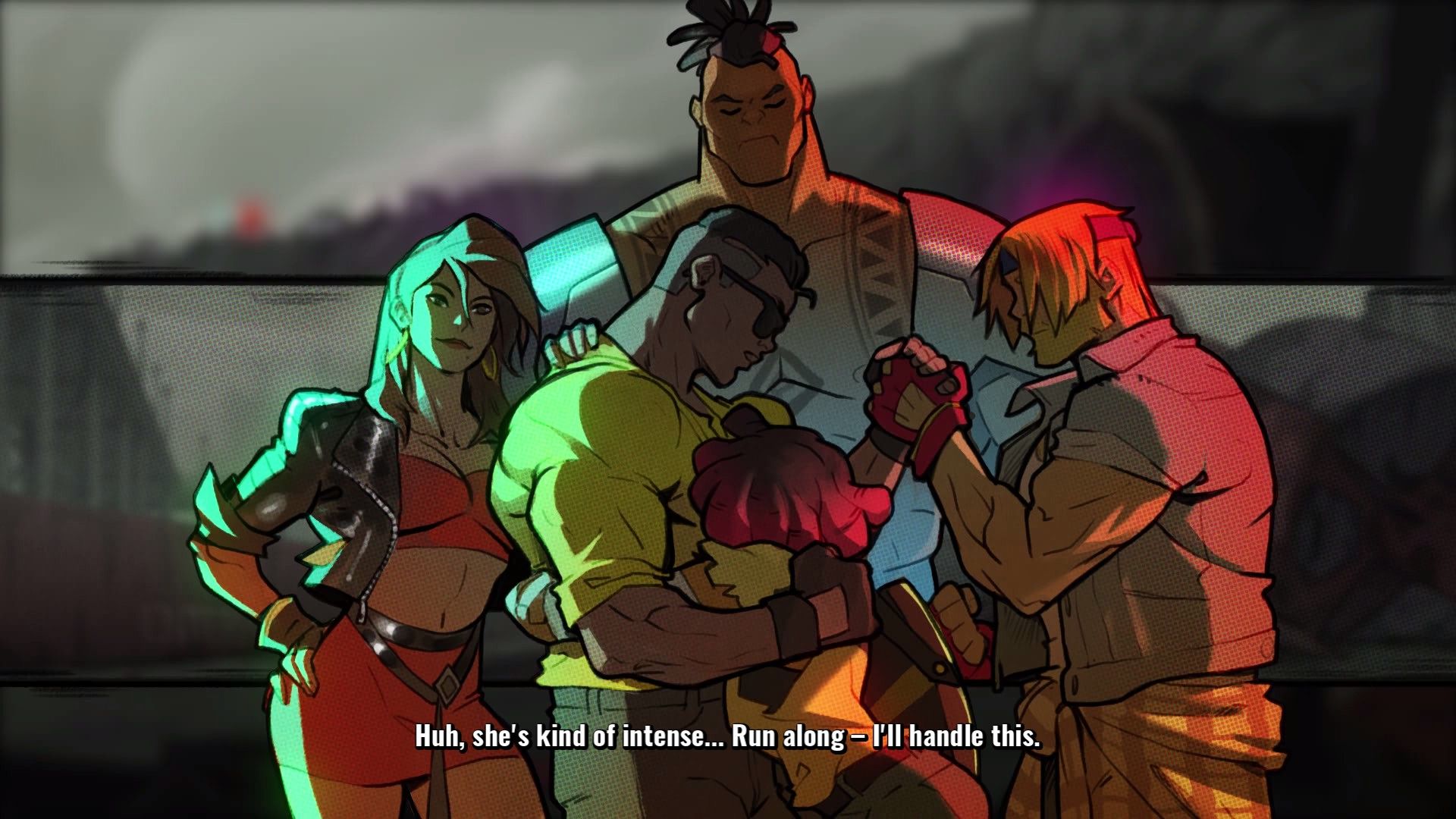
Colm:I was properly worried about Streets Of Rage 4. The last time Blaze Fielding was dishing out hurt on the pavement, Marti Pellow was topping the charts. For 15. Long. Weeks. But when I saw the beautiful hand-drawn art style, landed my first Grand Upper, and saw vegetarians could transform bin chicken into bin salad, I was in.
Rather than try and modernise the venerable beat ‘em up series with things like overly long cutscenes or an unnecessary skill tree, the developer just put more emphasis on what Streets Of Rage is known for: the punching and the kicking. The new combo counter and online leaderboard aren’t revolutionary, sure, but their inclusion means there’s more reason to dive back in after you’ve enjoyed the campaign’s afternoon of entertainment. And every playable brawler offers something different in combat, too. My personal favourite is Adam, though, because his special ability sees his feet turn into dragons, which is quite impressive.
While nostalgia is obviously the hook, Streets Of Rage 4’s subtle tweaks can be seen in every aspect of the game. Seen and heard. Composer Yuzo Koshiro’s work on the original games can be found on most Best Soundtracks lists, and rightly so; those tracks were outstanding then and they’re outstanding now. Koshiro was drafted in as a way to bridge the gap between old and new, with his classic, more chiptune-y sounds drawing you in at the beginning of the game, before SoR4’s lead composer Olivier Deriviere takes the quaver-shaped ball and runs into a wall of synthesizers and drum machines. It’s familiar, but fuller. A richer sound than you’ve heard before, despite you being convinced you already have it on your Spotify.
Is it revolutionary? No. But, then, this game didn’t need to reinvent the wheel, it just needed a little oil. And an Axel Stone with a beard.

James:I’m a youngster, so I’m something of a novice when it comes to these old school beat ‘em ups. They always looked cool, side-scrolling and smacking up enemies, but the closest I ever got to the genre was Castle Crashers. Streets Of Rage 4, then, is a game I can’t really compare to anything I’ve played before.
Well, it turns out this game is sweet as hell. Axel, Blaze, Cherry, Floyd, and Adam all have unique fighting styles and moves, and you can even unlock 16-bit fighters from the old Streets Of Rage. Regular enemies are a joy to smack around, and each character feels brilliant to play as. Floyd is a giant grappler, with the ability to walk around carrying baddies and smacking them together with his giant metal arms, whilst Cherry can flip around, bouncing off their heads and bashing them up with her guitar. I played through it for the first time on hard mode, and whilst I struggled, it never felt hopeless like a lot of ‘hard’ games. The option to switch up my character and try again was always present, and sometimes a difficult boss just needs a bit of practice.
It’s never boring to replay stages either - so if you keep dying on a boss fight, it doesn’t feel like a slog to get back to them. Instead, I took the opportunity to try out new approaches: maybe if I focus on getting hits in rather than letting the police and fighters scrap, I’ll get more points for extra lives, helping me in the boss battle.
Streets Of Rage 4 just makes everything feel brilliant. I can’t recommend this game enough, and it’s perfect for a bite-sized session. You can get through a stage in a few minutes, a far cry from the dozens of hours you might be dreading setting aside for whichever open-world game you’re currently putting off playing. Treat yourself with some Streets Of Rage 4. You won’t regret it.
Monster Train
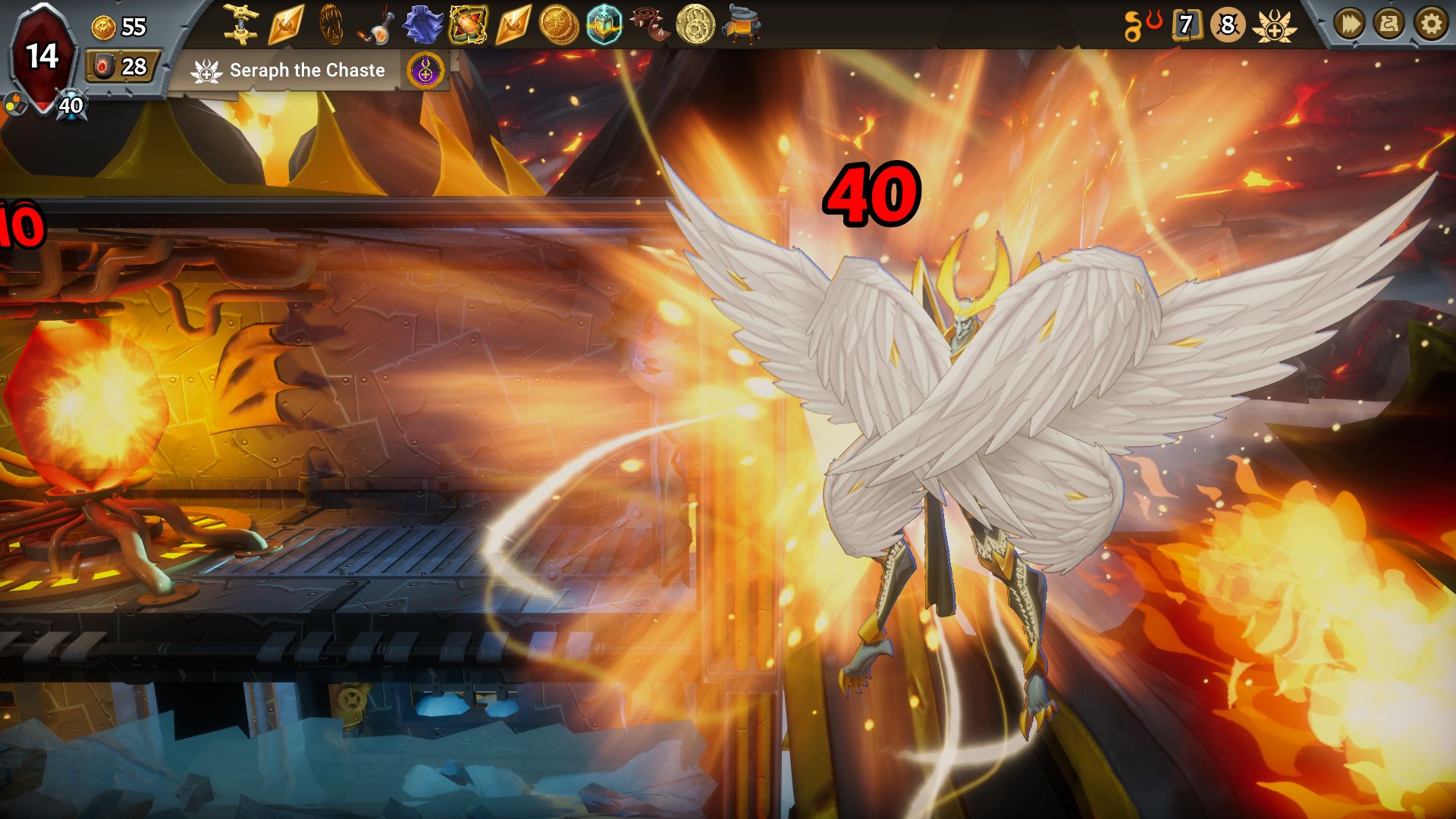
Imogen:Deckbuilding roguelikes are my weakness. I love RPGs, FPSs, puzzles and adventures, but nothing glues me to my seat quite like a deckbuilder, and Monster Train is no exception. It was one of those games where I looked at the title and thought, ‘god, that sounds awful’ - then I played it for seven hours straight and, well, it didn’t make the title any better, but I realise how wonderful the game underneath it was.
There’s so much you can do to change your deck, too. Rather than bog-standard upgrades for everything, in between fights you can usually buy perks for your spell cards or units. Fancy turning a monster into a tank? Buy him some more health. Wanna make it so when a unit dies they come back endlessly? It’s yours. Simply need a card to deal more damage? Done. This stuff makes every run so varied, and each build so different from the last.
On a completely separate but very relevant note, every time I load up the game all I hear is the late Matt Cox uttering the words “toot fucking toot.”

James:Card games and roguelikes are kind of my thing, too. After alotof hours in Slay The Spire, the deckbuilding/roguelike genre combination is, as it turns out, a magic potion of sorts. Imagine my joy, then, when a deckbuilding roguelike was released in 2020 with five different clans to choose from and the ability to mix-and-match them to combine their powers.
Monster Train has you hurtling into the depths of hell on a train (of monsters), using your team’s abilities to destroy the angelic army attempting to stop you. You’re given a champion of your primary clan, an extremely powerful unit you’ll want to build your deck around, and the chance to take out foes on your route through the nine circles. And though this may sound slightly complex, I’d actually say Monster Train is the most accessible and easy to learn game of its type. The effects are clearly explained, your mission is obvious, and the game even does the maths for you as to where your units will be after each round of combat.
You’re able to upgrade your deck with all kinds of sweet cards and effects too, along with myriad special events. In one run, I picked up a bunch of candles from some fella called Dante. The candles damaged my health total if I didn’t spend mana on them, but surviving a couple fights with them in tow meant Dante rocked up again and joins my team as a unit! He even gave me an artefact for my trouble - a passive bonus that applied for the rest of the run.
Everyone will have a favourite clan and champion, but some enemies and situations might inspire you to switch things up. Obviously, since the game has roguelike progression, every run is different, but you’re always making progress in that your understanding of the game is improving (and you’re unlocking new cool cards and stuff).
While it’s not most people’s favourite Hell-based roguelike of the year, I’m going to keep coming back to Monster Train. All kinds of new content has emerged, too (check out the new champions if it’s been a while since you dropped in). It’s super simple fun which is extremely tough to master - basically everything I want in a game to keep me entertained for a long time to come.

Alice0:I like Monster Train, a lot. Coming on the heels of Slay The Spire, it scratched a lot of that lovely itch with a twist (that’s my signature move when itching). It’s great. I agree with the things them lot ↑ said. But since they’ve already said them, I do want to gripe a bit: Monster Train’s difficulty levels are bad.
Having conquered Covenant Rank 25, I really have played a lot. But as I climbed the ranks, it was rare to think the new difficulty modifiers coming on each level were challenging in an interesting way. Filling my deck with crap cards I’ll want to remove as soon as I can is tedious, and makes future deck decisions and considerations less interesting. Biting huge chunks out of my starting health, likewise, strongly nudges me towards certain decisions. And giving bosses a squillion health points means only a deck which is really, truly broken has a solid chance at winning - so I sought those scant few combos. The difficulty system trying to railroad my decision-making process makes Monster Train less interesting. I mean yeah, I eventually beat Covenant 25 and felt great, but it’s a stain on a great game.
Death Stranding
To see this content please enable targeting cookies.Manage cookie settings
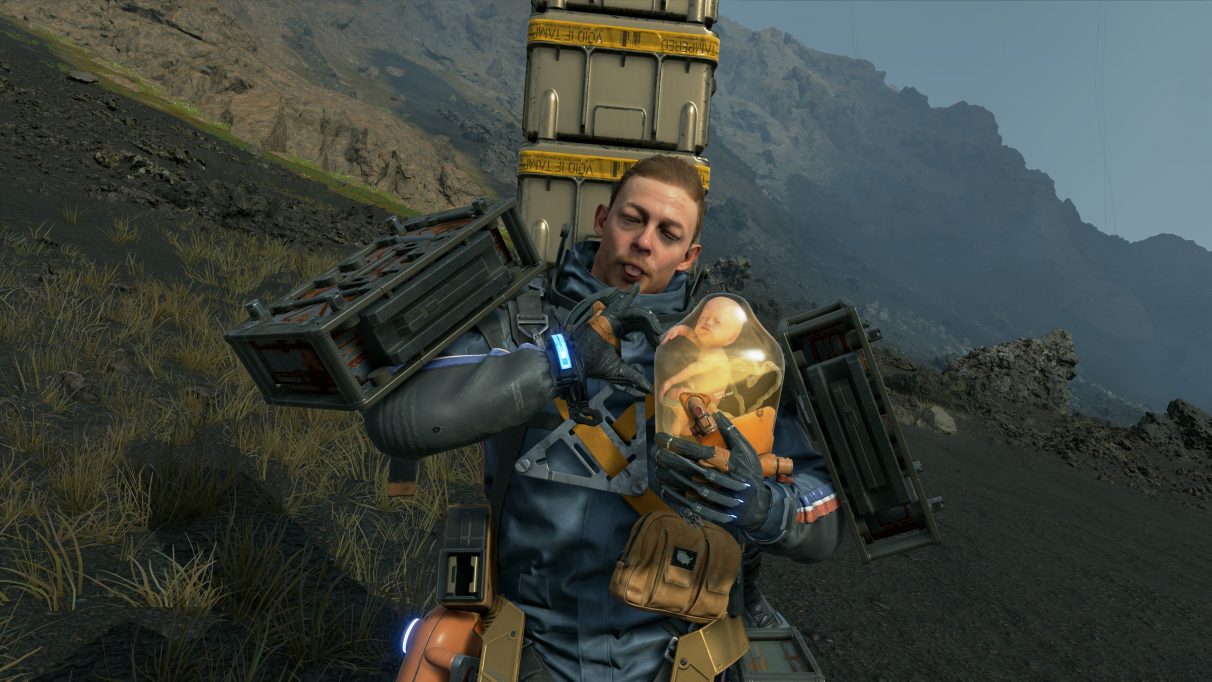
But if Death Stranding teaches us anything, it’s that time and distance are great healers. If you were to boil it down to its simplest form, then yes, this is indeed a game about moving boxes from point A to point B. But what an act of moving it is. In Death Stranding, traversalisthe game. From the way you load your cargo to the route you pick through its rocky, mountainous landscape, this is a game where even the tiniest change in gradient can send you tumbling to your knees, destroying your precious deliveries in the process. It’s a game where the weather is your enemy, and where the sight of a road or a well-placed zipline can bring you to the point of tears. It is a walking simulator in the very best sense of the word, and I just couldn’t get enough of it this year.
There ain’t no stopping the BB Boys!
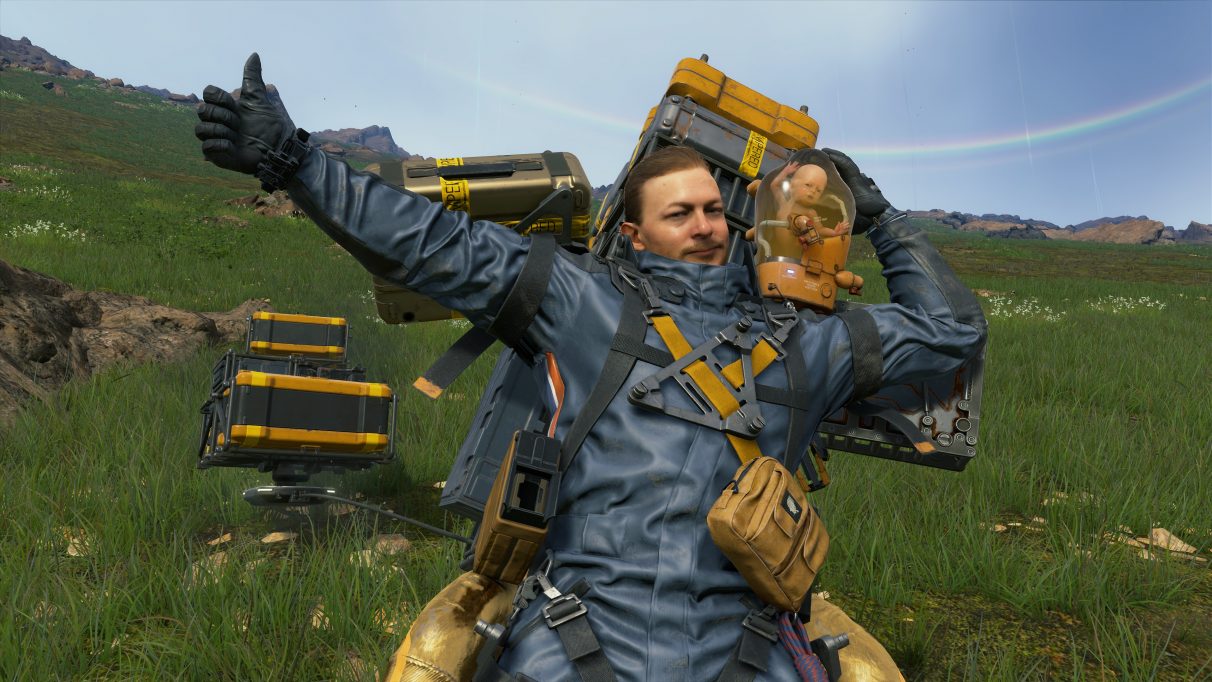
It’s a game that makes you engage with the landscape of its world like no other, as even the simple act of crossing a river can be fraught with danger. You can’t just charge toward your destination like Assassin’s Creed or follow the road like Skyrim. Heck, you also can’t climb up its walls with your bare hands like Breath Of The Wild. Instead, every journey must be planned and prepared for, balancing the tools you’ll need to get the job done (ladders, ropes, and construction kits) against how much cargo you’re able to carry.
After all, it’s not just you you’ve got to look out for in Death Stranding. You’ve also got a small passenger with you, BB, who sits in a jar on your chest. BB is your lifeline in this strange, empty world, as they’re the only way to sense where the world’s deadly (and potentially explosive) ghosts are. These otherworldly beings are the reason why humanity has fled underground in the world of Death Stranding, as no one but porters are equipped to deal with them.
Death Stranding still falls prey to many of Kojima’s bad habits. The opening couple of hours is nearly 90% cutscene, and the way it frontloads much of its lore and painfully on-the-nose character names and terminology is enough to make anyone reach for the uninstall button. But beyond that opening is a game truly unlike any other - and the deliveries are just one part of it.
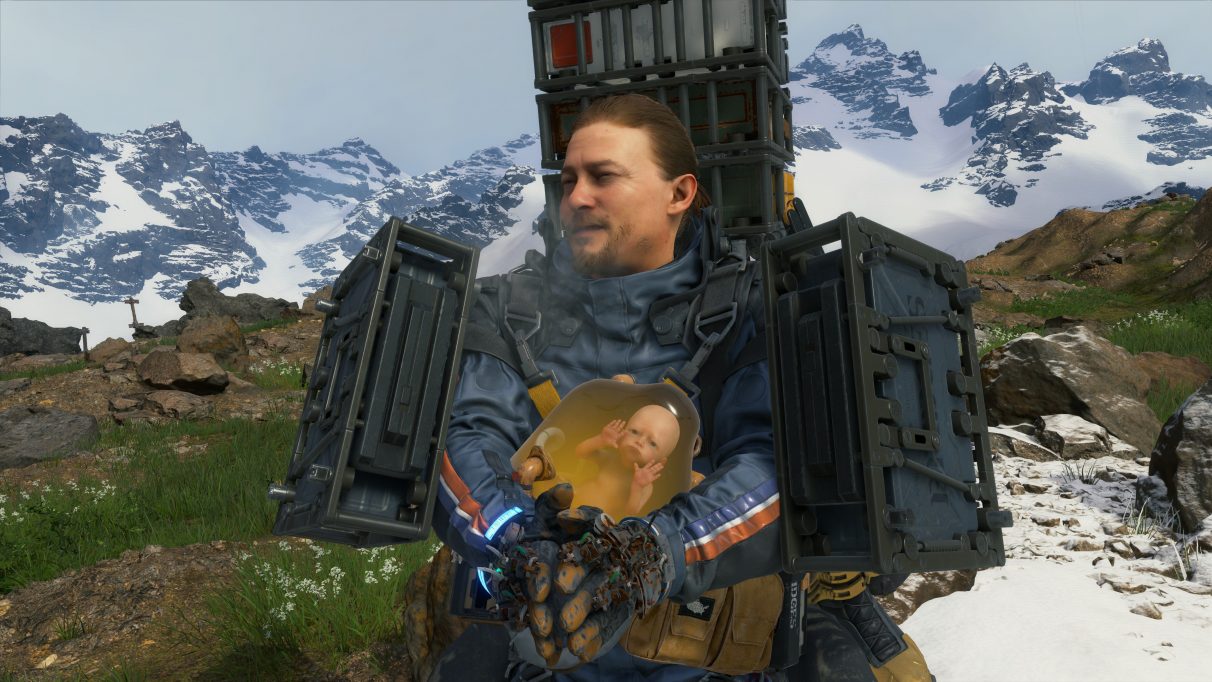
Ultimately, Death Stranding is a game about making connections. There are the literal ones you make in the game as you zig-zag your way across a broken (and very Icelandic-looking) United States to re-establish the ‘chiral network’ (a sort of proto-internet that got destroyed in the titular Death Stranding event some years back) that will bring its disparate citizens back together again. There are also the personal ones you’ll forge between individual characters as you go about making your deliveries. Sometimes the two go hand in hand, as some bunker inhabitants won’t agree to join the chiral network until you’ve done a few errands for them first to prove they can trust you.
But it’s arguably the connections you make with other players that leave the biggest and most lasting impression. While Death Stranding is fundamentally a single-player game, its asymmetric online multiplayer elements will also see the work of other porters occasionally overlap with your own, whether it’s a kind soul picking up and delivering a lost piece of cargo or a helping hand making a vital contribution to a big bit of construction while you’ve been plugging away at for your last few play sessions. I ‘made connections’ with just shy of 1600 other players, according to my end-game stats, which is actually a lot less than what I was expecting.
I love you, BB.
Cyberpunk 2077
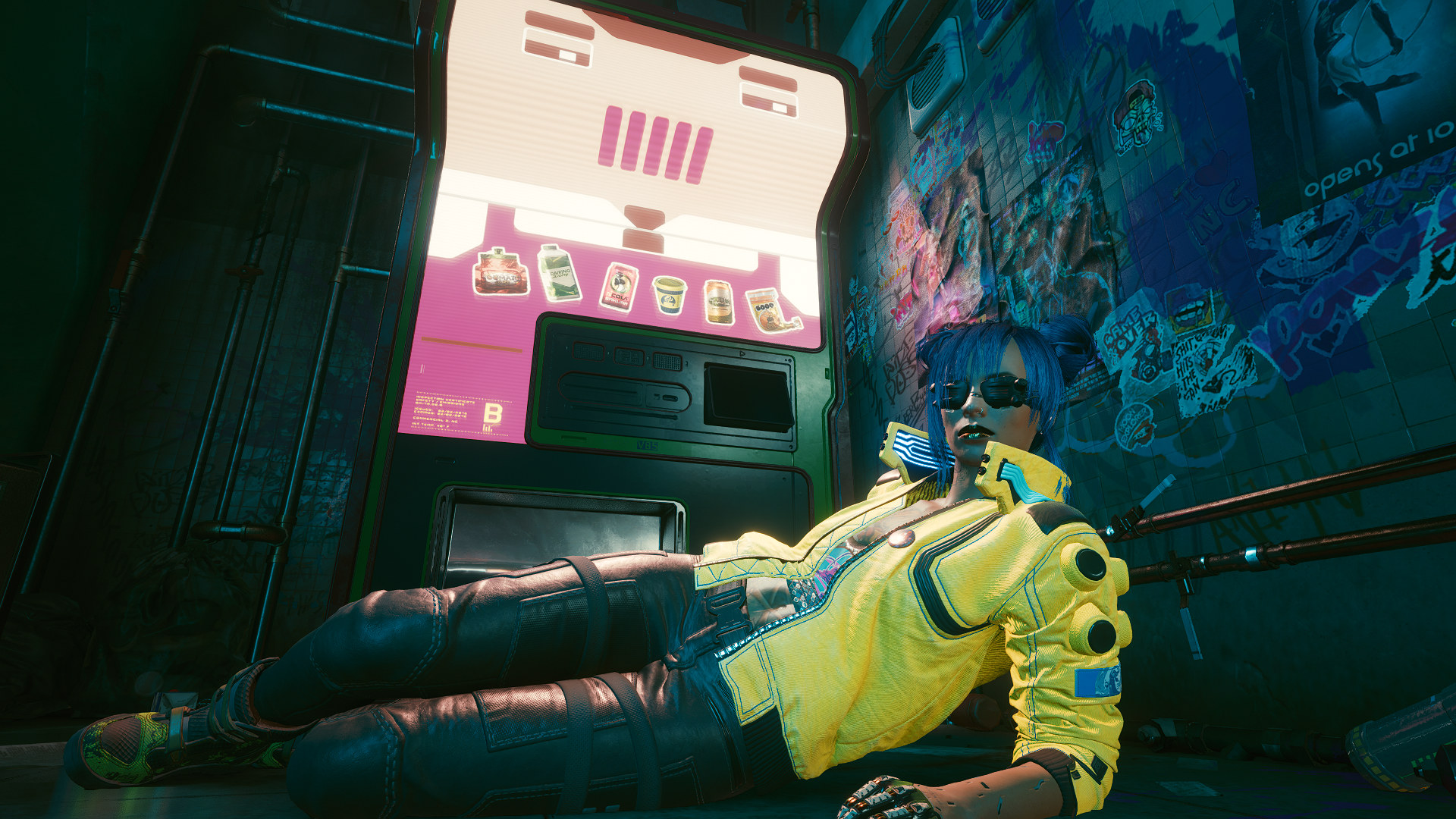
Graham:Cyberpunk 2077 is a buggy mess, and a trash RPG, but that doesn’t reflect the thrilling experience I had while playing it. It’s a game that does quiet and loud very well.
Night City is loud: a big, brash, cacophonous metropolis, that’s one of the best open worlds I’ve ever explored. That it’s also one of the most fragile - the more you try to interact with it, the more it falls apart - ultimately doesn’t matter to me. As a place to explore and look at, it’s glorious, particularly if you ever squinted at drawings of Mega City One as a teenager and longed to see more.
The quiet is even better: Cyberpunk 2077 has some of the best conversations in any game. Late at night around a campfire, or squeezed into a booth at a blaring nightclub, or on a long, rainy drive across town, dialogue is allowed to stretch out, relaxed and personal. I finished the game with a dozen characters I liked and wanted to spend more time with. In a medium where NPCs are often little more than deliverers of exposition, or simply terrible assholes, Night City’s residents are unusually human.
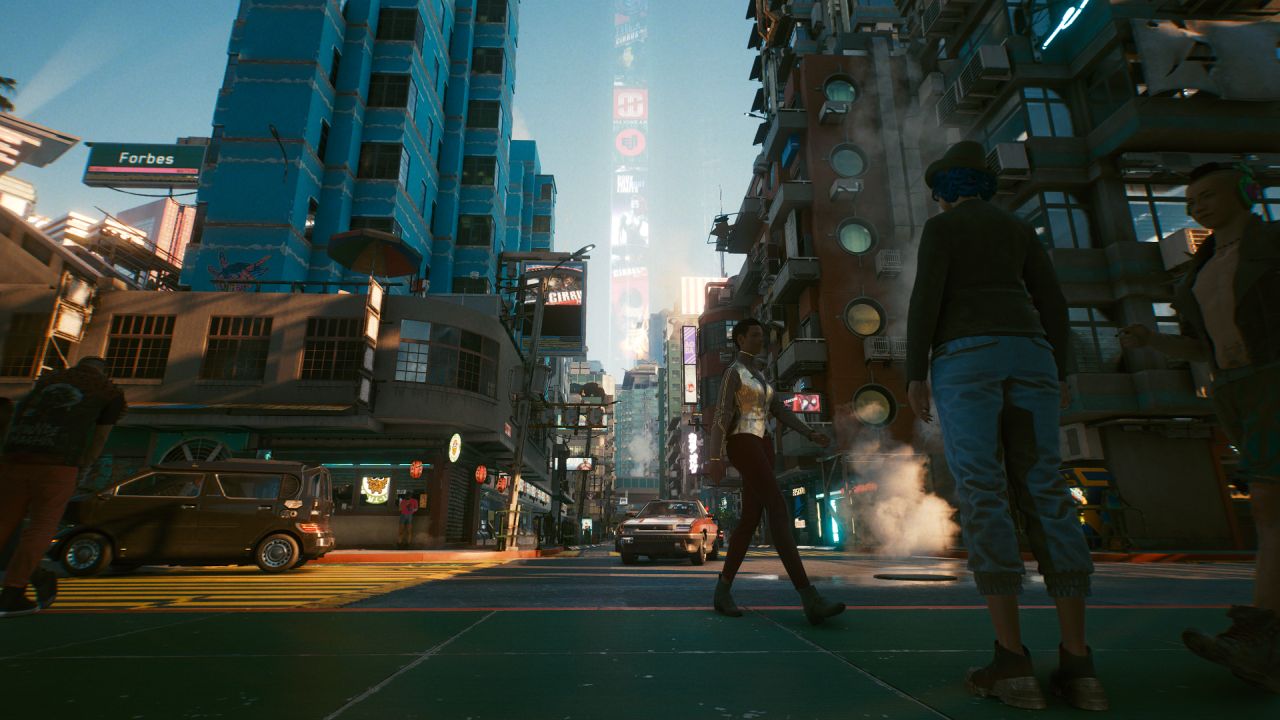
Alice0: Bug fixes cannot make Cyberpunk 2077 a great game. Too much is fundamentally a bit crap. Stealth feels perfunctory without interesting consequences and escalation for mucking up. Skill trees are bloated with uninteresting 2% boosts. Sifting through a deluge of random guns for ones that fit my style is boring. Crafting specific guns is a huge chore and unreasonable stat point investment. Buying anything in a shop is 1) outrageously expensive 2) almost pointless because you’ll soon find something better. The consequence of breaking the law is either losing a minute of my time in a boring way or reloading my last save. The game has so much wonderful fashion but it’s wasted because clothes are tied to stats, so V ends updressed like a drunk toddlerand finding a good-looking garment is only disappointing. Ah, I’ve so many more aspects to gripe about but they come down to: it’s at the intersection of The Elder Scrolls, Grand Theft Auto, and Deus Ex in a configuration that does not mesh well. I’m still hugely enjoying myself.
Night City elevates a janky-but-interesting 7/10 into a game I’ve already played more this year than anything other than Destiny 2. God, I adore Night City. I grew up with Judge Dredd, trash dystopian B movies,the 90s game Quarantine, and industrial music growling about sticking it The Man, so I was bound to have a soft spot for it all. Cyberpunk 2077’s realisation of these aesthetics and ideas is more than I’d hoped for. It is, asAlice Bee has already said, a right looker. It’s so big! It’s so garish! Everyone is so weird and colourful! It’s so messy! It’s all so much! As long as I don’t move slowly enough to see the stupid NPC behaviours and technical limitations, I am delighted drowning in the noise as I barrel through alleys and under concrete canopies.
What’s especially pleasing is that we’re free to explore so much. You can climb a whole lot more than you might think, especially once you get the double-jump legs. I rarely ever drive or use fast travel because running through Night City is a treat in itself.
I can’t tell you how Cyberpunk 2077 will end up. I imagine bugs will eventually be squashed. Beyond that, I do half-expect CD Projekt Red might eventually relaunch it with a load of features overhauled and expanded in a huge ‘Enhanced Edition’ update, like with their first two Witcher games. Even if they don’t, I’d be happy with this as an expensive walking simulator. Oh, but yeah, I do quite like the cyberpunk detective story running through it all so far and the cyberpals I’m meeting. Wouldn’t really know - my attention is obviously elsewhere.
Ollie:As I watched the end credits roll after my first playthrough of Cyberpunk 2077, I felt a bit empty, a bit dejected. I thought at first it was because I’d rushed through the game and didn’t get to experience it properly. I also thought I was disappointed that the game wasn’t better in nearly every way. Both those things were true, but as I sat with my thoughts, I realised that the real reason for my despondency was that I actually missed the characters. In a very small way, I was mourning the fact that there were no more experiences to be had with them.
Yes, I’m talking about Judy and Panam. Both are treasures, and I won’t hear a bad word against them. Their stories were startlingly hard-hitting, and the quests involving them were absolutely the highlights of the whole game. They felt like humans who had experienced pain and loss and hardship, and still managed to keep their heads high and help out those in need. They wanted above all else to support, and to feel supported. Any moment with Judy or Panam was guaranteed to be a high point in terms of writing, voice acting, and player immersion. Not since Pyre have I felt such pain at the prospect of having no more interactions left to explore with characters in a game. For all its flaws, Cyberpunk 2077 deserves a spot on the advent calendar for this in my book.
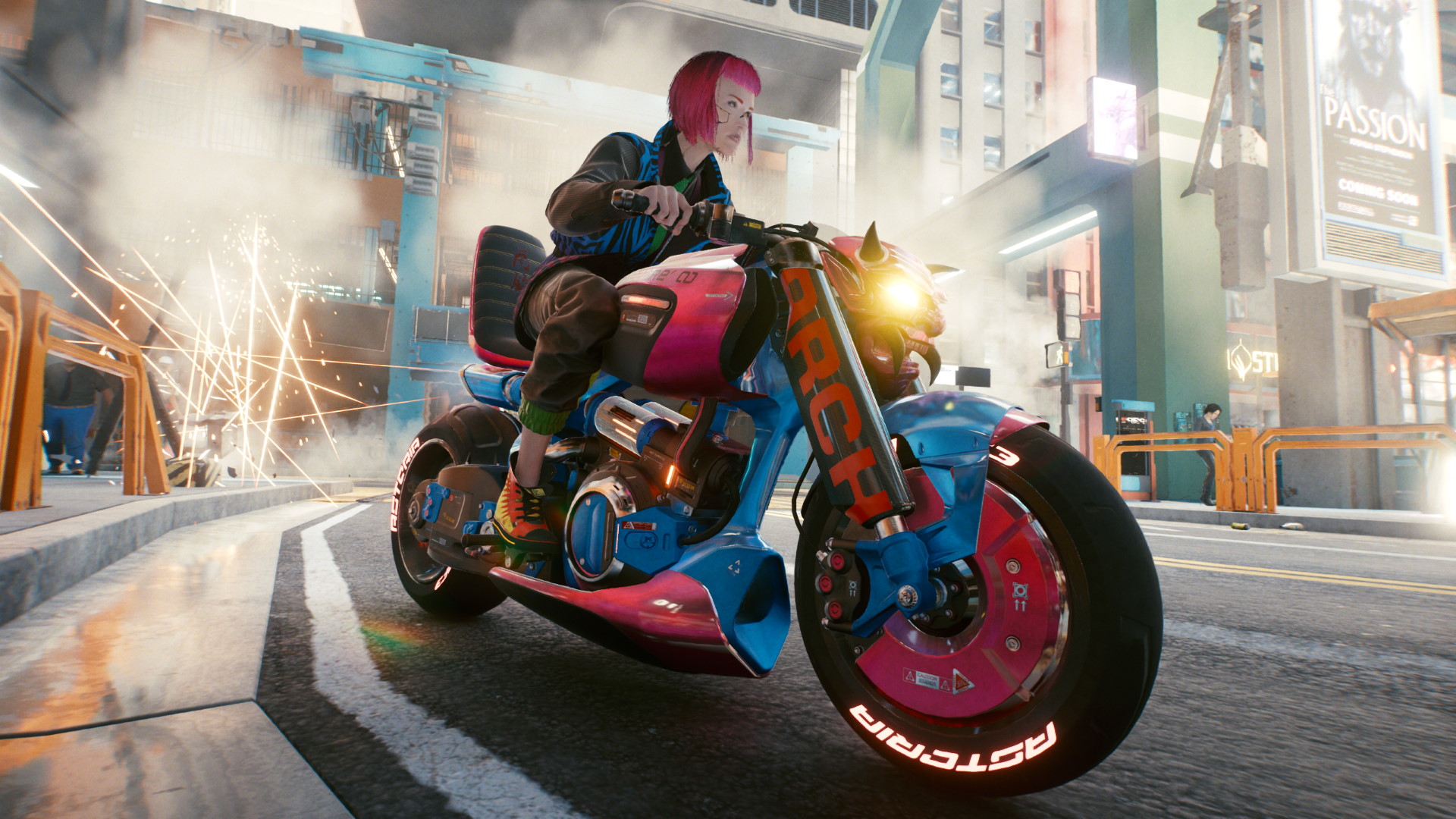
Alice Bee:Your flat has an entire separate room where you keep your weapons, but a burrito vending machine in it in lieu of a kitchen. I approve of this kind of forward thinking design. Imagine V bringing a date back there. “We’re having burrito for dinner. Again. Lol. Don’t go in there, that’s where my guns sleep.”
I have a lot of problems with Cyberpunk. I see a lot of people saying it’s “fine” on PC, but it’s… it’s not. It seems to spend most of its time trying to annoy me while I’m playing it, like a really cute puppy that keeps peeing on your carpet - but I knowingly brought the puppy into my home. Last night I called my car to me and it spawned with a truck sort of half in the back of it. I approached with extreme caution. Then, just as I was about to get into the car, the truckexplodedout of the back and half of my car’s doors fell off. Even if Cyberpunk didn’t have bugs, loads of, just, the core systems are well on the wonk, as the others have said. And unlike the others, I have found the story to be poorly paced and shallow so far.
I’m really enjoying it.
This seems to be the common experience from people I have spoken to. Like, we complain about all of Cyberpunk 2077 loads to each other and then go: “It’s good though, innit?” (I understand this is the same as the relationship that fans of The Walking Dead have with The Walking Dead). I think if you understand that before you play it, you’ll be fine.
Call Of Duty: Warzone
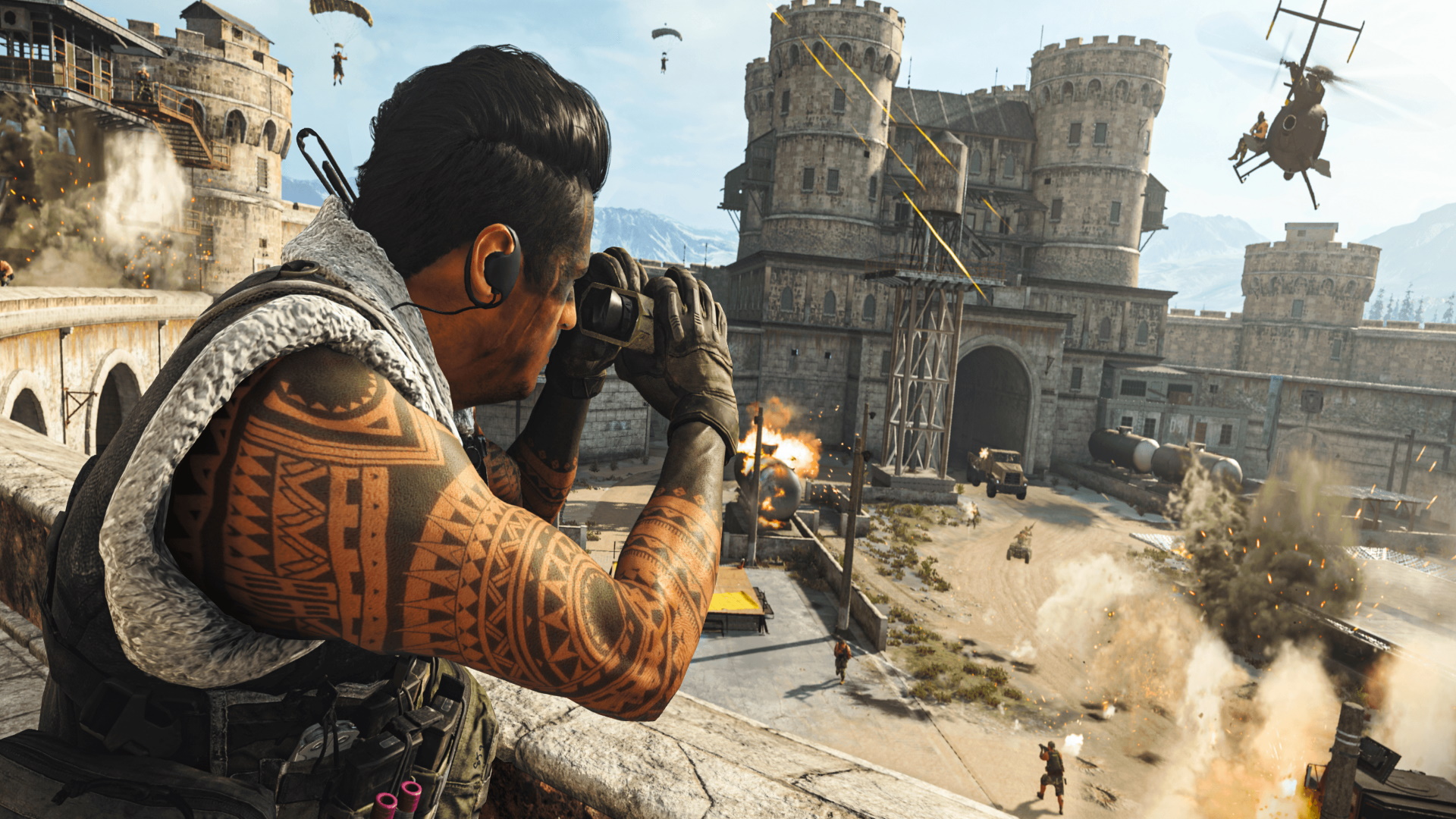
James:I don’t need to tell you how this year has been. Scary, lonely; we’ve all been through it. Isolation hit me pretty damn hard. Stresses from all corners of life melt into a giant ball of terror when you’re alone in a two-metre square bedroom on the top floor of a 19th century Kemptown mansion. In those long spring months, all I wanted was to explore the beautiful city I’d moved to, find new experiences, and meet new friends. Things don’t always work out that way though.
2020 has become more about coping than anything else. Mourning the loss of opportunity, financial security, family members, and relationships, with no end in sight. For a long while I needed a constant.
Looking back, Warzone fit me perfectly. It got me through a huge amount of the year and gave me that constant source of Literally Anything my brain wasn’t able to get from the outside world. I had fallen off the Call Of Duty train a while back, and hadn’t properly got into any of the games since I whiled away ludicrous amounts of time on Modern Warfare 2 back in the day, but 2019’s Modern Warfare reboot brought me right on back. Warzone, the game’s Battle Royale mode, was the perfect combination of familiarity and cool new stuff.
Warzone’s list of accomplishments is a mile long. The gunplay feels satisfying, the best guns being powerful and heavy in your virtual hands, and the elation of landing a sniper headshot to finish off the final member of an enemy squad is as intact as any polished AAA first person shooter. The map is varied, and the constant extra content and range of weapons and characters mean you can customise your experience to bring the best for both yourself and your squad.
To me, though, all the good stuff Warzone had was secondary. I’d be playing it anyway for work, after all. No, Warzone was my game of the year because other people liked it. It’s the first Battle Royale game, hell, the first game in general, that’s resonated enough with both me and a group of friends to the point where we can enjoy it together like we’re hopping online after school as soon as we’ve finished out homework.
Through all the bad backs and difficult days, Warzone, and the squad I drop in with, have got me through a really rough year. Thinking about Warzone for what it is, it seems almost silly to attach such emotional weight to this ridiculous shooty bang bang game that lets you buy weed guns and anime trucks. Honestly though, Call of Duty: Warzone is a banger, with all its brilliant limited-time modes (Armored Royale, I’m looking at you) and it’s one of those games that’s a joy to guide. Any excuse to jump into Verdansk with the squad is a delight for me.

Ed:James and I were out in Verdansk together for most of the lockdown, and he’s summed up my thoughts on Warzone pretty nicely. For me, as much as it was for him, getting on Discord with The Boys after work and dropping into Call Of Duty’s battle royale mode was an important way of connecting with actual human life forms.
We were all basically an advert for crossplay too. Despite us playing on a bunch of different platforms, Warzone was one arena which let us crack on regardless. As I write this article, I’m reminded of how brilliant this is. That we were - and still are - able to catch a ticket to Verdansk without even thinking about compatibility remains magic to me.
I can’t shake loose the idea that to play this game it doesn’t cost money, probably because it’s so polished. It’s pretty much a live service mode that feels stripped straight from £50 Call Of Duty: Modern Warfare. There’s no cheaping out on graphics or gun play here, it’s a triple A experience, just funnelled into a big multiplayer mode.
Having said all this, as lockdown wore on I’m not sure we even cared about coming out on top and securing that Warzone victory. In the end, Verdansk became more of a chatroom for us to air our frustrations, have a chortle, and just exist in a space that wasn’t our rooms. Essentially a mental health tool which happened to involve dropping onto a map, surviving poison gas, and shooting baddies.
Assassin’s Creed Valhalla
To see this content please enable targeting cookies.Manage cookie settings
Imogen:I never played an AssCreed game before Valhalla, so I don’t really understand any of its underlying story about modern humans and weird magic. I don’t want to understand it either, to be honest, because to me Valhalla is just a fun game about being a cool stealthy Viking.
One of my favourite things to do is climb everything. Mostly because it’s very freeing, but partially because I find it incredibly funny. While the climbing can be finicky at times, for the most part you can pretty much ascend anything. It’s not like the annoying Horizon Zero Dawn, where you play a character who is clearly very good at shuffling themselves up rocks, but will only do so up specific paths with bright yellow ledge markings. Rubbish! Push Eivor up to a flat wall and she’ll just go, regardless of whether or not there are handholds.
Which brings me to the bit I find funny: a hulking Viking warrior sprinting and leaping at various buildings. Every time I do it in some random town or village I am both baffled and amused that no one really seems to care. It’s almost like these people have absolutely seen the terrifying woman scale the side of a church, but of course they’re not going to call it out because what if she jumps down and crushes me.
And I absolutely would do that because aerial takedowns are also wonderful. There’s nothing quite so satisfying as a stealth attack from above, especially when you’re a giant Viking who absolutely flattens people before giving ‘em a quick stab. I’m 90% sure they’re already dead from the impact of Eivor’s body, poking them with the hidden blade just seems like a formality at that point.
Assassin’s Creed Valhalla let’s you climb up things and squish people, 8/10, GOTY.
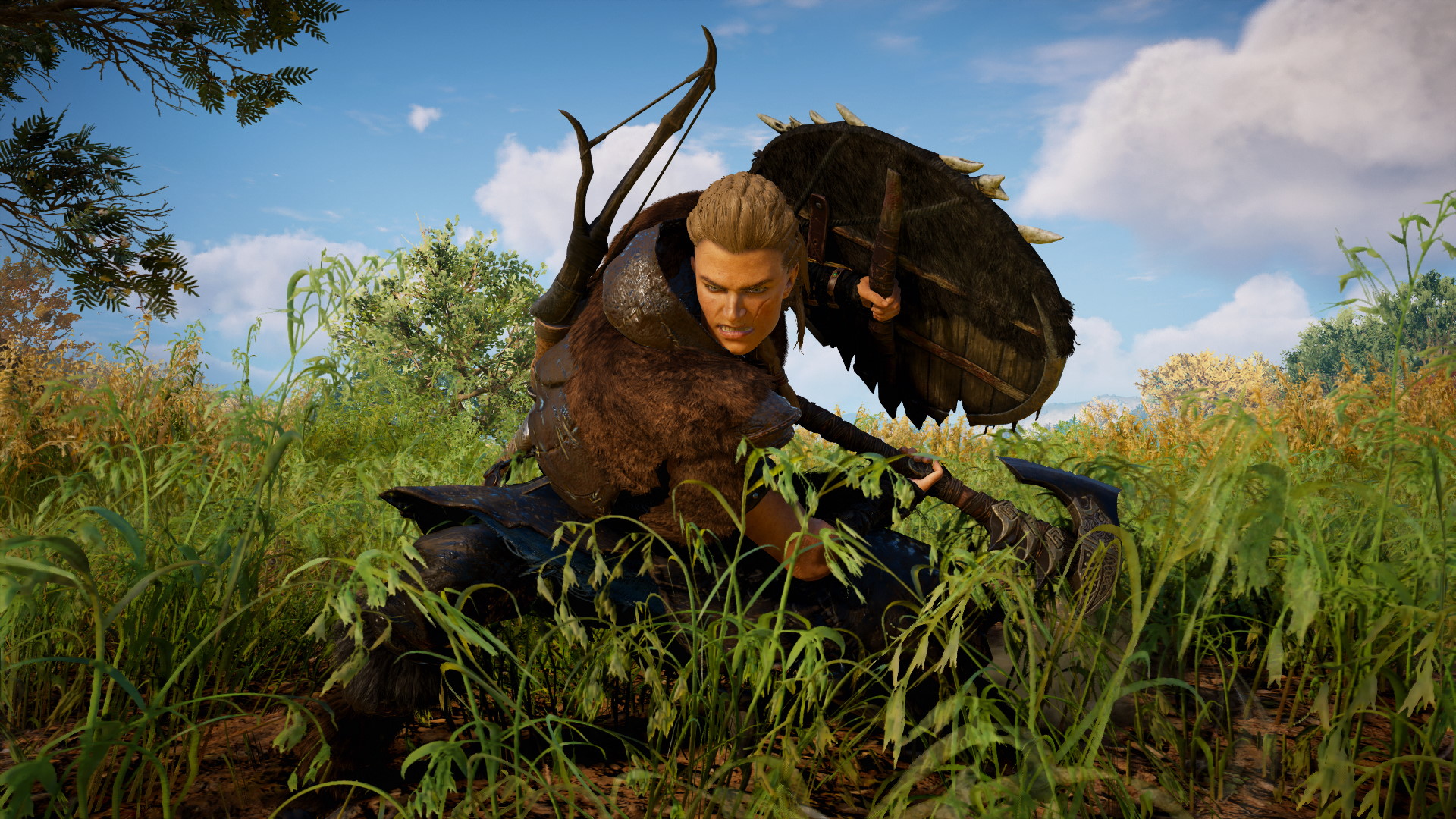
Alice Bee:Imogen need not worry, because most long time fans of Assassin’s Creed do not understand the aliens-but-not, historical-computer-magic framing story. It was never really the important part anyway, right?
Ubi’s stately flagship adventure series, which is basically about stabbing people throughout history, got a bit of a revamp a few years ago with Assassin’s Creed Origins. Set in Ancient Egypt, the new style Assassin’s Creed stripped back the HUD markers, revitalised combat, gave you a much bigger, more alive world to play around in. Assassin’s Creed Odyssey added a massive hench girl protagonist into the mix. And this year we got Valhalla.
Because I have played all of the AssCreeds, Valhalla, to me, feels like a game that has all the best bits from the series. It’s got the big world to play around in, the hands-off approach that lets you play in a more adventurous, off-the-leash way, and the big hench girl protagonist from the more recent games. But it brings back the blending in stealth from the earlier games. It fades out the precursor high-tech alien stuff.
Then it also adds Viking raids in your own longship (with a cat!), hoofing axes at people, cool undercut hairdos, a village to kit out, and a a whole side bit where you can relive being a Viking god that you can totally ignore if you’re not into it.
Sometimes the amount ofstuffyou can do feels a bit overwhelming, and I don’t think it needs all the elements in there that it has. The sidequests where you find an ancient altar stone and then have to do a fetch quest to kill loads of hares and collect their feet could probably have been trimmed back.
But the missions where a nudist colony have gotten into a fight with their former leader (and he is now standing naked on a rock above their bathing spot, and is constantly yelling at them) or two families are fighting over their shared grain business so you set the entire thing on fire, or the family of pagan witches… yeah, that kind of stuff can stay. Assassin’s Creed is dead; long live Assassin’s Creed.
Umurangi Generation
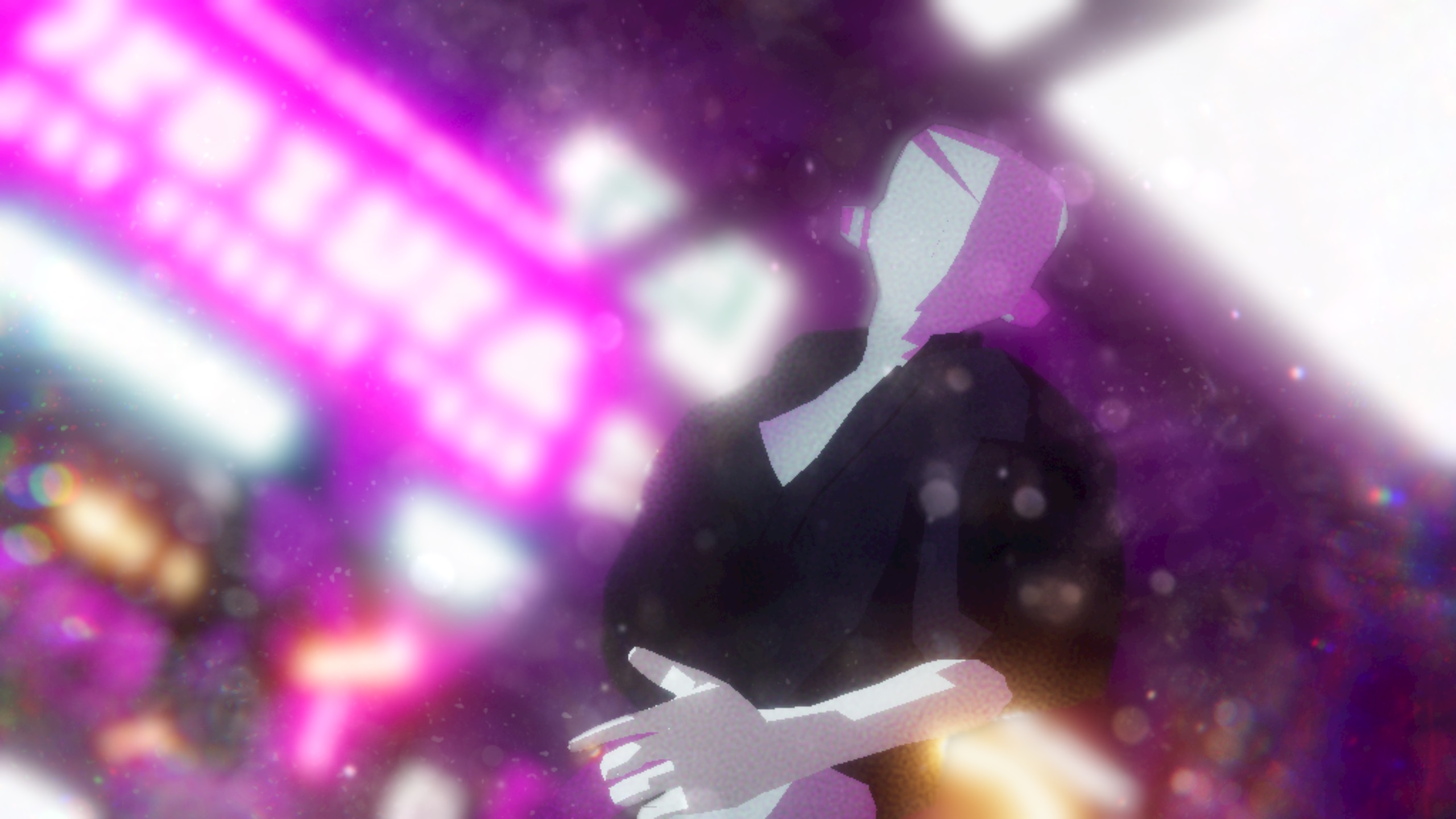
It is a hell of a place; colourful and exciting, and often somber or downright apocalyptic. So sure, an entire city block might be locked inside vast emergency barricades while a UN cleanup crew deal with the severed hand of a mech presumably lost in battle, but just round the corner the kids are holding a street party. There’s a weird energy to living through the run-up to the apocalypse. And in the game, wahey. The future might not even happen but the kids are still fighting for their ideals and living right now. Umurangi’s DLC, named Macro, makes the struggle feel all-to-familiar from today with its tear-gassed street protests, even while it also invites us to tour an Eva hangar. I very much like the fragments of daily life sitting against the backdrop of world-shattering disaster.

Umrangi Generation encourages us to be playful and creative with photography too. Lens options and filters are fun to play with, and give a lot of scope to create interesting images. Lovely. The object hunt can be fiddly, mind. Sometimes it’s not clear why I’m not meeting objectives with photographs I really think should work. This combined with the timer (used only for bonus objectives) does mean sometimes I’m so busy scrutinising the environment for objectives that I can miss the bigger picture on my first visits. A shame.
That said, the game doesn’t end when I’ve found everything. I’ve certainly revisited levels to take in more of the world, find details I’d missed, and take some better photographs.
Factorio
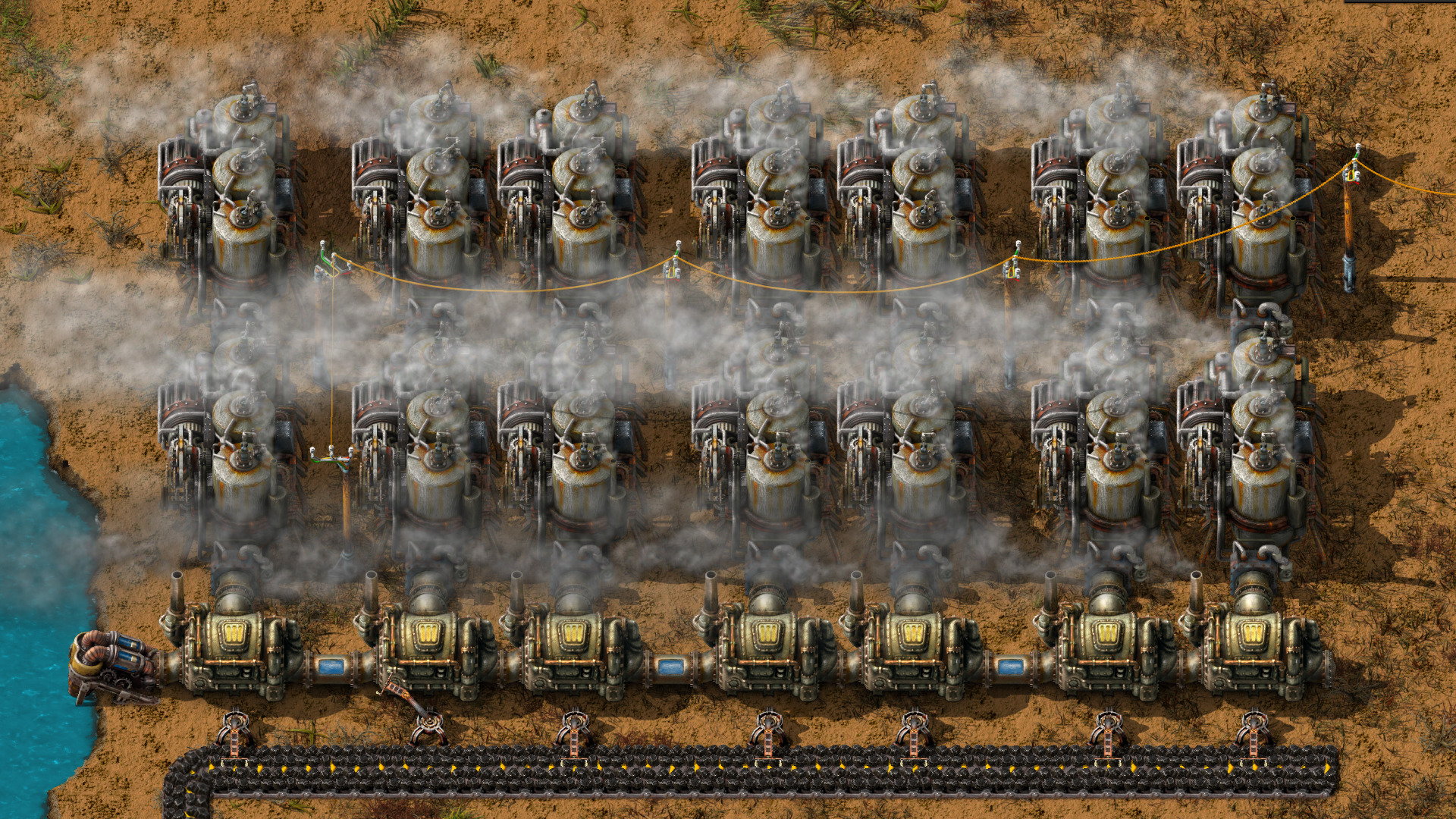
Nate:Factorio has been a fixture in the management/sandbox landscape for such a decent while, that I had to fight back the urge to insert “ye olde” before its name. Nevertheless, this was the year when it finally made into official “1.0” territory. And while the full release was more a particularly fancy instalment in Factorio’s regular program of hefty updates, it was a landmark nonetheless.
The pleasure of making its little automations work is enough to push you over the lip of experiment after tentative experiment, trying out each of its dizzying array of moving parts in turn, as you slowly add to your big, mad machine. And then, finally, you zoom out and see it in its full majesty, and you can’t believe thatyoubuiltthat.
I always used to look at computers with an air of concern and suspicion. I’d shake my head at the sight of a cutting-edge bit of chippery, and feel unable to muster the belief that humans could be capable of understanding such technology, let alone designing it. But then I figure, if I (the fool) can learn to make a gigantic, efficient Factorio machine in just a few tens of hours, then what must a proper smartus be able to comprehend, after devoting her working life to it?
Such clever, clever little apes we all are.
Oh, and if you’re gonna get stuck into Factorio, bring some jaunty tunes. The game’s recently-added soundtrack is good, but it’s so bloody bleak. Really gets to you, after a while. And be warned: if you do start playing,you will be there a while.

Ollie:Anecdotes. We tend to lean on them when describing a game, and it’s no wonder. What better way is there for getting right to the heart of a game, and lending substance to your words? Factorio resists this approach, which is why I get frustrated whenever I talk about it. I constantly feel like I’m underselling the game. Words are my forte, and yet I can’t adequately communicate the wonders of Factorio to anyone who hasn’t already seen those wonders for themselves.
It’s much the same with coding, I’ve found. If you’ve ever had a breakthrough while coding, you’ll know exactly what I mean. In your mind, it can be the most thrilling thing in the world, but when you try to tell the story of your breakthrough to someone else, you realise it just isn’t very interesting to someone who didn’t experience it themselves.
Likewise, I can talk about the thrill (and I do mean thrill) of expanding my factory, embarking on the next big smelting project or creating a new train network, or shoring up your defences at the western chokepoint. But it really won’t do those stories justice. To someone who hasn’t been in that position, “embarking on the next big smelting project” really doesn’t sound exciting. But oh, it is, and I wish you could see that too.
Hades
To see this content please enable targeting cookies.Manage cookie settings
Imogen:This time last year I was snuggled up on my at my parents house, blasting out runs of Hades while it was still in early access. It’s mad to think that back then this gorgeous mythological roguelike wasn’t even finished. Each run I completed was met with snarky jokes about Zagreus’ fate, and how I’d have to wait just a little bit longer to find out the rest of his story… Then it hit its 1.0 release this summer, I found what Zag was looking for, and it made me a bit teary.
I don’t think a roguelike has ever gotten me so emotionally invested. Zagreus is such a lovely boy with one goal: escape from hell. But his journey becomes intertwined with the journeys of so many others, there’s just so much more feeling in it than I could’ve imagined. It inspires so much determination to complete every run - not just to find out more about this mysterious ending Supergiant has you chasing for so long, but to absorb yourself in every aspect of the world they’ve created.
I think the little stories you come across in Hades are so compelling because the storytelling is baked into the gameplay, in a way I don’t think many games do. My favourite example of this is one of Hades’ boss fights. After tons of runs, these particular bosses started to change their tone during their pre-brawl banter. I didn’t think much of it at the time, until a few runs later it became clear they’d resolved their character arc and their move setpermanently changedto reflect it. And they killed me almost immediately! I was so used to their old sequences that it properly caught me off guard. Naturally, I jumped straight back in to find and fight them again.
Hades’ ability to continue to surprise and encourage is unlike any roguelike I’ve played. Even when you fail runs you’re rewarded with fun exchanges between brilliant characters back in your underworld mansion. Hades makes failure fun and success so incredibly inspiring. Please, play this game.
Ed:I like Hades because I like running through doors that’ll grant me loot, into rooms that’ll likely grant me more loot. I’m a big fan of Binding Of Isaac, because it too largely involves slaying things in a room, choosing a door, then hoping that the door you’ve picked has loot on the other side of it. I am a glutton for powerups.
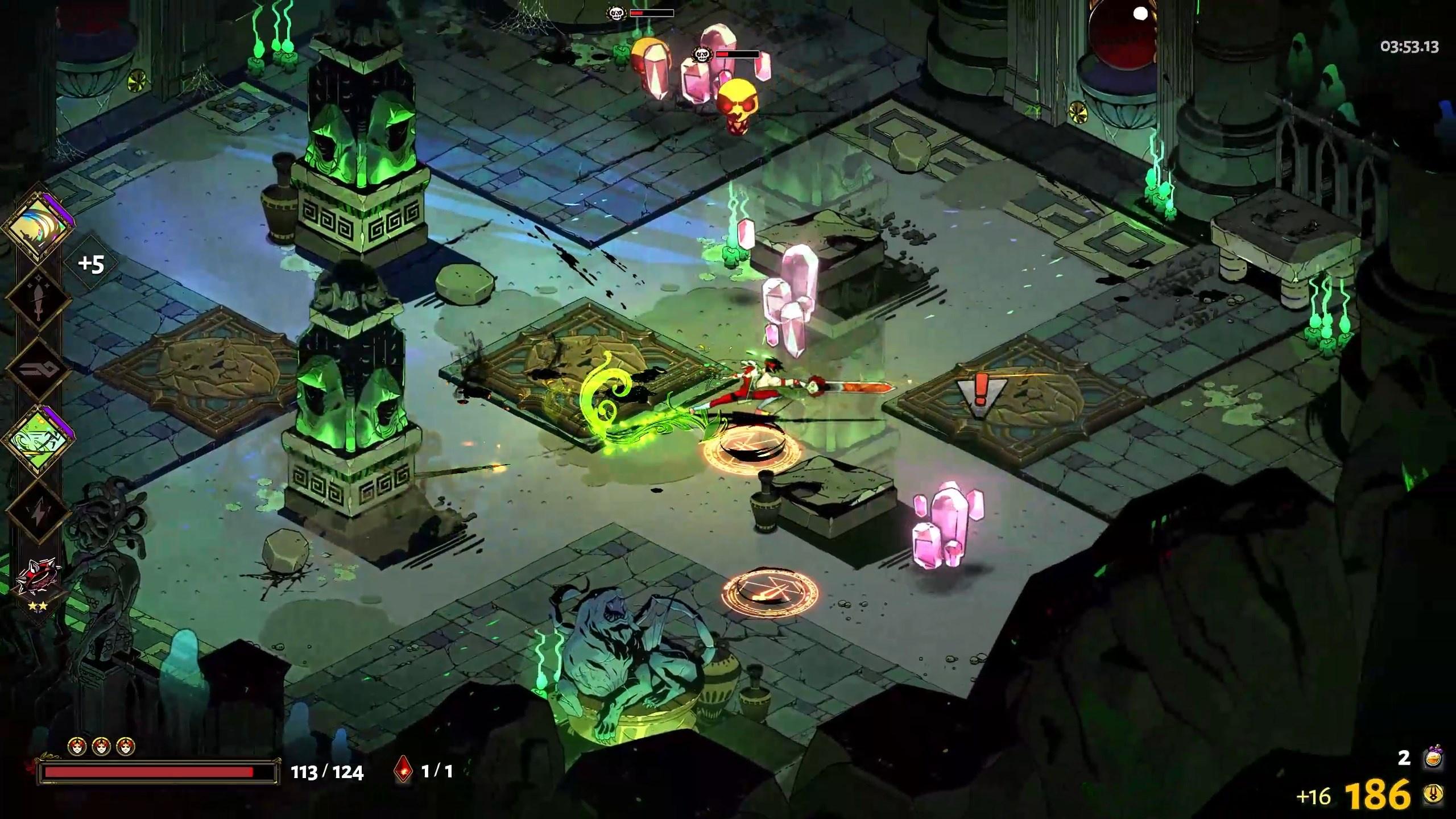
Eventually you’ll be dashing and slicing all the over place with loads of powers that play off each other. One of my best runs was with a big sword, and I had this thing where I’d inflict enemies with a stack of Doom every time I landed a hit, so after a short delay all these stacks would gather, and just plop like a mini-nuke on any nasties I slashed.
I also respect the fact Hades isn’t crushingly difficult and isn’t afraid to give you a little treat for your efforts. That wonder run with the sword ended eventually, but instead of sobbing into my blanky afterwards, I felt a solid sense of achievement. I could go back to my cosy hub world and give friends prezzies I’d found on my run, or spend currency on items, or even test out a new spear I’d unlocked. Cor, so many options!
I’ve found Hades to be super moreish, sowing that “just one more” sentiment into my brain, even as my eyes threaten to collapse. I reckon this is because it’s a rogue-like that’s excited to see you push forwards, as opposed to rooting for your demise.

Alice Bee:I think my favourite thing about Hades (aside from it being literally the only good roguelike game ever) is that everyone who plays it has their favourite god from among the pantheon. Like Ed says, they all offer you slightly different boons, and consequently everyone has their own preferred combinations to stack, to get the right attacks or passive abilities for that primo run through the underworld.
So, you end up with a couple of favourite gods that you end up praying will turn up early and repeatedly in your run, and a couple of others that you don’t mind but aren’t your best. I’m an Artemis/Poseidon girl these days, but I mean, I won’t saynoto Ares or Apollo.
It is in this way that Supergiant have managed to make us all worshippers of the Ancient Greek gods once more, in a way that I imagine people actually were in the past. Because we’re all like “Yes, thank you Artemis, give me that sweet crit stacking damage!” but equally, because runs can make or break on a single roll of the infernal dice, we are just as much hoping tonotrun into certain gods. “Please,pleaseno Dionysus or - oh fucking hell, it’s Zeus, ugh.” Can’t tell me someone in Ancient Athens never said basically that exact sentence before. Time is a circle.
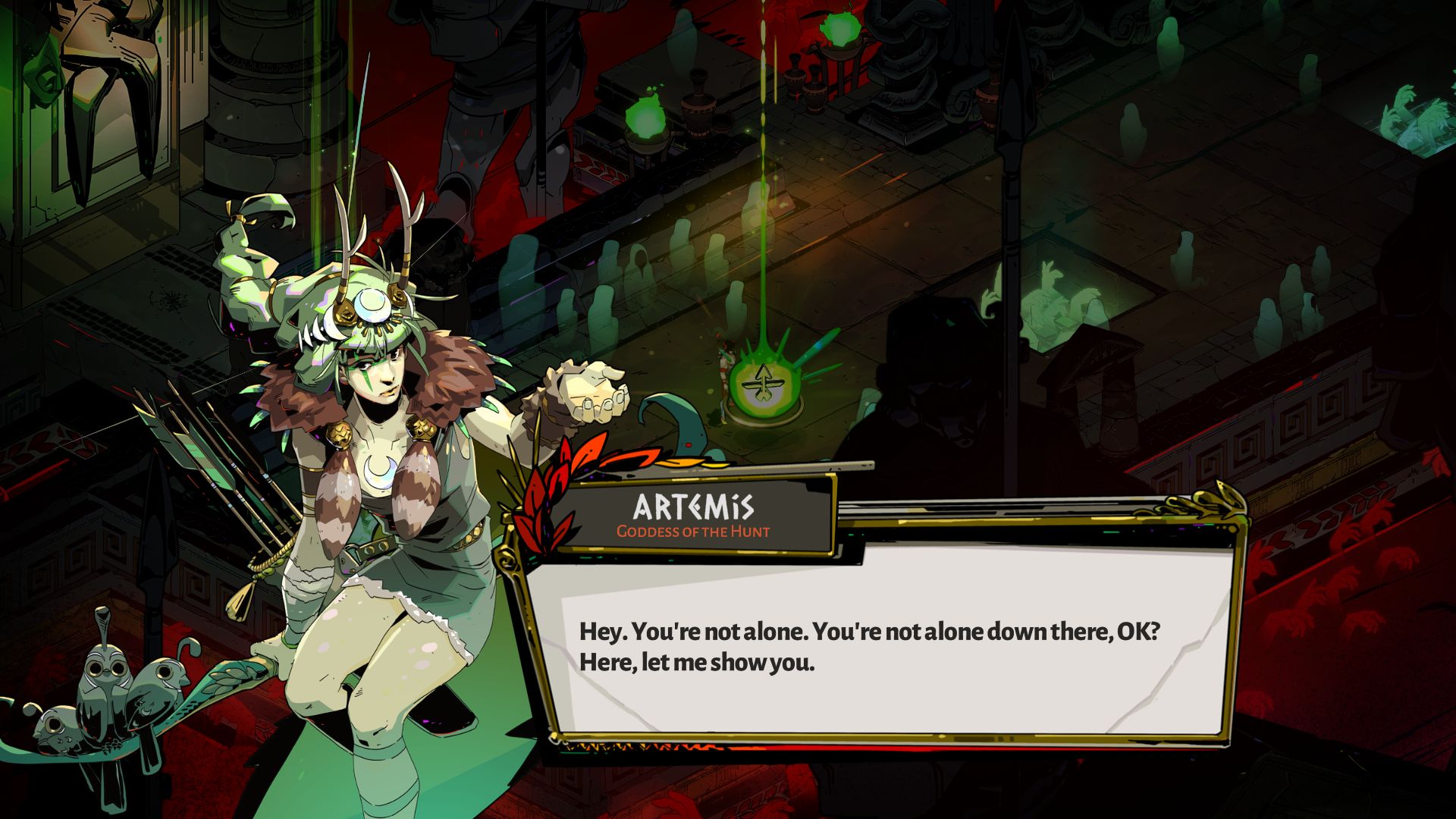
Alice0:I haven’t played Hades yet but I do appreciate everyone’s beautiful, creative, funny, and horny fan art. Thank you for drawing it. Keep up the good work.
James:What can I say about Hades? Every time I think I’m done with it, the game keeps pulling me back in. Please stop reading this and play it if you haven’t already - even the most intensely anti-roguelike folks I know have come around to the genre after Supergiant’s stunning effort this year.
When I play games, as the absolute content-hound I am, I naturally seek out screenshotable moments. Those lines of dialogue you can send to a friend and say “haha that’s something you’d say”, or a beautiful bit of landscape, as well as everything in between. Well, Hades is absolutely stuffed with those moments. From the flirtatious chats with Meg to Achilles’ entertaining glossary in the Codex, to the hand-draw vista looking out on to the plains of Elysium, save a bit of disk space. You’ll be hitting that PRT SCR button pretty often.
“Despite everything, if I had to recommend one single game 2020 has offered, it’s got to be Hades.”
Screenshotable moments do not a game make, though. Hades has all the rest, too. The game is just sitting there with a giant array of characters, none of whom I’ll be forgetting in a hurry, some great tunes to keep propelling you through the depths of the Underworld, and some of the sharpest, most responsive action I’ve ever experienced.
The way the narrative expands over several runs is something I haven’t seen before either, and it’s extremely impressive how every single line of dialogue (all excellently voiced, too) feels relevant to your current situation. I still haven’t heard a chat repeated, and even though you have to complete several runs to get the ‘full’ story, it doesn’t feel like a chore thanks to the sweet variety of weapons to choose from, as well as the options to up the ante and make things tougher on yourself.
If you can, treat yourself this Christmas. Despite everything, if I had to recommend one single game 2020 has offered, it’s got to be Hades. Supergiant have completely smashed it with Hades, and I doubt I’ll uncover everything this game has to offer for a long ol’ time.
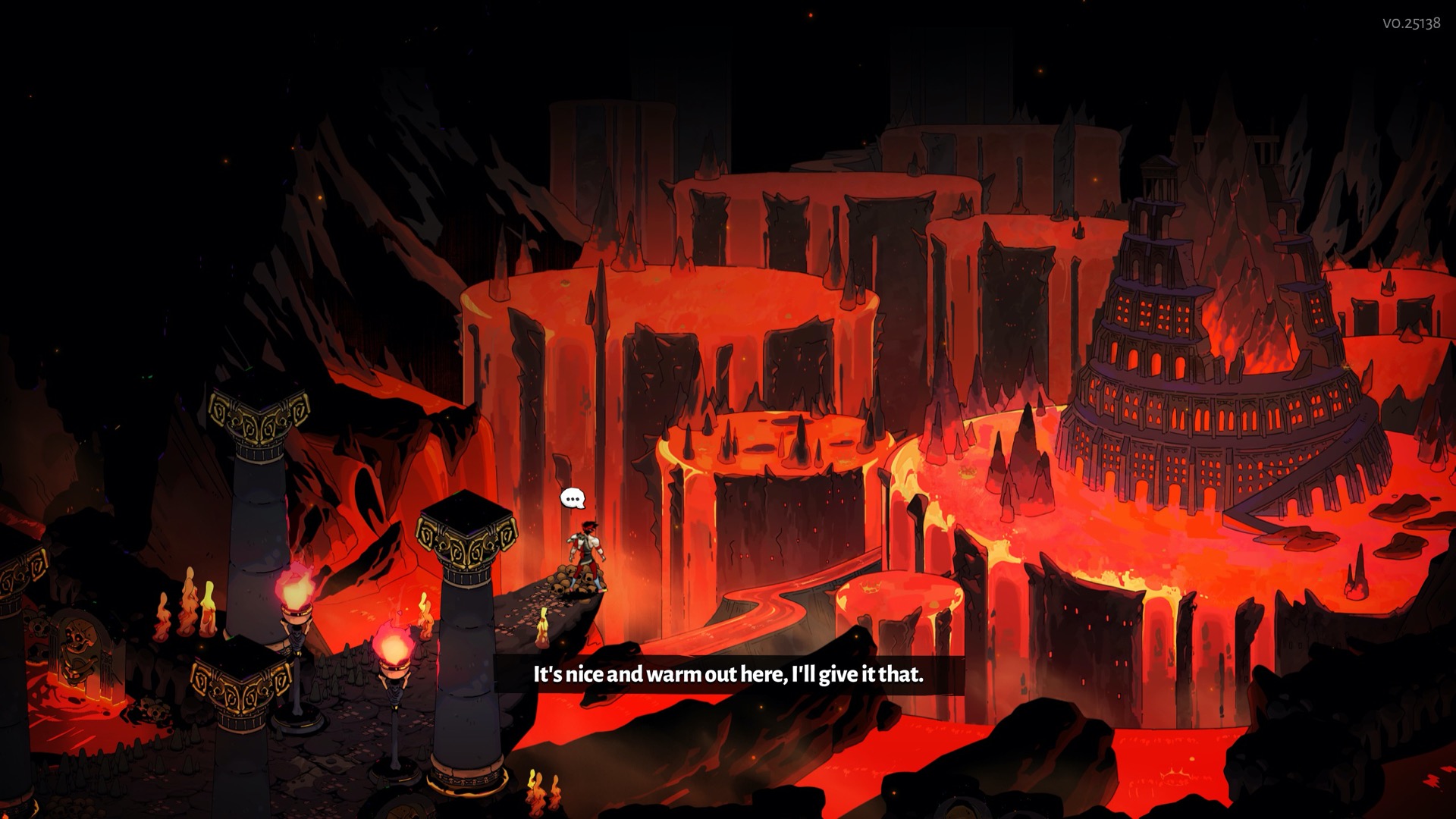
Ollie:Supergiant Games have played a large part in my career writing about games. I wrote my undergraduate dissertation on Bastion and Transistor, for one thing. And I’d only been working at RPS for three days when Hades was announced (and simultaneously released in Early Access) at the 2018 Game Awards, so I’ve been able to watch it grow while I’ve grown in the role. It’s such a pleasure whenever I get to write about a Supergiant game.
Hades lacks the emotional narrative punch of Supergiant’s other games, and yet at the same time I can’t see it as anything except their finest writing to date. Before Hades, I couldn’t even imagine how you could build an effective story within the framework of a roguelike with permadeath and meta-progression. Supergiant have always done incredible work marrying mechanics with narrative in a way that elevates both, but Hades is their magnum opus.
The Full List
Game Of The Year: HadesFactorioUmurangi GenerationAssassin’s Creed ValhallaCall of Duty: WarzoneCyberpunk 2077Death StrandingMonster TrainStreets Of Rage 4Paradise KillerYakuza: Like A DragonTales From Off-Peak volume 1TeardownRokiCrusader Kings 3Immortals Fenyx RisingGears TacticsPhasmophobiaSpelunky 2SpiritfarerValorantIn Other WatersTony Hawk’s Pro Skater 1+2Half-Life: Alyx
