HomeHardwareFeatures
Nvidia GeForce RTX 3050 vs AMD Radeon RX 6500 XT: budget GPUs comparedHow Nvidia’s cheapest RTX graphics card beats its AMD rival
How Nvidia’s cheapest RTX graphics card beats its AMD rival
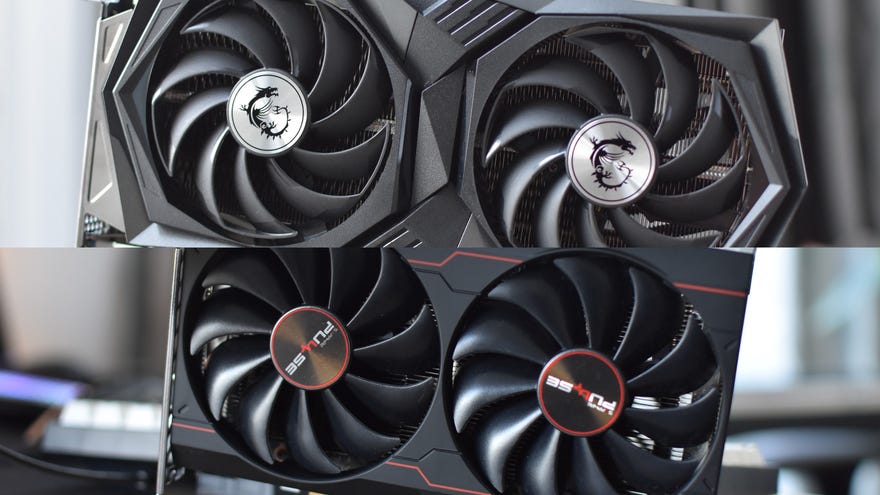
Even withsome graphics cards dropping in price, the overall GPU availability situation remains pretty dire. TheNvidia GeForce RTX 3050andAMD Radeon RX 6500 XTboth launched in recent weeks with the aim of reasserting some sanity, and to an extent, they have: while they’re not immune to bonkers inflation, they’re still relatively affordable, with unusually plentiful stock available.
Which, though, is the better buy? Both are 1080p-focused cards on sale for £300 or less, both sit at the bottom of their respective GPU hierarchies (the RTX 30 series and Radeon RX 6000 series), and both supportray tracing, so let’s break out the bar chart app and do some comparisons.
Top 10 New PC Games For April 2022Watch on YouTube
Top 10 New PC Games For April 2022

Only one, of course, can be deserving of a spot on ourbest graphics cardslist. If you haven’t read the full reviews then I won’t spoil which one it is, but here’s a clue: it’s an anagram of “RTX 3005”.
Nvidia GeForce RTX 3050 vs AMD Radeon RX 6500 XT: Price
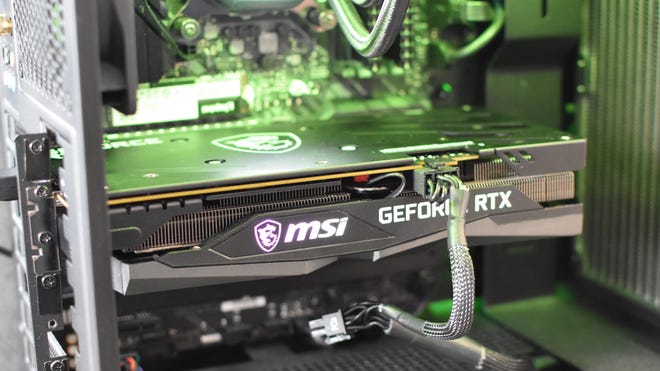
Is anything over £150 stretching the definition of a “budget” graphics card? Yes. Is there wiggle room because of the economic nightmare that’s been engulfing PC hardware since 2020? Also yes. Like it or not, a return to the days of dirt-cheap but decently capable cards like theGTX 1050 TiandRadeon RX 570isn’t coming any time soon. Mathematically, the RX 6500 XT is just the next closest thing.
Nvidia GeForce RTX 3050 vs AMD Radeon RX 6500 XT: 1080p benchmarks
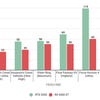
Unfortunately for the Radeon, being cheap and being good value aren’t always the same thing, something that becomes apparent though its gaming performance. Alone, the RX 6500 XT’s 1080p benchmark results look weak, with multiple games barely reaching 30fps on their highest graphical settings. Next to the RTX 3050, it’s a massacre.
1of2CaptionAttribution
1of2
1of2
1of2
CaptionAttribution
CaptionAttribution
Caption
Attribution
On average, the RTX 3050 was 37% faster than the RX 6500 XT in these tests. This might not sound all that superior when you’d be paying at least 50% more for the RTX 3050, but remember that even small frame rate differences can be clearly visible at 60fps and below, where these GPUs mostly reside. That 37% difference therefore represents a very visible, tangible difference in smoothness.
Nvidia GeForce RTX 3050 vs AMD Radeon RX 6500 XT: 1440p benchmarks
1of2CaptionAttribution
1of2
1of2
1of2
CaptionAttribution

CaptionAttribution
Caption
Attribution
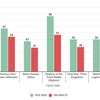
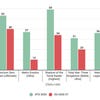
That’s not to say more easygoing games will struggle as badly as Metro and Three Kingdoms do. Hitman 3 comes close to the 60fps mark (as well as the RTX 3050’s 66fps), and 40fps in Horizon Zero Dawn isn’t awful. For a more futureproofed card, though, the RTX 3050 is an obviously better choice.
Nvidia GeForce RTX 3050 vs AMD Radeon RX 6500 XT: Features
Both of these GPUs can deploy upscaling to improve performance. The RTX 3050 is the first Nvidia XX50 graphics card to support DLSS, while the RX 6500 XT can call upon FSR.FSR 2.0is launching soon as well, though like the current FSR, Nvidia cards will also be able to use this in whichever games support it – cards including the RTX 3050.
FSR is worth turning on when you’re struggling, as seen in Horizon Zero Dawn, where the upscaler’s Ultra Quality setting boosted the RX 6400 XT from a 40fps average at 1440p up to 50fps. DLSS is still a superior bit of tech, however, to the point where it can be worth paying more specifically for it. DLSS is capable of similarly impactful performance improvements, and because it uses a smarter form of temporal upscaling (as well as its own built-in anti-aliasing) than FSR, its upscaled results are pretty much always sharper-looking with finer detail reproduction. In some cases, DLSS on its highest quality setting can even look better than native resolution.
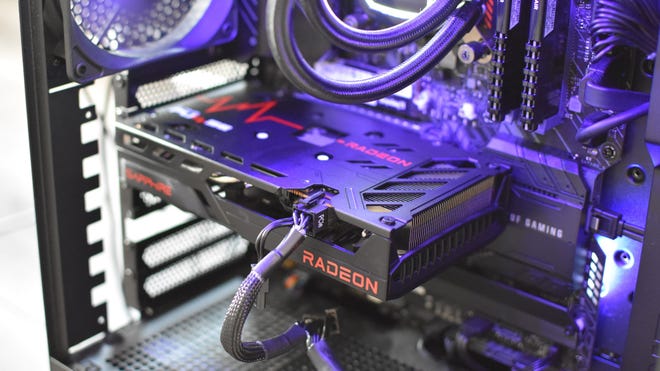
DLSS also comes in extremely handy for offsetting the performance loss from ray tracing, which both GPUs support and invariably scarfs a load of frames per second in whichever games include it. In fairness, FSR can perform the same FPS damage limitation role, but with the RX 6500 XT specifically, there’s so little power to begin with that enabling ray tracing is basically asking for trouble.
The RTX 3050 is much, much better equipped for the strain of RT effects. Since Metro Exodus supports DLSS but not FSR, I tested it with upscaling off, and at 1080p with Ultra setting and Ultra-quality ray tracing, the RTX 3050 averaged 36fps - while the RX 6500 XT only averaged 13fps. So, while both GPUs can technically put ray tracing on their features list, it’s far, far more readily usable on the RTX 3050.
Nvidia GeForce RTX 3050 vs AMD Radeon RX 6500 XT: Conclusion
I’m aware of the irony in moaning about price inflation then immediately recommending the more expensive of two graphics cards. But when you look at just how much faster the RTX 3050 is at 1080p, how much better it adapts to 1440p, how much DLSS outperforms FSR, how much more comfortable it is with ray tracing… that extra money is worth it and then some.
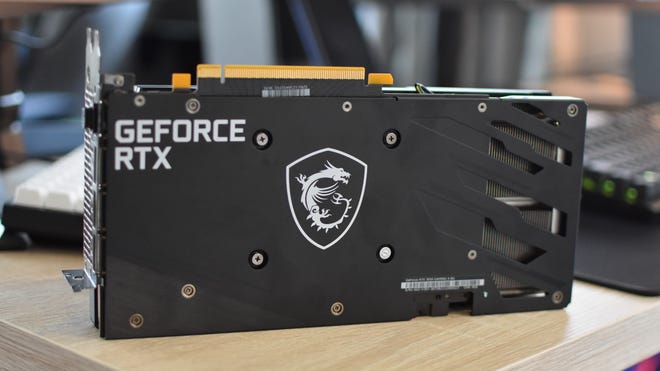
With that advantage nullified, there’s just not much else going for the RX 6500 XT. Efficiency? It is rated at a lower power usage of 107W, and only needs a 400W PSU, but then the RTX 3050’s 550W requirement is hardly unreasonable even for a low-cost PC build. Thermals? This will vary from card to card anyway, and the Sapphire-made RX 6500 XT I used peaked around 61°c under load – an insignificant difference to my MSI RTX 3050, which hovered between 61°c and 63°c.
Of these two, then, the RTX 3050 comes out the winner. As refreshing as it is to see a recent graphics card available at its true price, stretching a little further will secure you a markedly more accomplished pixel pusher.
For more GPU comparisons check out:
