HomeFeaturesNewCity
NewCity lets you build cities on a massive scaleBigCity, more like
BigCity, more like

The first thing that tends to strike everyone aboutNewCity, is how massive its cities are. They makeCities: Skylinesmetropolises look poky, and cities from 2013’sSimCitylook like quaint little villages. There’s no doubt about it:NewCityis all about urban sprawl, and actually comes close to being able to replicate the terrifyingly massive size of actual, real world cities. Indeed, in the later stages of the session I played with it, I kept zooming out and having the uncanny sensation I was looking out of an aeroplane window.
Looking out of an aeroplane window with a migraine, that is. Because for all its wonders, NewCity is, as it stands, a fairly ugly game. It stutters a bit, at least on my PC, when speeding up time in a decent-sized city, and it feels very feature-sparse, to an extent where in the early game I wondered if I was missing some menus. Its UI is bleak, and its music is - with profound apologies to the composer, who I’m sure has done much better work in other genres - horrendous. But this is early access, friends! Andearlyearly access, too, as the game’s only been up on Steam a couple of weeks. NewCity’s problems, therefore, don’t concern me, as they’re all fairly peripheral set dressing issues. The game’s core, on the other hand, feels like the foundation of something really special.
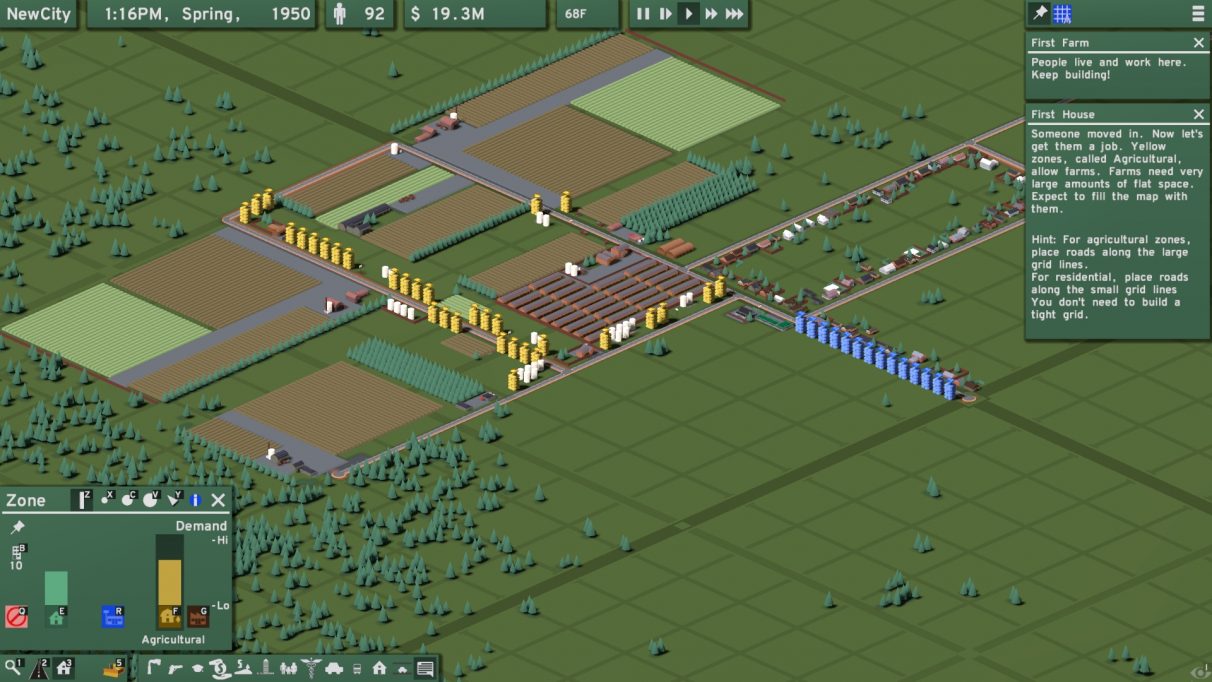
I’m really glad I didn’t. Because while the basic elements of the game are all borrowed from elsewhere, the way they play out in practice is impressively original.
A city of 1,200 people.
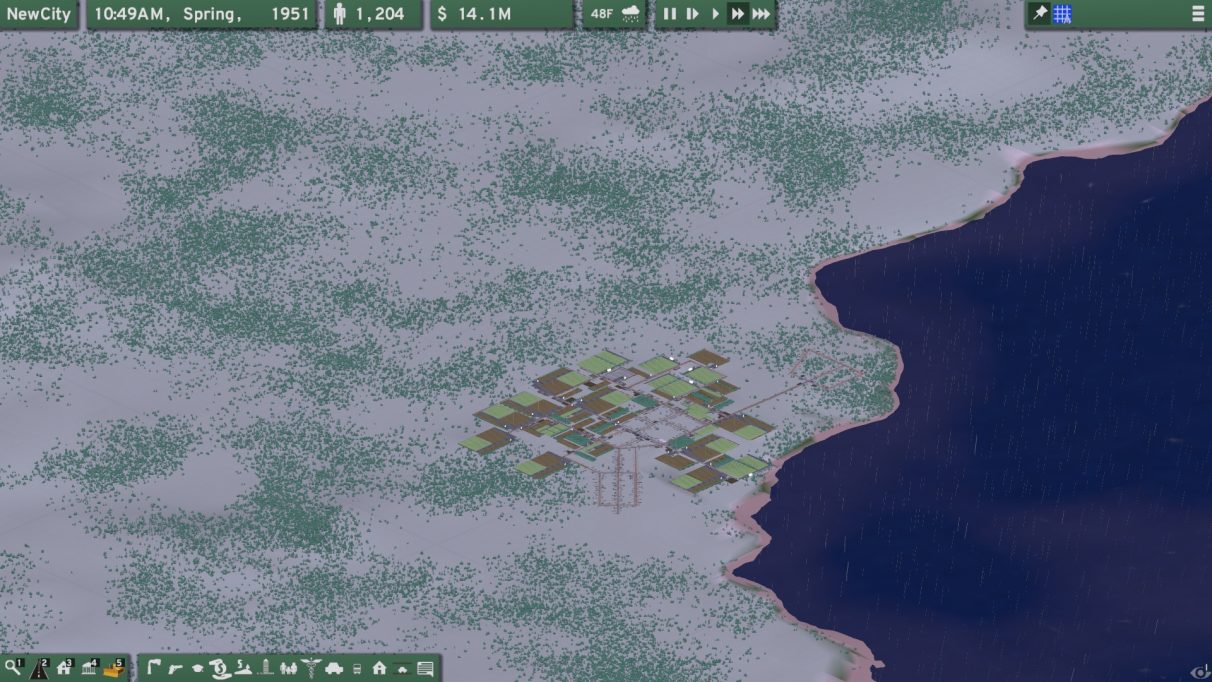
There wasn’t even anything else to build, except basic zones, until I got to (I think) 5,000 residents. In other games, you’ll have the inevitable plopfest of fire stations, schools, clinics and the like to handle very early on, and it always feels a bit arbitrary and chore-ish. You put them down cos you have to, and it’s cheap enough that it doesn’t really feel like much of a decision. In NewCity, when I was finally allowed to build schools at pop 5000, I found they were so expensive that I could only afford the one. It meant I had to think really carefully about where best to put it, and once it was up, the education budget was high enough that I had to raise income tax just to keep from plunging into deep debt.
Behold, the might of the history museum!
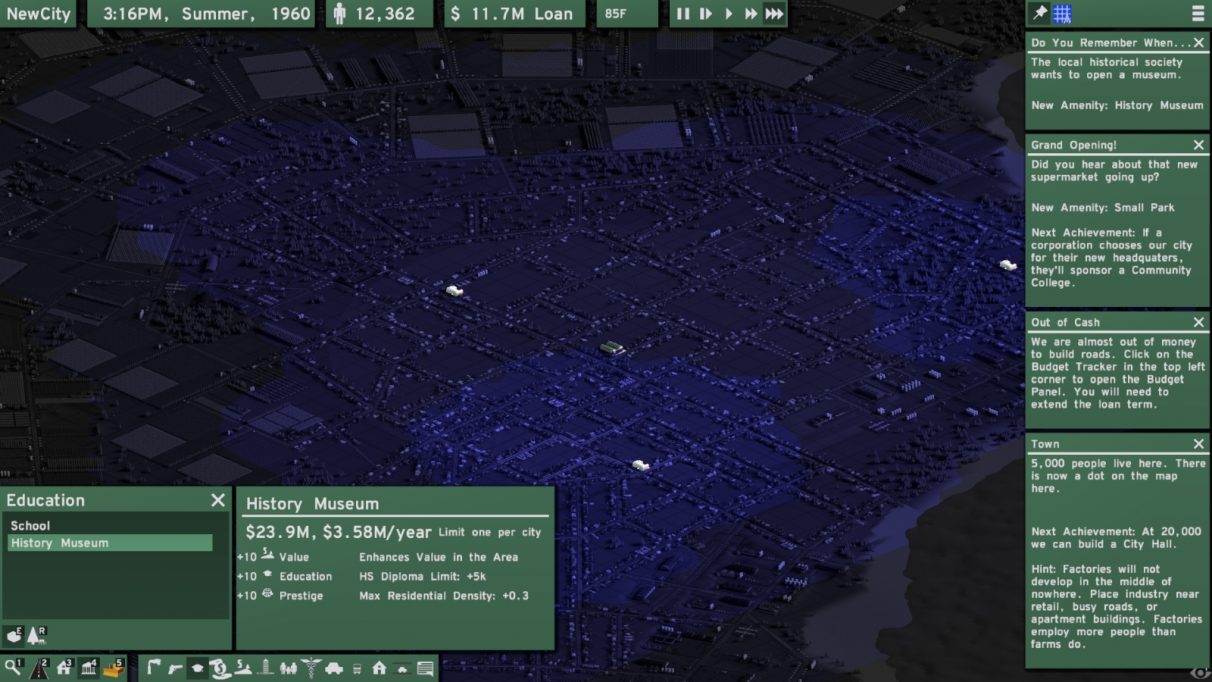
After the school was up and running, I learned that my next major unlock - a city hall - would take place at20,000residents. And it would cost far, far more than my current city (which was straining to fund a single school, after all) could ever hope to earn. It was as if the game was at last making a statement about its identity, and it was as unambiguous as a hardman swaggering into a newly-opened pub and taking a bite out of a pint glass before staring around the room in challenge. If I wanted to get anywhere in this game, NewCity was telling me, I was going to have to build like a man possessed.
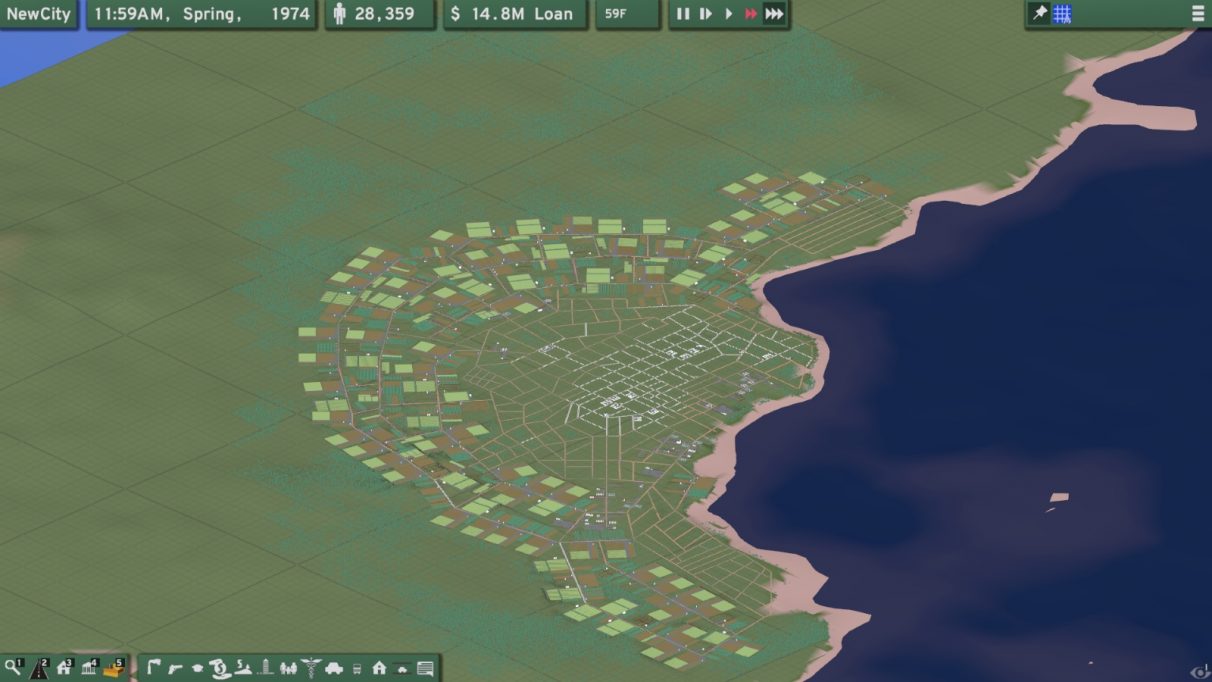
So I built. More and more residential districts went up, the nascent education level from the school created some demand for light industry, and the fledgling factory quarter boosed demand for commercial zones. As all this went on, the farming orbital was moved outwards and then outwards again, with its old inner ring bulldozed to make room for even more housing. A clinic became available, and then a museum, and I really had to be smart with the city budget to make them happen. At one point, I didn’t even have the cash to finish a very moderately sized road, of all things.
Those farms tho.
There’s more, too. I only played to a city size of 25,000 or so, and it felt like I was a long, long way from the game’s ceiling. Plus my financial management was poor enough that I never afforded a lot of the amenities that would have made my city more interesting. Another thing I didn’t get time to play with was the blueprint system, which lets you clone-stamp carefully designed bits of city in a way that could make the dynamics of expansion feel entirely different all over again. And then there’s the modding capacity, which seems to be as broad asOpenTTD’s.
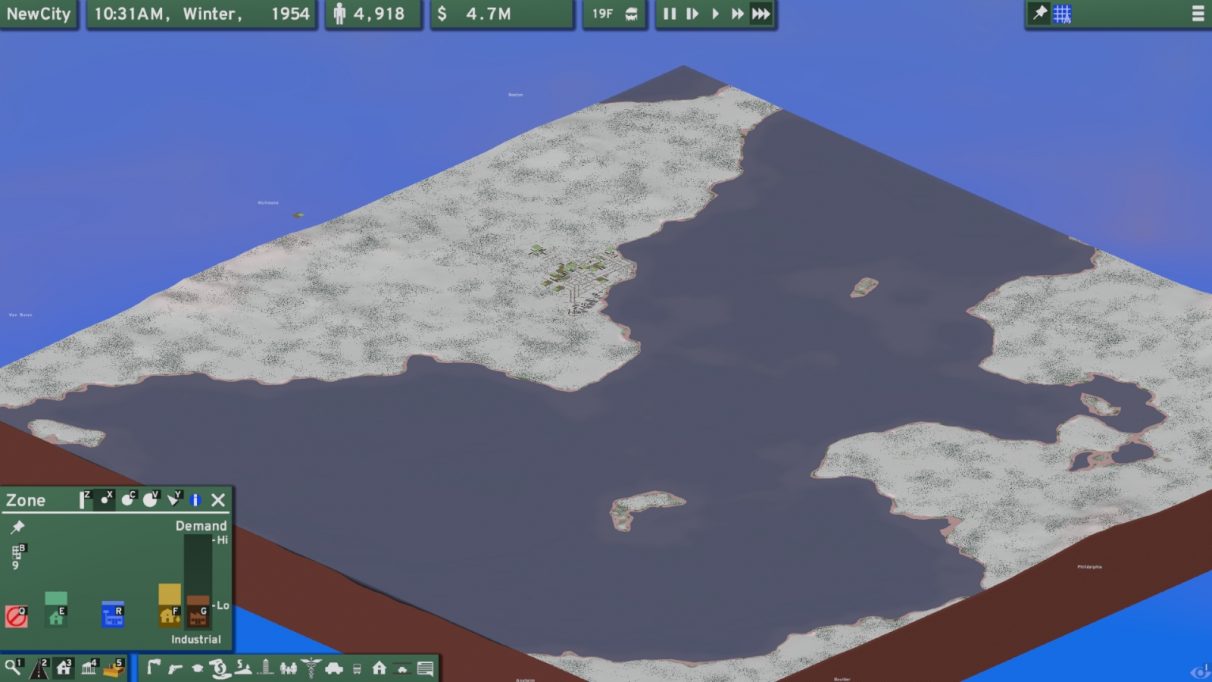
The maps, they are large.
And this is all in week three of early access. Certainly, this is nowhere near as slick an entry into the genre asCities: Skylines' was. But given this is a debut effort from indie studio Lone Pine, and it’s already managed to find a fresh approach to some of the most established tropes in PC gaming, I’d say it’s bloody promising. Keep growing, little city.
