HomeFeatures
Mushrooms, mould and killer plants: the best horror isn’t animal, it’s vegetableReturn to the earth
Return to the earth
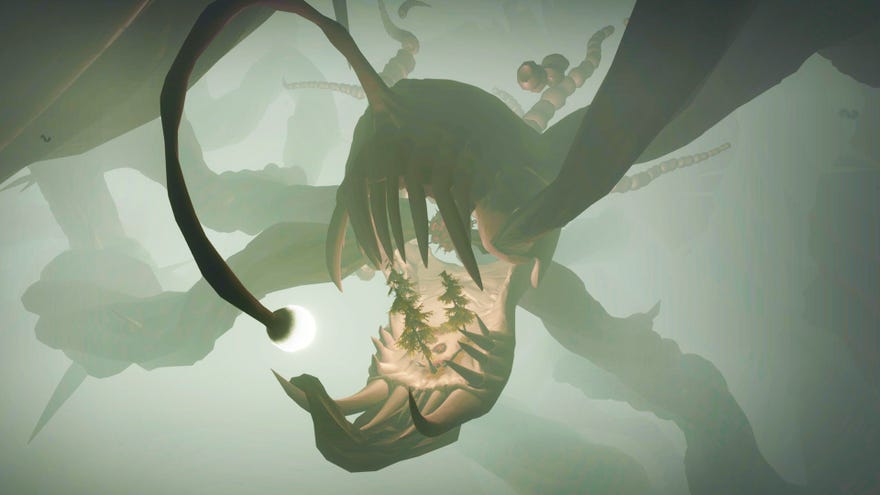
Ever since I witnessed a little red-and-blue plumber-man tumble into the gnashing jaws of a Piranha Plant, I knew vegetables weren’t to be trusted. I see my suspicion of all things green and floral as a natural, even instinctual thing. We ourselves aren’t vegetable, and differences so often motivate our deepest fears. The vegetal realm is entirely inaccessible to us, its behaviour strange and habitats dark. From the carnivorous Venus flytrap to the bleeding tooth fungus, from plants that smell like rotting corpses to one’s that trap prey and dissolve them with digestive fluids, it’s an unknown, often dangerous world, and one that overlaps closely with our own. And it makes for a compelling game.
Dap Announcement Trailer - Coming Q3 2021Watch on YouTube
Dap Announcement Trailer - Coming Q3 2021

Mushrooms – those are the ones you really can’t trust. In Ben Wheatley’s recent sci-fi horror filmIn The Earththere exists a giant Wood Wide Web – a connected ecosystem basedon a real thing, which in In The Earth’s specific, fictional case is a web of psychoactive mushrooms that have been slowly evolving into a peculiar kind of alien intelligence. Even more visually spectacular is this year’s South African horror filmGaia– all close-ups of fluttering shroom gills and reproductive spores wafting oppressively in the jungle atmosphere. Gaia plays with the same concept of a massive mycorrhizal, or fungus-root, network. What if something as malicious as it is intelligent was silently evolving in our forgotten forests, biding its time in the shadows of the undergrowth and plotting revenge for all the terrible things we’ve done to our – their – planet?
While mycorrhizal networks throw up questions around where individual entities begin and end, and therefore throw into question our own individuality (living symbiotically with various bacteria etc.), there’s also an innate alieness to vegetation. Forests are ancient, prehistoric, and have long been the go-to game environment for mysterious and mystical explorations; Gaia, for example, makes much of the fact that we first evolved out from Earth’s dense jungles. Recent games likeKena: Bridge Of Spiritslean into tropes of corrupted nature, filling its forest glades with pulsating, purple pollutants that must be defeated in order to cleanse the area. While Kena’s vegetal depiction cleaves a little too closely to simplistic memes around Earth’s healing, and its Kodama-like companions are more twee than spookily indifferent (as they are in Studio Ghibli’s Princess Mononoke) weird horror gameDapoffers a much more frightening rendition of strange forest spirits and their natural ecologies.
Dap’s Pikmin-like entities are profoundly odd. Always with an anxious possibility for corruption, and so never settling into any mould of wholesomeness. Its forest is equally bizarre, a thoroughly alien landscape where plant-life continually jitters and writhes with vitality, like coral reefs when hit with powerful currents. In fact, underwater vegetation, as seen vividly in games likeSubnautica, and hinted at under the surface inSunless Sea, or continually held at arm’s reach beneath a digital interface inIn Other Waters, are often astonishing places brimming with aberrant weirdness.

In all honesty, The Last Of Us’ clicking mushroom-zombies were always a little too loud for my tastes. In contrast, one of my favourite details from the sequel is found in the old abandoned theater. It’s a wall. A ridiculously lavish wall, rivalling the game’s obsession over minute details like rope physics and the precise ways in which glass can be broken.As you pass the wall you can hear it gently writhing, the damp, mouldy surface slowly festering away. It’s an easy thing to miss, but that’s what makes it great. A quiet, mouldy perversion on the periphery of the game, growing, spreading, away from all the noise of the zombies and the endlessly warring factions.

The mould is also one of my favourite things about Control. The Hiss is, like zombies, comparatively loud and obnoxious, chanting in your ear whilst blitzing you with violently red beams of light. But it’s the mould in the basement I’m worried about. There are, similar to The Last Of Us, mould-infected zombies, and even a boss mould – a huge, tentacled thing known as Mold-1, but I think, somewhat ironically, these kinds of individualised, even centralised, figures are poor ways of dealing with our fears around fungi’s otherness.
Too often there is some unified entity, a fungal face, to tie the horror together.Resident Evil’s Miranda; the Thorian you meet and speak to on planet Feros inMass Effect. But networks of mushrooms, mould and plants have no face. They are abjectly other, existing outside our usual, human “models of time, space, scale and species.” While games continue to wrestle with concepts of monstrous vegetation, giving voice to many of the insecurities we have in regards to our planet’s current ecological state and our precarious place in it, as of yet not many have tackled the alien otherness of mushrooms head-on. The most frightening thing about vegetables remains the fact that we may never understand them.
