HomeFeatures
Meet the men hiding their FIFA Ultimate Team addiction from their familiesWe ask the players and the experts why people can’t stop spending money on lootboxes
We ask the players and the experts why people can’t stop spending money on lootboxes
Image credit:Electronic Arts
Image credit:Electronic Arts
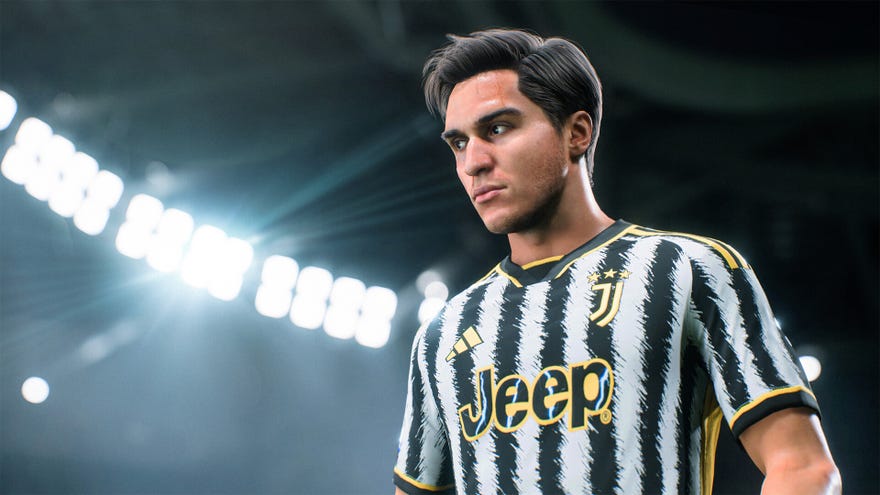
Gaurav* wakes up at 4am on Saturdays and Sundays. His routine is the same each time. He quickly turns off his alarm. He slowly shuffles out of bed, keeping the light off to avoid waking his wife and his 18-month-old son. He goes out through the bedroom door, and along the hall, to his office. He sits back in his chair, and he gets high.
In the last nine months, Gaurav has spent £2,000 on his secret addiction. He admits to a total spend over eight years of more than double that. That is, £4,250 is the amount he admits to when talking to me – he’s never told his family. But Gaurav isn’t addicted to drugs, or alcohol or even online poker. The reason Gaurav only gets a few hours of sleep each weekend, is because he can’t stop playingFIFA Ultimate Team.
Loot boxes are nothing new, of course. This time last year, amid calls to revise the Gambling Act to include them, the UK government opted tolet video game companies continue to regulate themselves. Then-Secretary of State For Culture, Media And Sport Nadine Dorries wrote that “it would be premature to take legislative action without first pursuing enhanced industry-led measures.” But, a year and two Culture Secretaries later, the industry is showing no signs that it will voluntarily slaughter its largest cash cow. EA, for example, likely made even more this year than the $1.62 billion they made from Ultimate Team (across FIFA, Madden, NHL, NBA and UFC) in 2021, the last time they publishedspecific figures.
To see this content please enable targeting cookies.Manage cookie settings
To see this content please enable targeting cookies.Manage cookie settings
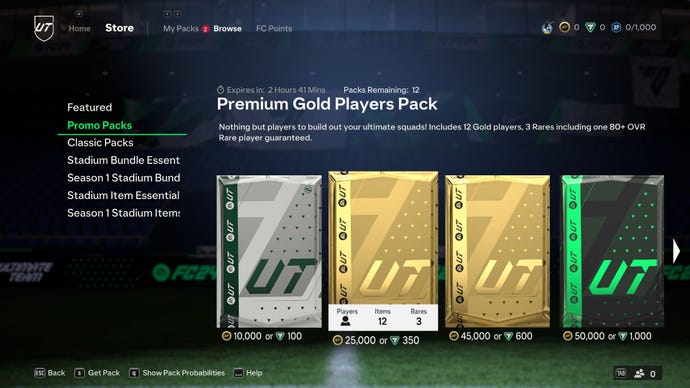
For those who have never played Ultimate Team, packs function as you would expect. For anywhere between £0.79 and £19.99, you can buy a chance at getting your favourite football player to join your in-game team. Much like the Panini stickers and Match Attax football cards I used to spend my pocket money on, you have no idea what’s inside. You might get Lionel Messi. But you probably won’t. “When you do get someone good, you get really high. Like,highhigh,” Gaurav explains to me from his home in Dresden, Germany. His calm demeanour falters, just for a second.
He didn’t have a lot of money growing up but, obsessed with football from a young age, he remembers going to friends’ houses to play FIFA 1998 on the original PlayStation. Older and in a better financial position, Gaurav returned to FIFA in 2016, and quickly started spending money on the game. At first, it was £20 here and there. But before long, he was shelling out £100 on FIFA Points in an evening on a regular basis.
Image credit:Electronic Arts
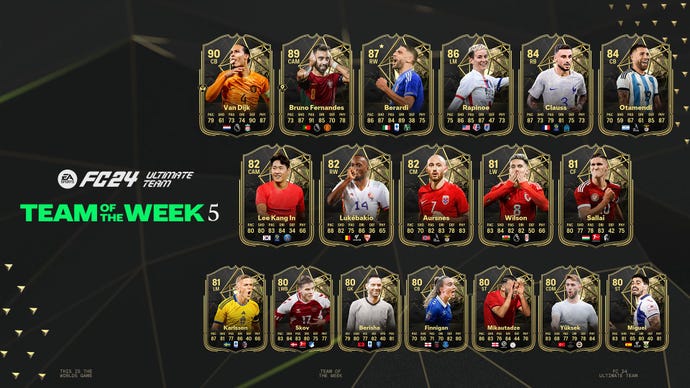
“I go on sprees,” he tells me. “I can have a phase where I don’t spend any money at all, and then suddenly they bring out a new type of player card, and I go on a spree. I don’t even care about my bank balance in those moments. I just keep on going and going. Normally I’m a calm person, and I’m not so impulsive. But with FIFA, you just press a button and you get the reward. It’s on the tip of your finger.”
The promise of that reward is what draws Gaurav out of bed while the rest of Dresden sleeps. The game’s “Weekend League” mode requires players to play 30 matches a weekend, each around 20 minutes long, in order to get the best chance of getting the best players when they open their packs. Gaurav isn’t willing to give up his family life to fit in this ten-hour commitment, so he gives up his sleep instead. “It does hamper my life,” he says. “It affects my mood. It affects how I am with other people. But if I had a choice, I would sit down for the weekend, every weekend, and play FIFA non-stop. I don’t enjoy the Weekend League, but it’s all about FOMO [fear of missing out]. I don’t want to miss a weekend because I might miss a good player.”
Waking up at 4am has another upside for Gaurav though: “My wife knows I play FIFA, but she doesn’t know anything about the FIFA Points and the gambling aspect of it. She doesn’t know about it at all, and I like it that way,” he says. “I feel guilty sometimes thinking of how I am hiding it from her. It’s a huge amount of money. I don’t care what she does with her money, but it’s still something I keep secret from her. I don’t think she would like the idea.”
And so it has been for much of the last eight years. A friendly, sociable, and altogether normal guy with a good job and a loving family, living an entirely separate secret life, where he pays thousands for the chance of playing as his favourite football players in a video game. A video game that, on top of everything else, comes out – and therefore resets players’ progress – every year.
“After I spend something, and I look back on it, I think ‘What the fuck did I do that for?’. It’s nothing, it’s just pixels on a screen. It’s going to be gone in a year,” he sighs. “Even when I get a good player, I’m happy for that moment, but then later I think ‘I spent £100. I could have gone for dinner with my wife, or I could have bought something real.’”
Like most addicts, Gaurav has tried to put it down: “I don’t know how to go about quitting. At the start of every FIFA I say I’m not going to buy anything. Then, I don’t know how it starts, but I just keep spending and spending and spending. It’s something that I’m really stuck in and I don’t know how to get out of it. I spent £100 on FIFA Points the day before yesterday,” he continues. “I actually have no idea what to do.”
The house always wins
5,000 miles from Dresden is EA Vancouver, the shiny development studio where FIFA has been worked on every year since 1993, and where, in 2008, two of its 1,300 employees would come up with an idea that would change Gaurav’s life.
Image credit:Electronic Arts
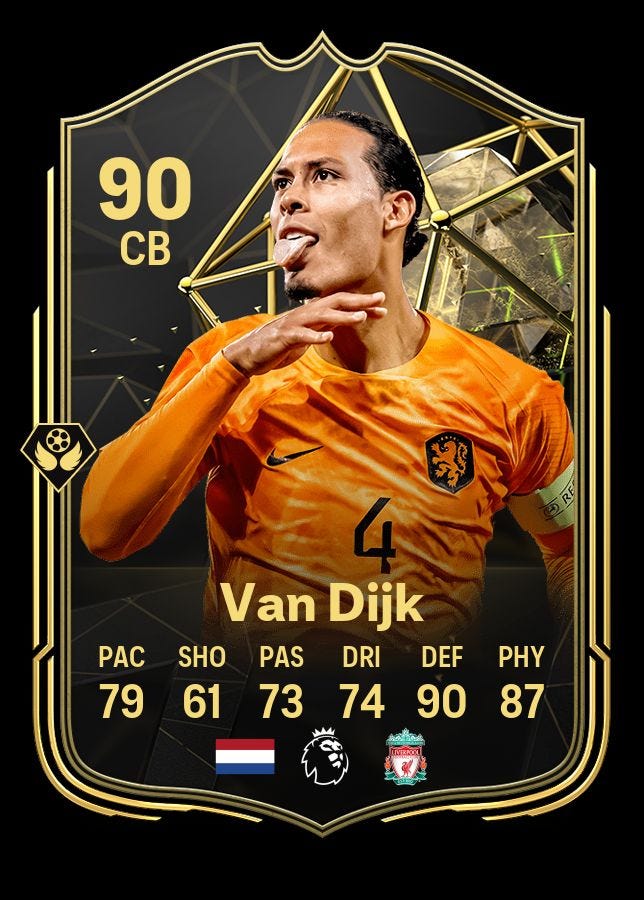
Producer Matt Prior and executive producer Andrew Wilson, now EA’s CEO, were taking note of the gacha boom in Asia. Having also admired a short-lived trading card mode from a previous FIFA spinoff game in 2007, they decided totry and combine the two. It would be called FIFA Ultimate Team. It’s safe to say it took off. But if opening packs to get football player cards was such a lucrative business, why aren’t Panini and Topps, the companies that make the football stickers I spent my pocket money on, recording similar profits?
“Without a shadow of a doubt, there are clear correspondences between loot boxes and problem gambling,” says behavioural scientist Dr. David Zendle. Considered a world expert on the subject, Zendle has been investigating this link for as long as Gaurav has been spending money on Ultimate Team. “If you look at the roulette-like way thatCS:GO, for example, presents the opening of the loot box, and then you look at the spinning of the wheel on even a classic fruit machine, there are striking visual and auditory similarities,” he tells me from his office at the University of York.
These similarities appear to be reflected in Zendle’s results. “If you ask people how much they’re spending on loot boxes, and then you give them a standardised measure of gambling problems, dozens of times we’ve seen this effect replicated,” he says. The link is so strong, he argues, that, just as a traditional gambler may not be doing it to make money, people who buy FIFA packs are often not doing so to get a better in-game team.
“People often posit a rational behaviour pattern within FIFA, where they say ‘People opening packs are seeking to do better at the game’. Actually, a lot of stuff when it comes to randomised reward schemes isn’t rational. People open it for an experience, rather than it being because it’s the optimal rational path to getting the players they need for the best team.”
When he says this, I’m reminded of something Gaurav told me when I asked him why he doesn’t spend his money buying coins from third-party websites. That way he could guarantee getting a good player, right? “Well, it would violate the terms of service,” Gaurav informs me. “But mostly, opening packs is a lot more fun. You get more of a high.” There’s that word again. High.
It makes sense.Studieshave shown that traditional gambling activates the brain’s reward system, triggering a release of dopamine in the same way as addictive drugs like cocaine and nicotine. Even more pertinently,early indicationsare that people who purchase loot boxes undergo “similar increases in physiological arousal”. So when Gaurav talks about FIFA as if it is a drug, that’s because, in many ways, it functions as one.
Image credit:RPS/Electronic Arts
Normal people
In 2019 I’d just graduated from university, and was working a boring job in a boring office wondering what on earth to do next. But with every weekend came the Weekend League. It was a routine, and it was something I was good at. I wasn’t racking up the same kind of financial outlay as someone like Gaurav, but that doesn’t mean I wasn’t addicted to the feeling of opening packs. And the more you play, the less you have to spend to get that hit. And so I played. I played and I played and I played. On Friday, Saturday and Sunday, I was on FIFA for far longer than I was sleeping.
And then COVID hit, I found myself furloughed, and this habit turned from an all-weekend thing to an all-week thing. There I was, spending all my waking hours – many of which should have been sleeping ones – playing this game that I don’t particularly enjoy. All for that feeling on a Thursday morning at 9am, when you’d get your packs and all of the previous weekend’s “hard work” would be distilled into a few throws of the virtual dice.
And that’s what I’ve found while I’ve been talking to people for this piece. These people are not the stereotypical basement-dwelling, misogynistic man-children that many mistakenly picture when they hear stories of people who spend thousands on video games. These are normal people with normal jobs and – at least at one point – normal social lives.
Cristian is 27 and lives in New York. “It’s like a drug. It’s exciting in the moment and feels like shit when it wears off, especially when you don’t get a good player,” he tells me. “I have bought packs at night and then sat up for hours wondering why the fuck I wasted money on something so temporary and stupid. So yes, it has contributed to a bad mental state.”
Much like Gaurav, Cristian keeps his habit a secret from friends and family. “Nobody knows that I spend this kind of money,” he says. “My girlfriend thinks I have only spent a little bit. I use my money so I don’t feel the need to share but I obviously hide it because it is embarrassing.”
These are not freak cases. There are people everywhere living secret double lives that their family and friends don’t know about. But is there any chance of the UK following Belgium in banning these loot boxes?
Change on the cards?
Lord Foster of Bath, who chairs the cross-party reform group Peers for Gambling Reform, is critical of the government’s decision not to regulate loot boxes, which he calls a “do-nothing” approach. “To be honest I really don’t understand,” he tells me, when I ask him why the government opted to continue to let video game companies regulate themselves.
“One complication is simply the straightforward one of money. In-game purchases are a key source of funding” he explains. “The industry and the bodies that represent the UK gaming industry were very keen for this not to happen, and of course they lobbied and made it harder for the government to include loot boxes in the Gambling Act. They basically said to the government ‘Don’t start doing anything. Let us see what we can do’. And that’s what they’ve gone away to do. But of course, everything has gone relatively quiet since then.”
Indeed, a year on from the government’s decision, and the UK finds itself in the same position. There is still no regulation on the industry, despite the factat least one developer consideredmanipulating rare item drop rates for streamers. An industry in which popular FIFA YouTubers have been finedhundreds of thousands of pounds for promoting unregulated gamblingto children. A game which still publishes the chances of packing its best player cards as “less than 1 per cent” when the actual odds could be far lower than what that statement implies.
Image credit:RPS/Electronic Arts
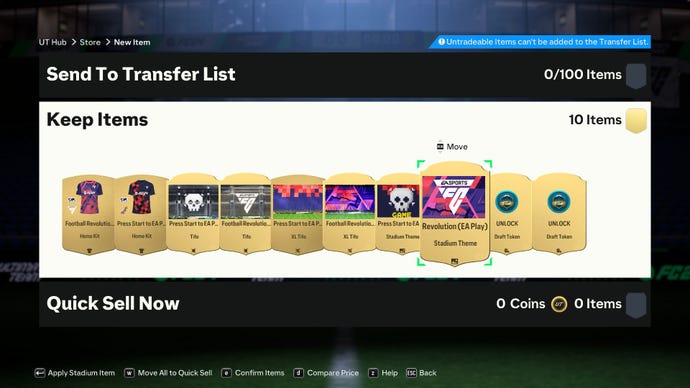
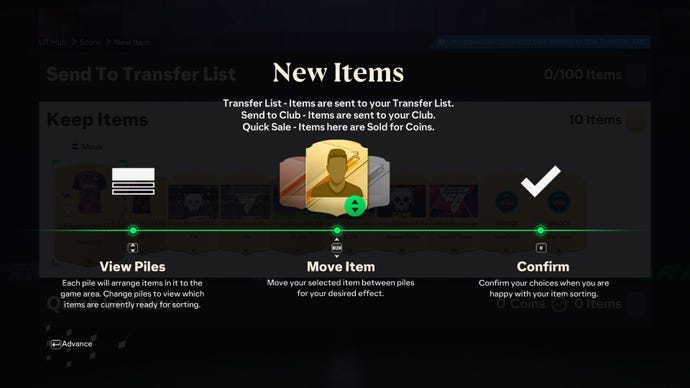
EA, asked for comment about the potential of their card packs to be addictive, and if they’re doing anything to alleviate this potential, have not responded at the time of publishing. 2023 is a momentous year for the FIFA franchise. The series has run since 1993, but the new game, released on September 29th, has seen the removal of the “FIFA” moniker. EA failed to reach a licensing agreement with FIFA the governing body, the game has been rebranded asEA Sports FC 24. Some of the most optimistic players hoped the new era would do away with packs. It hasn’t.
Multiple endings
A couple of months after our first chat, I speak to Gaurav one last time. We talk about his holiday, his new job and how he thinks Manchester United will do next season. And then he drops another piece of news in. “Oh, and I’ve stopped playing FIFA.
The whole thing had just become too much. Too much money, too many sleepless nights, too many secrets. He decided that he wouldn’t pre-ordering EA Sports FC 24. Suddenly, a whole new potential future path has opened up. Maybe Gaurav will be able to kick his habit for good. Maybe one day he will tell his wife about his other life, the one where he spent thousands on virtual football cards.
But there are other endings to this story. Andreas* is 25 and lives in the North East of England. “I’ve been spending money on FIFA for a decade. I used to use my mum’s card, with permission, but when I got my own bank account I started spending more than I had,” he says. “It started as about £10 here or there but then became £20 every week. I’ve spent thousands for sure,” he continues. “I sometimes do it as a way to try and make myself feel better, but it makes me feel horrendous afterwards.”
Image credit:RPS/Electronic Arts
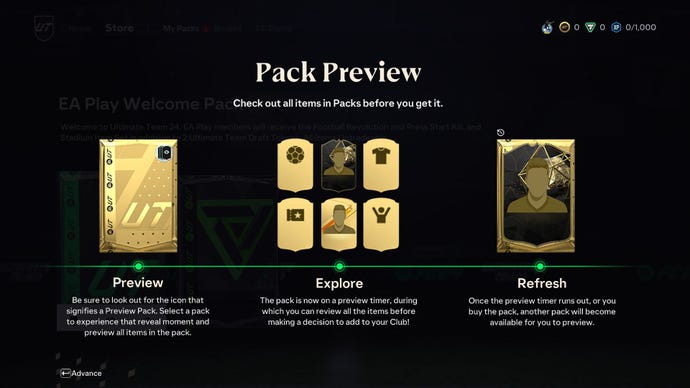
I’m speaking to him just after the release of the new game. My next question is the elephant in the room – has he bought it? “I have bought the new game, but I’m adamant I’m going to be controlled and careful with [the newly renamed] FC Points,” he says. Maybe I’m wrong to doubt him. Maybe he really will develop a healthier relationship with these micro-transactions. But I’ve seen this pattern before, not least in myself. “There’s always a chance it will get out of hand again,” he adds. “But I’m hoping I’ll be more reserved.”
The reality is that, even if not for Andreas, the cycle will continue for many players. There will be thousands of people waking up in five years and wondering how it is that these cards ended up taking so much of their time and their money. And there may well still be thousands more waking up at 4am on Saturdays and Sundays, slowly shuffling out of bed, keeping the light off, and heading next door to get a few matches in.
*Not his real name.
