HomeReviewsLost In Play
Lost In Play review: a gorgeous point and click puzzlerSpirited away
Spirited away
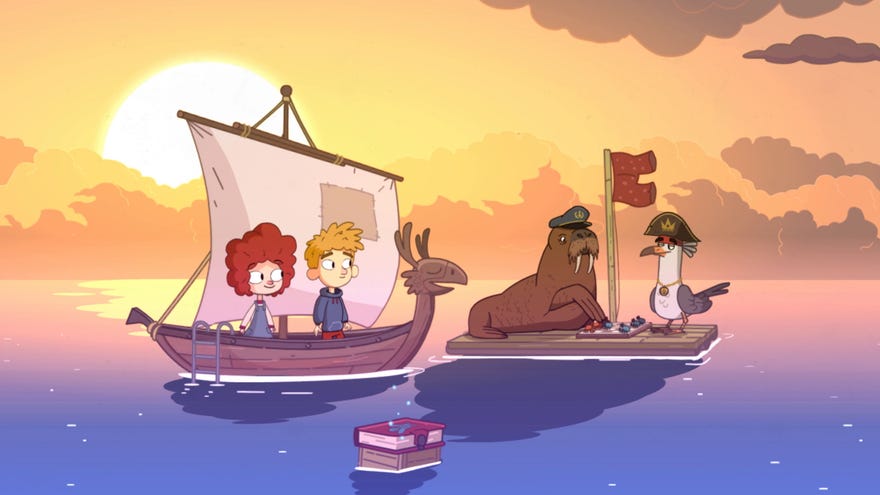
You know when a game instantly charms the socks off you the moment you first clap eyes on it? Point and click puzzlerLost In Playis one of those games for me. Its vibrant cartoon visuals immediately caught my attention when I first sampled itsSteam Next Fest demoearlier in the year, and I’m happy to report that the full game, out today, is just as captivating as it was back then.
It tells the tale of Toto and Gal, a pair of rambunctious siblings who end up far from home after getting lost inside a fantasy world of their own imagining. If they don’t find a way back before nightfall, though, they’ll be stuck there forever. A classic kids adventure story, in other words, but one that really relishes in its own sense of playfulness. Over the course of their four-odd hour adventure, they’ll meet monster fighting frogs in a dark forest, board game-playing seagulls on the high seas, orc mechanics in a vast desert and even a heavy-metal loving sheep on a floating island in the sky as they make their way home to their messy childhood bedroom. It all makes for some memorable puzzling backdrops, but be warned: if you’re planning to play this with little ones, then you’ll definitely need a puzzle savvy adult in the mix, as some of its brainteasers aren’t quite as child-friendly as you might expect.
Lost in Play - Launch Date TrailerWatch on YouTube
Lost in Play - Launch Date Trailer

For the most part, Lost In Play is typical adventure game fare. As you move Toto and Gal through its whimsical mishmash of folkloric landscapes, you’ll be interacting with the environment and its colourful cast of characters to collect all manner of puzzle objects. A frog might need a can opener to eat his tasty, tinned fly food, for example, while a pesky goblin might want you to collect four rubber ducks forreasonsbefore he’ll agree to let you up on his giant stork in an attempt to fly you home. Interaction points are all clearly marked up as you move your mouse across the screen, although surprisingly, it actually felt more natural to play with a gamepad here (which is also the recommended input from the developers, too).
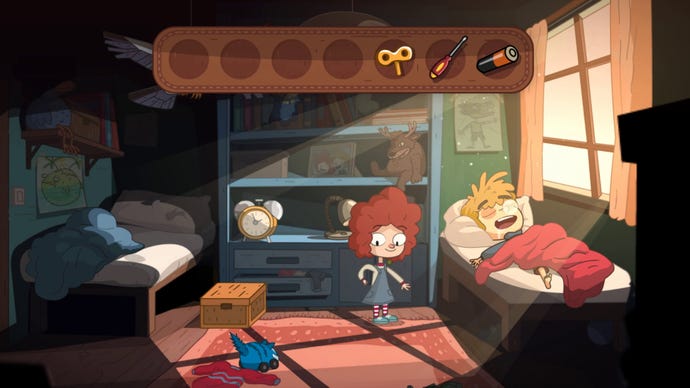
To their credit, developers Happy Juice Games provide players with plenty of tools to help in moments of crisis - in addition to an info button acting as an always accessible tutorial reminder of how puzzles work, there’s also a hint button you can call upon at any time, and an instant reset option if you end up going wrong or see yourself failing to win a game of checkers against a particularly wily forest imp, for example. And in fairness, on the handful of occasions where I did get stumped, the hint button was usually enough to point me in the right direction. But it did also make me wonder how kids might fare in the same situation - especially if they don’t have a handy adult playing alongside them.
This entire sequence is such a delight, one of my favourite animation moments.Ah yes, that classic game of Sliding Crab Connect Four. I’ve got your number, pirate seagull…This was the first puzzle that had me reaching for the hint button, as the tutorial wasn’t massively clear on how you were meant to succeed here.Some logic puzzles can lead to instant failures - like letting Toto get too close to our big bear friend here - which can lead to a lot of hasty restarts.
This entire sequence is such a delight, one of my favourite animation moments.
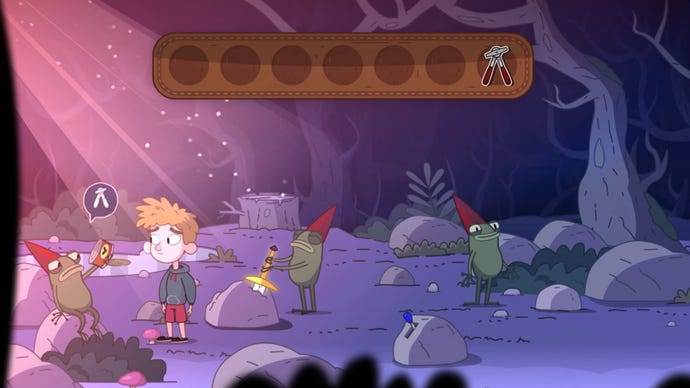
Ah yes, that classic game of Sliding Crab Connect Four. I’ve got your number, pirate seagull…
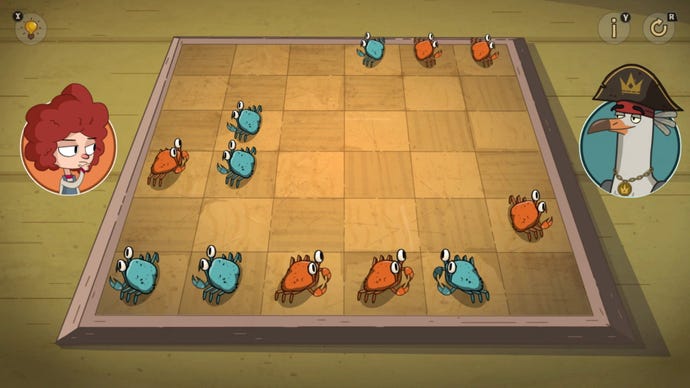
This was the first puzzle that had me reaching for the hint button, as the tutorial wasn’t massively clear on how you were meant to succeed here.
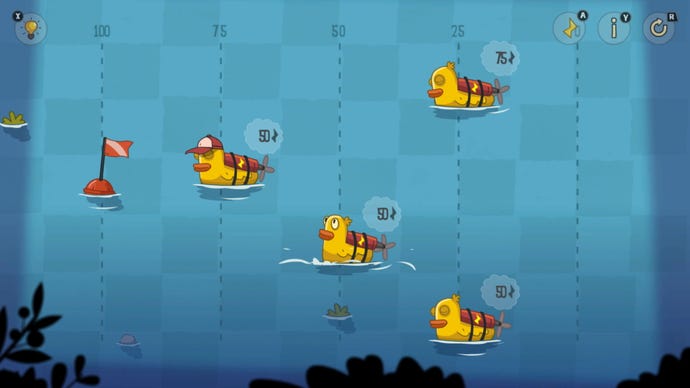
Some logic puzzles can lead to instant failures - like letting Toto get too close to our big bear friend here - which can lead to a lot of hasty restarts.
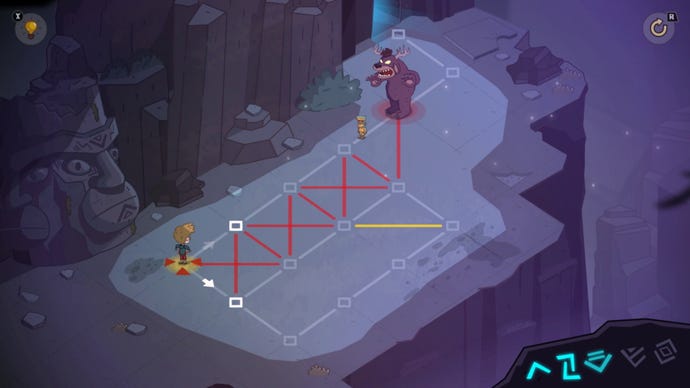
It’s a strange tension for a game that looks and feels so welcoming for younger players elsewhere, although I should stress that these situations were very much the exception rather than the rule. On the whole, Lost In Play’s logic puzzles brought a welcome sense of variety to its fantastical style of adventure game brain-flexing, and nearly all of them riffed on what was actually happening in the story as well. None of Layton’s abstract ‘This reminds me of a puzzle!’ gubbins here, no sir. There were perhaps one too many sliding puzzles for my liking (and we all knowhow I feel about those), but these were the only moments Lost In Play felt in danger of repeating itself. Everything else felt fresh and different.
The floating orc island in the sky is one of Lost In Play’s most ambitious levels.
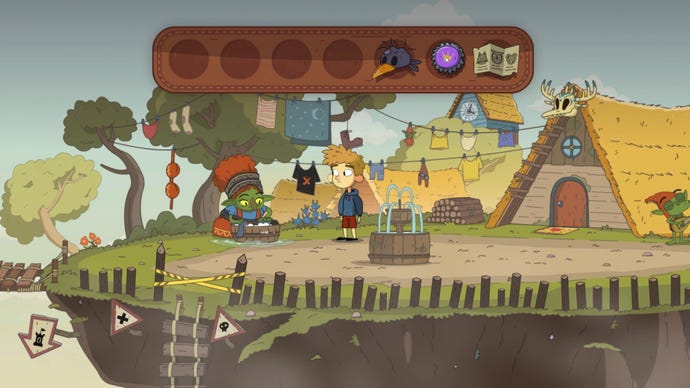
If anything, I was more disappointed that all the other exotic locations glimpsed in the trailer weren’t, in fact, playable stages, but simply part of a cutscene that plays out as the kids are nearing home.Iwanted to jump through lava and pull out thistles from a giant’s toe, not watch it play out in front of me, gosh darn it, but hey, it’s a small dev team, I get it. Even without those extra pit stops, Lost In Play is still a rollicking adventure in its own right, and just the most lovely thing to spend your afternoon with. Logic hiccups aside, I still reckon this is a great game to play with kids - just be prepared to take over some of the puzzle solving if you do. Ultimately, Lost In Play is like curling up with a good book, and four hours later you’ll suddenly wonder where the time’s gone.
