HomeFeaturesWolfenstein 3D
John Romero reflects on the making of Wolfenstein 3D, crunch and finding time for creative exploration“I wish that I had made fewer games, but better games.”
“I wish that I had made fewer games, but better games.”

But that’s getting ahead of ourselves a bit. The origins of Wolfenstein 3D, a gloriously violent game that paved the way for the even more gloriously violentDoom, can be found in a somewhat more cutesy series of titles: theCommander Keenseries. id Software made four of these side-scrolling platformers for MS-DOS in very quick succession between 1990 and 1991, and studio co-founder John Romero tells us that the team was definitely ready for a change.
8 Reasons DOOM Eternal Is One Of The Best Action Games Ever Made | Doom Eternal Review (PC)Watch on YouTube
8 Reasons DOOM Eternal Is One Of The Best Action Games Ever Made | Doom Eternal Review (PC)

“At the beginning of ‘92, we had just come out of a year where we made 13 games,” says Romero. “Out of those 13 games, four of them were Commander Keen games. The idea of immediately making another Keen… it felt like it was just too much.”
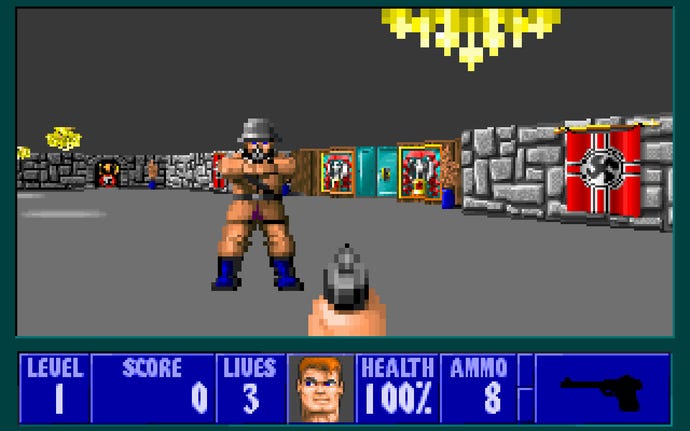
A particular sticking point for Romero was wanting to do more in the 3D, first person space - an area id had previous experience in with the likes of Hovertank 3D and Catacomb 3-D.
“What bugged me the most was that we had just made the first 3D, first-person perspective action game - like a shooter, except without a gun. For me, we’d already led in this technology, so I was ready for us to do something better with it and go one step further. Because we didn’t hit it with Hovertank, and Catacomb 3-D was better but just not there yet, it wasn’t an FPS. I knew we could do better than that.”
The original box art for Wolfenstein 3D sure was something.
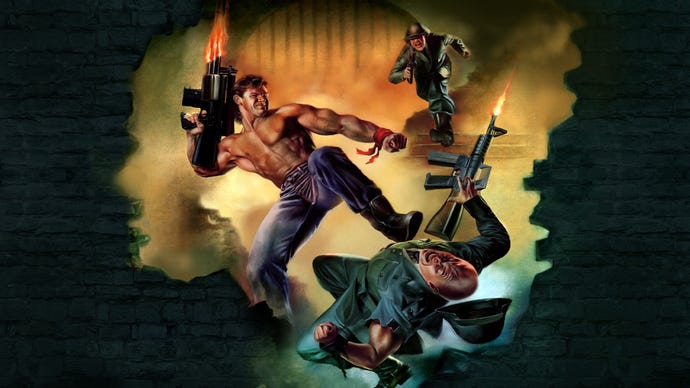
“We loved the original Castle Wolfenstein - we played the hell out of it. And 11 years later, the market had gone up significantly from where it was in 1981,” says Romero. “The amount of people who saw Castle Wolfenstein was far smaller - 30,000 people probably played Castle Wolfenstein, because those were the sales numbers back then. So the numbers who had seen Wolfenstein weren’t huge, but no one would have seen it in 3D like this. To make it in 3D with high-speed gameplay was to do something different.”
However, Wolfenstein 3D wasn’t intended as a remake as we understand it today. In fact, it very nearly wasn’t ‘Wolfenstein’ at all, with id originally planning to create a spiritual successor instead of a direct reboot.
“It was originally a spiritual successor. Because we didn’t license any games back then - we just made new things all the time. It was obvious to us that we weren’t going to call it Wolfenstein. It was obvious that we’d come up with another name, like we had always.”
Needless to say, they did not come up with another name - despite pitching (and rejecting) multiple title ideas as development went along. Eventually, unable to come up with a cooler name than Wolfenstein, id eventually purchased the trademark in April 1992 for $5,000 - a far cry from the multi-million dollar deals of today.

“Before Wolfenstein, we had been limited in our timelines - we had two months maximum to make anything at that time,” says Romero. “So once we were finished with all our previous stuff, we knew that we didn’t have to rush with our next game. We don’t have to make it in two months, we can take as long as possible, do a really good job and it’ll be done when it’s done. Wolfenstein was when we came up with that motto, because we didn’t have those limits on our time.
“And so that’s what happened - we were going to take our time and do it right, with a team that isn’t worried about how to make money, but just focused on how to make the best game possible. Even those four months to get the shareware version out felt like a crazy amount of time to us. It’s funny, because six months nowadays is just so fast. No one can get anything done in six months!”
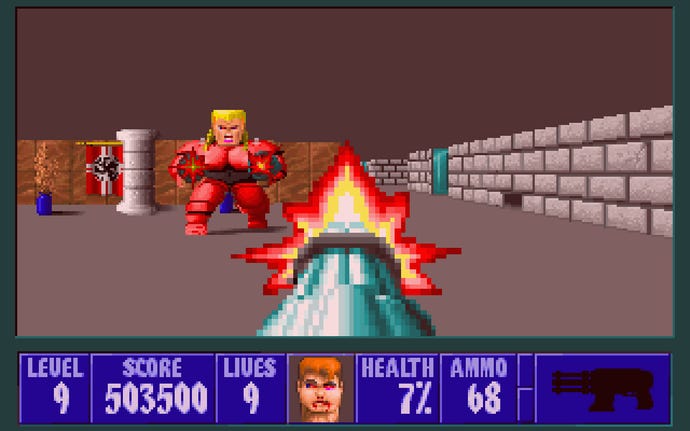
“The time that it took to make games back in the day was very different,” says Romero. “I read Jordan Mechner’sMaking of Karateka- he made a masterpiece with that game, because he just worked on it whenever he felt like it. He was never pressured to get anything done. I wish I had done that back then. I wish that I had made fewer games, but better games. If I had been older, and knew more about programming and design, I would have taken more time and done a better job. I think the stories you hear about people staying up late back in the day, that was maybe the last night, or they were getting the core of their game working really well and they were on fire. When we worked long hours, it’s because we wanted to, and we were driven to get this stuff done.
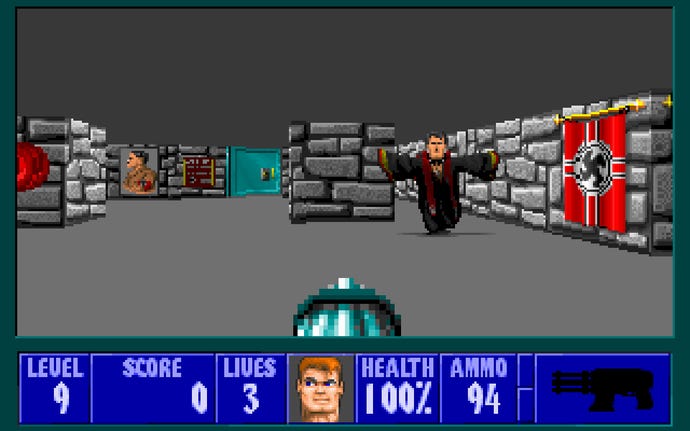
“When someone is making you work late, that is absolutely crunch. We absolutely don’t condone that [at Romero Games]. We’re all for working at normal times, because people have lives. If you want to work extra you can, but we’re not ever scheduling it - and if things go on too long, we’ll rescope the work. People don’t crunch here anymore. Today, you can ship a game and put more features in later - so why would you cram them all in at launch, if they’re not critical to your game’s identity?”
Romero is keen to stress that the lesson to take from the early days of id Software is that games needmoretime to fully unleash their potential. Crucially, time for creative exploration, free from overbearing deadlines or exhaustion.
“When you’re in crunch mode, you’re not innovating, you’re just executing,” says Romero. “Your focus is different, your focus is on completion, not exploration. Not having that deadline was really important for the innovation of [Wolfenstein]. It’s like making a song, having a cool guitar riff and working around that to make the song. Indies have come up with these cool initial ideas likeReturn of the Obra DinnorHer Story. These games have these really great ideas, and building around that core takes time. That really should be the takeaway for any game developer: take your time, do something new and cool, and do it right.
“Nobody will remember the games we made in 1991. We made them really fast and we made a tonne of them. No one cares about those games, they care about the ones that we spent our time on.”
