HomeFeaturesInscryption
Inscryption is horrifying because it does things games aren’t supposed to"I had a friend who said he had nightmares because of the menace of the person across the table"
“I had a friend who said he had nightmares because of the menace of the person across the table”
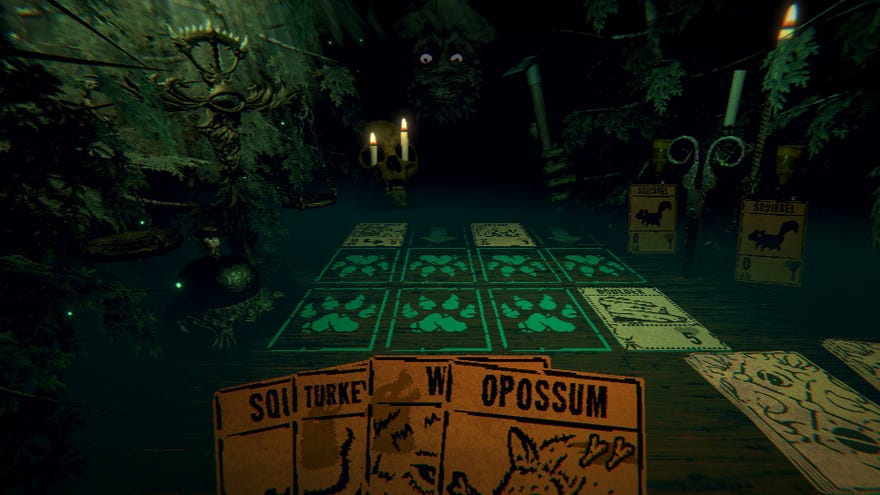
At the start, Inscryption is like a hostage situation, where you’re forced to play a card-based roguelike against a sinister games master. Then, just as you start getting the hang of things, the game evolves into something way more complex. If you’ve played Mullins' other games you’ll know his work can go to some weird, meta places. I won’t say more above the cut, because I’d hate to spoil it. But for those of you who’ve already played, read on for more detail on how Mullins created an excellently unsettling world.
“I thought, maybe you sacrifice your body parts somehow, what implications would that have for playing a card game?” He says. “If you chop off your hand, then you can’t hold the cards. You cut out your eye and you can’t see half the playing field. A lot of the really core stuff came together right then and there - including the evil character across from you, with the weird googly eyes that are always watching.”
Inscryption | Developer OverviewWatch on YouTube
Inscryption | Developer Overview
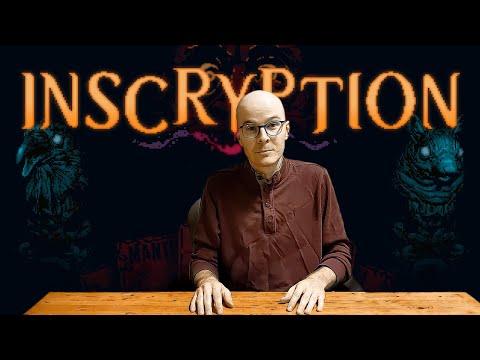
The opening feels like a horror game, too. You’re in a dimly lit room and are barely able to see your opponent - who uses ominous masks to act as characters you meet on your roguelike journey. You aren’t glued to the gaming table though, and can (and are encouraged to) wander around a dark cabin, solving puzzles as though you’re in an escape room.
“That sets the stage for creepy and macabre things to happen,” Mullins tells me. “In that mindset, a lot of the horror stuff just followed. Especially the really gruesome stuff, like taking your eye out with a knife, or yanking a tooth out of your mouth with pliers - that stemmed from that original game jam. I didn’t have pliers, but I did have a dagger that would cut off your hand or eye. The hand cut off never made it into Inscryption.”
While you’re playing, the game master will occasionally offer you items to give you a little bit of help. Pliers to pluck out your teeth to tip the scales in your favour, or a knife that you know will have the same effect, but you’re unsure what exactly you’ll be chopping until you’re desperate enough to use it. When I first played, I actually thought I’d be taking off a hand or finger, much to my absolute horror when I raised the damn thing to my face.
But once you do start cutting out eyeballs and uncovering the cabin’s mysteries, the game quickly starts to change. From strange interludes showing you found footage, to a complete shift in what you’re actually playing. Suddenly, you’re in a 2D world, playing through more of an RPG-like deckbuilder. And, uh oh, turns out creepy mask man isn’t alone after all.
“I felt that simply having a deckbuilding roguelike in the cabin with creepy puzzles wasn’t gonna be good enough, or not be enough of a twist for people who had really liked my previous games,” Mullins tells me. He’s also the developer behindPony Islandand The Hex, two games that deliciously subvert your expectations, and Inscryption is no different.
The game lets you get up and walk around the room, with a glowing, locked door teasing you as you search for a way out.
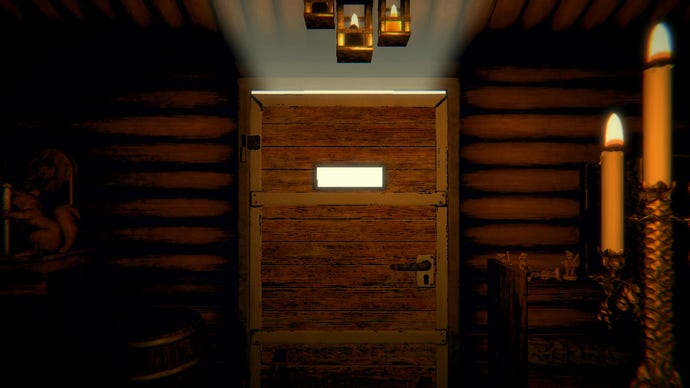
“I was really racking my brain wondering where this was gonna diverge,” he adds. “My previous idea was that you’d acquire items during the roguelike run that would aid you in a first-person chase at the end, where instead of pliers you could take shoes, and in the final event you get an attempt to run and maybe jump over obstacles and stuff.”
Personally, I would’ve found that terrifying. Perhaps it would have cemented the game as a slightly more traditional horror experience. But Mullins wasn’t satisfied with keeping it all so similar, and wanted a sharper change.
“At the time, I was playing the Pokémon trading card game for the Game Boy Colour, and something just clicked where I loved the idea of de-making Inscryption into 2D and having that be like a core part of the lore,” he tells me. “The idea that the character in the first part was only one of four of these Pokémon gym master-types, or Scrybes as they’re called in the game, was really exciting. It opened things up to explore a different one of them in 3D.”
The 2D world you come across in the second part of Inscryption. It’s a litte bit like the overworld in a Mario game.
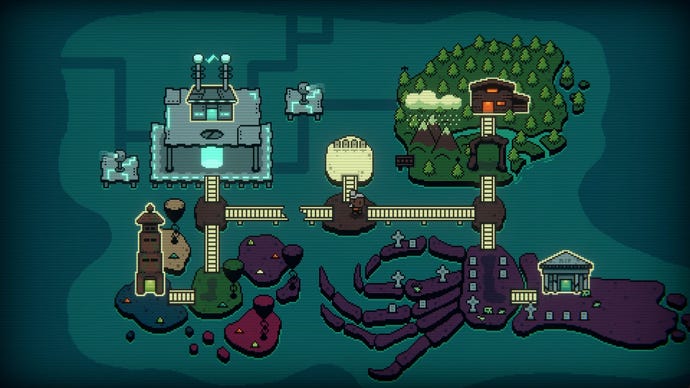
It’s certainly a daunting feeling as a player, “escaping” the first 3D section to be met with what feels like a whole new game. All I remember thinking was, how long is this? Once you manage to battle through the 2D part, you’re once again sucked into another 3D world. That one is a stark contrast to the first, however. You’re pitted against a robotic Scrybe in a high-tech factory with slightly tweaked rules to the original card game. You spend a lot of time in his world, looking for more secrets and, importantly, a way out. Truthfully, I didn’t enjoy that section as much as the first, and was hoping to battle the last two Scrybes, Magnificus and Grimora, as well. Unfortunately, Mullins didn’t think players would have the appetite for even more 3D sections.
Giving those two their own full sections of the game would also add an extra couple of card games that players would need to adapt, and Inscryption already had quite a few of those. While the card battles are all somewhat similar, I’m curious how difficult Mullins found it all to balance.
“One thing I learned later on was the utter frustration that people had that they were asked to create a deck in part two,” he tells me. “They’re not building it one card at a time, they’re asked to completely assemble a twenty card list themselves, and there’s much more to juggle and keep in mind in the creation of your deck.”
A snippet of Grimora’s unique Inscryption style.
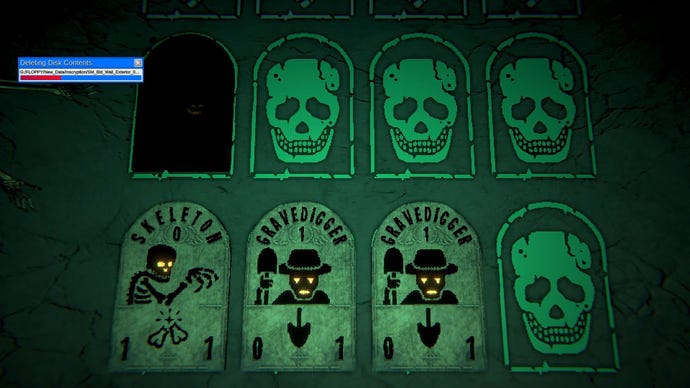
He adds that it led to problems where players had mastered the first part, but weren’t necessarily the sort of people who were into card games, and couldn’t quite get their heads around building a full deck from scratch. He ended up adding an automatic deck build button to help those players out.
“I was looking at it from the perspective of someone who loves card games,” Mullins says. “I thought the idea of assembling the deck yourself would be exciting, but for some it was a huge frustration. Part three wasn’t so bad, because you’re bringing back knowledge that you had from the first part, and it let me start adding more exciting gimmicks, like the file battle, to make it fresh, but it wasn’t throwing wildly new challenges your way.”
The file battle is one I want to draw particular attention to, because it brings Inscryption’s world unsettlingly close. Not only does it make you search through your PC’s folders to find large files to turn into cards, but it takes one of your files hostage, threatening to delete it if you lose. While you know that a video game isn’t really going to do that, it’s enough to sow a tiny seed of doubt in your mind - what if it did? It might, though, right?
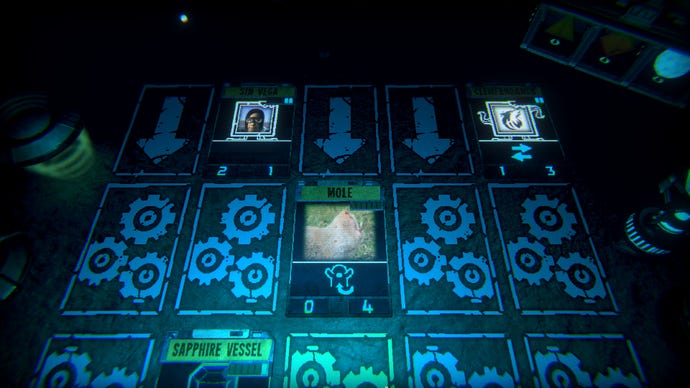
For Mullins, it seems Inscryption is more about giving a player those shocking or surprising situations than it is about creating a typically horrifying experience.
“It’s weird, because I did call it a horror game when I first announced it, but I started to feel maybe it wasn’t that accurate a label,” he says. “But then, people would tell me it really scared them. I had a friend who said he had nightmares because of the menace of the person across the table. Not that he’s really - well, he does reach out and strangle you - but it’s not like he’s constantly jumping and throwing a knife at you.”
