HomeFeaturesThe Bookwalker: Thief of Tales
I wouldn’t buy The Bookwalker in hardcover but it’s worth flicking through in the Game Pass libraryAn RPG breaking into books to steal fictional treasure
An RPG breaking into books to steal fictional treasure
Image credit:Do My Best / Tinybuild
Image credit:Do My Best / Tinybuild
The Bookwalker: Thief of Tales - Mix Event TrailerWatch on YouTube
The Bookwalker: Thief of Tales - Mix Event Trailer

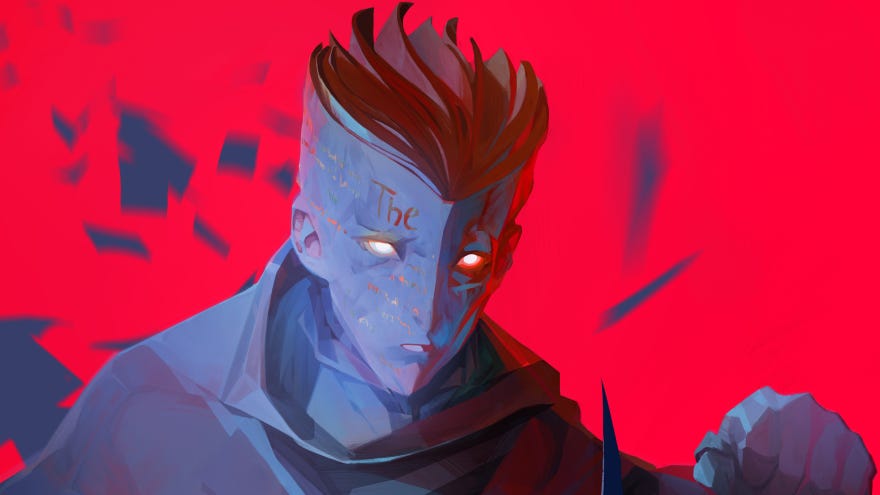
Your man is Etienne Quist, a novelist who cannot write. Not for creative reasons; because his punishment for crimes unknown was being slapped in magical shackles which stop him from writing. But he has the rare power to enter books, explore them like real worlds, and even bring items back into reality. This makes him valuable to wrong’uns. If he pulls a few heists for a shady bunch, they say they will break his shackles. Just petty crimes, like stealing an immortality elixir or Mjollnir. It’s a strong setup, and a great excuse to dance across different worlds and fiction genres.
I feel I can see the shape of what wanted The Bookwalker to be. Jump from horror to sci-fi to fantasy and beyond, dipping into new worlds just long enough to enjoy fresh new stories, figure out their rules, meet their people, make a few moral decisions, solve a few puzzles, umm and ahh about risking rewriting parts of a book to your benefit, then rob the place blind. And hopefully, ultimately, break our shackles and write again. A series of heists and surprises. I feel glimpses of this delight and magic here but sadly developers Do My Best (the studio behindsci-fi horror train journey The Final Station) fall short of most their ambitions.
Image credit:Rock Paper Shotgun/tinyBuild
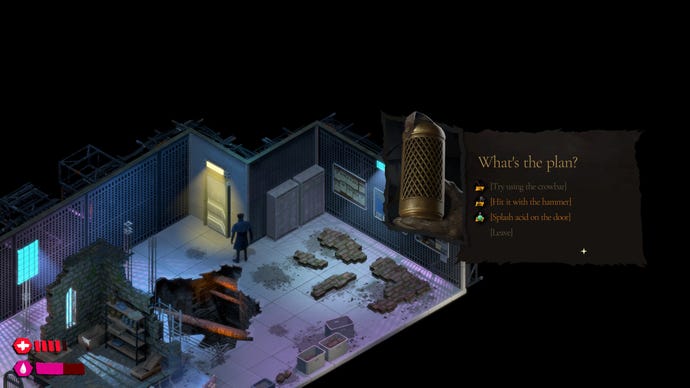
Most ‘puzzles’ involve using pixel-hunting for something to use, or remembering something you were just told, or using the right object in the right place. The menu options on the solution spot will tell you what object you need, even if you don’t have it yet. Other puzzles involve the uninteresting crafting and scavenging systems. Opening boxes, barrels, and other containers (pixel-hunting for them amongst their identical unopenable siblings) will earn you healing items, junk you can melt down to craft Ink potions (mana potions), and parts to create tools. In most levels, you will create the same three tools—pliers, lockpick, and crowbar—which do what you’d expect. You will lose these at the end of levels and need to find parts to craft them all over again in each new book.
Image credit:Rock Paper Shotgun/tinyBuild
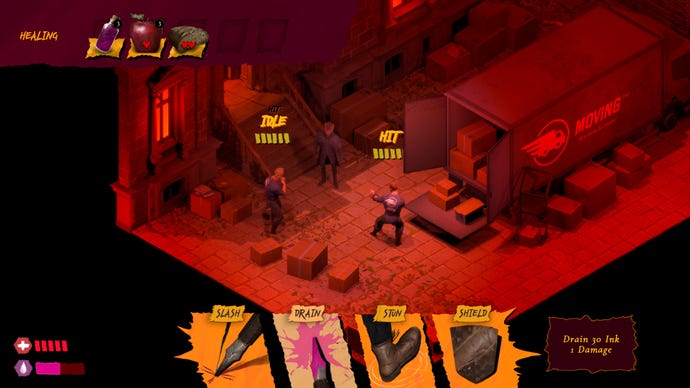
The occasional bits of turn-based combat are simple. Your main attack and a stun attack cost Ink, one weaker attack refills Ink, and a shield shields. You can see what an enemy will do each turn and they don’t coordinate attacks to overwhelm you, so moves tend to be obvious. Healing items are common enough that I ended up playing aggressive to just finish these boring fights. I only died unintentionally once, at a point where plot reasons meant the game threw me back into the fight anyway with full health while enemies remained injured.
Image credit:Rock Paper Shotgun/tinyBuild
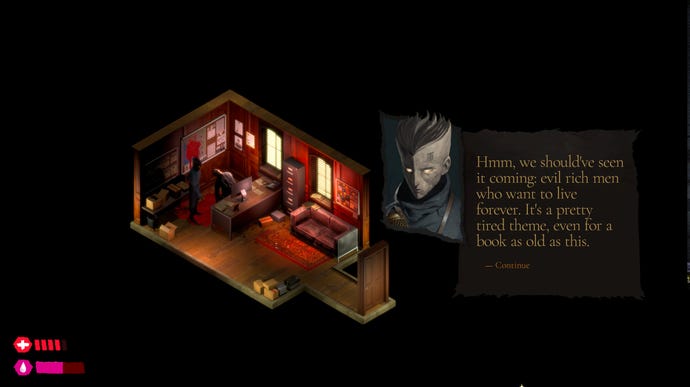
Through it all, while the premise is strong, the dialogue and plot are functional at best. This is disappointing for a game which stars a writer, and is set inside fiction, and urges you to care for fictional characters as if they were real people. I don’t. Some books we enter have fun setups but uninteresting execution, and Etienne dismissing this as bad writing from bad authors is clumsy lampshading. Dialogue is awkward. Words and sentences never delight. Characters are unremarkable and inconsistent, particularly when Etienne and his sidekick swap moral codes every five minutes. The tasks we must perform are often dull. I started struggling to not click clean through dialogue, resisting mostly because some conversation branches are long and will repeat as if you’re hearing them for the first time, so it’s quicker to take it slow rather than risk fumbling and starting over—and at that point, you might as well read it.
Image credit:Rock Paper Shotgun/tinyBuild
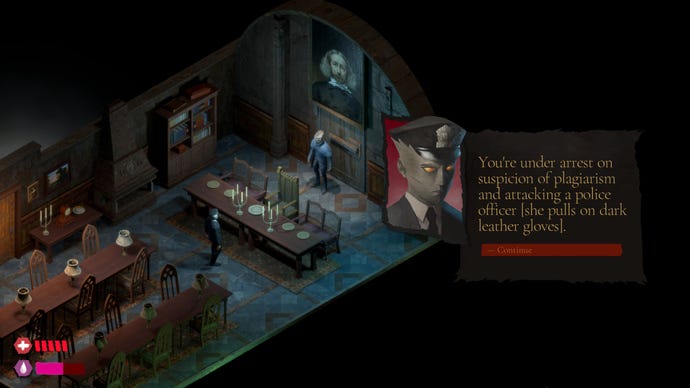
I’m a big fan of overambition. Some of my favourite games dream far bigger than they can manifest, coming out as games I can probably recognise are 7/10s but which mean more to me than so many polished yet bland 9/10s. But a great 7/10 is so audaucious in its ambition that you cannot help but admire it, or gets one or two core elements so right that the rest feels unimportant. The Bookwalker is a tiresomely repetitive game with a strong premise and a pretty look, and that’s not enough.
Like almost everything, The Bookwalker would probably be better shorter. It runs out of new ideas, and that is painfully felt. I would have quite liked it as a four-hour game. Might’ve really liked it as a three-hour game. It is a seven-hour game.
Still, I do think The Bookwalker is a good game for having a go on Game Pass. Without the commitment of buying it, you’re more free to leap in, enjoy discovering it, then stop once you know its shape and grow tired of seeing more because it won’t surprise or delight you again. Reviews on Steam from players who bought Bookwalker have given it a ‘Very Positive’ rating, mind, so maybe you’ll find it a real page-turner too.
