HomeFeaturesA Total War Saga: Troy
I sold loads of rocks during A Total War Saga: Troy’s campaignThe face that sold a thousand units of stone
The face that sold a thousand units of stone
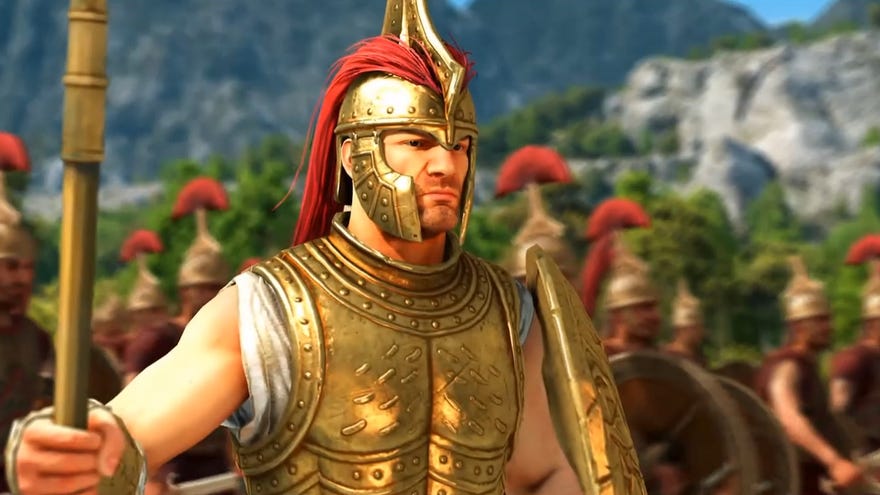
If you see the name “Menelaus” and find yourself scratching your head over how to pronounce it, then have no fear: play any more than eight seconds ofA Total War Saga: Troy, and you will never forget. That’s because the extremely bellowy king of Sparta can’t seem to take a breath without hollering his own name on the exhalation. He’s like an incredibly angry Pokémon. In fairness, though, he’s very cross, because noted Trojan sex enthusiast Paris has run away to the other side of the Med with his wife Helen, and the whole incident has made him look a right boafus. Cue the Trojan War.
Just as myfirst go at Troysaw me play a battle built on the feud between bronze age miseryboys Achilles and Hector, this second demo, which allowed me four hours to guzzle down as much campaign play as I could, focused on the even more cataclysmic beef between Menelaus and Paris. I got to play a good chunk of game with each of them, but Menelaus got the lion’s share of time. And while my inner roleplayer wanted to really get into the sandals of this insecure, shouting Greek fight aficionado, it transpired that the real joy to be had was in playing him as a sort of cheeky, opportunistic rock salesman.
Watch on YouTube
Watch on YouTube

But though Troy doesn’t depart massively from formula, it’s worth pointing out that the innovations it has made are generally both welcome and highly noticeable in play. The best new trick was the implementation of five resources - food, wood, stone, bronze and gold - to replace the classic single “moneys” resource in previous games. It might not sound a sexy feature, but if you like resource management your tummy will be tickled, and it adds a new layer of consideration to fold into strategic decision-making.
I just wanted you to know how hard I had to resist including a screenshot of Sparta, with the deadpan factual caption “this is Sparta”.
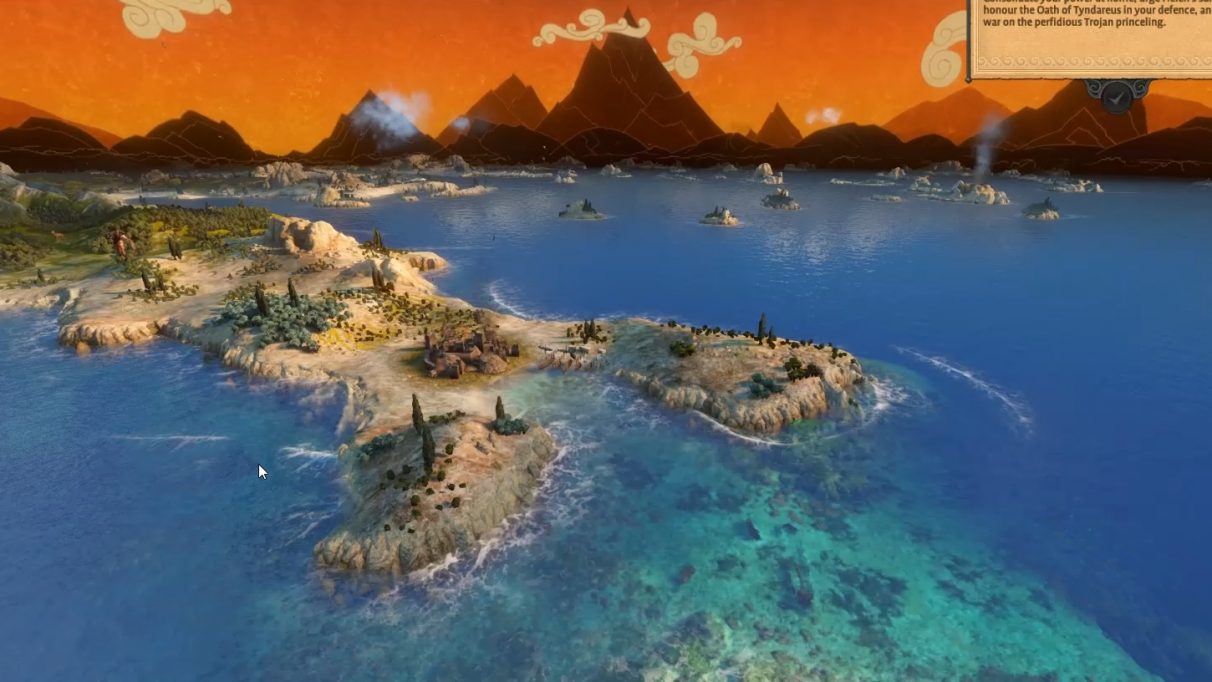
And there’s the thing - the new resources don’t just add a resource management element to the game. They make bartering with neighbours vital, in a design decision Georgieva said reflected the importance of trade in the Bronze Age. And sure enough, resource-swapping made diplomacy feel like a far more useful tool than it has done in the series to date. Sure, it had a bit of Settlers Of Catan’s “wheat for ore?” energy at times. And the AI did propose some bloody odd bargains, with that joker Ajax in particular asking me for free money more often than a Twitter ko.fi grifter. At one point, an ally offered to tradeactual territorieswith me, which barely ever happens in strategy games. But apparently these are known issues, arising from the fact part of the system was lifted from Three Kingdoms, and the hope is that they’ll be ironed out in time for launch next month.
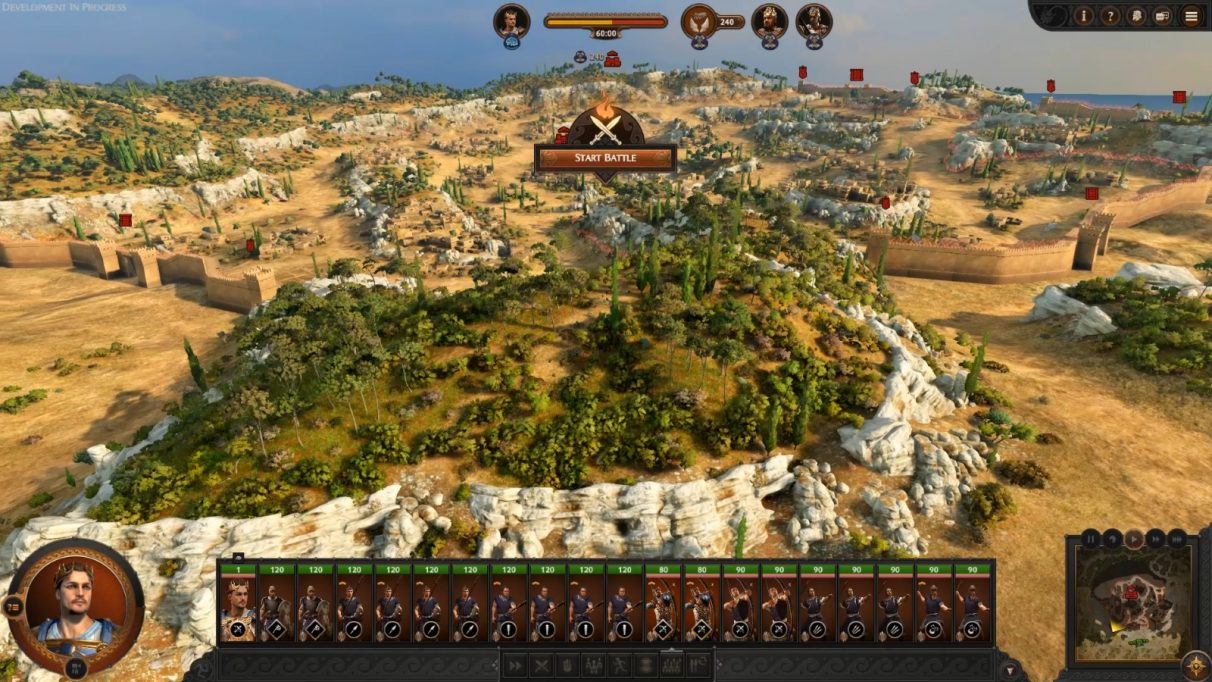
It’s so good to see 360 degree siege battles back in Total War, and although I’ve only played a couple, Troy’s were as tactically interesting as they were gorgeous to look at. But then, in a game named after arguably the most famous siege in history, you’d hope the sieges would be good.
From the campaign’s painted-pottery skybox to the Homer quotes littered on its loading screens,A Total War Saga: Troyis very much The Iliad: The Game. Genuinely, I think classicists (of the kind who are relaxed enough to deal with mostly-rationalised minotaurs, at least) will properly love it for that. As such, it cleaves pretty closely to the story of said Iliad: most of the factions are directly or loosely allied with the Danaans (i.e. the Greeks) or the Trojans, and shortly after the campaign begins, the Big War will kick off in earnest. At that point, it’s an effort tonotfall in with one of the big alliances, and play along with the general flow of Homer’s bonkers story about humans and gods competing to see who can act like the biggest set of dickheads.

The sense of playing my game parallel to a series of historical cues, or at least semi-mythological ones dressed up as them, sort of put me in mind ofEuropa UniversalisorCrusader Kings 2, where history is there to be bounced off, rather than adhered to. And there was another aspect of Troy, too, which gave off a very Crusader Kingsy feeling - the unique mechanics for each faction. Faction-specific rules are nothing new to Total War, but here they felt less like a set of mild situational advantages, and more fundamentally transformative to strategy.
Menelaus, for example, can insta-colonise razed territories from across the map without having to get soldiers there and leave them behind, and can also recruit unit types from any faction’s pool, no matter where he is in the world. He is, therefore, an absolute beast for projecting power over large distances. But it was Paris who made me feel occasional stings of Paradox-esque roleplaying flavour. For a start, the Troyboy’s territories, armies and personal stats get better in direct correlation to the proximity of his wife, because he isjust that horny.
There’ll be a lot more to talk about once we see the full game, I’m sure. But for now, I’m seeing a lot of ways Troy could end up delivering an atmospheric, RPG-scented strategy adventure, and very few in which it could trip over itself. Fingers crossed, this should be a good’un.
