HomeFeatures
How the co-creator of Skins became the lead writer on an upcoming AAA open world gameJamie Brittain has switched tracks to embrace videogames at Maverick Games
Jamie Brittain has switched tracks to embrace videogames at Maverick Games
Image credit:Maverick Games
Image credit:Maverick Games
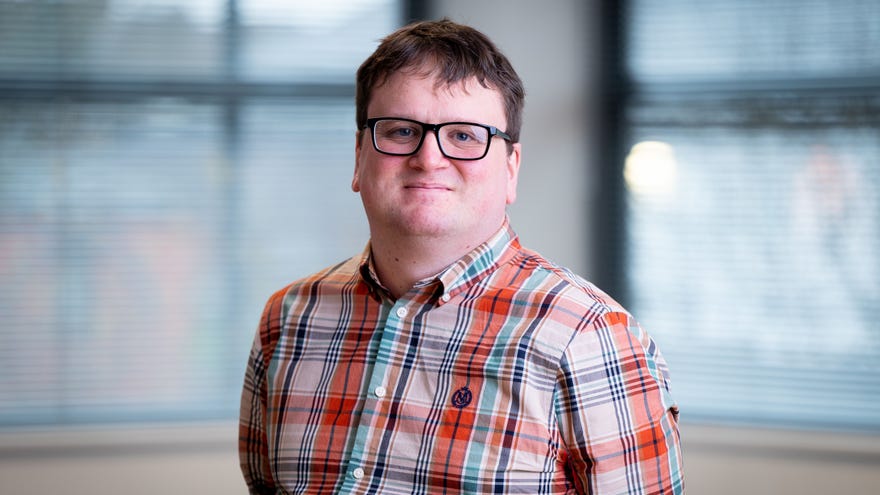
One of the new things Maverick is backing is Jamie Brittain, lead writer on the studio’s unannounced open world game. Brittain has never worked on a videogame before. Yet any millennial who grew up in the UK will undoubtedly be familiar with Skins, the epochal teen drama he co-created with his dad, Bryan Elsley.
Born in Edinburgh, Brittain grew up poor for the first decade of his life - his dad a “perennially stressed” theatre director and sometimes television writer. Then in the late 90s, things changed: Elsley adapted an Iain Banks novel, The Crow Road, into a BAFTA-nominated miniseries for the BBC.
To see this content please enable targeting cookies.Manage cookie settings
To see this content please enable targeting cookies.Manage cookie settings
“Then all of a sudden, we were going on nice holidays,” Brittain says. “With money from that, he bought me an Amiga 1200, which was a serious bit of kit. I think he said, ‘I’m not gonna be around for the next year or so because I’ve got a bunch of stuff to do; here, have this computer as a surrogate parent.’ Which was the beginning of the end for me, really. I just played on that for the next few years.”
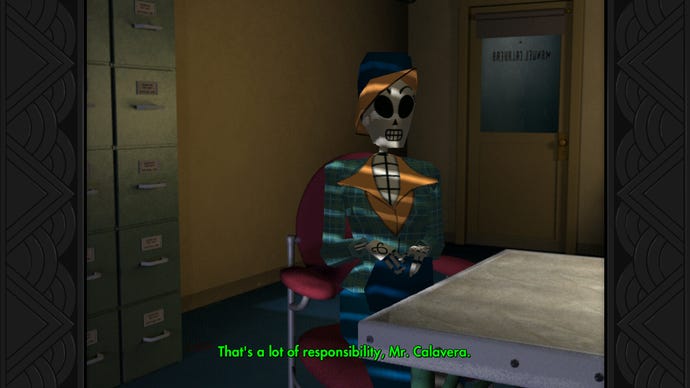
Later, when Brittain “made the stupid mistake of going to university in London, which no one should ever do”, an unpatched copy ofGrim Fandangobought in a car boot sale proved a wonderful companion. Once the credits rolled, Brittain was hit with the realisation that he was going to miss the company of Tim Schafer’s oddball cast. “Being in this really lonely and shit place as ostensibly a grown-up and finding the ending of this game to be transcendently beautiful is a moment I always remember and return to,” he says. “Games can worm their way into you in a pleasant way, and be such cathartic experiences on the same level as any other form of artistic expression.”
Mercedes Colomar in Grim Fandango Remastered, from 2015 |Image credit:Double Fine Productions
Skins arrived at the tail end of British TV monoculture, becoming the flagship show of the teen-focused channel E4. Its tone was raw yet romantic, mirroring the shambolic-cool of Pete Doherty, the culturally dominant NME rock star of the time. Adults were the clowns of the piece, depicted as incompetent frauds, whereas teen issues like family dysfunction and eating disorders were treated with a steady hand. A commitment to rebooting the story with a new cast every couple of seasons made stars of Nicholas Hoult, Dev Patel and Jack O’Connell.
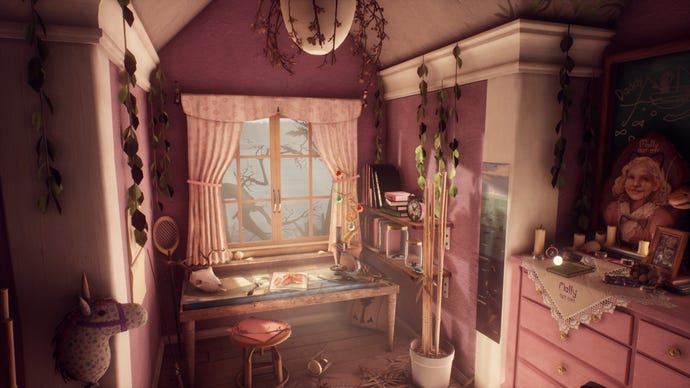
Image credit:PlaydeadImage credit:Annapurna InteractiveL: A haunting scene from the later part of Inside; R: a sunny bedroom from What Remains Of Edith Finch
Image credit:Playdead
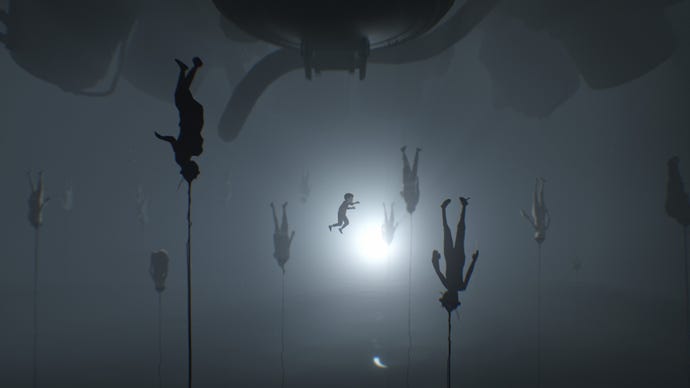
Image credit:Annapurna Interactive
Without realising, however, Brittain was developing a taste for exactly the kind of collaborative writing environments that AAA games require. “I was always just in an office in London, talking bollocks with Josie Long and Jack Thorne and various other [TV writer] types,” he says. “The collaborative bit was always the part of TV writing that inspired and excited me. All the best writing experiences I’ve had, both on Skins and since Skins, have been in some way in that form. The bit when you’re sent home and have to try and write a script out of your own brain I always found much harder.”
In recent years, Brittain has written for Breeders, the unflinching Martin Freeman series about struggling parents. His work with Elsley, meanwhile, has crept towards gaming territory. 2018’s Kiss Me First hinges on the action of an MMO, and the way online relationships can spill over into reality.
Meanwhile, games have taken on increasing importance in Brittain’s personal life, after a long period in which they took a backseat to television. He credits the Crate And Crowbar podcast - where articulate hosts including RPS alumni Philippa Warr and Graham Smith would dig into the unexpected richness of systems-driven AAA games - for “rewiring his brain”. He discoveredBloodborne, and dug into a burgeoning indie scene that hadn’t existed during his childhood. He smiles at the memory ofInsideand What Remains Of Edith Finch (“like a Barbara Kingsolver novel”).
Eventually, Brittain found himself co-hosting The Crate And Crowbar, a role he still fills most weeks. And he ultimately resolved to transform his career to reflect his growing love for the medium of games. “I made it my full-time job to go after those [narrative roles] quite aggressively,” he says. “And it was quite a humbling experience. I didn’t think I would simply walk into a new job, but I had to really go at it. It was an intense period.”
Since landing the role at Maverick, he’s tried to bring the best of the television writing process to the studio. “Narrative and storytelling is fundamental to being a human being, and people who are good writers are just a little bit better at expressing that,” he says. “If you talk to anyone for long enough, they’ve got a story. And if you tell someone a story, people have got opinions on it. For me, that’s always been the magic of a writers’ room. 90% of all the best TV shows you’ve ever seen are made that way. And it’s a gloriously fun way of doing things.”
That said, Brittain’s happy to leave behind the hierarchy of television, in which the writer sits at the top - preferring instead to be part of the team and disappear somewhat into the background. “Videogames aren’t really a writer’s medium, they’re design-led, and that was really attractive to me,” he says. “I never particularly relished that responsibility of being at the top of the pyramid.”
Long ago, a respected television writer hired a bunch of inexperienced students to write Skins, trusting that with a little guidance, their stories would be more exciting than his. It’s a lesson that Brittain has carried with him. “Something I’m passionate about is finding ways to democratise the storytelling process,” he says. “More than anything else to make it reflect the world we’re in, rather than just making it reflect me. Because I’m actually not that interesting. It’s other peoples’ stories I’m interested in.”
