HomeFeaturesFallen London
How Failbetter’s artists drew the unknowable for Fallen London’s new mapNot built in a day
Not built in a day
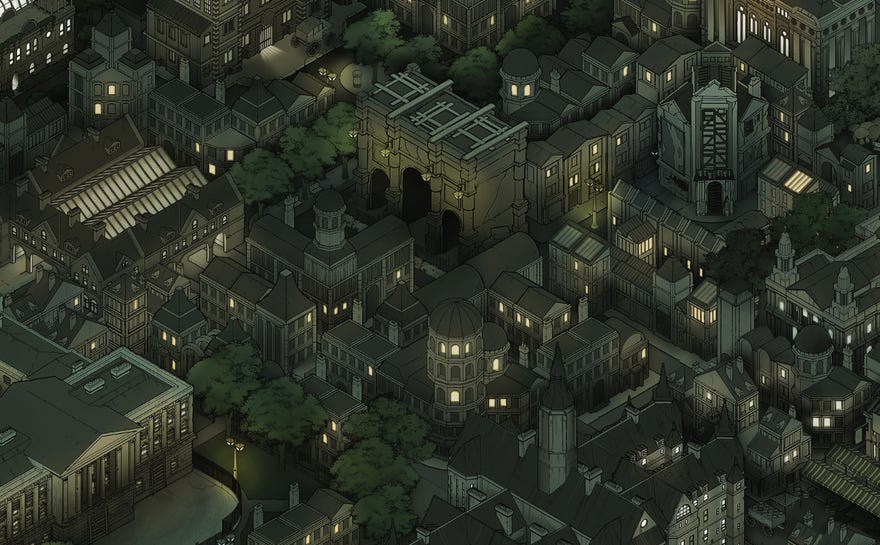
As part ofFailbetter’s 10th anniversary, the studio has made an overhaul toFallen London. Its first game, and the one on which subsequent, exceedingly polite steampunk-ish exploration gamesSunless SeaandSunless Skieswere based,Fallen Londonis a browser-based story game that takes place almost entirely in text form. But a little less so today, since after some downtime yesterday, it has reappeared with a brand-spanking-new map.
Fallen London’s map used to be a flat, 2D, top-down view of the game’s weirdly esoteric version of the UK capital. A sort of Victoriana Google maps, with a few key locations marked.
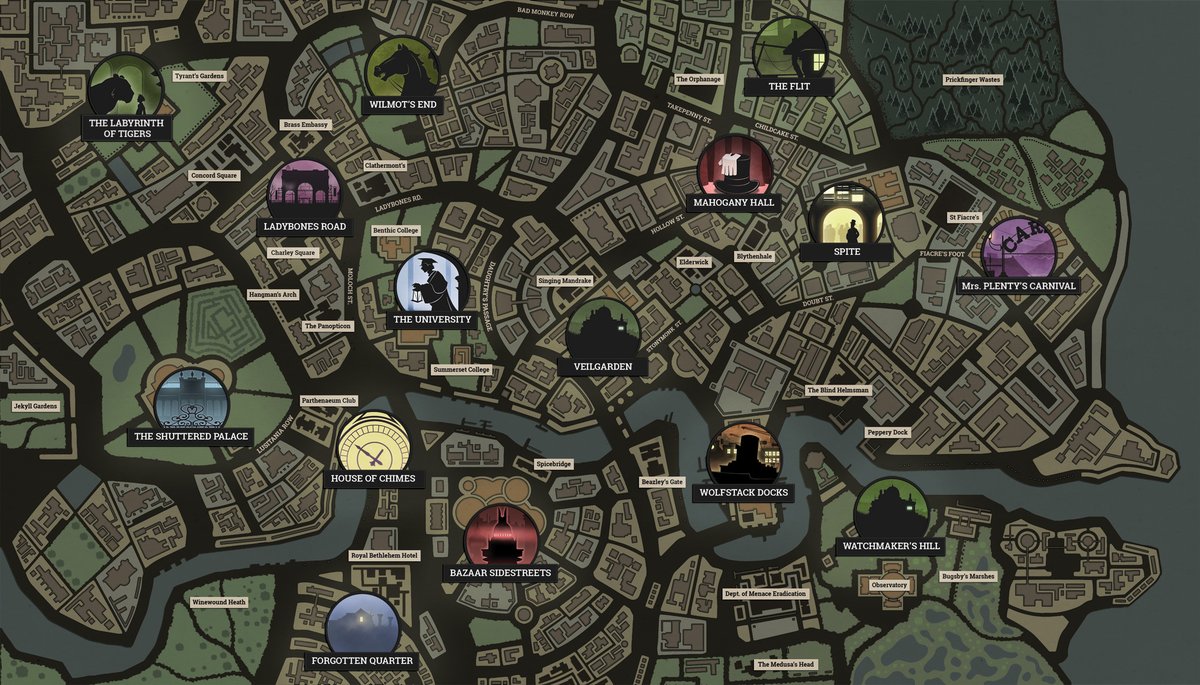
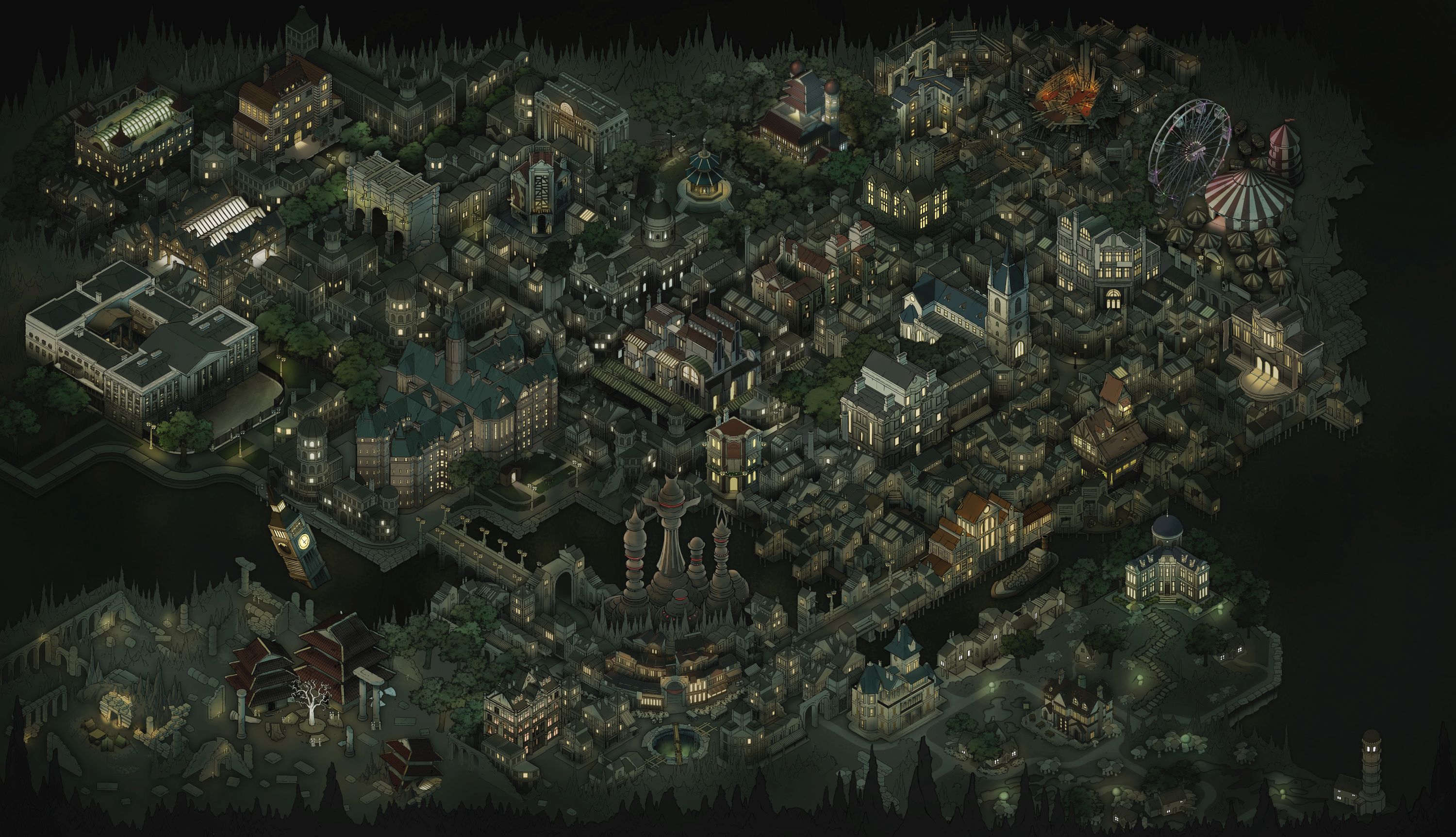
“To try and pin down the space geographically is a bit of a nightmare,” Arendt explained to me, when he showed me the in-progress artwork a few months ago. Arendt is a calming, broad-shouldered presence in Failbetter’s office, much given to sitting with his arms comfortably folded, and he’s been at the studio since its inception. “We’ve had a few goes at it,” he added - and no wonder. Over the years, the game’s writers have added location after location, meaning a never-ending programme of urban renewal for the theoretical city.
A work in progress version of the Spite district.
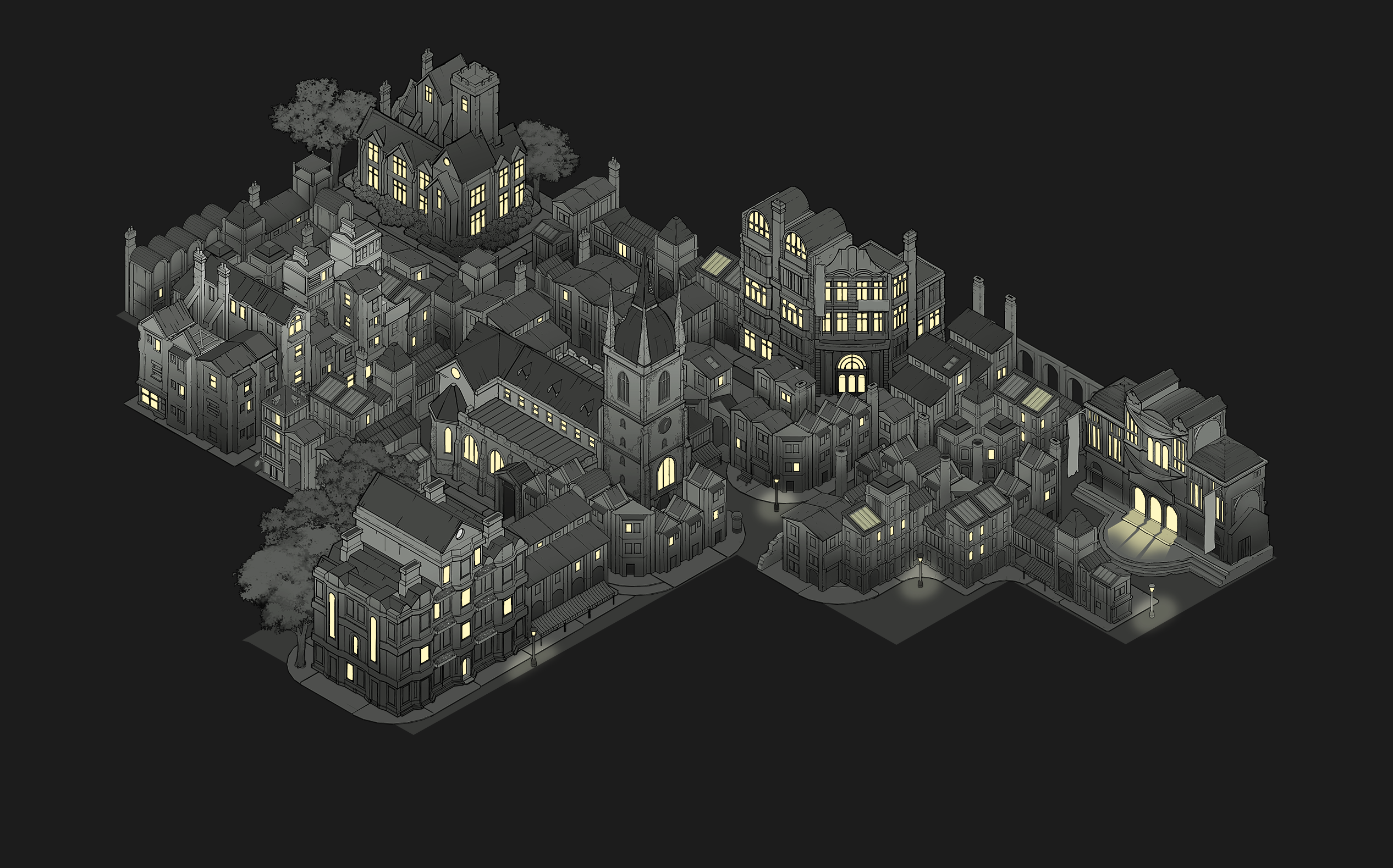
Arendt explained that for the studio’s 10th anniversary they wanted to do something fun, and also make the map more interactive and interesting, feeling more like a part of the game. “So in a moment of madness, I said ‘Why don’t we do this isometric?’. Because honestly I’m so bored of drawing roofs. It’s been, like, five years now. Sunless Sea,Sunless Skies, nothing but roofs,” he added, with a genial chuckle. “I really wanted to draw a window and a wall.”
Some of the isolated ‘hero buildings’. Guess which one is The House Of Chimes.
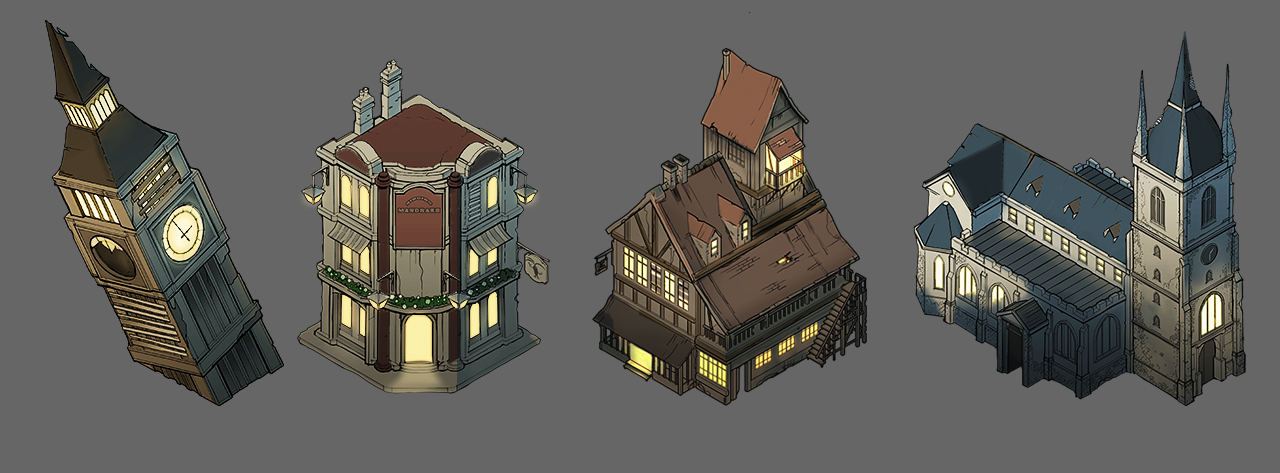
It took each of them about half a day per building, with the buildings themselves being divided up between them. They were drawn in 3D modelling software Sketchup, which Arendt described as “a terrible programme for any kind of serious game, really, but great for exactly what I need it for - which is isometric 3D architecture.” The models were then exported and painted, saving “a lot of fucking about with perspective.” Arendt said that isometric illustration is “really magic”, and fun once you get into it, doing all sorts of things that regular drawing can’t.
Pickpocket’s Promenade, before colouring.
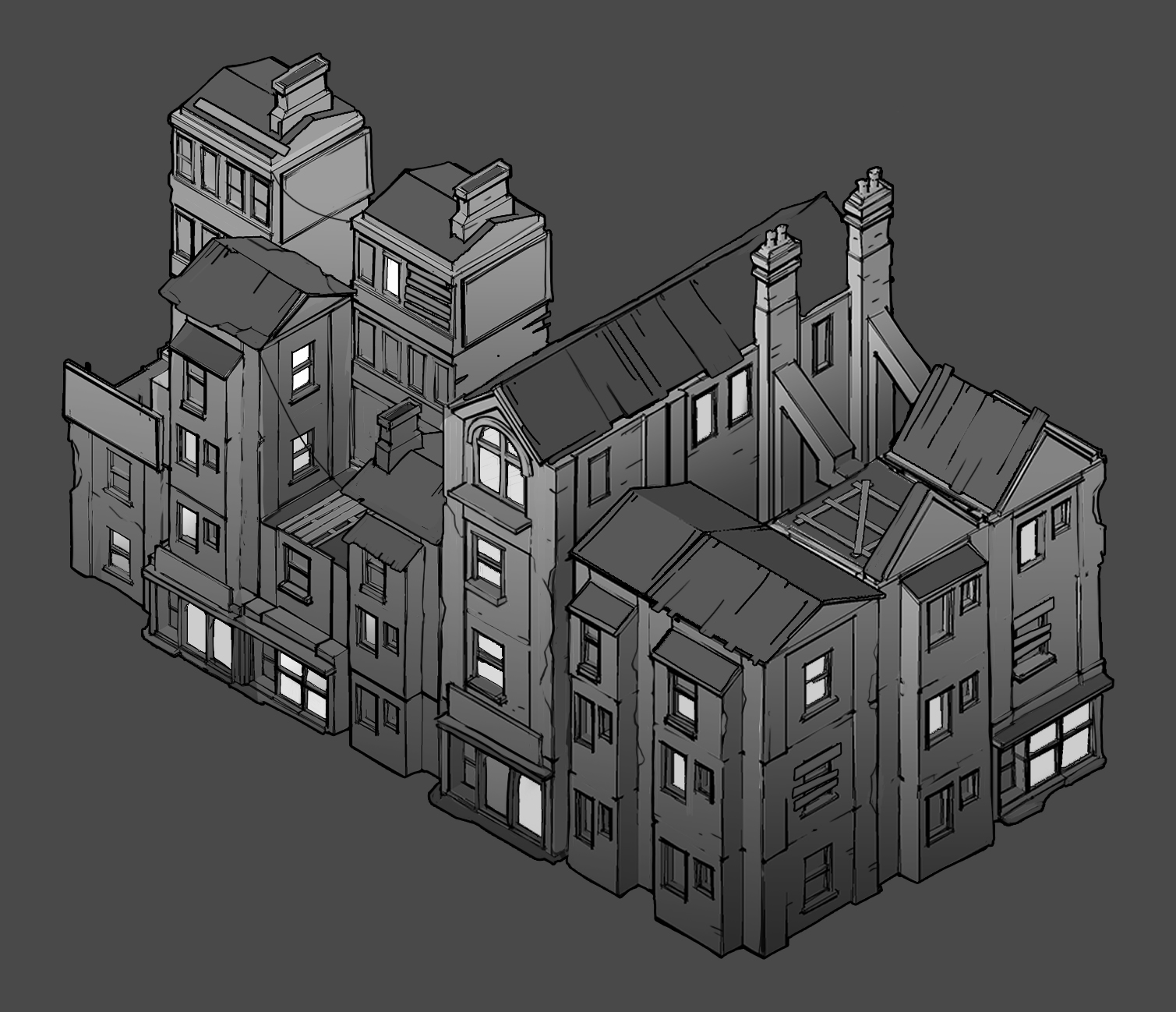
“It sounds incredibly obvious with hindsight, but if you take any element of an iso illustration,” - here he mimed moving buildings around on the table in front of him - “if I was to take one of these buildingshereand put itthere, it would work fine. Which is why it’s such a big deal for games, because it just makes it all vastly easier.” Something drawn in perspective forces each house to remain in the spot it was drawn in, meaning nothing can be moved without being at least partly redrawn. With isometric drawing, however, you can even flip the art horizontally, and it still works. “You flip stuff vertically and itstops making any sense whatsoever, though,” Arendt cautioned me.
The other problem with drawing Fallen London is the inherent weirdness of the game. There are 34 visit-able locations in the city, not counting locations in other places - such as those out on the Unterzee, the underground ocean. But Fallen London has plenty of metaphysical locations, like “death” or “scandal” or “the mind of a long dead god”, which are all places players can physicallybein. For the new map, Arendt and Cook have stuck to the physical. However, some metaphysical locations have a physical element to them, like, for example, “a state of some confusion”, which takes you to the Royal Bethlehem Hotel.
A construction kit for some of the filler buildings that go in between the main hero locations

The Echo Bazaar was “an interesting one”, Arendt said, because it’s a building that’s sort of alive. It’s been party to a lot of different descriptions over the years that Fallen London has existed, and has been seen already in Sunless Sea (where the top-down view rendered it “basically a series of circles”). “Working out what it was going to look like was weird,” Arendt said, and it’s ended up being a series of differently shaped, slightly alien-looking towers, entirely different to all the other buildings.
Disclosure: our reviews editor Nate was once the recipient of a Fundbetter grant from the studio’s now defunct funding scheme. I was given a kitkat when I visited their studio, and one time I had lunch with Hannah Flynn in Brighton.
