HomeFeaturesStar Wars
How Bit Reactor’s Star Wars game hopes to do for strategy what Baldur’s Gate 3’s done for RPGsWe chat to former XCOM art director Greg Foertsch about the challenges of making a new strategy game in 2023
We chat to former XCOM art director Greg Foertsch about the challenges of making a new strategy game in 2023
Image credit:Bit Reactor
Image credit:Bit Reactor

Making a strategy game is “harder than people give it credit for,” Bit Reactor’s CEO Greg Foertsch tells me. The same could probably be said of any game this yearin particular, but having spent over 20 years shepherding the art teams at Firaxis on Civilization, XCOM,Sid Meier’s Pirates,Alpha Centauriand most recentlyMarvel’s Midnight Suns, Foertsch has seen firsthand what it takes forstrategy gamesto break new ground over the years, and what an arduous road it’s been for the genre to get where it is today. Not only was it “late to party on 3D, they were late to the party on consoles,” but it’s also “suffered from lower budgets, which means it just hasn’t pushed in the way that other genres have,” he says.
Even now, “it’s got some catching up to do,” he continues, but there are plenty of reasons to be positive, too. As we speak at the beginning of September, our conversation quickly turns toBaldur’s Gate 3, whose enormous success Foertsch cites as a clear and obvious sign that “there’s a thirst for something different now,” both within RPG circles and, perhaps a little unexpectedly, for strategy heads as well. It’s his hope that his own upcoming project, theclosely guarded Star Wars strategy gamehis new studioBit Reactorare working on in collaboration with Respawn, will follow in these lauded footsteps. “We want to make a game and just have people say, ‘Man, that’s amazing game, and oh, it happens to be strategy.’ That’s the goal.”
Card based battles make Marvel’s Midnight Suns an essential tactical RPG | ReviewWatch on YouTube
Card based battles make Marvel’s Midnight Suns an essential tactical RPG | Review

Alas, Foertsch still isn’t ready to talk about his Star Wars game yet, or how it’s going to go toe to toe with the likes of XCOM andBaldur’s Gate 3when it eventually comes out. But as we skirt round the specifics of what his Star Wars game is, it certainly seems like their alliance with Respawn and EA is a strong one, allowing them to put down sturdy foundations during this time of secrecy so they can avoid some of the pitfalls Foertsch has seen elsewhere during his career.
Speaking to that aforementioned budget problem, Foertsch believes that part of the reason why XCOM has continued to dominate the genre since its release in 2012 is because “once people get in, I don’t think they usually come to the table with enough cash to absorb the losses.” This in turn makes it “very hard to anticipate some of those things that you’re going to encounter that cost time and money, these potholes, and being able to avoid chasing butterflies sometimes, so I think when people come to it, I think that’s where you get a lot of derivative games.”
Chief among those potholes are strategy game tutorials, it seems, whose “off-putting” wall of text pop-ups are often an unfortunate result of underestimating a game’s cost, according to Foertsch. “When you can’t afford to teach through a fantastic tutorial, and you’ve got walls of text that pushes people out, it makes people feel like it’s too smart to approach.” It’s this reason why he’s tried to avoid them as much as possible in the games he’s worked on, he says, but he’s also quick to concede that sometimes they’re a kind of necessary evil. “With only so much money, those are just the only answers that you have sometimes,” he admits.
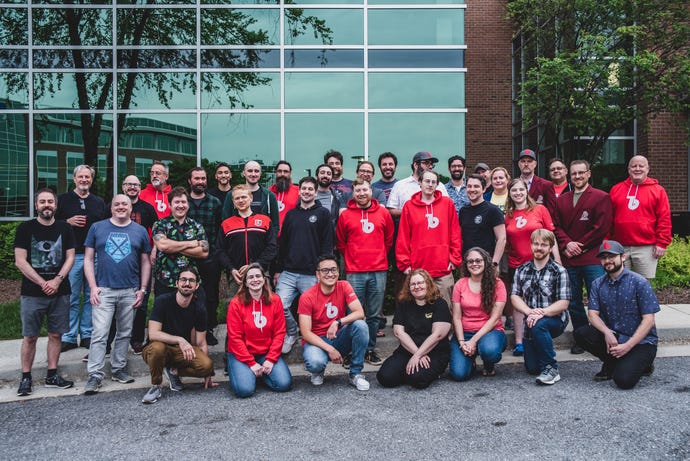
Based in Maryland in the US, Bit Reactor count former XCOM, Civilization, Gears Of War and Elder Scrolls Online developers among their ranks. |Image credit:Bit Reactor
Of course, most developers would probably say similar if they had the kind of security and financial backing that Foertsch is hinting at here. But as we’ve seen time and again over the last 12 months or so, even the surest-seeming bets don’t always pay off as expected. Strategy or not, games are now more expensive to make than ever before, and if they fail to find the audience they need to make good on those initial funding bets, the fallout can be devastating, resulting in widespread layoffs and even the closure of entire studios. This year alone has seen theloss of over 6000 jobsin the games industry, with EA themselves being among the first in the year toannounce layoffs, including the abrupt closure of theirApex Legends QA studioin Baton Rouge, as well asBioWareandFiremonkeys, the latter of whom handled EA’s live service ops for their mobile games. Even Firaxis haven’t been immune, with 2K Games announcingrestructure plans back in Mayafter the disappointing launch of Marvel’s Midnight Suns.
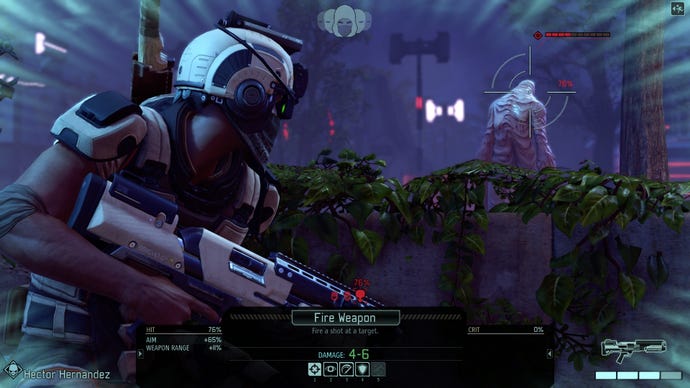
Among his many roles at Firaxis, Foertsch was the art director for XCOM 2 and the cinematic director of its War Of The Chosen expansion. |Image credit:2K Games
Indeed, some might say it’s precisely this kind of gambling on big ideas that’s led to such a drastic and brutal contraction of the wider industry. And yet, it’s here where Baldur’s Gate 3 enters the conversation, because when that level of support does find its mark, the results speak for themselves - and even as the debate rages on about whether the circumstances of Baldur’s Gate 3’s developmentcould ever be replicatedat a different studio, Foertsch strongly believes that “publishers have to start seeing the value” in games like that in order for the industry to move forward. “As you start to see [Baldur’s Gate 3] get those sorts of numbers and that sort of backing and enthusiasm, you can’t help but pay attention to it,” he says. “I think it starts to lend credence to belief in the artistic process, support from the publisher on that process, believing in developers and, again, betting on it in a sense, financially.”
It remains to be seen whether Respawn and EA’s bet on Bit Reactor’s Star Wars game will pay off in quite the same way, of course, but Foertsch remains upbeat about their chances. His hope is that Baldur’s Gate 3 “will cause another ripple” in the industry in much the same way that XCOM and Civilization did before it, encouraging developers and publishers alike to “push on things” and see where it takes them. “Even with XCOM, people started to see that, ‘Wait a minute, maybe there’s another option here, maybe there’s something else we can do here,’ and I think that’s why you’ve seen so many of those games,” he says. “Everyone’s got a different take on it, [… and] I just think [the genre is] going to have a resurgence with everybody splintering. It’s got so many ways to grow […] and so much space to pull from.”
In fact, despite the success Foertsch has had with XCOM, Civilization and Sid Meier’s Pirates, he tells me that “those things are all so far in my rearview mirror” now. Instead, Bit Reactor are “very focused on forward,” he says. “We’re not really looking backwards anymore at any of the things we’ve made. We’re aware of them, we know some of the mistakes, […] so we can stop things ahead of time that would be dangerous, [… but] we have very clear ideas on things that we can really, really, really change, so we’re excited about that.”
Respawn Entertainment, the makers of Star Wars Jedi: Fallen Order (pictured above) and this year’s Jedi: Survivor are providing production support on Bit Reactor’s Star Wars game. |Image credit:EA

This is partly a reaction to some of the development practices Foertsch has seen elsewhere during his career. “I’ve been in studios where that’s just not the case,” he says. “There’s not those foundational pieces that you’re constantly aware of, so that you don’t deviate.” But it also stems from that desire to keep moving forward, not relying simply on what’s worked before, but marrying that experience and expertise with new ideas and fresh experiences.
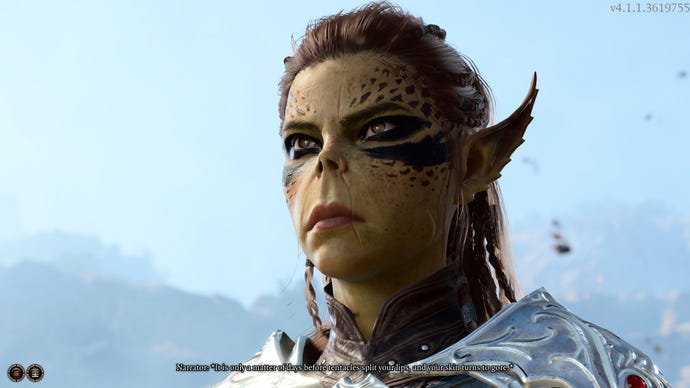
The impact of Baldur’s Gate 3 is being felt across the industry, not just in RPGs. |Image credit:Rock Paper Shotgun/Larian Studios
The Force is strong with this oneDuring our chat, Foertsch also called out Larian’s Divinity: Original Sin games, Mimimi (RPS in peace)’s “awesome” Shadow Tactics: Blades Of The Shogun (“all the games those guys have made are great”, he says), Klei’s Invisible, Inc., and even Ubisoft’s Switch exclusive Mario + Rabbids Kingdom Battle as all being great examples of the “really cool innovations happening across the strategy stratosphere” at the moment.Image credit:Rock Paper Shotgun/EA

It’s an ethos that sits right at the heart of the studio’s composition, too, and Foertsch explains that his decision to build his team in such a way that “a little less than half” of them have a “deep strategy pedigree” while the rest doesn’t was fully “intentional”. This is so that everyone can bring their ideas to the table, whether they’re an artist, animator, or the creative director. “Bring it, tell me how you would make it, tell me what your experience as a developer has been in that genre, and is there a place where they cross?” Foertsch says, giving an example of how their cinematic director “just brings a totally different sensibility to all the camerawork” in their Star Wars game thanks to them having “been on the Gears franchise forever” while working at The Coalition. “He has ideas that I never had, and so for me, I’m just like, throw it all out there and I’ll tell you where to cross the line, and I’ll reel it back in.”
It’s one of the many ways Foertsch is trying to steer the project so as to avoid things “we’ve tried before and it didn’t work” and “embrace things that we’ve never thought about or are new to us”. Ultimately, Foertsch says his goal - in addition to “just making a great game that happens to be a strategy game” - is “trying to look at those spaces and just defy the box that people try to put games in.” Depth, he says, should not cost you elegance at the end of the day, and “you should be able to have an absolutely gorgeous-looking game that is also deep, and you’re not trading one for the other.”
