HomeReviewsGrowbot
Growbot review: a puzzle game not quite in bloomStill room to grow
Still room to grow
Growbot Release TrailerWatch on YouTube
Growbot Release Trailer

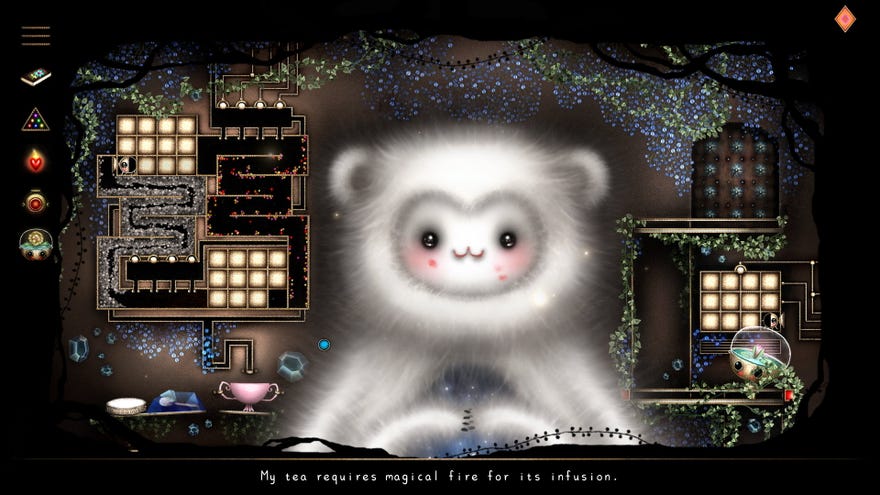
You’ll be exploring Growbot’s spaceship setting using a separated inventory – ‘keepables’ on the left, ‘consumables’ on the right – and a cool, coloured cursor to traverse through its various chambers. These range from scenic locations like the garden to more industrial ones like the ship’s engine room. They’ll all divided into a few sections, and more often than not you’ll encounter characters and puzzles near their respective entrances that require something found from deeper within, such as keepables that alter the world and are useful throughout your journey, or consumables to combine or attach to other things so you can progress. Thankfully, you’ll only need to backtrack through areas once for a story-related event.
It sounds simple enough, but Growbot often veers into frustration. It’s not particularly adept at telling you how to progress if you get stuck, for example, and I often couldn’t find the one tiny thing that was eluding me. One keepable you obtain, for example, is Brainipilia, a rodent-like creature living rent free inside Nara’s head that’s meant to provide context or hints. Right-clicking things with your own mouse is also supposed to guide you when you’re stuck, but in practise I didn’t find either of these helpful. While the glistening, shimmering world of Growbot looks sublime, it doesn’t often do enough to point you in the right direction.
It’s much more useful to tap the spacebar, which briefly marks interactable objects with red crosses. Strangely, the game never tells you about this keyboard hint, but it ended up being a lifesaver when I was desperately searching for a flower that was buried under a platform I thought was just there to look pretty.
The Flower Arranger
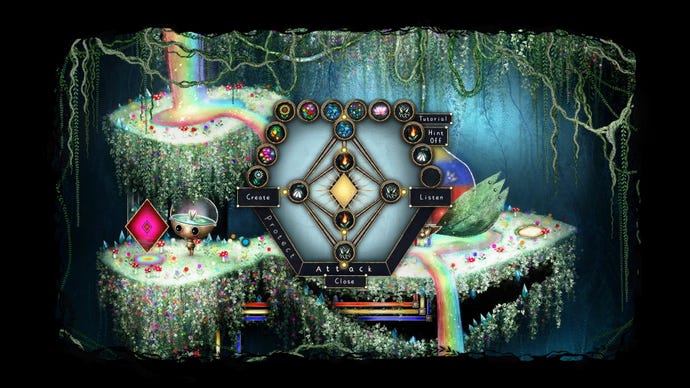
Growbot doesn’t require such large leaps of logic as Machinarium, but its undercooked hint system still ends up making even its simplest puzzles much harder than they should be. There were several times when I knew what I had to do, for example, but didn’t know how to do it. You’ll love some puzzles more than others, but many have at least one drawback, be it ambiguous instructions or finicky controls. Alone none of this is monumental, but combined it becomes a bit tiresome.
With games like this I usually hope for a memorable story, but sadly this is where Growbot disappointed me most. The sudden return of the villanous Crissy sounds promising on paper, but there’s more incidental worldbuilding than actual plot here, and repetitive dialogue that seems insignificant leads into an unsatisfying ending. Growbot’s story is told much better via an opening cutscene, a guide book and a few brief flashbacks, and it’s a shame once ‘The End’ was slapped on screen I was left wondering: “Wait, is that it?”. Admittedly this is a short tale, with the game only lasting a handful of hours, but I wish the story and characters (not least Nara herself) had a bit more time to breathe and develop.
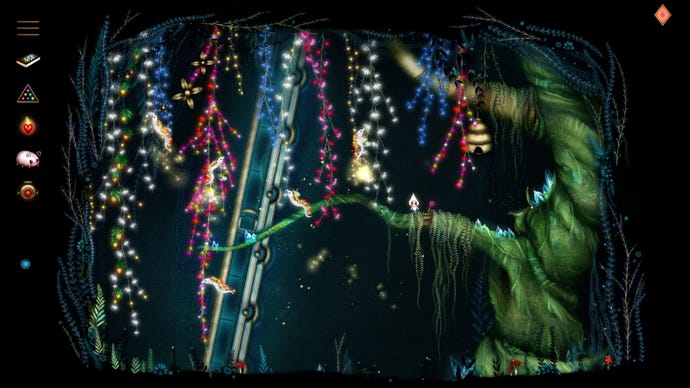
And that’s the thing that most frustrates me about Growbot. It squanders much of its potential. When things click, Growbot can be magical, but for all those wondersome moments, there are more that come to a jarring, juddering halt. If you’re good at puzzles and have a good ear, then you may well have a better time with Growbot than I did, but I suspect its hint system will leave you equally irked. I wish the game was as beautiful to play as it is to look at.
[Disclosure: Developer Lisa Evans’ former partner is Graham Smith, RPS’s former editor-in-chief. Graham still writes for RPS, and he provides the voice of Starbelly in Growbot.]
