HomeReviewsGrotto
Grotto review: a grim, mystical tale about the limitations of languageStars in their eyes
Stars in their eyes
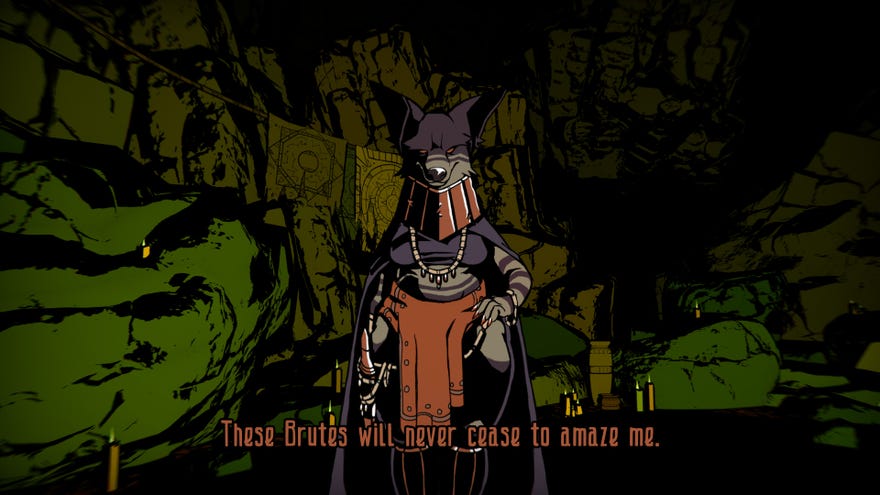
It’s a hard life, being a soothsayer inGrotto. You live in a dingy little cave, the locals look at you with varying levels of distrust and suspicion, and occasionally your campfire will perk up and talk to you when no one’s looking, its yellow flames turning an ominous shade of blue as it whispers dread-filled words about failure and the beating heart of the mountain into your ear. It’s unclear how you ended up like this, but day after day you’re tasked with consulting the handful of stars visible through a crack in the cave’s ceiling to dole out advice to the local tribespeople, a group of anthropomorphic animals known only as The Brutes.
Grotto | Announce Trailer | PC, PS4, Xbox One, Switch, iOSWatch on YouTube
Grotto | Announce Trailer | PC, PS4, Xbox One, Switch, iOS
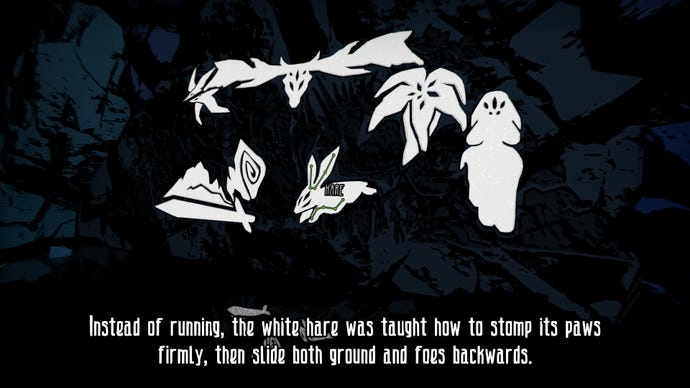
The actual divining of the constellations themselves takes up a surprisingly small amount of the overall game. While there is, technically, a ‘correct’ way of working them out (which I discovered far too late in the day for it to be of any use), you can figure out most of them quite easily through trial and error. I uncovered nearly all of them this way, clicking my mouse seemingly at random to see what else cropped up in my discoveries, and yes, it did feel like I was cheating a bit in the process.
But there was also nothing in the game to stop me from doing this. Indeed, it quickly became apparent that your drawings don’t actually have to match the prescribed shape of each constellation in order to discover them. As long as your drawings contain the right number of stars in roughly the right configuration, the constellation will appear no matter what form your drawing actually takes. I feel like Grotto could have been stricter on this point, only giving up its secrets after precise and intentional mouse clicks, but I would have also appreciated some more obvious clues to suss them out in the first place. In a cruel twist of irony, it turns out that keeping your eyes focused on the ground will reveal much more than casting them skyward.
Once you’ve discovered a constellation, you can ‘stick’ it to the wall to use again later, saving you from having to draw it out every time you want to use it.
Thankfully, you do start to gain extra tools to help give you a steer on how to proceed. First, you acquire a set of bones you can throw to speak to a deceased Brute on the other side; second, you’re given a three-string guitar you can pluck to send you into another otherworldly trance to receive advice from an ominous red spirit. Finally, you’re given a pipe that lets you journey to the land of the dead to speak with other fallen Brutes to get their take on things. Unsurprisingly, everyone’s got their own conflicting agendas, and seeking the advice of the dead can often leave matters feeling even foggier than before. Sometimes they do reveal important clues and sagely nuggets that make you feel glad for doing a bit of extra detective work, but ultimately, Grotto is a game about going with your gut and then dealing with the consequences.
Or at least it is in part. While the advice you give does have an effect on some of Grotto’s more minor storylines, the overall thrust of the narrative follows the same handful of beats on every playthrough, robbing your choices of some of their power. Dedicated players might be willing to experiment with how far they can push certain plot points, but when a single playthrough lasts a good five hours, Grotto’s demand on your time is just a bit too long to encourage several repeat visits.
For the record, these are both TERRIBLE options.
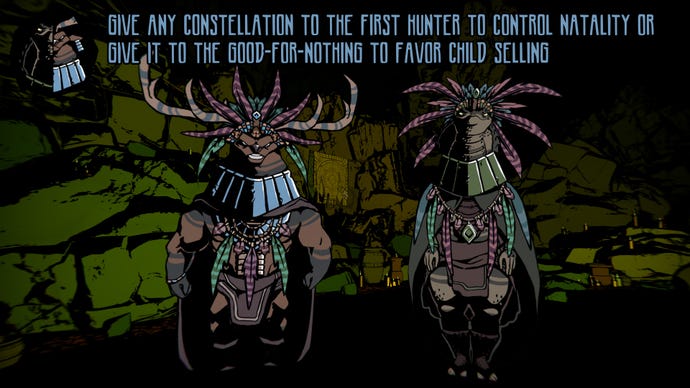
Still, even if you only play Grotto once, what it has to say about the limitations of language and the meaning of words will stick with you long after you reach the end credits. Answering big important life questions with mystical sayings might seem absurd at first, but when your constellations lose their power later on in the game and you’re asked to replace them with single, one word meanings, you quickly realise the importance of having a bit of interpretive wiggle room. Reducing the hedgehog constellation from “Build a bastion on your bended back, secure it with spikes and let stillness be your strength” to something as crass as “huts”, for example, doesn’t just change its linguistic meaning. It also shifts the kind of power relationship you have over this fledgling society, transforming you from a mystical “startamer” into a cold and calculated (if slightly accidental) dictator. You’re the one calling the shots now in this tribe’s affairs, not the creatures themselves, and twisting the lens of this autocratic kaleidoscope created a wonderful sense of unease and tension when I next came to answer one of their questions. And when they change for a third time, you’ll wish you had no words at all.
Let’s put it this way. After several months of stalling and dogged perseverance, I finally finished a 350-page book about the art and struggle of being a Japanese literary translator the other week, and not once did it get me thinking about words and language in the same way Grotto did over the course of five hours. When a game provokes these kinds of feelings in me, I don’t mind so much if the choices I’m making are actually a little bit fake. Grotto stands on its own as an engaging story about the way we communicate with others and how their meaning can be polluted and morphed over time, and I reckon fans of such things will likely enjoy it even if the game-y aspects of it feel a little undercooked. If it’s a meaningful, branching narrative you’re after, though, then you’ll be better off finding a different rabbit hole to hunker down in than Brainwash Gang’s Grotto.
