HomeReviewsGhost Song
Ghost Song review: a melancholy Metroidvania with a hint of Hollow KnightLo-fi beats to die to
Lo-fi beats to die to
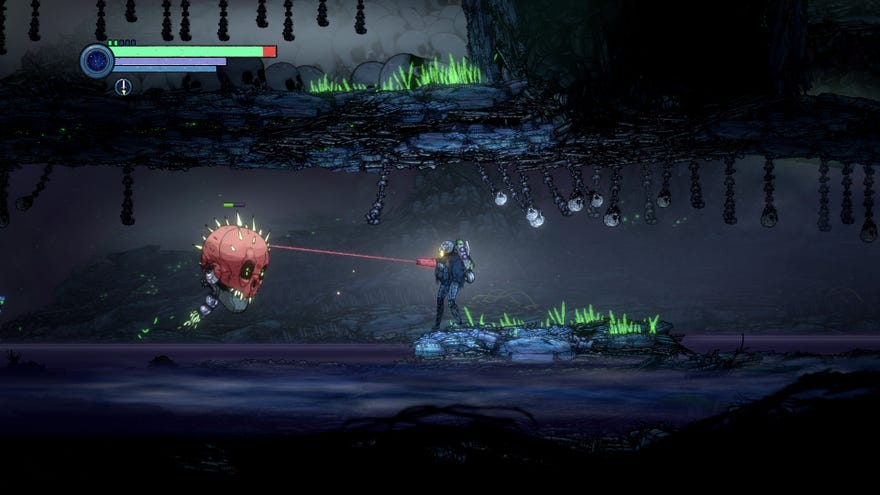
But Deadsuit, your android-like protagonist, makes for a slightly rusty-feeling companion at times, lacking the grace and elegance of Nintendo’s Samus Aran, and the nimble dexterity of Team Cherry’s nameless knight. It will tide you over untilSilksongarrives, for sure, but it also never quite sings in the way you’d hope.
Ghost Song - Release Date Trailer | Humble GamesWatch on YouTube
Ghost Song - Release Date Trailer | Humble Games
From the off, it’s clear Ghost Song owes a great debt to Metroid andHollow Knight. Deadsuit herself might be a smaller and less imposing presence than Nintendo’s fearsome bounty hunter, but her arm cannon and glowing visor feel like they could have been an old suit design that’s been saved from the recycling bin. You’ll eventually acquire other weapons to use in tandem with the arm cannon, including a spear and a very large (and very good) Buster-like sword, but shooting remains your primary method of interaction with this strange, impenetrable world, and the way you need to plant your feet in order to aim freely with your analogue stick couldn’t feel more Metroid-like if it tried. Heck, there are even little yellow bugs that go round and round hugging the suspended platforms in Ghost Song, just like the little yellow spiky dudes at the beginning of Samus' 1986 debut.
There’s only a small smattering of save points to be found here, but fortunately its hallways aren’t so packed with enemies that getting back ever becomes much of a chore. It only starts to become particularly problematic when you accidentally walk into a barriered boss room and get absolutely mullered within the first five seconds, leaving you stuck in a perpetual cycle of either ‘gitting gud’ or abandoning your cells altogether – the same as it ever was in FromSoft’s Souls games, essentially.
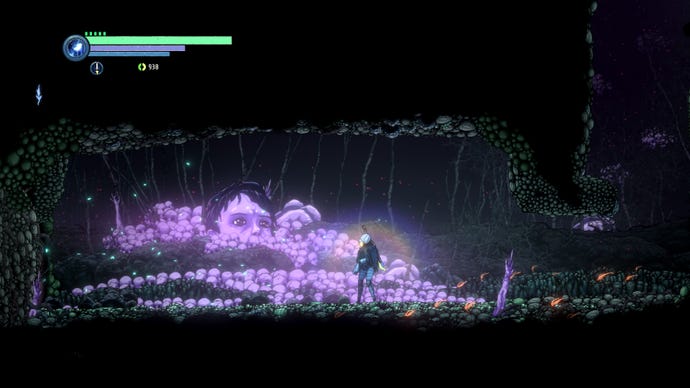
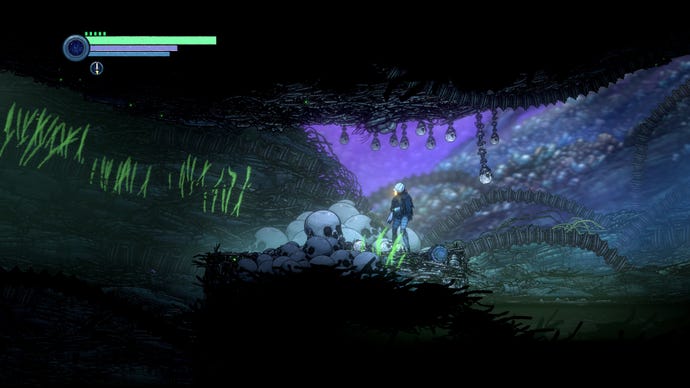
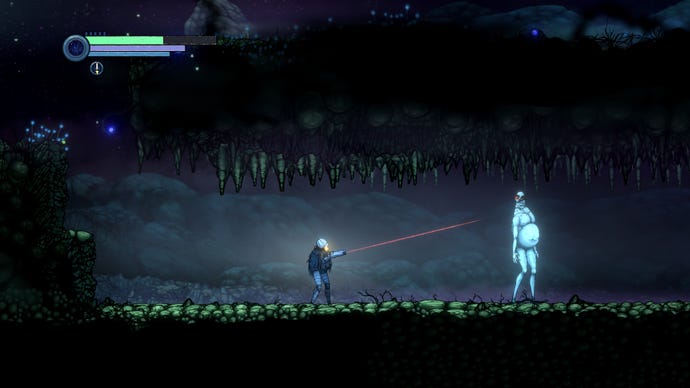
Thankfully, those losses are never quite as painful as they are in other Soulslikes. Upgrades still gradually creep up in price over time, but whereas a bad death inElden Ring, say, can see you lose thousands, if not tens of thousands of runes in a single location, Ghost Song rarely deals in anything more than a couple of hundred. 1000, absolute tops. And yes, it still takes a fair bit of work to earn those cells back if you do have the misfortune to lose them altogether, but when even end-game upgrades come to less than 3000 cells a pop, it just helps to make it all feel a bit more manageable and less like a grind.
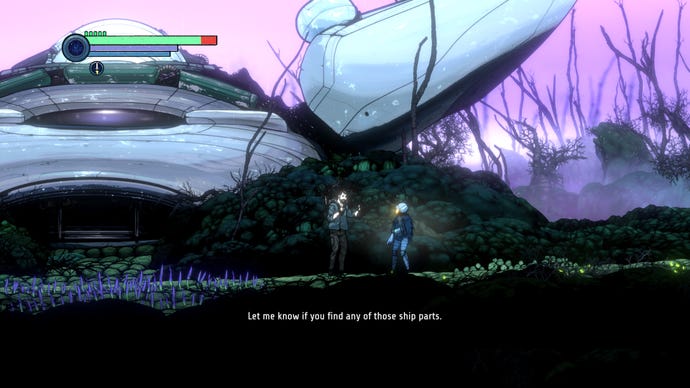
This really came to bear when I was trying to get to my second ship component. The game tells you which one you should head to first, but after that leaves it up to you, and having exhausted all other routes, I was essentially left with two options - and both seemed to involve fighting super difficult bosses that locked you into their respective arenas. I just didn’t seem remotely equipped to deal with either of them at that particular moment, although a suit module I eventually found off another boss that exponentially increased my firepower in line with my current suit level certainly did help quite a bit in that respect.
But Deadsuit herself also feels quite stiff in the hands, her jump never quite offering the range or level of control you need to dodge projectiles, and her dash to get past enemies always seemingly falling short of where you’d like. You do develop a certain muscle memory for these things over time, but it’s easy to get overwhelmed in these fights, especially when Ghost Song’s more run of the mill enemies don’t offer anywhere near the same level of challenge.
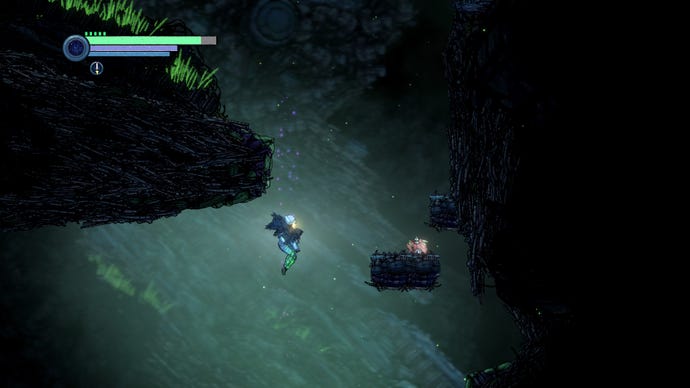
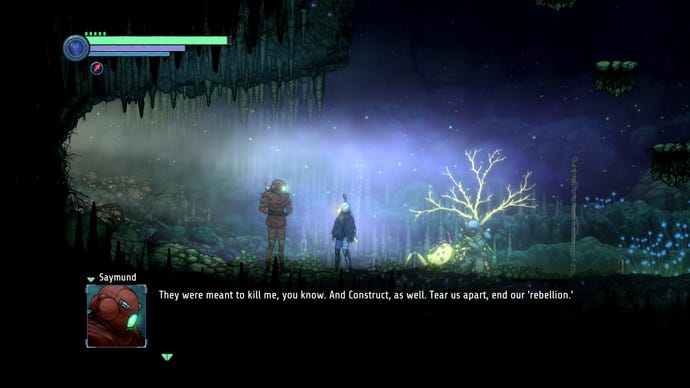
A clunky protagonist I can live with, but that freeform structure of ‘go anywhere in any order’ also falls foul of some of the same pitfalls I encountered in Axiom Verge 2, namely that the direction you need to go in to actually find these bosses and components isn’t always as obvious or intuitive as it might seem on your map. Once again, there were times when I had to head in almost the opposite direction to get where I really needed to be, making it difficult to judge if you’re actually making progress. Having suffered through that with Axiom Verge 2 earlier in the year, this second-guessing of the map screen is something that’s been engrained into my psyche with Metroidvanias now, but it also just made me appreciate the elegance and sense of clarity you get from having simple little waypoint markers and mini ‘hey, my scanners sure are picking up something weird over here!’ objectives in Metroid and Hollow Knight. Some might call them too hand-holdy and that part of the fun is nosing through its squelchy caverns and the like, but my patience does also have a limit for these things.
I enjoyed Ghost Song overall, but that middle act slump did almost kill it dead for me, too, which is a shame, as underneath it all, this is a very accomplished Metroid-like for such a tiny dev team - and it will certainly fill that Hollow Knight shaped hole in your life while we wait for Silksong, especially if you’re a Game Pass subscriber. There’s still plenty to admire about what Old Moon have made here, but there are enough fluffed notes in the mix that it just stops short of being a harmonious whole.
